
Temple of Hatshepsut (Deir el-Bahari)
The terraced temple of Egypt's great woman pharaoh, set against the cliffs of the west bank — with the reliefs of the expedition to Punt.
A queen who became king
Hatshepsut, daughter of Thutmose I, ruled Egypt in the fifteenth century BC, first as regent for her young stepson Thutmose III and then, for about twenty years, as pharaoh in her own right — one of the very few women to hold the throne. Her reign was a period of peace, trade and building, and her mortuary temple at Deir el-Bahari, on the west bank of Thebes, is her greatest monument. Known to the Egyptians as Djeser-Djeseru, "holy of holies", it was dedicated to Amun and to her own funerary cult. Its design is traditionally attributed to her steward and architect Senenmut.
Terraces against the cliff
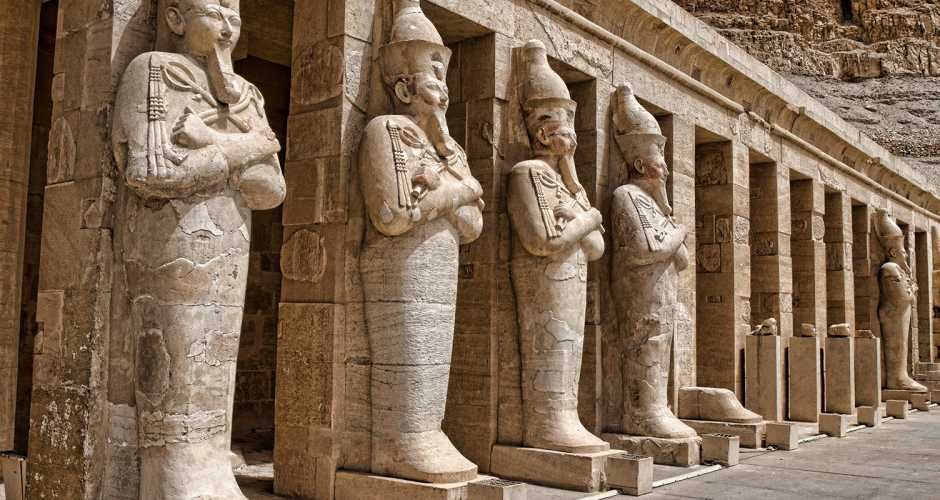
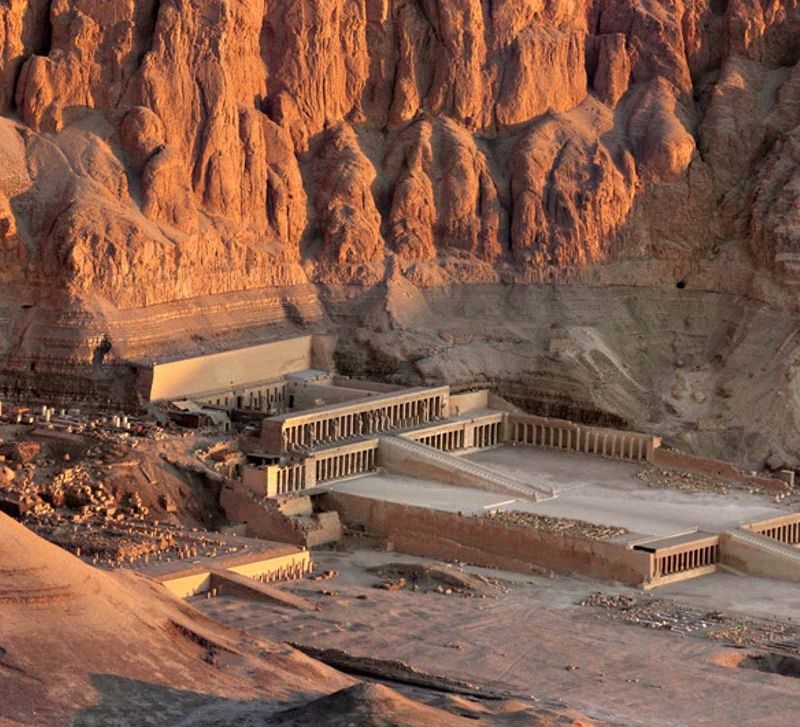
The temple rises in three broad terraces linked by ramps, fronted by colonnades and set dramatically into a natural amphitheatre of sheer limestone cliffs, beside the older temple of the Middle Kingdom king Mentuhotep II that inspired it. Its clean horizontal lines and rhythmic colonnades have often struck modern visitors as almost modern. Statues of Hatshepsut as Osiris lined the upper terrace, and the walls of the colonnades are carved with some of the most remarkable reliefs of the New Kingdom.
Punt and divine birth
On the middle terrace, the Punt Colonnade records a trading expedition sent by Hatshepsut to the land of Punt, probably on the southern Red Sea coast, showing ships loaded with incense trees, ebony, ivory and exotic animals, and the famously portly queen of Punt. Another colonnade presents the queen's divine birth, showing Amun as her true father to legitimise her rule. The upper terrace holds shrines to Hathor and Anubis and the sanctuary of Amun, cut into the rock.
Erased and restored
After her death, many of Hatshepsut's images and names were systematically removed, probably during the later reign of Thutmose III, and the temple was later damaged and reused. Since the 1960s a Polish–Egyptian mission has excavated and restored it, reconstructing much of the upper terrace. The temple is part of the UNESCO World Heritage Site of Ancient Thebes with its Necropolis.
Exhibo editorial
Arrive early and you will see the temple the way it was meant to be seen: pale terraces climbing towards a wall of golden cliffs, so perfectly matched to the landscape that it seems to have grown out of it. The architecture is calm, horizontal and almost minimalist; you half expect it to have been designed in the twentieth century.
Then go and find Punt. In the shade of the middle colonnade, the reliefs of the queen's expedition still carry their delicate carving — the ships, the incense trees in baskets, the fish of the Red Sea, the queen of Punt with her donkey. It is a woman pharaoh's account of her own reign, carved in stone, survived despite every effort to erase her.
Gallery
How to find it
Deir el-Bahari is on the West Bank, about 6 km from the Nile crossing, reached by taxi or car. From the visitor centre a small electric train (or a short walk) takes you to the foot of the temple; climb the central ramps to the middle terrace — the Punt Colonnade is on the left (south) side — and continue to the upper terrace and sanctuary.
Similar places
All places
News by Exhibo
Editorial coverage on Exhibo
The Museum of Everything That Became a Tomb
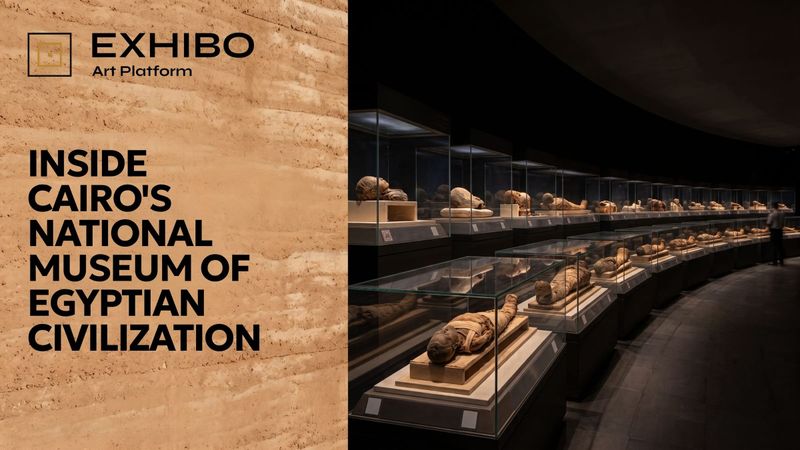
Egypt built a museum to tell the story of an entire civilisation — seven thousand years of it, from flint tools to the present. The public knows it for one thing: the room where twenty dead kings lie in the dark.
In a black, hushed hall beneath the National Museum of Egyptian Civilization in Old Cairo lie the mummified bodies of Ramesses II, Hatshepsut, and eighteen other rulers of the New Kingdom — carried here in 2021 in a televised parade watched around the world.
Unearthing the Golden City: Daily Life in Ancient Egypt
How a newly excavated workers' quarter reframes pharaonic history
A major survey travels to the West Coast, bringing ancient artefacts that shift focus from royal opulence to the daily lives of those who built the empire.
Ancient Egyptian Tomb with Vibrant Murals Unearthed in Luxor
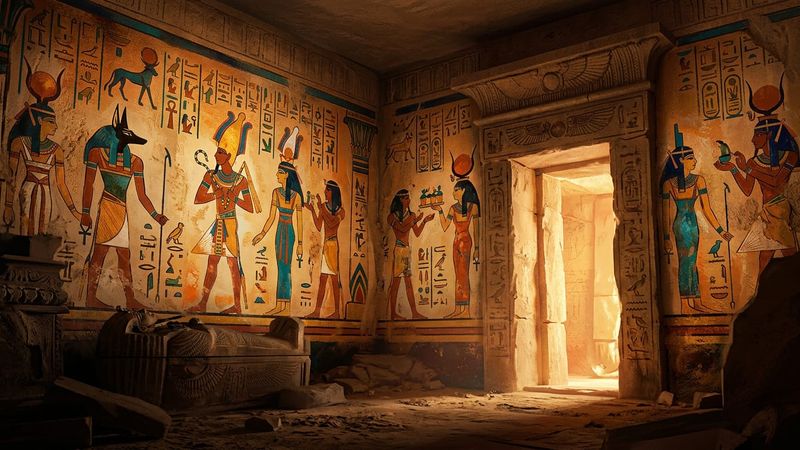
Dutch excavation reveals well-preserved Ramesside period burial with rare coloured wall paintings
Archaeologists have uncovered a 3,000-year-old tomb on Luxor's west bank featuring brightly painted murals that provide valuable insights into elite burial practices during Egypt's New Kingdom period.