
Deir el-Medina (Village of the Tomb Builders)
The village of the artists who carved and painted the royal tombs — with their own jewel-like painted tombs and a Ptolemaic temple.
The Place of Truth
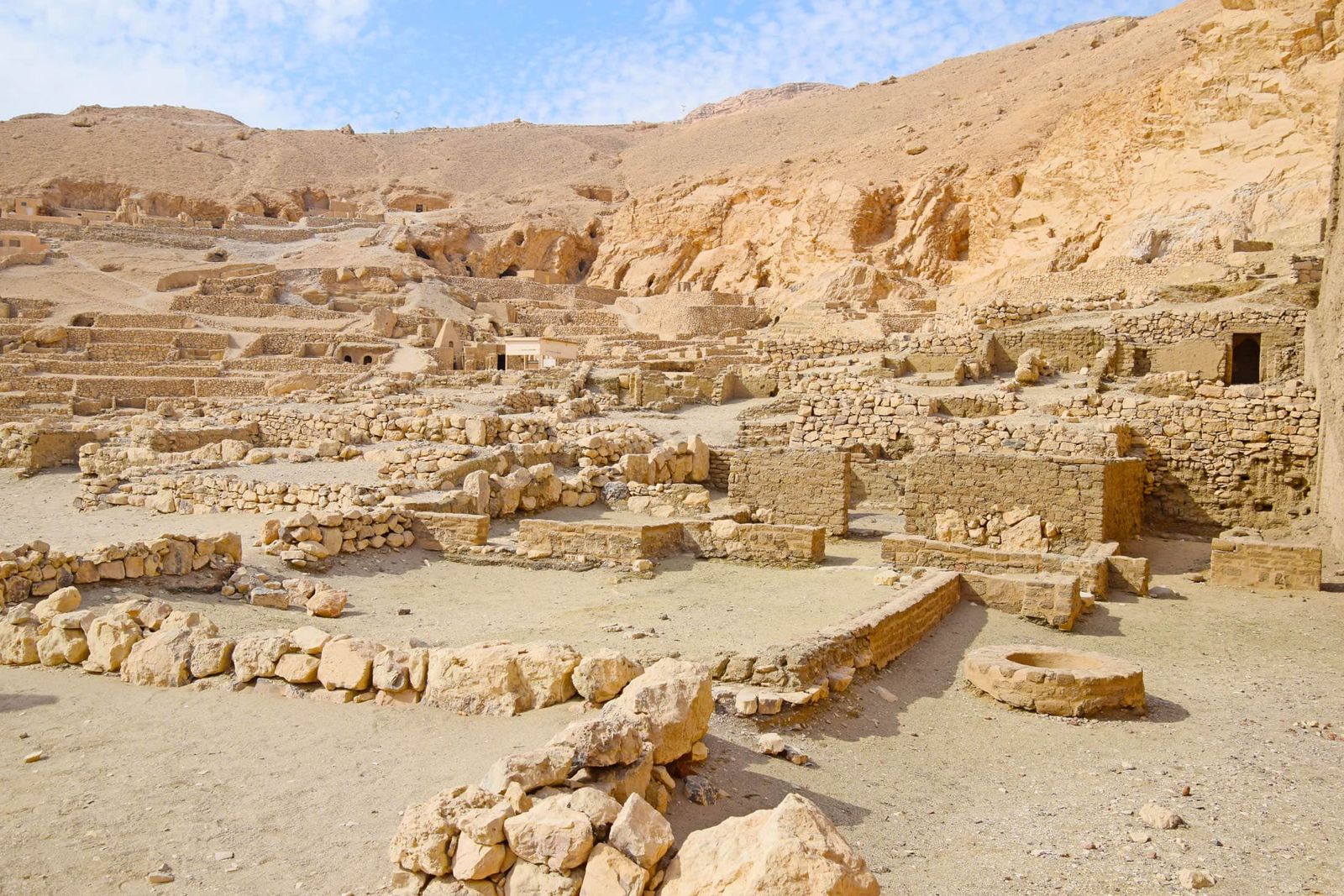
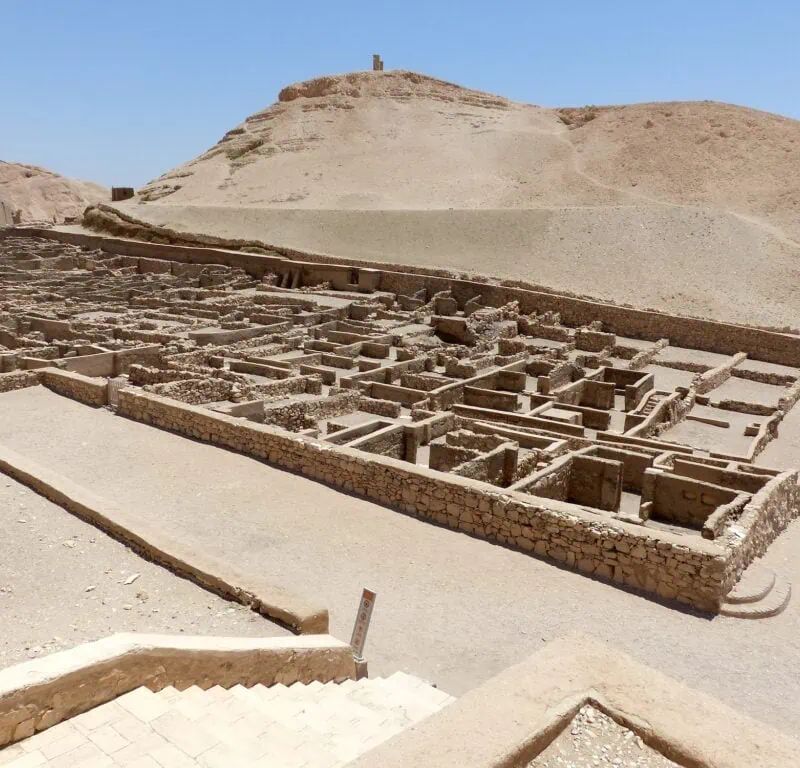
Deir el-Medina, in a small valley on Luxor's west bank behind the hill of Qurnet Murai, was the village of the craftsmen who built and decorated the royal tombs in the Valley of the Kings and the Valley of the Queens. Known in antiquity as Set Maat, "the Place of Truth", it was home for some five hundred years, from the early New Kingdom to the end of the Ramesside period, to generations of stonecutters, plasterers, draughtsmen, sculptors and painters and their families. The remains of some seventy houses, laid out along a single main street within an enclosure wall, are still visible.
Life recorded
The village is one of the best-documented communities of the ancient world. Thousands of ostraca — limestone flakes and pottery sherds used as notepads — and papyri found here record the workers' daily lives in astonishing detail: attendance registers, excuses for absence, quarrels, court cases, love poems, letters and drawings. It was here, in the reign of Ramesses III, that the first recorded labour strike in history took place, when the workmen downed tools because their rations had not been delivered.
The artists' own tombs
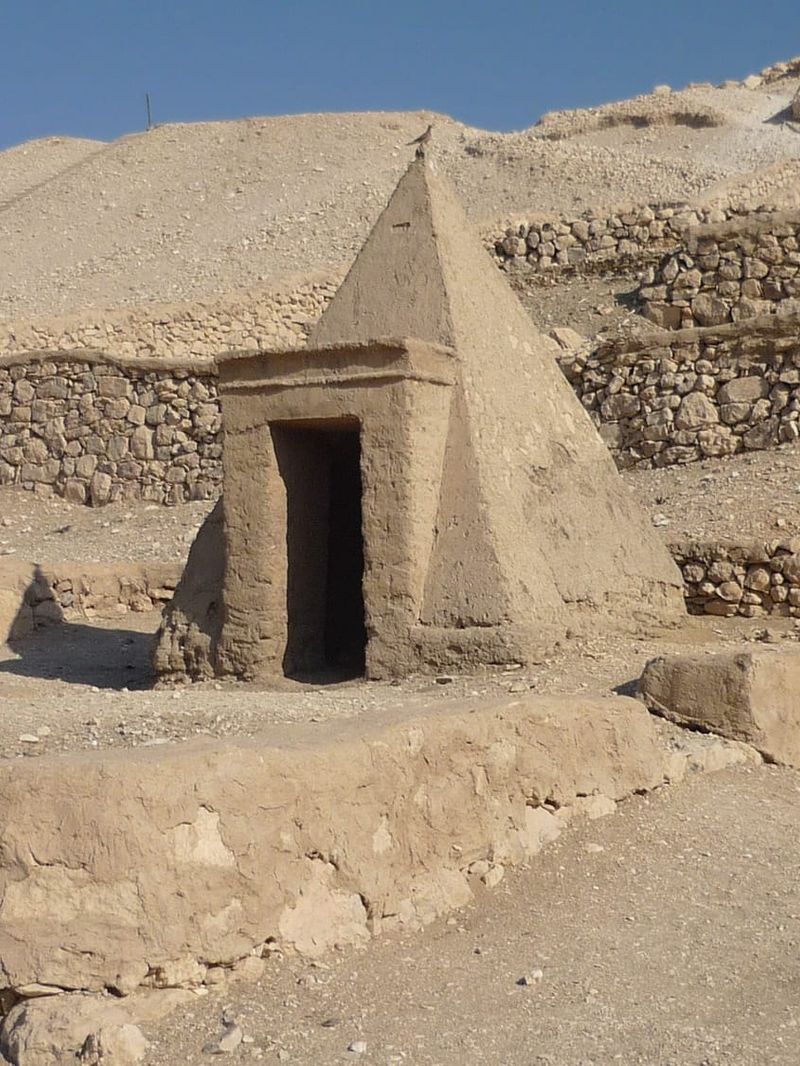
On the hillside above the village, the workmen built their own tombs, small chapels crowned with mud-brick pyramids, with painted burial chambers that rank among the finest in Egypt. The tomb of Sennedjem (TT1), discovered intact in 1886, is decorated with radiant scenes of the deceased and his wife in the fields of the afterlife; the tomb of Inherkhau (TT359), a foreman of the workforce, shows vivid funerary scenes; and the tomb of Pashedu (TT3) has a striking image of the god Osiris before a mountain. At the northern end of the site stands a small, well-preserved temple of the goddess Hathor built in the Ptolemaic period, later used as a monastery from which the site's Arabic name, "monastery of the town", derives. Deir el-Medina has been excavated principally by the French Institute of Oriental Archaeology (IFAO) since the 1920s, and is part of the UNESCO World Heritage Site of Ancient Thebes with its Necropolis.
Exhibo editorial
This is where the people who painted the Valley of the Kings went home at night. Walk down the main street between the stone foundations of their houses, then climb to their own tombs, and you see what they made for themselves: tiny chambers glowing with colour, the same mastery they gave the pharaohs, now spent on their own families and their dreams of a pleasant afterlife among fields of wheat and date palms.
It is one of the most moving places in Luxor. Think of the strike, the love poems, the notes asking for a day off because of a scorpion sting — and then step into Sennedjem's tomb, small, golden, perfect. Come early or late, when the valley is quiet.
Gallery
How to find it
Deir el-Medina lies in a small valley on the West Bank behind the hill of Qurnet Murai, about 1 km north-west of Medinet Habu, reached by taxi or car along a short side road. From the parking area, the tombs are up the hillside to the left and the village foundations lie below; the Ptolemaic temple of Hathor is at the northern end of the site.
Similar places
All places
News by Exhibo
Editorial coverage on Exhibo
Ancient Egyptian Art
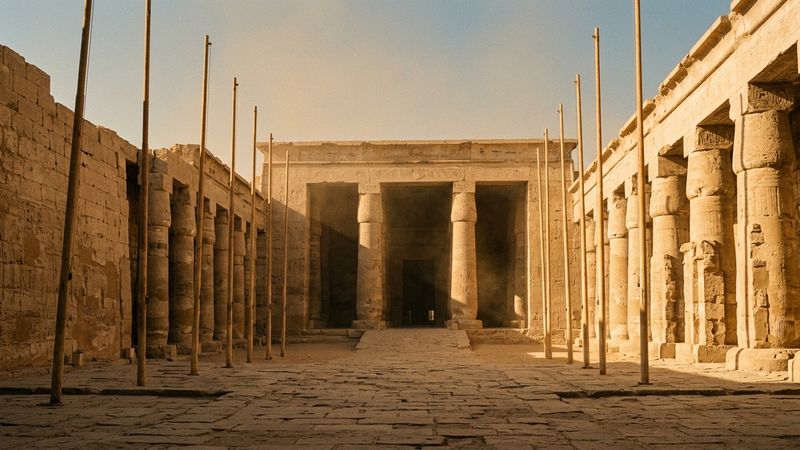
Images built to work for gods, kings and the dead: canon, craft and change along the Nile across nearly three millennia.
Ancient Egyptian art was rarely made for the museum wall alone. This period survey explains why statues and reliefs functioned as cult tools, how a stable visual canon held for centuries, where Old, Middle and New Kingdom styles diverge, and which collections still make those differences visible today.
Unearthing the Golden City: Daily Life in Ancient Egypt
How a newly excavated workers' quarter reframes pharaonic history
A major survey travels to the West Coast, bringing ancient artefacts that shift focus from royal opulence to the daily lives of those who built the empire.
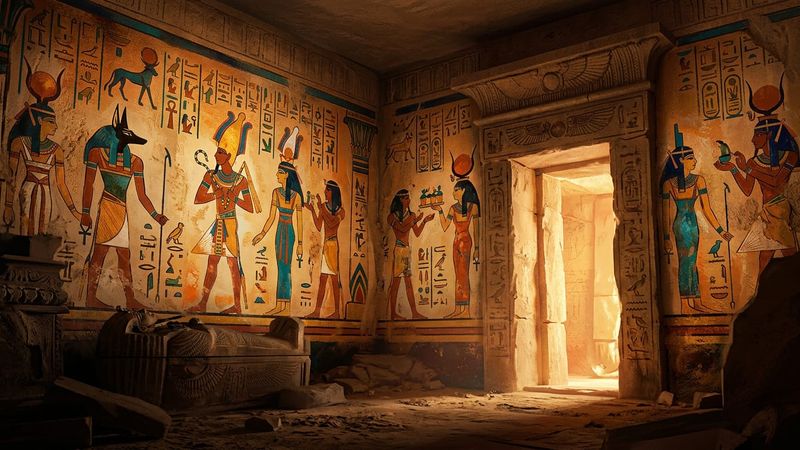
Ancient Egyptian Tomb with Vibrant Murals Unearthed in Luxor
Dutch excavation reveals well-preserved Ramesside period burial with rare coloured wall paintings
Archaeologists have uncovered a 3,000-year-old tomb on Luxor's west bank featuring brightly painted murals that provide valuable insights into elite burial practices during Egypt's New Kingdom period.