
Karnak Temple Complex
The vast sanctuary of Amun, built and rebuilt over two thousand years — the largest religious complex of the ancient world.
The house of Amun
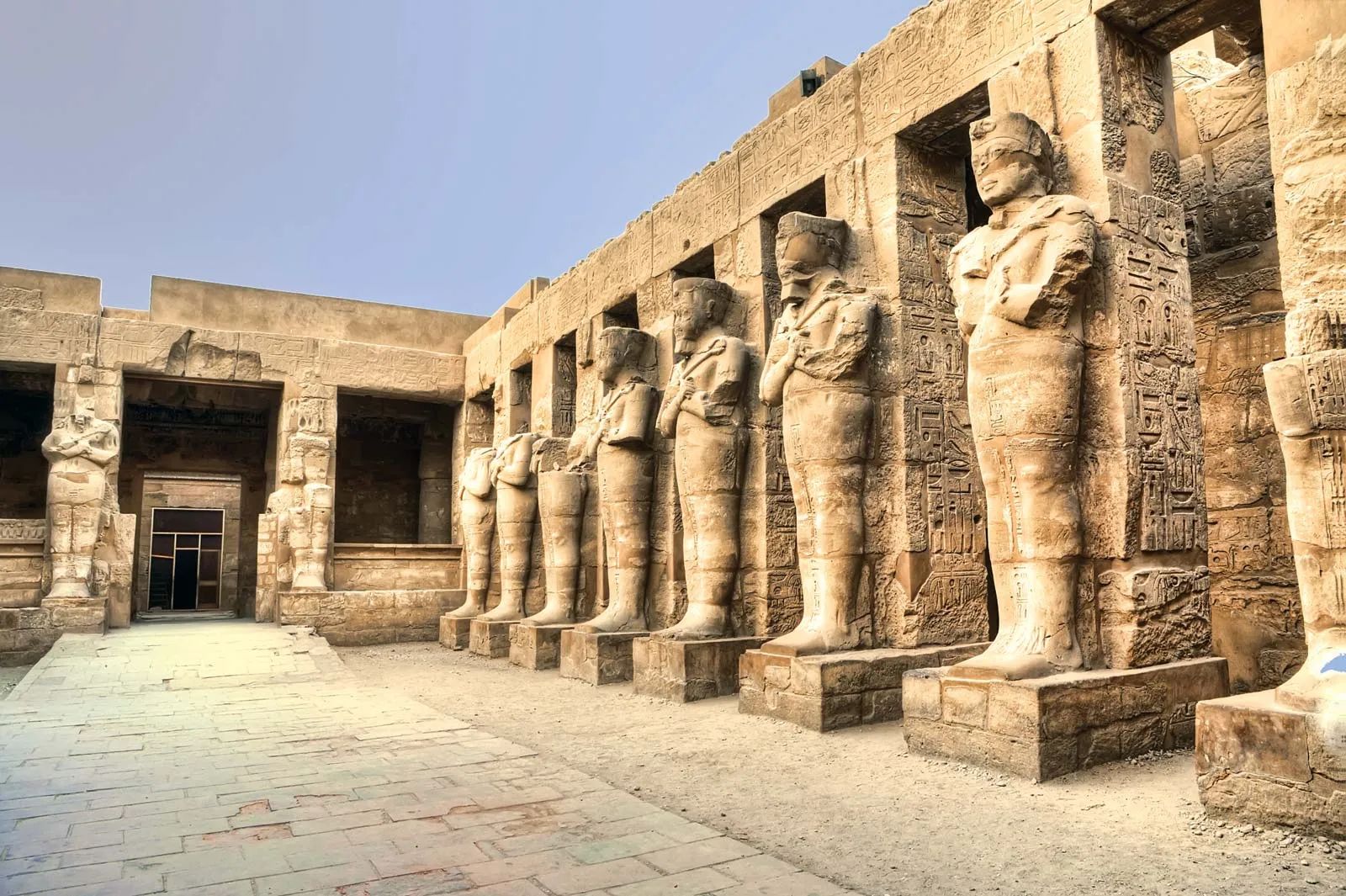
Karnak, on the east bank of the Nile in Luxor, was the greatest temple of ancient Thebes and the most important religious centre of Egypt during the New Kingdom. Known to the Egyptians as Ipet-isut, "the most select of places", it was the principal home of the god Amun-Ra, king of the gods, together with his consort Mut and their son Khonsu. Building began in the Middle Kingdom and continued for some two thousand years: almost every pharaoh from the early second millennium BC to the Ptolemies added pylons, halls, obelisks, chapels or statues, making Karnak less a single temple than a city of temples, the largest religious complex ever built in the ancient world.
The Great Hypostyle Hall
The heart of the complex is the precinct of Amun-Ra, entered from the west through a massive first pylon and a courtyard. Beyond it lies the Great Hypostyle Hall, begun under Seti I and completed under Ramesses II in the thirteenth century BC: a forest of 134 sandstone columns covering some 5,000 square metres, the twelve central columns rising about 21 metres and crowned with open papyrus capitals. Traces of the original paint survive high on the columns and architraves, and the walls are carved with scenes of rituals and of the kings' military campaigns.
Obelisks, chapels and the sacred lake
Further into the complex stand the obelisks of Thutmose I and of Hatshepsut — the latter, of pink Aswan granite, one of the tallest standing in Egypt — the Festival Hall of Thutmose III with its tent-pole columns, and countless chapels and shrines. To the south lies the Sacred Lake, where priests purified themselves, beside a giant granite scarab dedicated by Amenhotep III. In the Open-Air Museum, reconstructed shrines include the White Chapel of Senusret I, one of the finest examples of Middle Kingdom relief, and the Red Chapel of Hatshepsut. The precincts of Mut and of Montu lie to the south and north, and the Avenue of Sphinxes leads from Karnak to Luxor Temple.
Visiting
Karnak is part of the UNESCO World Heritage Site of Ancient Thebes with its Necropolis. Its scale rewards an early start and at least half a day.
Exhibo editorial
Nothing in Egypt — perhaps nothing anywhere — prepares you for the Hypostyle Hall. You walk out of the bright courtyard into a forest of stone trunks so thick that six people could not join hands around one, the tops lost in shadow, sunlight falling in narrow shafts between them. Look up and you can still see the paint: blue, red, yellow, three thousand years old.
Come at six in the morning, when the gates open and the light is low and gold, and walk slowly: Karnak is not a temple you see but a landscape you wander, where every turn opens another century. Then find a quiet corner by the Sacred Lake and simply sit. The pharaohs built for eternity; for an hour or two, you can borrow some of it.
How to find it
Karnak lies about 3 km north of central Luxor on the east bank, reached by taxi, horse carriage or on foot along the Corniche or the Avenue of Sphinxes. From the visitor centre, walk along the avenue of ram-headed sphinxes to the first pylon; continue straight ahead through the great court into the Hypostyle Hall, then on towards the obelisks. The Sacred Lake is to the right (south) of the main axis; the Open-Air Museum is to the left (north) near the entrance.
Similar places
All places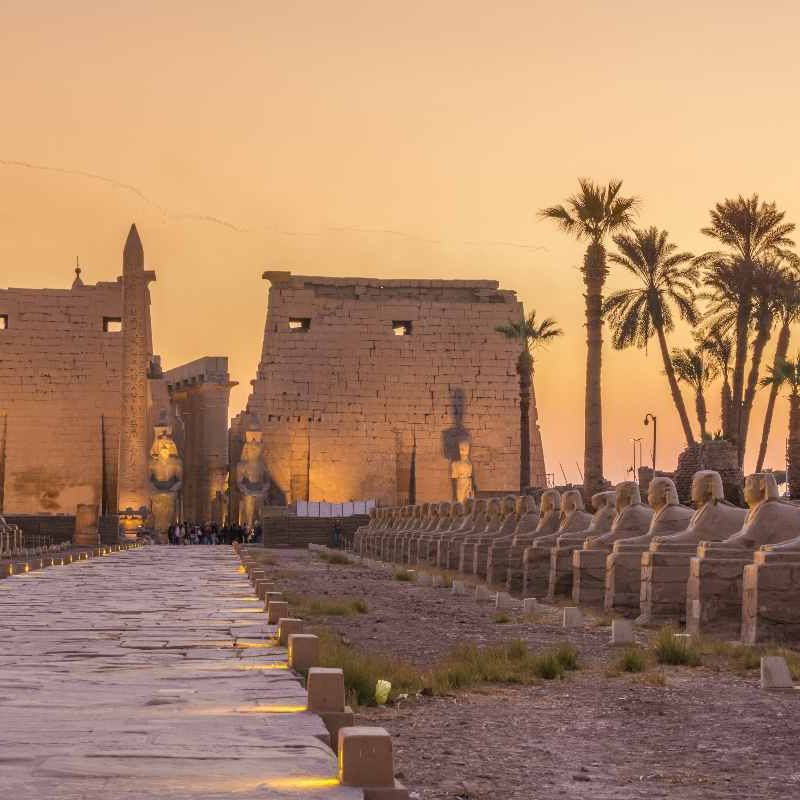
News by Exhibo
Editorial coverage on Exhibo
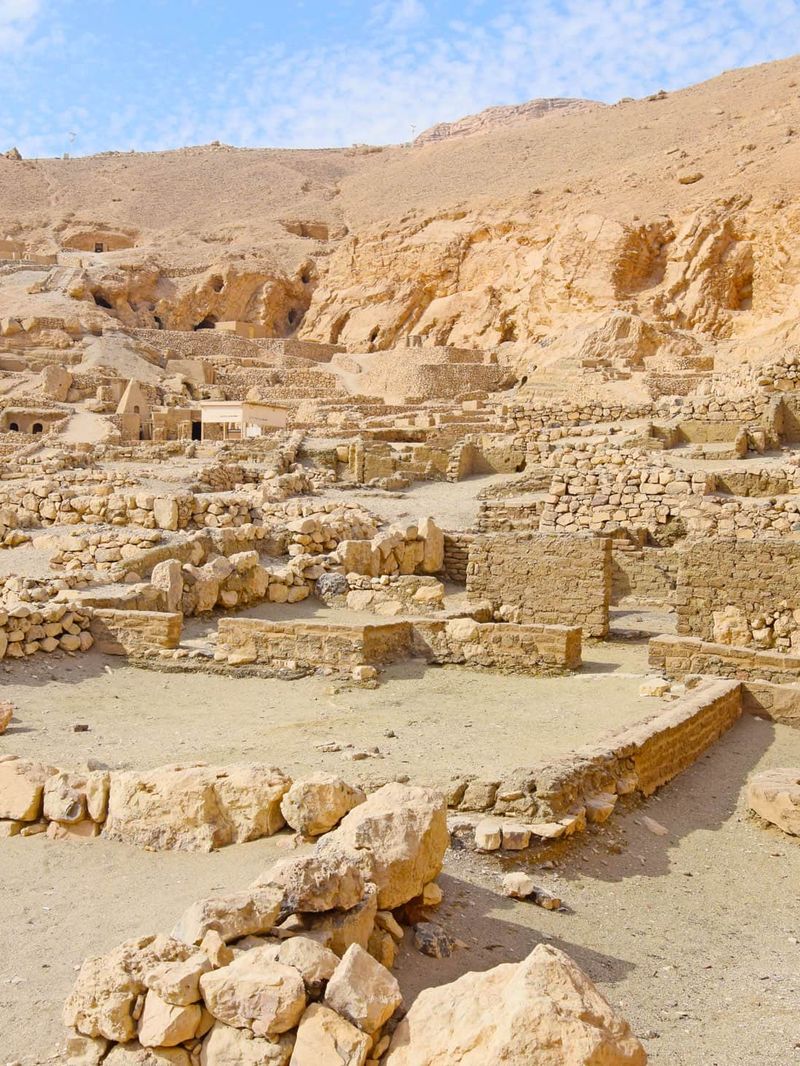
Unearthing the Golden City: Daily Life in Ancient Egypt
How a newly excavated workers' quarter reframes pharaonic history
A major survey travels to the West Coast, bringing ancient artefacts that shift focus from royal opulence to the daily lives of those who built the empire.
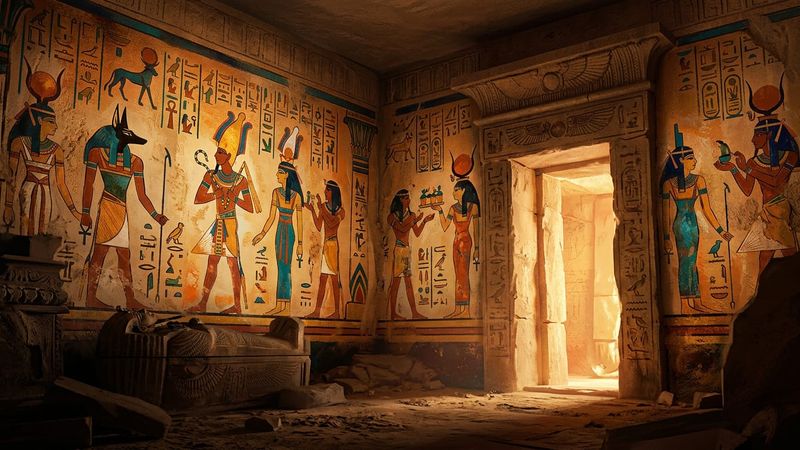
Ancient Egyptian Tomb with Vibrant Murals Unearthed in Luxor
Dutch excavation reveals well-preserved Ramesside period burial with rare coloured wall paintings
Archaeologists have uncovered a 3,000-year-old tomb on Luxor's west bank featuring brightly painted murals that provide valuable insights into elite burial practices during Egypt's New Kingdom period.