
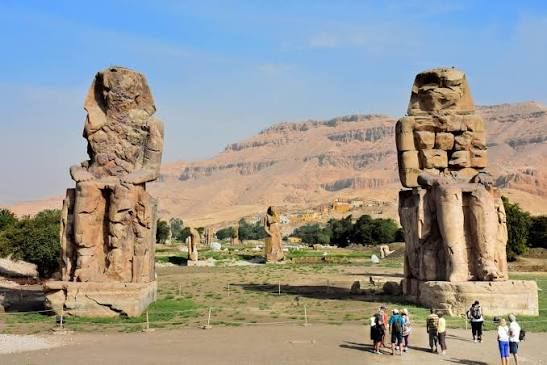
Colossi of Memnon
Two 18-metre statues of Amenhotep III guarding a vanished temple — the 'singing statues' of the Roman world.
Guardians of a vanished temple
The Colossi of Memnon are two gigantic seated statues of the pharaoh Amenhotep III, who reigned in the fourteenth century BC, standing in the fields of Luxor's west bank. About 18 metres high including their bases and carved from quartzite sandstone quarried far to the north, they once flanked the entrance of Amenhotep III's mortuary temple, the largest temple ever built in Thebes. The temple itself, built close to the Nile's flood plain, was destroyed by floods and quarried for stone in later centuries, leaving the colossi standing alone. Smaller figures of the king's mother Mutemwia and his wife Tiye stand beside his legs.
The singing statue
In 27 BC an earthquake cracked the northern colossus. Afterwards, the statue was heard to emit a sound at dawn, often described as a musical tone or a cry, probably caused by moisture evaporating from the cracked stone as it warmed in the morning sun. Greek and Roman visitors identified the statue with Memnon, a mythical Ethiopian king killed at Troy, greeting his mother Eos, the dawn — hence the name. The "singing" made the colossus one of the great tourist attractions of the Roman world, and visitors, including the emperor Hadrian and his wife Sabina in AD 130, carved dozens of inscriptions in Greek and Latin on its legs, which can still be read. After repairs to the statue, traditionally attributed to the emperor Septimius Severus around AD 199, the sound stopped.
The temple rediscovered
Since 1998, an international mission led by the archaeologist Hourig Sourouzian has excavated the site of Amenhotep III's temple behind the colossi, uncovering and re-erecting further colossal statues of the king and many statues of the lion-headed goddess Sekhmet. The site is part of the UNESCO World Heritage Site of Ancient Thebes with its Necropolis.
Exhibo editorial
Most people stop here for ten minutes on the way to the Valley of the Kings, take a photo and drive on. Give them a little longer. Stand between the two giants, faces eroded to almost nothing, and read the graffiti on the legs: Greek and Latin verses left by tourists who came here at dawn two thousand years ago, hoping to hear a statue sing.
Best of all is sunrise, when the fields are misty, the hot-air balloons float overhead, and the colossi turn from grey to rose in the first light — just as the Romans saw them. Then look behind them at the excavations, where the vanished temple is slowly coming back out of the ground.
How to find it
The colossi stand beside the main road on the West Bank, about 3 km from the Nile crossing, on the way to the Valley of the Kings and Medinet Habu; every taxi and tour stops here. A small parking area faces the statues; walk round to the north colossus to see the Greek and Latin inscriptions on its legs and base.
Similar places
All places
News by Exhibo
Editorial coverage on Exhibo
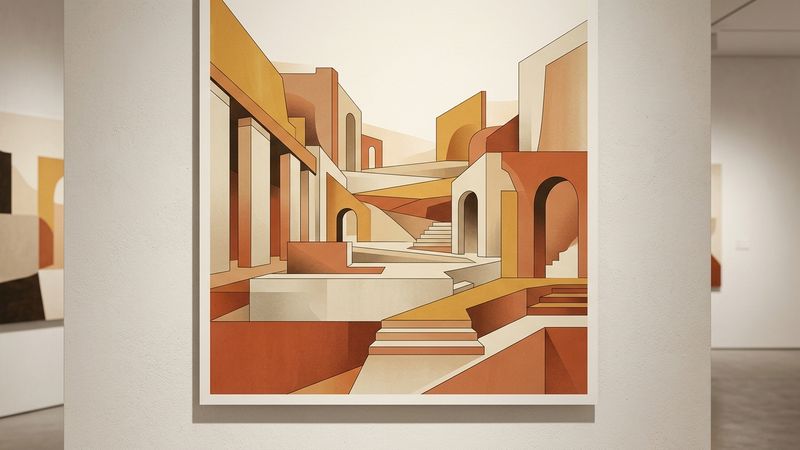
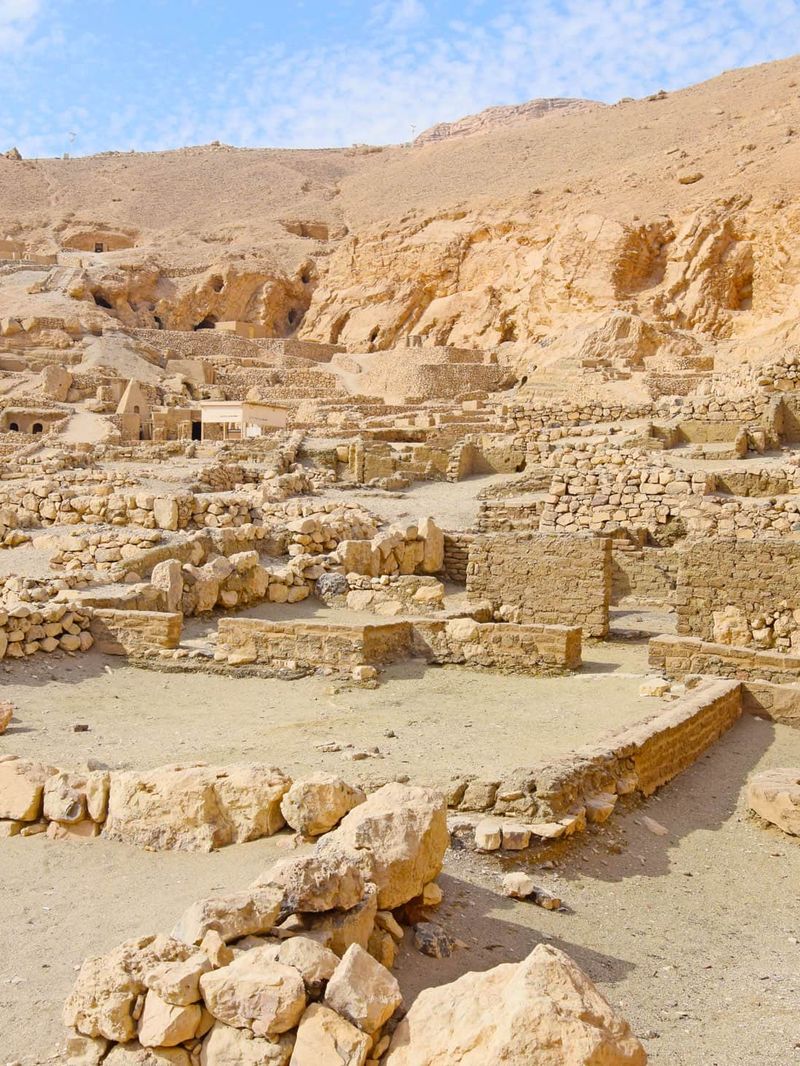
Unearthing the Golden City: Daily Life in Ancient Egypt
How a newly excavated workers' quarter reframes pharaonic history
A major survey travels to the West Coast, bringing ancient artefacts that shift focus from royal opulence to the daily lives of those who built the empire.
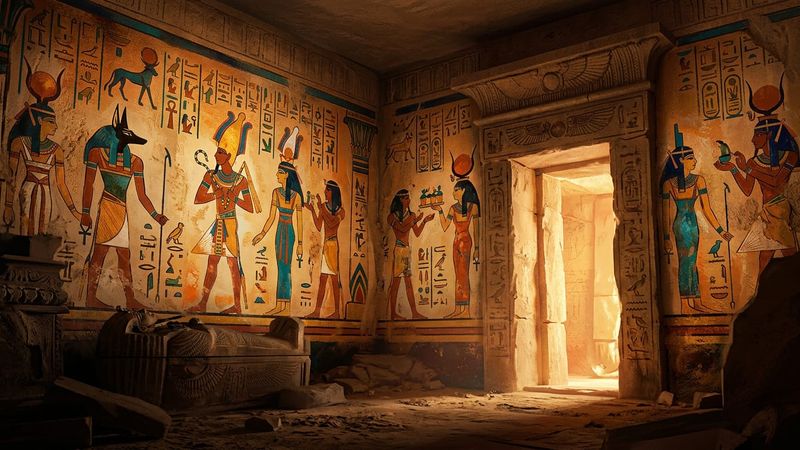
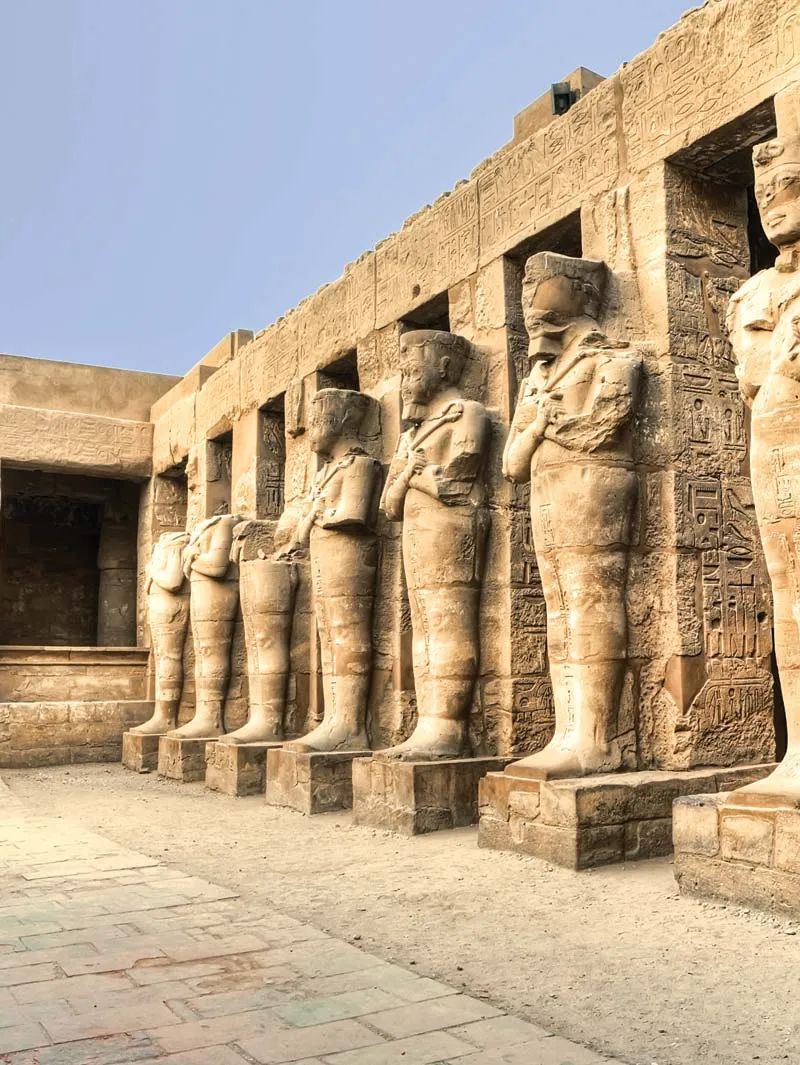
Ancient Egyptian Tomb with Vibrant Murals Unearthed in Luxor
Dutch excavation reveals well-preserved Ramesside period burial with rare coloured wall paintings
Archaeologists have uncovered a 3,000-year-old tomb on Luxor's west bank featuring brightly painted murals that provide valuable insights into elite burial practices during Egypt's New Kingdom period.