
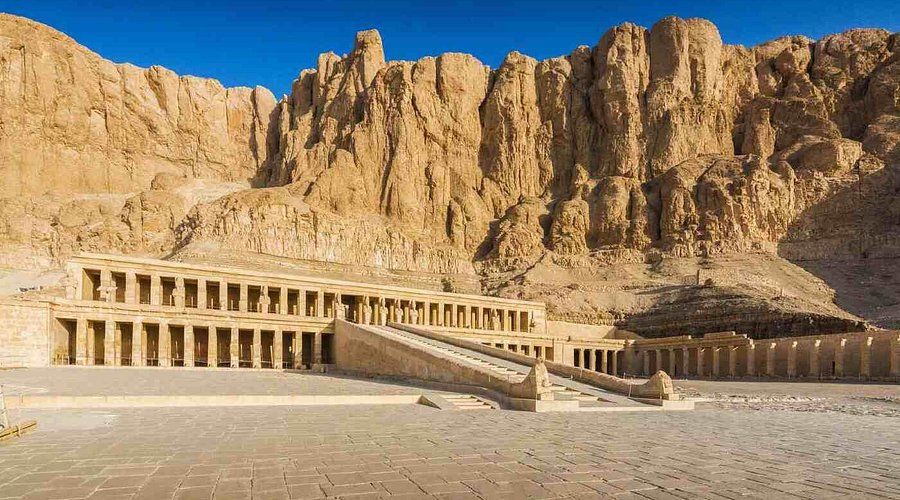
Valley of the Kings
The hidden royal necropolis of the New Kingdom — painted tombs of Seti I, Ramesses VI and Tutankhamun under a pyramid-shaped peak.
A secret valley for pharaohs
For about five hundred years, from the sixteenth to the eleventh century BC, the kings of Egypt's New Kingdom were buried in a remote desert valley on the west bank of the Nile at Thebes, beneath a natural pyramid-shaped peak known today as al-Qurn. Abandoning the pyramids, which had proved easy targets for robbers, they had their tombs cut deep into the rock and hidden, decorated with texts and images that guided the king through the underworld to rebirth with the sun. More than sixty tombs and pits have been found in the valley, belonging to kings such as Thutmose III, Amenhotep II, Seti I, Ramesses II and Ramesses VI, as well as royal family members and high officials.
The decoration
The royal tombs typically consist of long descending corridors, halls and a burial chamber, with walls painted or carved with funerary books — the Amduat ("What is in the Underworld"), the Book of Gates, the Book of Caverns and the Litany of Ra — and astronomical ceilings showing the sky goddess Nut. The tomb of Seti I, the longest and most completely decorated in the valley, is considered the masterpiece of New Kingdom tomb art; the tomb of Ramesses VI is famed for its vividly coloured ceiling; and the tomb of Thutmose III shows the Amduat drawn in a style resembling an unrolled papyrus.
Tutankhamun
In November 1922, the British archaeologist Howard Carter, funded by Lord Carnarvon and working with Egyptian teams, discovered the small, nearly intact tomb of the young king Tutankhamun (KV62), whose treasures caused a worldwide sensation. Most of them are now in the Grand Egyptian Museum, but Tutankhamun's mummy still lies in its burial chamber in the valley, beneath walls painted with scenes of his funeral and his journey to the afterlife.
Visiting
A standard ticket allows entry to three of the tombs open on the day, which rotate for conservation; the tombs of Seti I and Tutankhamun require separate tickets. Photography without flash is generally permitted inside the tombs. The valley is part of the UNESCO World Heritage Site of Ancient Thebes with its Necropolis.
Exhibo editorial
From the outside, it is just a dry, sunbaked valley of grey limestone with doorways cut into its slopes. Then you step into a tomb, walk down the long corridor away from the glare, and the walls explode into colour — gods with jackal heads, serpents, boats sailing through the night, the sky goddess stretched across the ceiling scattered with stars.
Go at opening time, when the valley is cool and almost empty. If you only pay for one extra, make it Seti I: it is the Sistine Chapel of ancient Egypt, worth every pound. And stand for a moment in front of Tutankhamun, still lying where he was laid, small and very human. The rest of his gold may be in Cairo; he stayed home.
How to find it
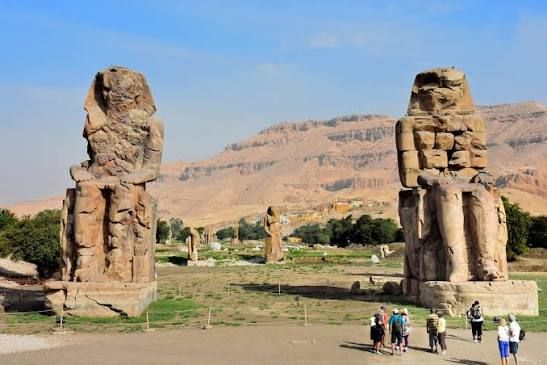
The Valley of the Kings lies about 8 km north-west of the West Bank's Nile crossing, reached by taxi or car past the Colossi of Memnon and the Howard Carter House. From the visitor centre at the entrance, a small electric train runs up to the tombs; check which tombs are open on the board and plan your three, with Seti I and Tutankhamun as optional extras.
Similar places
All places
News by Exhibo
Editorial coverage on Exhibo
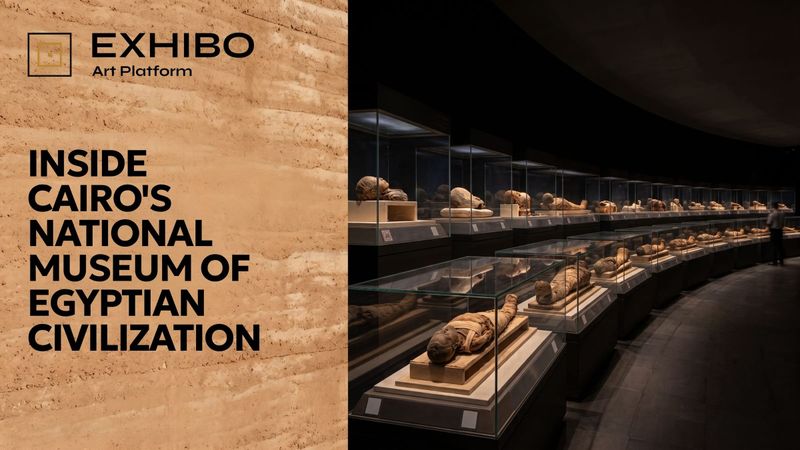
The Museum of Everything That Became a Tomb
Egypt built a museum to tell the story of an entire civilisation — seven thousand years of it, from flint tools to the present. The public knows it for one thing: the room where twenty dead kings lie in the dark.
In a black, hushed hall beneath the National Museum of Egyptian Civilization in Old Cairo lie the mummified bodies of Ramesses II, Hatshepsut, and eighteen other rulers of the New Kingdom — carried here in 2021 in a televised parade watched around the world.
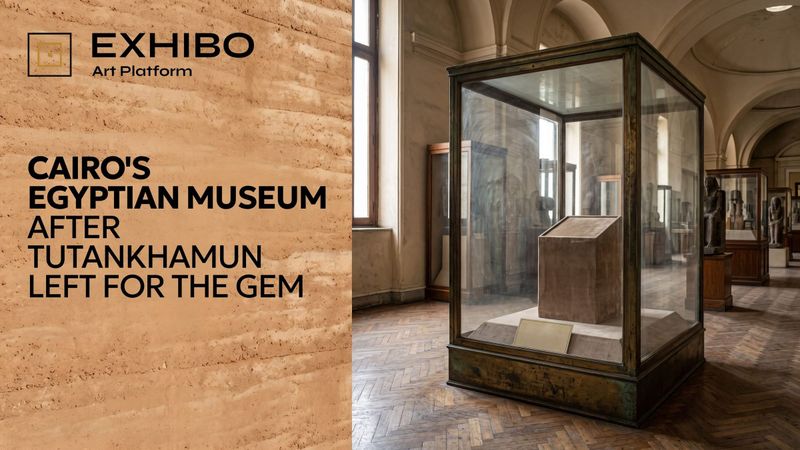
The House Whose Famous Guests All Moved Out
When Tutankhamun's mask left Cairo's Egyptian Museum for the Grand Egyptian Museum, it took the crowds with it — but not the collection. What remains in the old building on Tahrir Square turns out to be a stranger and more interesting museum than the one that emptied.
For most of a century, the golden mask of Tutankhamun stood behind glass on the upper floor of the Egyptian Museum in Cairo. In October 2025 it was driven out to Giza, and it was not the only thing to go: the royal mummies, the whole Tutankhamun collection, tens of thousands of objects have left the old museum for Egypt's gleaming new institutions.

Famous Restoration Controversies
Nine public disputes, chosen for a named conservation reason: overcleaning, amateur work, reconstruction ethics or missing records
Restoration fights are arguments about what a treatment removed, added or failed to record. This list sets selection criteria first, then walks nine documented cases from the Sistine Chapel and the National Gallery to Borja, Angkor Wat and Tutankhamun’s mask, with dates and 2026 locations checked against institutional sources.