Caring for Art
Sunlight, humidity, a badly chosen cleaning cloth, a removals van in August. Most damage to privately owned art is preventable and slow. What to do, what to leave to a conservator, and what it costs either way.
Prevention first
Most privately owned art fails slowly: ultraviolet bleaches colour, a humid cupboard softens canvas, a DIY wipe dissolves varnish, a courier turns a corner into a crease. This series covers owner-level care and logistics: when cleaning is safe and when it is not, how to pack and ship, how to store for years, what insurance actually covers, and what a condition report is for.
What belongs here
Practical guides for collectors and custodians. Cleaning limits and when to call a conservator. Domestic and international shipping. Packing for a house move. Long-term storage climate. Ultraviolet and light damage. Humidity and temperature targets. Crates and travel frames. Day-to-day handling. Condition reports for loans, sales and claims. Insurance for works you own.
Lab restoration chemistry, scientific imaging and famous restoration controversies belong to Art Conservation & Science. Career pathways into conservation belong to Art Careers. Display design for hot climates and hanging systems belong to the hanging-and-display series when that cluster is live.
Fences readers should expect
No solvent recipes that replace a paintings conservator. No DIY varnish removal. International shipping notes Gulf and GCC customs where they change the job, without becoming a legal advice desk. Cost ranges are indicative and dated in prose when sources allow. Platform sales pitches stay out.
How to use these guides
Read the direct answer first, then the method and the materials table. When a step needs a licensed shipper, a broker or a conservator, the text says so. Internal links point to this hub, to sibling care guides, and to Exhibo's museums directory when institutional practice is the model. British spelling in the body.
Articles in this series
- GuideCare
How to Clean a Painting (and When Not To)
Owner-level soft-brush dusting for stable oil paintings, and the hard line where only a paintings conservator should work
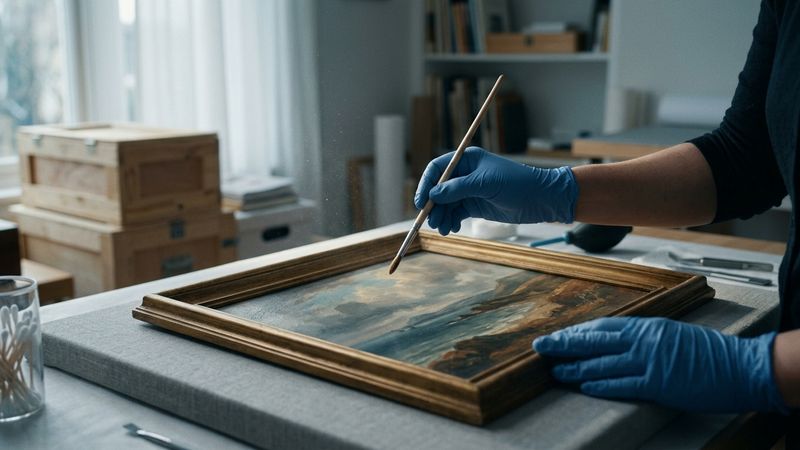
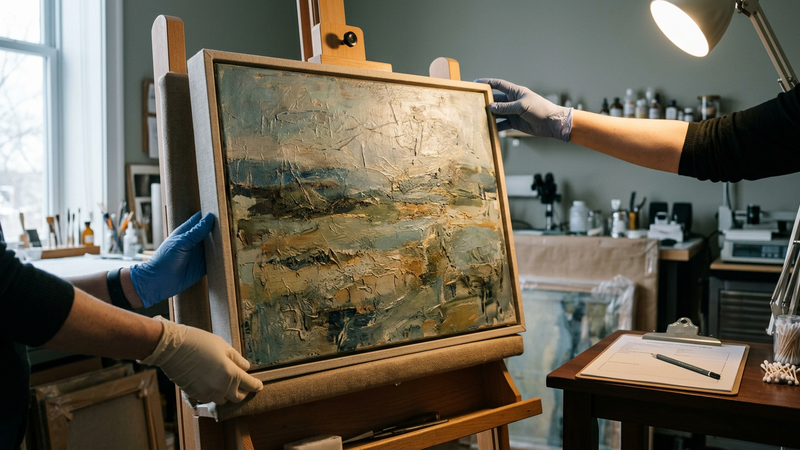
Most “how to clean an oil painting” advice online invites irreversible damage. This guide draws the museum line: call a conservator for grime, varnish and any unstable paint; reserve soft natural-hair dusting for stable surfaces; and show what professionals do differently, what treatment costs, and when to stop.
- GuideCare
How to Ship a Painting Safely
A practical guide to packing methods, courier liability limits and deciding when a fine-art shipper is safer for domestic transit
Shipping a painting means choosing the right network, packing against shock and abrasion, and documenting condition before the box leaves the wall. This guide covers domestic courier packing, materials specs, common edge cases, professional art logistics and realistic cost bands for UK and US routes.
- GuideCare
Art Insurance for Collectors
Agreed value, nail-to-nail transit and exclusions: how specialist collector policies settle claims when home contents cover stops short
Specialist art insurance schedules works at agreed values, often on an all-risks basis with worldwide transit. This practical guide covers policy types, schedules, claims, common exclusions, premium factors and when a fine-art broker earns their fee, without freeport storage or appraisal-career digressions.
- GuideCare
What Does an Art Conservator Do?
Day-to-day examination and treatment, ethics, museum labs versus private studios, and how owners commission care work
An art conservator examines, documents, stabilises and treats cultural objects under professional codes. This guide covers daily work, AIC and Icon ethics, institutional versus private practice, material specialisms, commissioning costs, and when to hire a conservator rather than clean at home.
- GuideCare
How to Store Paintings Long-Term
Climate bands, sliding racks, safe wrapping and home-versus-offsite choices drawn from museum collection-storage practice
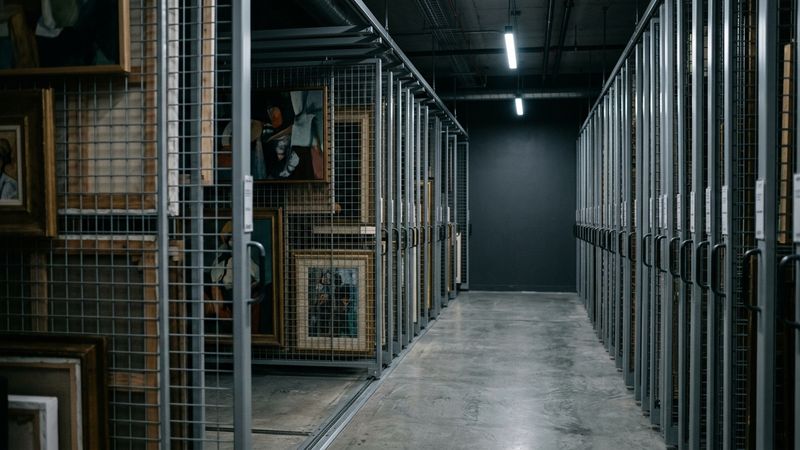
Long-term painting storage means vertical racks, wraps that never touch paint, and a room that holds a stable mid-range climate year-round. This guide covers room preparation, rack systems, wrapping, backing boards, cited RH and temperature bands, edge cases, professional stores, indicative costs and when a home setup stops being enough.
- GuideCare
How to Pack Art for Moving
Surface barriers, corner guards, upright boxing for house moves, and when DIY packing should yield to fine-art handlers
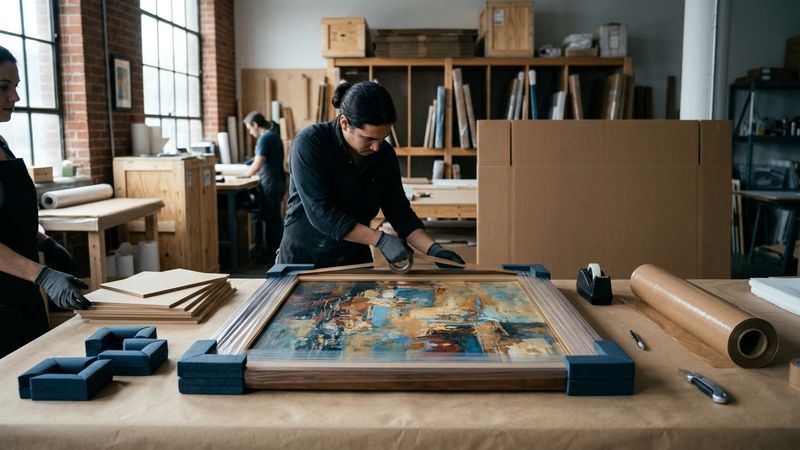
Pack paintings for a house move with a surface barrier, rigid corners, cushioning and an upright picture box. This guide covers framed glass, bare canvas, works on paper and small sculpture, a materials failure table, indicative costs, and when a house move needs fine-art handlers instead of DIY.
- GuideCare
Shipping Art Internationally
Cross-border customs routes, ATA Carnets, UK export licences and Gulf import notes for exhibition and sale shipments
Moving a work across a border means choosing temporary or permanent entry, lining up licences and invoices, and clearing customs with values that stand up to audit. This guide covers carnets, UK export controls, document packs, GCC route differences and when to hire a broker rather than a parcel label.
- GuideCare
What Actually Fades: UV and Artwork
Lux budgets, UV limits, window films and conservation glazing for home display, drawn from CCI, Smithsonian and Getty practice
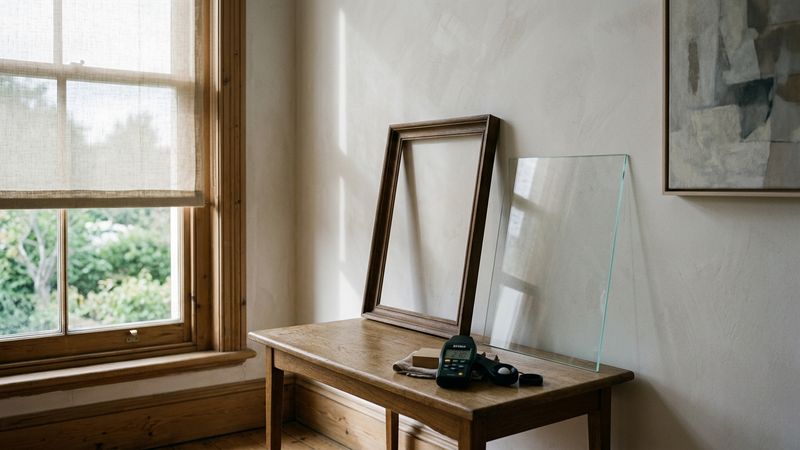
Sunlight fades paintings through visible light as well as UV, and damage tracks lux multiplied by hours on the surface. This guide sets museum-derived lux and UV targets by medium, then covers meters, window films, frame glazing, LEDs, edge cases, costs and when a conservator should examine the work.
- GuideCare
Humidity and Temperature Specs for Art
Relative humidity bands, temperature limits and ASHRAE types for paintings, with monitoring and material exceptions
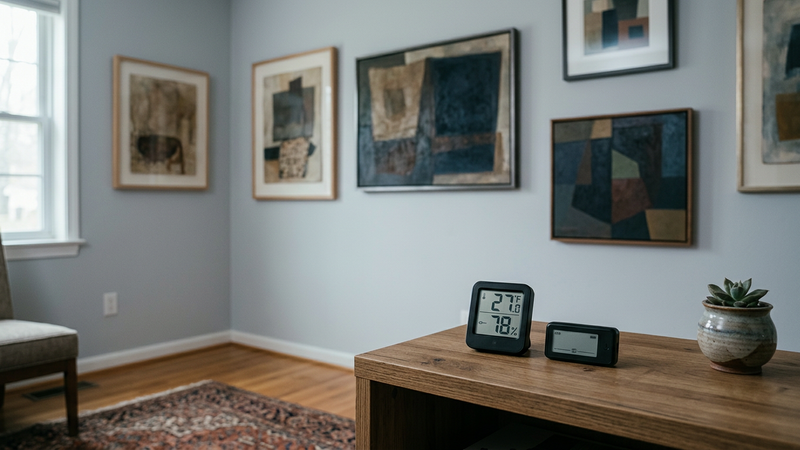
Ideal humidity for artwork sits near a stable mid-range band, not a single magic number. This table-led guide compares CCI, Bizot, Icon, NPS and ASHRAE setpoints, then covers how to monitor the room, which materials break the mid-range rule, what museums do now and what holding a safe climate costs.
- GuideCare
Crates, Travel Frames and Handling Kit
Soft packs, HTS travel frames, plywood crates, foam specs, sensors and when to commission a professional crate shop
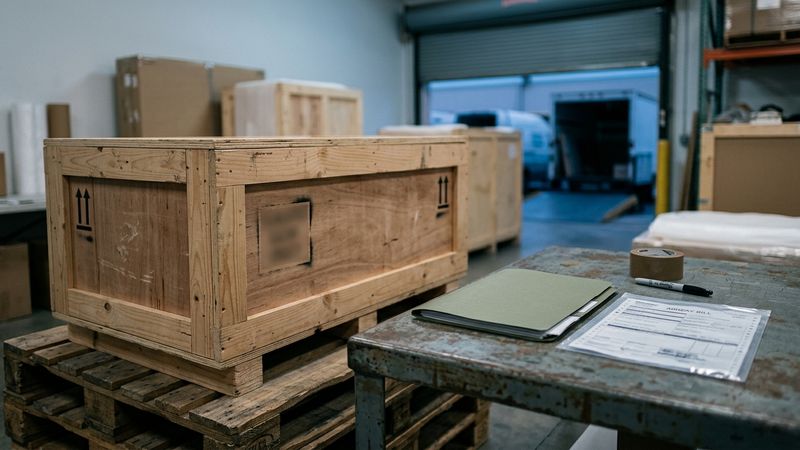
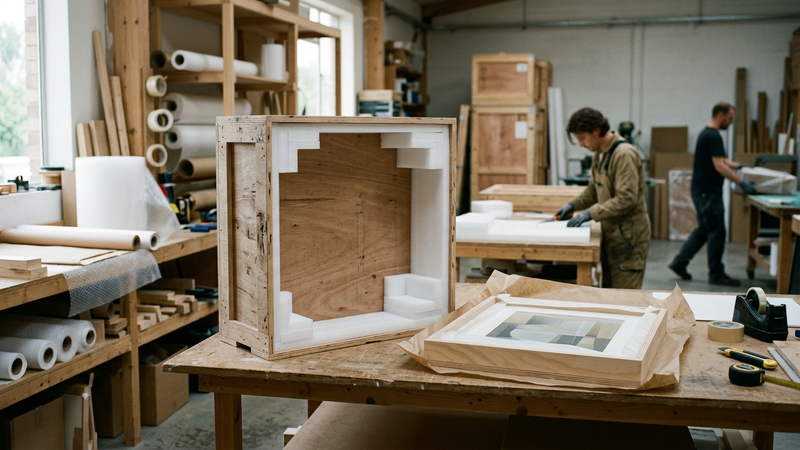
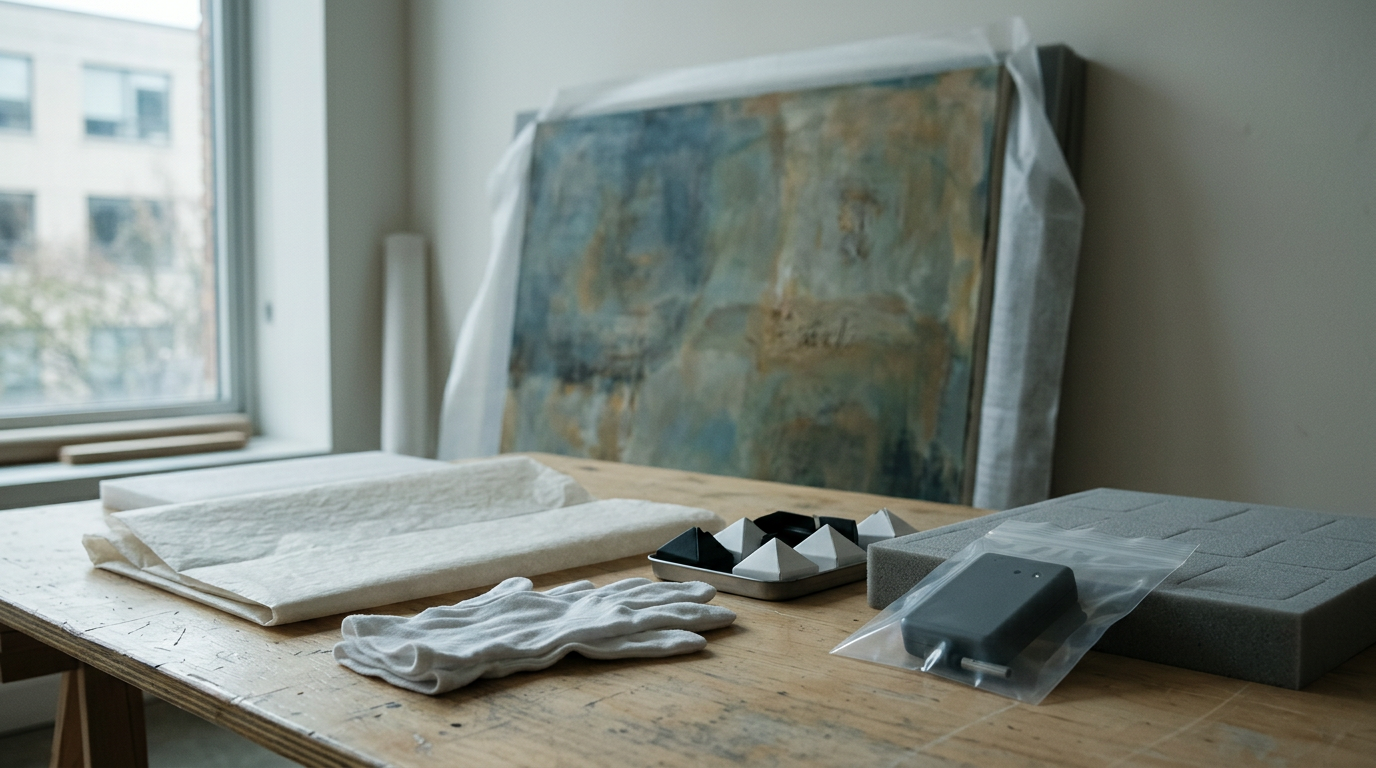
An art shipping crate is a designed system: travel frame or soft pack, foam that floats the work, a rigid shell, and often climate barriers plus shock sensors. This guide covers crate types, build specs, materials, kit contents, costs and when to commission a maker rather than improvising plywood.
- GuideCare
How to Handle Artwork
Gloves, two-person lifts, face-out carrying and padded rests, plus when household art needs trained specialist handlers
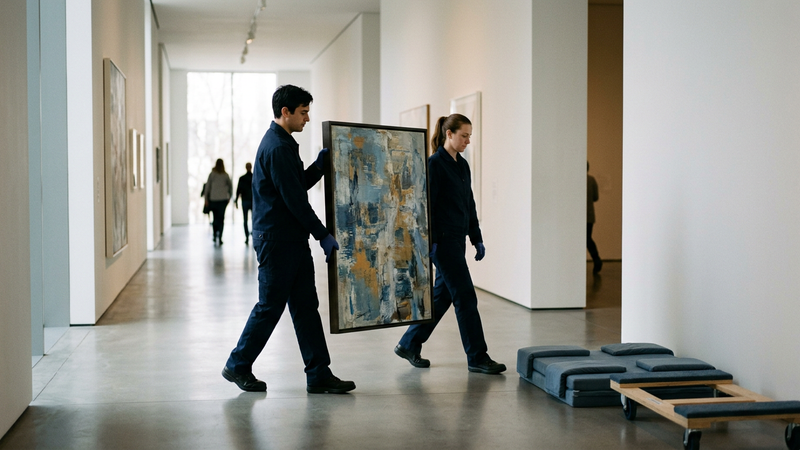
Handle paintings and objects with clean hands or the right gloves, two people for anything awkward, and the painted face towards the carriers. This practical guide covers assessment, lifts, orientation, resting blocks, the gloves debate, a domestic kit table, fragile edge cases, professional practice, costs and when to hire trained art handlers.
- GuideCare
What Is a Condition Report?
A dated record of an artwork’s physical state for loans, sales, claims and intake, with the fields examiners actually fill
An art condition report records the physical state of a work at a named date, with photographs and controlled vocabulary. This practical guide covers when you need one, standard fields, CCI and Spectrum report types, who writes it, typical fees, and how the document differs from an appraisal or a treatment proposal.