Art Conservation & Science
X-rays that find a different painting underneath, craquelure that dates a canvas, pigment analysis that ends an attribution. Conservation is the closest art history gets to forensics. What the science can and can't prove.
What the science can prove
A painting is a physical object before it is a masterpiece. Binders yellow. Grounds crack. Underdrawings survive as carbon lines that infrared can still read. Conservators and conservation scientists treat those facts as evidence: of how the work was made, how it has aged, and what a later hand added. This series stays in the lab and the treatment studio. It explains restoration as a documented process, imaging as a set of tools with limits, and dating methods that can rule claims in or out without pretending a single test settles authorship.
Searchers arrive with mixed motives. Some want to know why a restored ceiling looks too bright. Some have a craquelure pattern they want named. Some hope science will prove a bargain is genuine. The articles answer those questions with institutional sources (museum conservation departments, AIC, Icon, ICOM-CC, published technical studies) and with named case studies you can still check. They do not teach owners how to clean a canvas at home. That work belongs with Caring for Art, which leads with when to stop and call a conservator.
Restoration, imaging, and the ethics of change
Cleaning, filling and retouching alter what the public sees. So do decisions not to intervene. Famous controversies (Sistine, Ecce Homo in Borja, overcleaned portraits) are not gossip filler here; they are evidence of competing values: original surface versus later varnish, liturgical brightness versus historical dirt, reversibility versus a treatment that cannot be undone. Preventive conservation sits beside treatment: light, humidity, pests and packing prevent the damage that restoration then has to negotiate.
Technical imaging (infrared reflectography, X-radiography) and material analysis (pigments, radiocarbon, binders) have changed attribution debates. They also fail in predictable ways. Infrared sees carbon underdrawing, not every colour change. Radiocarbon dates organic material, not the moment a forger reused an old panel. Craquelure can be aged, faked or misread. Each guide states those limits in the same breath as the method.
Map of the ten articles
Start with how paintings are restored if you need the process spine. Pentimenti and craquelure explain two of the most searched surface phenomena. Forgery detection and imaging pieces stay on science rather than true-crime narrative. Darkening and yellowing, then dating methods, cover chemistry and chronology. Restoration controversies collect the public fights. Preventive conservation and time-based media close the set: one for keeping objects stable, one for works that exist as files, equipment and display instructions.
Internal links point to this hub, to sibling science pages, and to Exhibo’s museum directory when a collection’s conservation studio or technical study is the place to look next. Career training for conservators already lives in Art Careers. Owner packing, shipping and “how to clean an oil painting” stay in Caring for Art when that cluster publishes.
How to use these guides
Read them as a map of what laboratories and studios can show, not as a kit for amateur treatment. If a passage names a solvent, a humidity band or an imaging wavelength, it is describing professional practice with sources, not inviting you to repeat it on a work you own. When two technical studies disagree, the article names both. Dates, locations and programme names are checked against museum and standards-body pages current at the time of writing; confirm before you travel or cite a live display.
The tone stays concrete. Named paintings, published radiographs and conservation codes matter more than metaphors about “secrets under the paint.” Science here is a set of methods with error bars.
Articles in this series
- GuideConservation
How Paintings Are Restored
From examination to varnish: how conservators clean, fill and retouch easel paintings under the ethics of reversibility
Conservators restore paintings through examination, cleaning, filling, retouching and varnish, under codes that demand reversibility. This guide covers studio chemistry, the museum treatment sequence, how the profession formed, why old linings fail, and how private work is priced, without amateur solvent recipes.
- GuideConservation
Pentimenti: The Paintings Underneath
A change of mind in paint: how pentimenti form, why oil films reveal them, and how to tell an artist's revision from later overpaint
Van Eyck shifted a hat brim. Rembrandt painted out helmet feathers. Manet uncrossed a barmaid's arms. Those traces are pentimenti: the painter's own revisions, distinct from later overpaint and from a second picture on a reused canvas. Museum studies in London, Madrid, Amsterdam and New York show how the term is used.
- GuideConservation
How Forgeries Are Detected
Pigment anachronism, imaging and dating: laboratory methods that catch a false claim, and the limits that leave authorship unproved
A laboratory can date a pigment, a panel or a binder. It cannot, on its own, name the painter. This guide sets out the chemistry of anachronism, the order of a technical examination, and the known failure modes of dendrochronology and radiocarbon, with published cases from the National Gallery, the Getty and independent pigment studies.
- GuideConservation
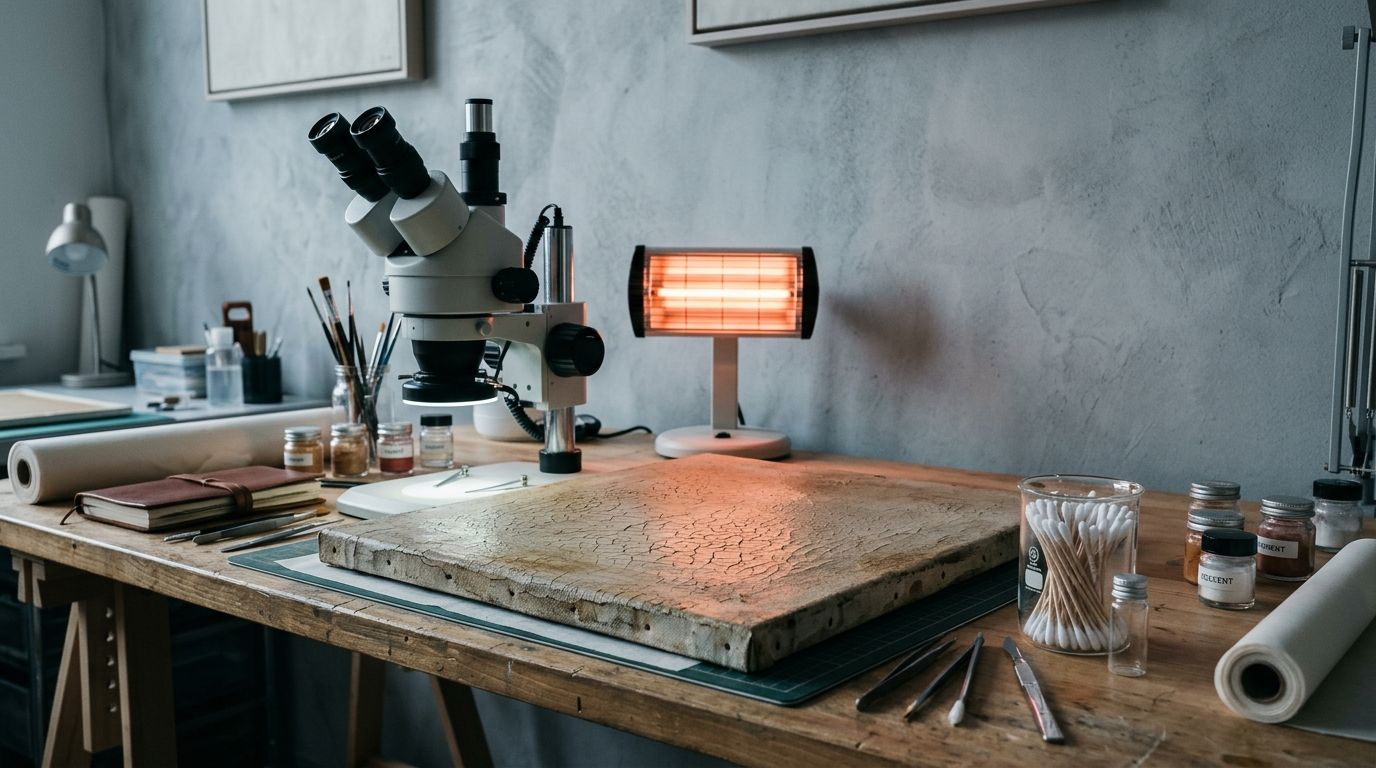
What Is Craquelure?
Age cracks, drying cracks and impact webs: how craquelure forms in oil, tempera and ground, and how to tell it from craft crackle
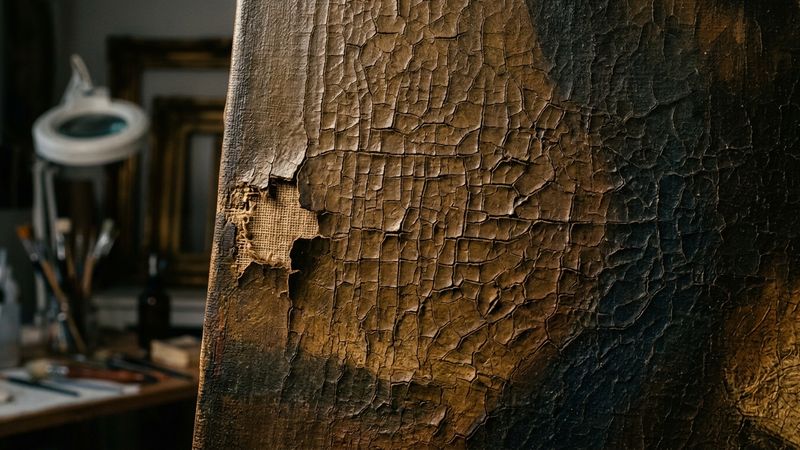
Conservators read craquelure as a map of how paint, ground and varnish have shrunk, flexed or taken a blow. Age, drying and mechanical webs look different under raking light; Italian panels crack unlike Dutch canvases. Six museum pictures show the types. Craft crackle glaze is a different object.
- GuideConservation
Infrared and X-Ray Imaging of Paintings
How infrared reflectography, IR photography, X-radiography and MA-XRF record underdrawings, paint structure and elemental maps
Carbon drawing absorbs infrared; lead white blocks X-rays; calcium and mercury light up on elemental maps. This guide sets infrared reflectography beside IR photography, X-radiography and MA-XRF: physics, a study protocol, the people who built the kit, and campaigns at the NGA, Rijksmuseum, Getty and Met.
- GuideConservation
Why Paintings Darken and Yellow
Linseed oil, aged varnish, dirt and unstable pigments each yellow or darken a picture, and cleaning reverses only some of those changes
Old pictures look brown for mixed reasons: soot, oxidised varnish, yellowed linseed oil, and pigments that have changed in the film. Conservators can lift dirt and later varnish in many cases. They cannot restore copper greens gone brown or lead white turned transparent. The chemistry, the history of noticing it, and the limits of treatment.
- GuideConservation
Radiocarbon and Pigment Dating
How carbon-14, pigment first-use dates and tree rings date a painting, and why those laboratory results still cannot name the artist
A date on a painting is a date on a material: flax in the canvas, oil in the binder, a growth ring in a panel, a pigment that did not exist before a given year. This guide covers radiocarbon including the bomb peak, pigment terminus post quem, dendrochronology and lead isotopes, then the failure modes that keep a calendar from proving authorship.
- GuideConservation
Famous Restoration Controversies
Nine public disputes, chosen for a named conservation reason: overcleaning, amateur work, reconstruction ethics or missing records
Restoration fights are arguments about what a treatment removed, added or failed to record. This list sets selection criteria first, then walks nine documented cases from the Sistine Chapel and the National Gallery to Borja, Angkor Wat and Tutankhamun’s mask, with dates and 2026 locations checked against institutional sources.
- GuideConservation
Preventive Conservation, Explained
How museums slow collection damage with climate, pests and risk, using sourced ranges rather than a single 50% RH target
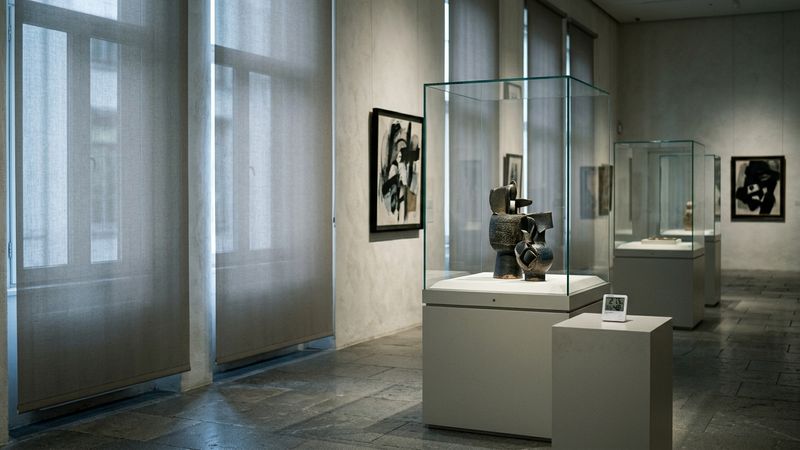
Staff keep collections usable by managing climate, pests, storage and risk at room scale. This guide sets out ICOM-CC and AIC definitions, CCI’s ten agents of deterioration, and museum humidity, temperature and light bands with their source caveats. It covers risk ranking, historic-house limits, monitoring costs and when to hire a specialist.
- GuideConservation
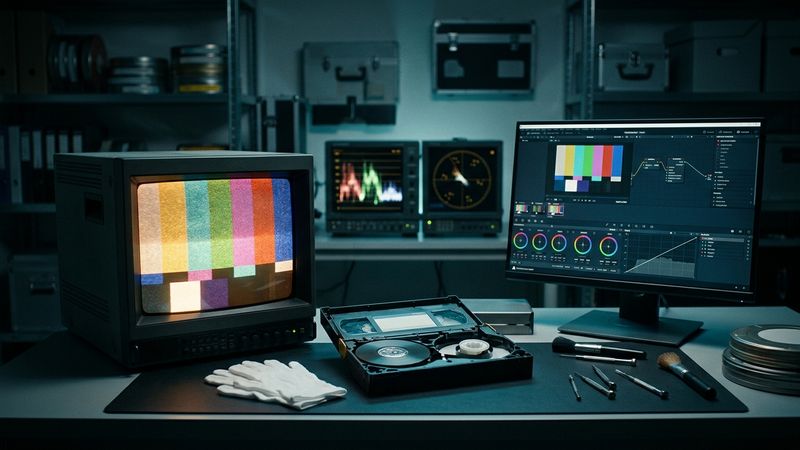
Conserving Time-Based Media
How conservators keep video, film, software and installation playback working as tapes fail and display equipment goes out of production
Tate, MoMA, the Guggenheim and the Met keep video, film and software playable: they document artist intent, migrate analogue signals and decide which decks stay dedicated to the work. This guide covers formats, ingest, Variable Media strategies, how the specialism formed, and current costs for museums.