Malqata, Palace City of Amenhotep III
The mud-brick 'House of Rejoicing' of Amenhotep III, a festival city with painted palaces beside a vast harbour.
The House of Rejoicing
Malqata is the site of the palace city of Amenhotep III on the West Bank of Luxor, in the desert south of Medinet Habu. Its ancient name was the House of Rejoicing. The Arabic name is usually explained as "the place where things are picked up", after the scatter of ancient debris on the surface. Amenhotep III ruled in the second half of the 18th Dynasty. He was the father of Akhenaten and very likely the grandfather of Tutankhamun.
A city built for a jubilee
In the thirtieth year of his reign, around 1360 BC, the king celebrated his heb-sed, the royal jubilee. For it he undertook a huge building project: an artificial harbour at the edge of the desert, the Birket Habu, linked to the Nile, with a festival city laid out at its north-western corner. The city held ceremonial buildings, royal palaces and administrative quarters, with villages for the workers, artisans and servants who supplied the festival.
After the first jubilee, which lasted a month or more, the city stood empty until the king's thirty-fourth year and a second heb-sed. New buildings went up for it, among them a temple to the Theban god Amun. A third jubilee followed two years later, when the existing buildings were refurbished.
Painted mud brick
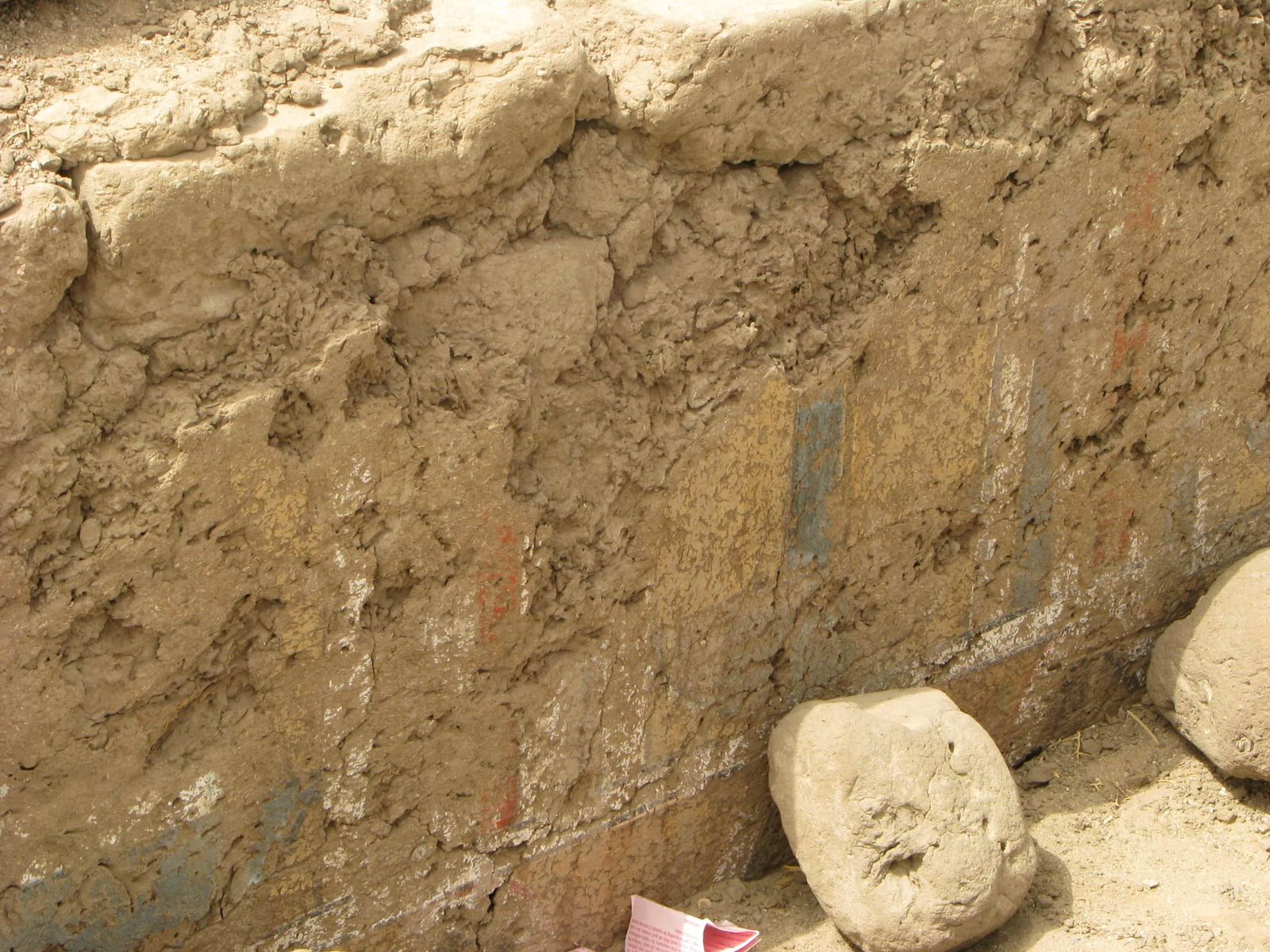
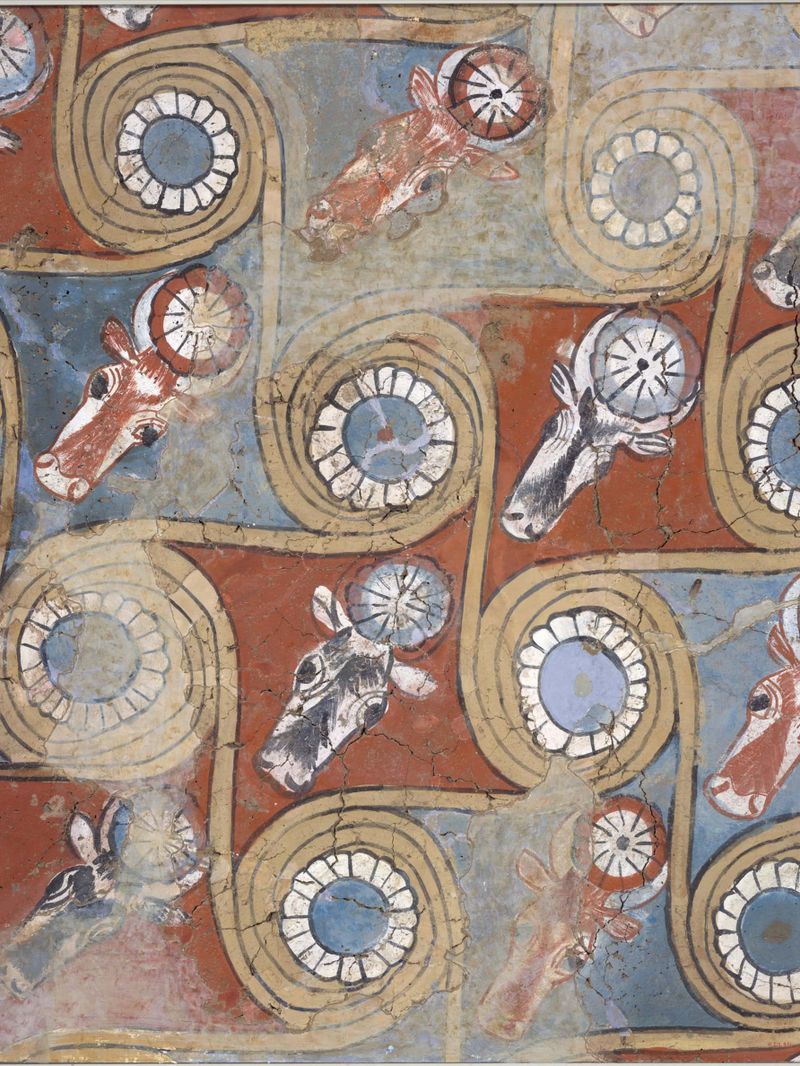
The palaces were built mainly of mud brick, many bricks stamped with the king's cartouche. The king's apartments held audience halls and festival halls. Queen Tiye, his principal wife, had her own suite. Inside, walls, floors and ceilings were plastered and painted: marsh scenes with birds and fish, floral friezes and ceilings with interlocking spirals and the heads of bulls. Glazed tiles added colour to some rooms.
Excavation
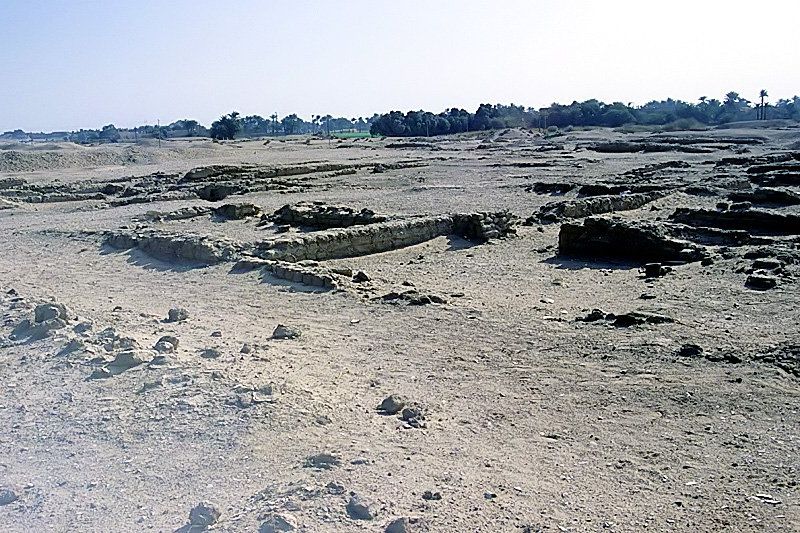
The Metropolitan Museum of Art carried out six seasons of excavation here between 1910 and 1920. Its share of the finds is shown in New York. Since 2008 the Joint Expedition to Malqata, sponsored by the Met and the Ancient Egyptian Heritage and Archaeology Fund with the Egyptian antiquities authorities, has explored unexcavated areas and conserved the king's palace. On the ground today the site is a wide field of low mud-brick walls, with the mounds of the ancient harbour still visible across the plain.
Exhibo editorial
Everything else on the West Bank was built for eternity in stone. Malqata was built for a party in mud brick. That is its charm and the reason it is so easy to overlook: no columns, no colossi, only the outline of rooms where a king once held court among painted birds.
The Colossi of Memnon give you the stone face of Amenhotep III. Malqata gives you his house. Walk out along the low walls in the early morning and picture the colour that once covered them, with barges on the harbour bringing guests to the jubilee.
Gallery
How to find it
Malqata lies in the desert south of Medinet Habu on the West Bank, reached by the road running south past the Medinet Habu temple. It is an excavation site rather than a fitted-out monument, with no visitor facilities. Ask at the West Bank ticket office or at Medinet Habu about current access before walking out.
Similar places
All places
News by Exhibo
Editorial coverage on Exhibo
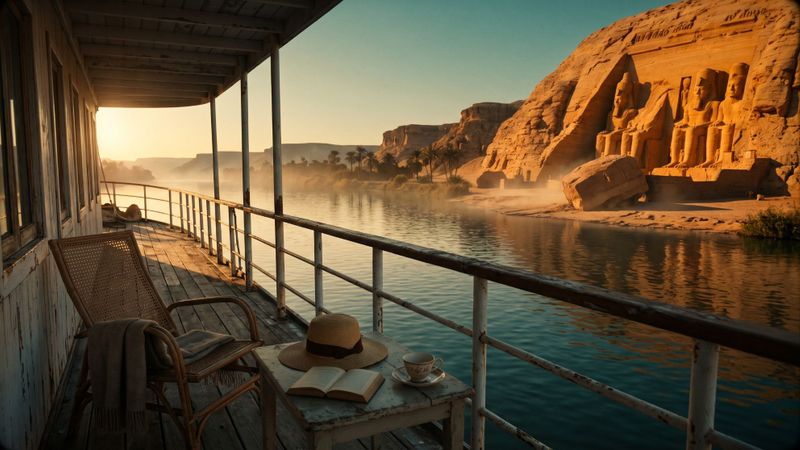
Agatha Christie's Egypt: Three Abu Simbels, a Pharaoh and a Murder on the Nile
Christie set one famous murder on the Nile and two lesser-known stories in ancient Egypt. The temples, letters and film sets behind all three.
The Abu Simbel of Death on the Nile has since moved up a hill. Christie's two other Egyptian stories lead to a pharaoh's dismantled temples at Karnak and a farmer's 4,000-year-old letters now in New York.
Unearthing the Golden City: Daily Life in Ancient Egypt
How a newly excavated workers' quarter reframes pharaonic history
A major survey travels to the West Coast, bringing ancient artefacts that shift focus from royal opulence to the daily lives of those who built the empire.
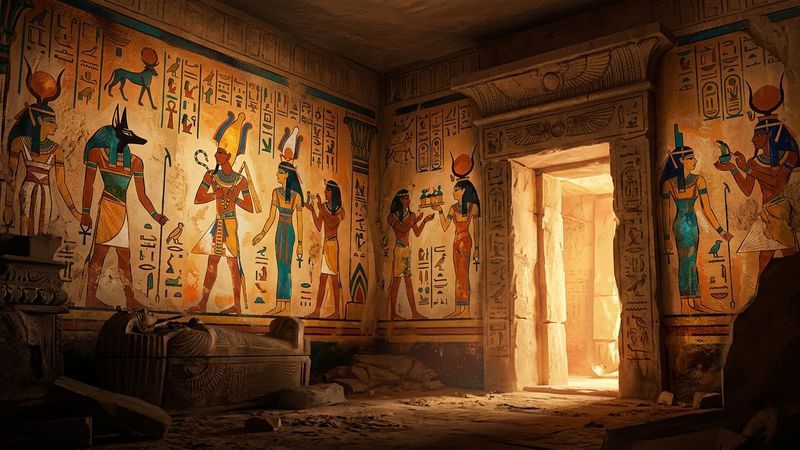
Ancient Egyptian Tomb with Vibrant Murals Unearthed in Luxor
Dutch excavation reveals well-preserved Ramesside period burial with rare coloured wall paintings
Archaeologists have uncovered a 3,000-year-old tomb on Luxor's west bank featuring brightly painted murals that provide valuable insights into elite burial practices during Egypt's New Kingdom period.