
Medinet Habu (Temple of Ramesses III)
The best-preserved mortuary temple of the west bank — vivid reliefs, painted ceilings and the battle against the Sea Peoples.
The last great temple of the New Kingdom
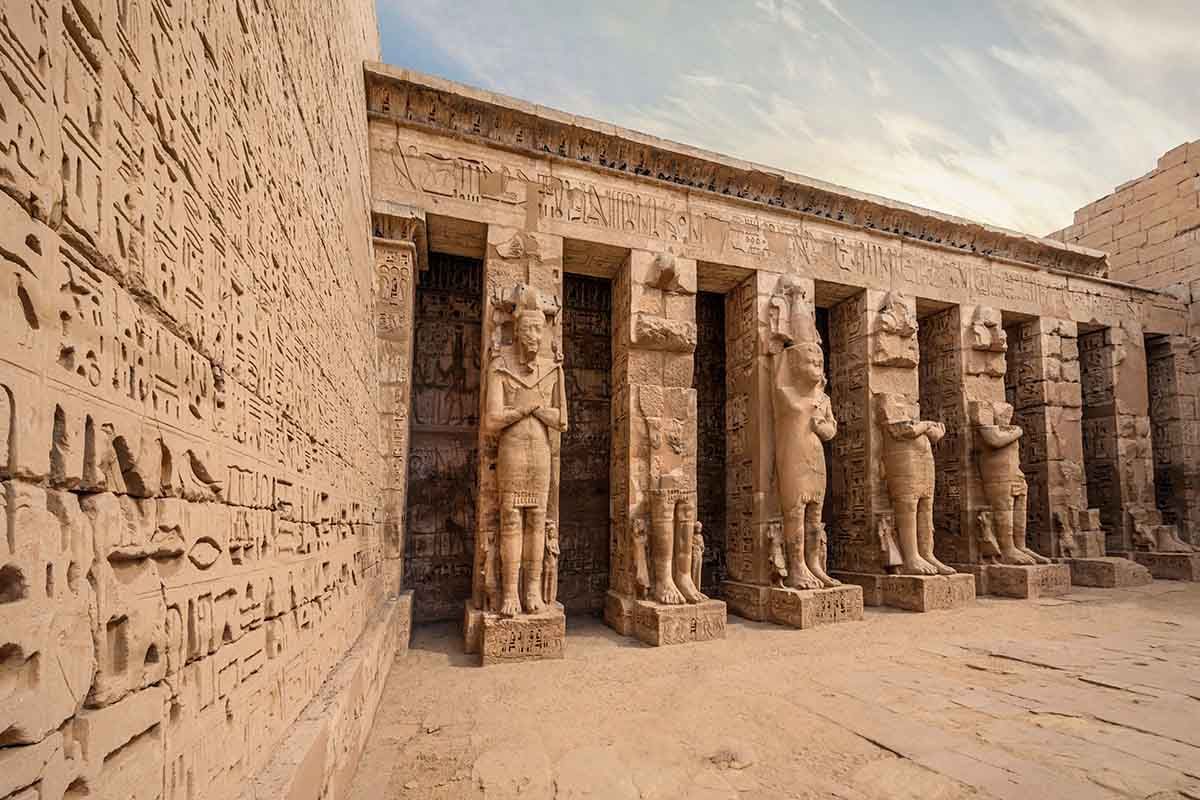
Medinet Habu, at the southern end of Luxor's west bank, is the mortuary temple of Ramesses III, the last great warrior pharaoh of the New Kingdom, who reigned in the early twelfth century BC. Built on a site already sacred, beside an earlier temple of Amun begun under Hatshepsut and Thutmose III, it is one of the largest and best-preserved temples in Egypt. Its plan closely follows the Ramesseum of Ramesses II, which Ramesses III admired and imitated.
A fortified temple
The complex is surrounded by massive mud-brick walls and entered through a monumental gateway in the form of a migdol, a fortified tower of a type known from Syria, whose upper rooms are decorated with intimate scenes of the king with women of his household. Behind it rise the temple's pylons and two great courts, their walls and columns covered with deeply carved reliefs that still retain much of their original paint — especially in the second court and on the ceilings, where the blues, reds and yellows remain startlingly fresh.
The Sea Peoples
The outer walls carry the most famous historical reliefs of the temple: Ramesses III's campaigns against the Libyans and, above all, his victory over the "Sea Peoples", a coalition of migrants and raiders who threatened the eastern Mediterranean around 1175 BC. The naval battle on the north wall is the earliest detailed depiction of a sea battle in history, showing ships, warriors with horned and feathered helmets, and the fate of the defeated. Elsewhere, scenes of a royal hunt and of temple festivals complete the record.
A town inside the walls
In later centuries a town grew up within the enclosure; in the Coptic period it was the town of Djeme, whose houses and a church were built inside the temple. The temple was documented in detail by the University of Chicago's Epigraphic Survey, which has been based in Luxor since 1924. It is part of the UNESCO World Heritage Site of Ancient Thebes with its Necropolis.
Exhibo editorial
If you see only one temple on the west bank besides Hatshepsut's, make it Medinet Habu. It is quieter, bigger and in many ways more astonishing: walk through the fortress gate into the second court and look up, and the colours are still there — the blue of the ceilings, the reds and yellows of the gods' robes — as if the painters had packed up last season.
Then walk round the outside walls with the sun low and raking across the reliefs. The sea battle against the Sea Peoples is right there in stone, three thousand years old, ships tangled and warriors falling into the water: the first war reportage in history. Afternoon light, few people, extraordinary carving — it is the west bank at its best.
How to find it
Medinet Habu is at the southern end of the West Bank necropolis, near the village of Kom Lolah, about 4 km from the Nile crossing by taxi or bicycle. Enter through the fortified migdol gateway on the east side, then walk through the first and second courts towards the sanctuary; the sea-battle reliefs are on the outer north wall, reached by walking round the temple to the left.
Similar places
All places
News by Exhibo
Editorial coverage on Exhibo
Unearthing the Golden City: Daily Life in Ancient Egypt
How a newly excavated workers' quarter reframes pharaonic history
A major survey travels to the West Coast, bringing ancient artefacts that shift focus from royal opulence to the daily lives of those who built the empire.
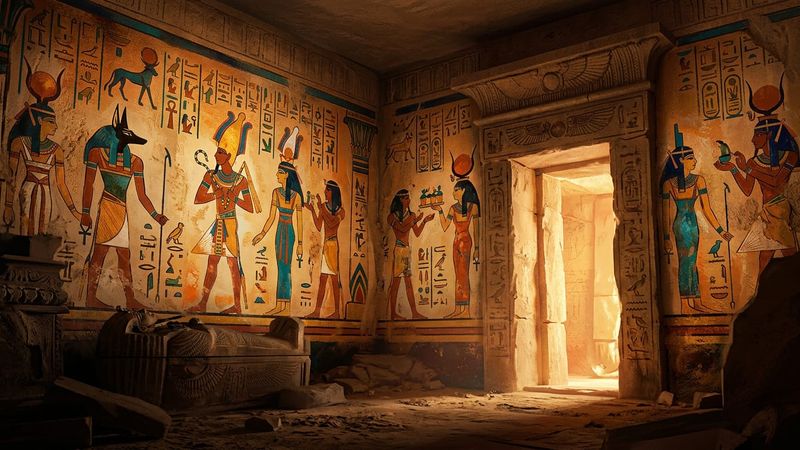
Ancient Egyptian Tomb with Vibrant Murals Unearthed in Luxor
Dutch excavation reveals well-preserved Ramesside period burial with rare coloured wall paintings
Archaeologists have uncovered a 3,000-year-old tomb on Luxor's west bank featuring brightly painted murals that provide valuable insights into elite burial practices during Egypt's New Kingdom period.