
Qusayr Amra
An Umayyad bathhouse in the eastern desert whose walls and domes are covered in 8th-century paintings.
A bath in the desert
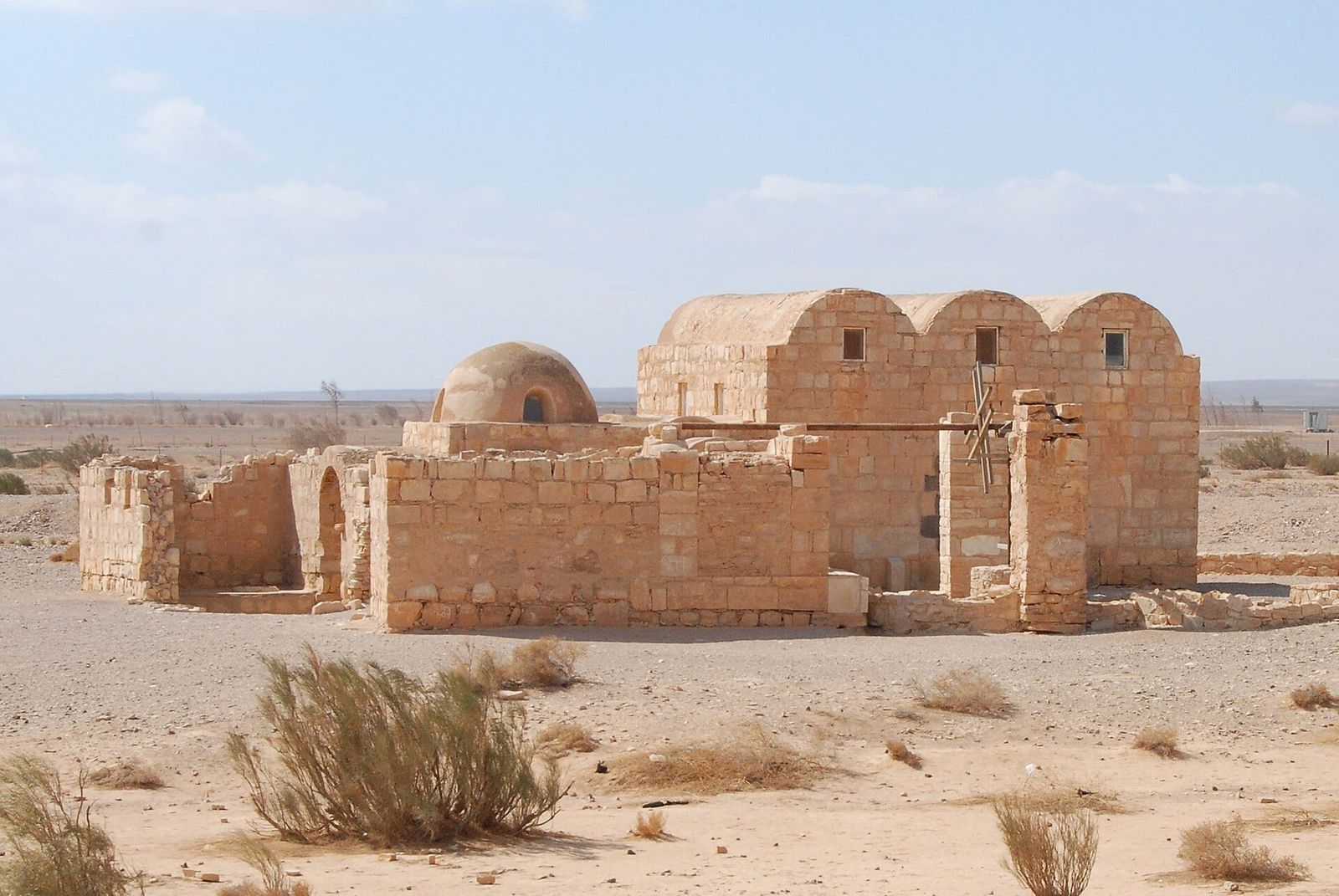
Qusayr Amra, the little palace of Amra, is an Umayyad bathhouse and reception hall of the early eighth century in the eastern desert of Jordan. UNESCO inscribed it as a World Heritage Site in 1985. It is one of the most important monuments of early Islamic art because of the paintings that cover almost every surface inside.
The building
It is built of local limestone and basalt. A vaulted audience hall with a small alcove for a throne opens onto a bath of three rooms: a changing room, a warm room and a hot room. The plan follows Roman and Byzantine baths. Outside are a well, a system for lifting water and a furnace that sent hot air under the floors. The building is usually attributed to the Umayyad prince al-Walid, later the caliph al-Walid II. It is dated between the 720s and the 740s.
The paintings
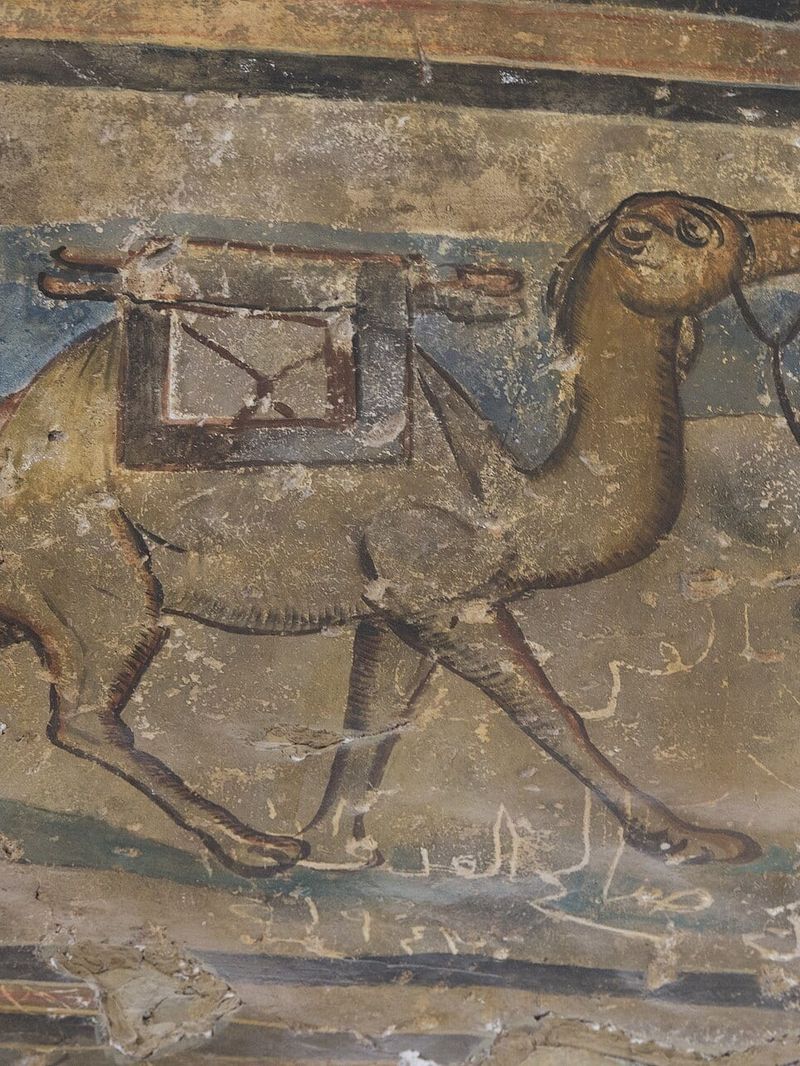
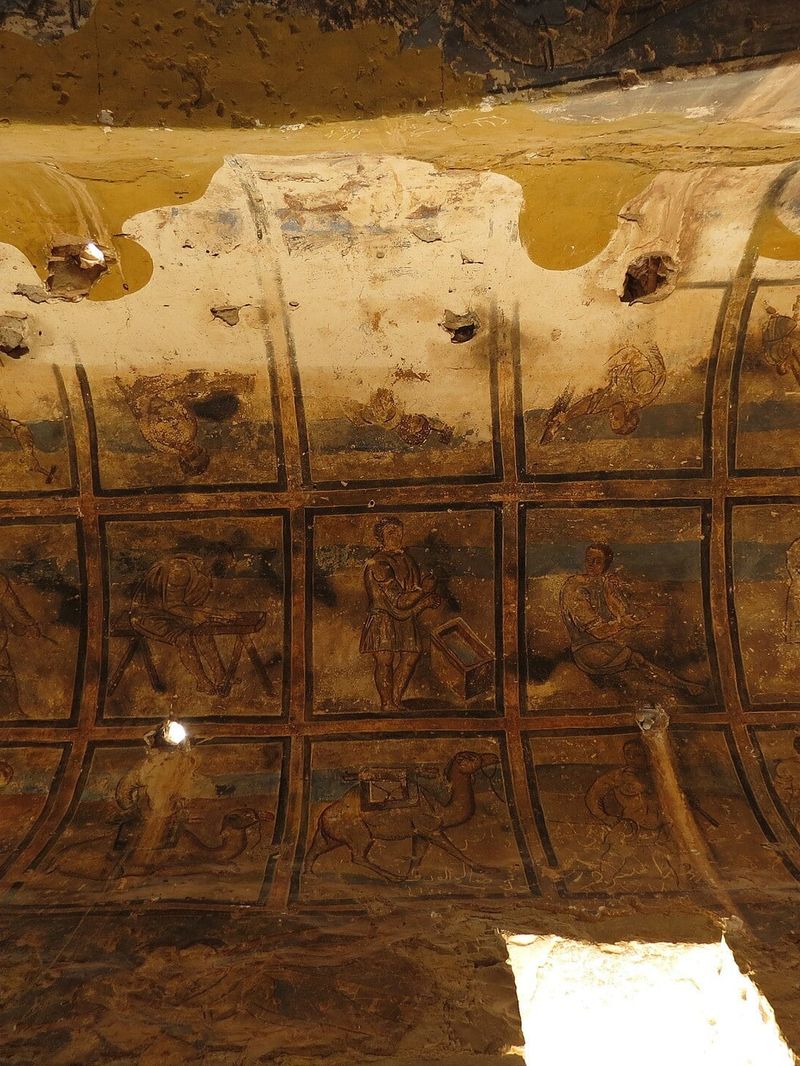
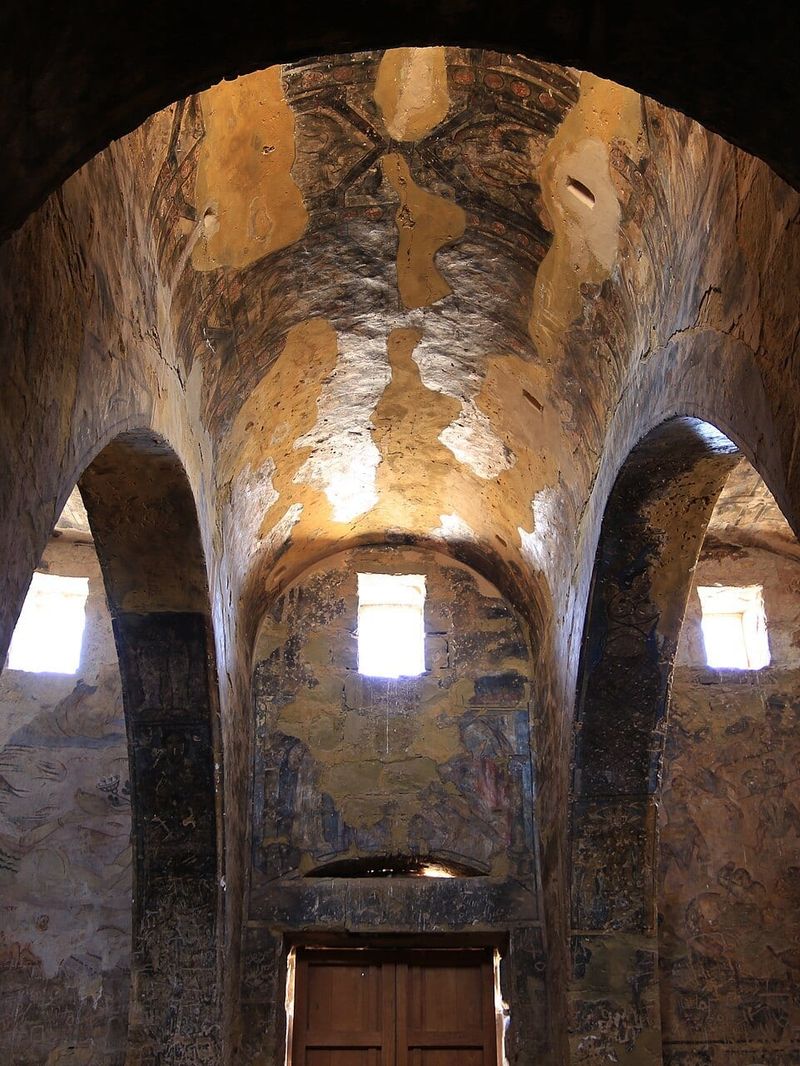
The paintings form a rare body of secular early Islamic imagery. Onagers are driven into nets during a hunt. There are bathers, dancers and musicians, craftsmen at work, figures labelled in Greek and animals playing instruments. One wall carries the painting known as the Six Kings: rulers of lands defeated by or subject to the caliphate, among them the Byzantine emperor, the Visigothic king of Spain, the Sasanian shah and the Negus of Abyssinia, named in Greek and Arabic. The small dome of the hot room shows the night sky with constellations and the signs of the zodiac. It is one of the oldest surviving pictures of the heavens painted on a dome.
Conservation
Cleaning and conservation in recent decades have brought back colours and details long hidden under soot and old varnish. There is a small visitor centre by the road. On the same highway lie Qasr Kharana and Qasr al-Azraq.
Exhibo editorial
From the road it is three low humps of stone on a gravel plain. Step through the door and the walls start talking. A woman bathes, a bear plays a lute, workmen haul stone, a dancer turns mid-step. This was a prince's idea of a good afternoon and thirteen centuries later it still reads like one.
Give your eyes a minute in the hot room before you look up. The zodiac on that small dome was painted for someone lying in steam, staring at the ceiling, while outside the real stars over the desert were as bright as anywhere on earth.
Gallery
How to find it
About 85 km east of Amman on Highway 40 towards Azraq. Park at the visitor centre and walk a few hundred metres down the path to the building. The interior is dim, so bring a torch or use your phone light.
Similar places
All places
News by Exhibo
Editorial coverage on Exhibo
Filmed, but Not Recorded: The Arab World’s Missing Film Locations
Wikidata knows Gladiator was filmed in Morocco. It doesn’t know where.
Ouarzazate is the second most filmed place in the Middle East and North Africa, yet 25 of its 27 productions are recorded only in Wikipedia prose. We compared filming records worldwide and found that in the Arab world, Wikidata usually knows the country but not the place.
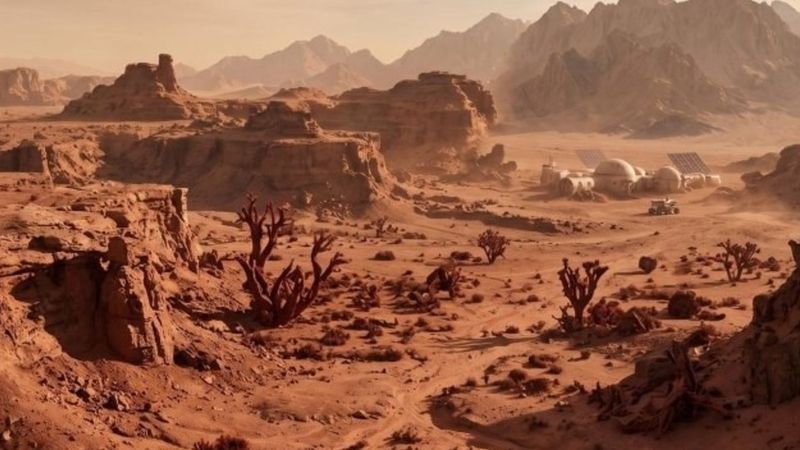
Why Every Sci-Fi Desert Looks Arab
From Arrakis to Tatooine, when a film wants a desert to feel ancient, prophetic and alien, it reaches for an Arab and Berber vocabulary — and reveals more about the West that built it than the region it borrows from.
The wrapped faces, the trilling women, the barely-displaced Arabic: cinema's alien deserts keep sounding Arab. But the vocabulary was assembled in the West — from Orientalist painting to Lawrence to Dune — and it says more about who is looking than about anyone being looked at.
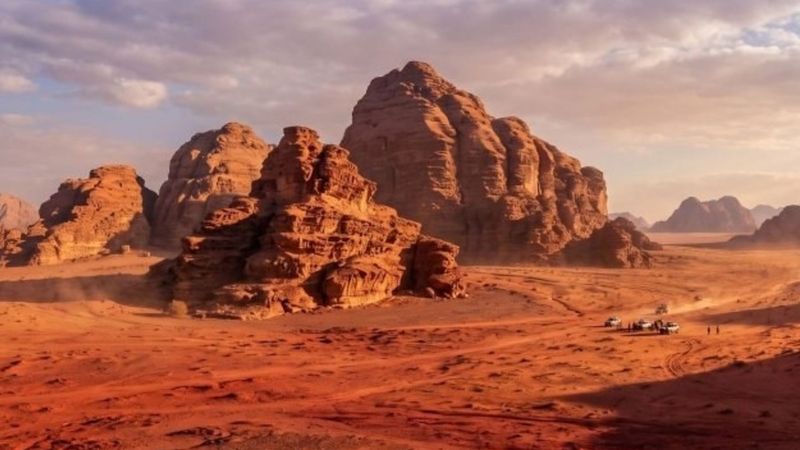
Why Wadi Rum Keeps Playing Mars: A Desert That Is Right About the Wrong Planet
A valley in southern Jordan has become cinema's favourite Mars — not because it is like the planet, but because it looks like the one we carry in our heads.
Put Wadi Rum beside a rover photograph and you can't tell which is Mars. But the desert shares almost nothing with the real planet except its colour — and lately, the illusion has grown powerful enough that real space missions have come to Jordan to rehearse.