Abu Darwish Mosque
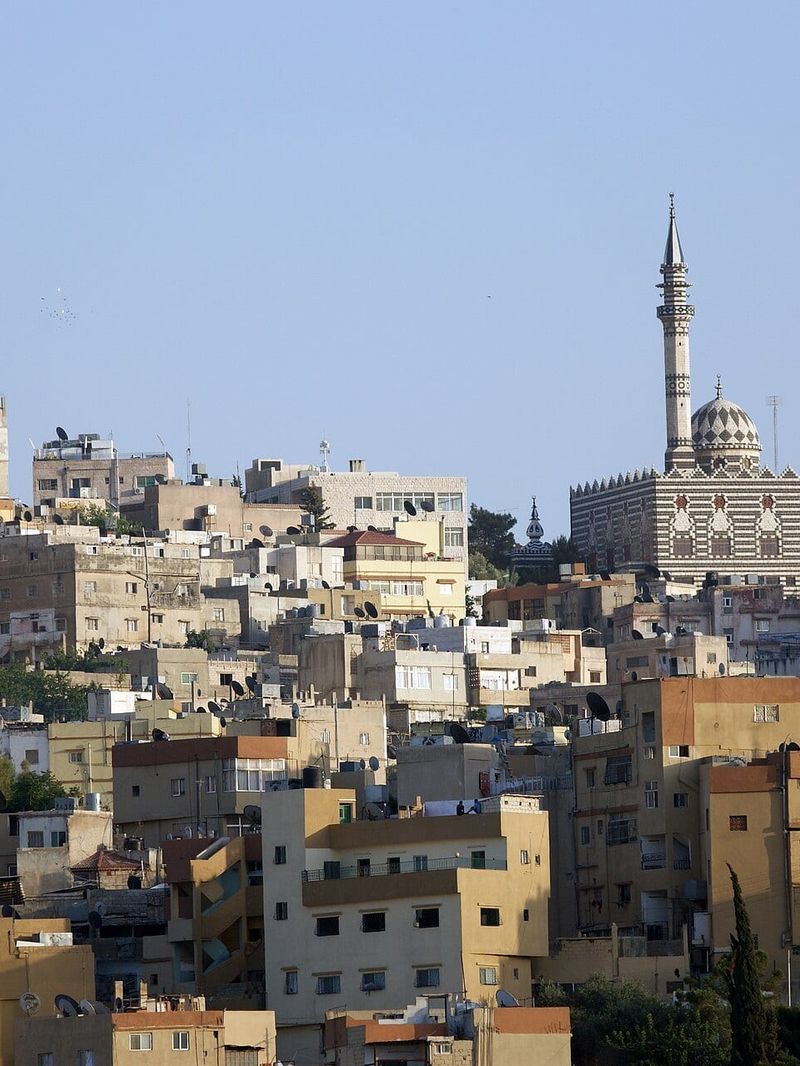
A black and white chequered mosque on one of Amman's highest hills, with a panorama of the city.
The chequered mosque
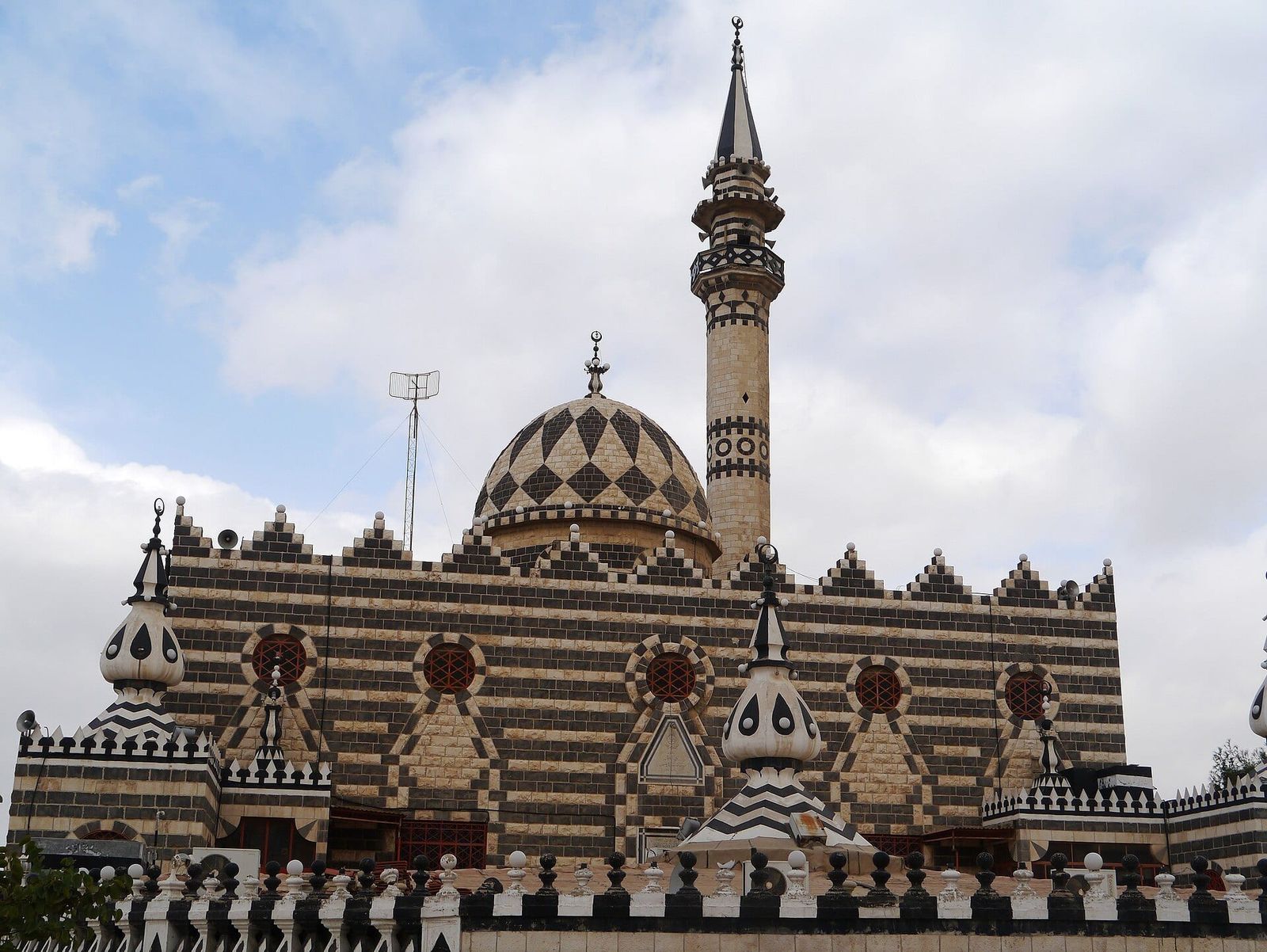
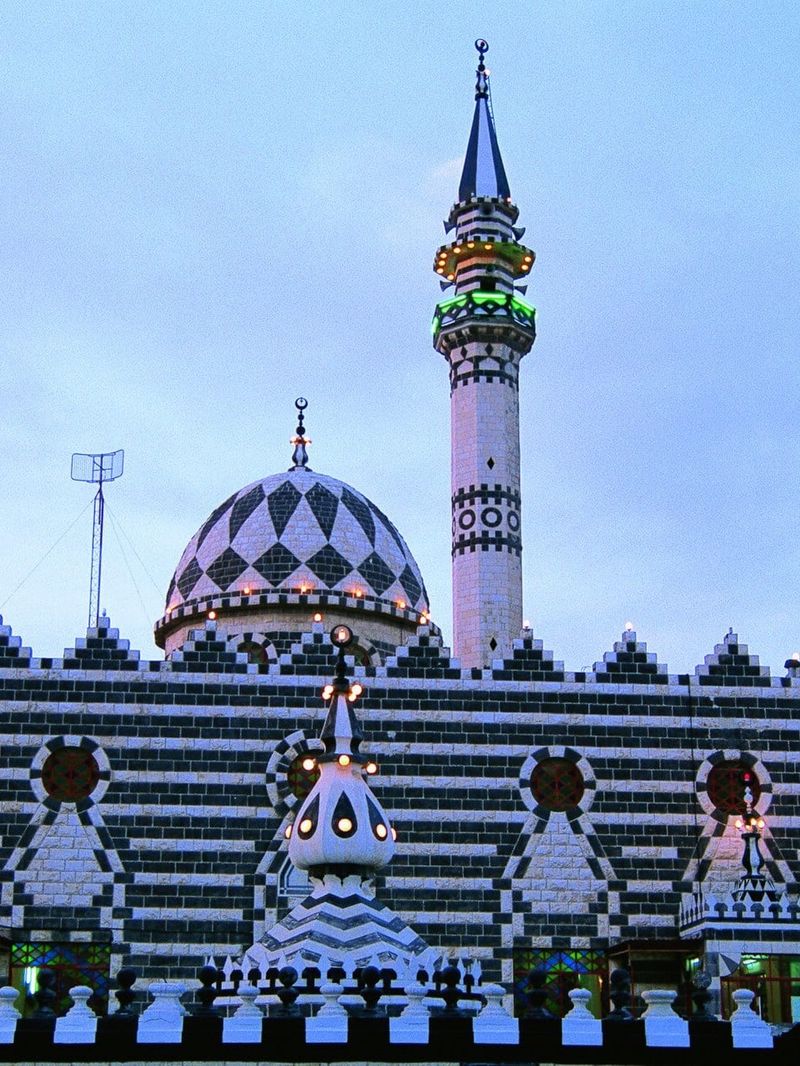
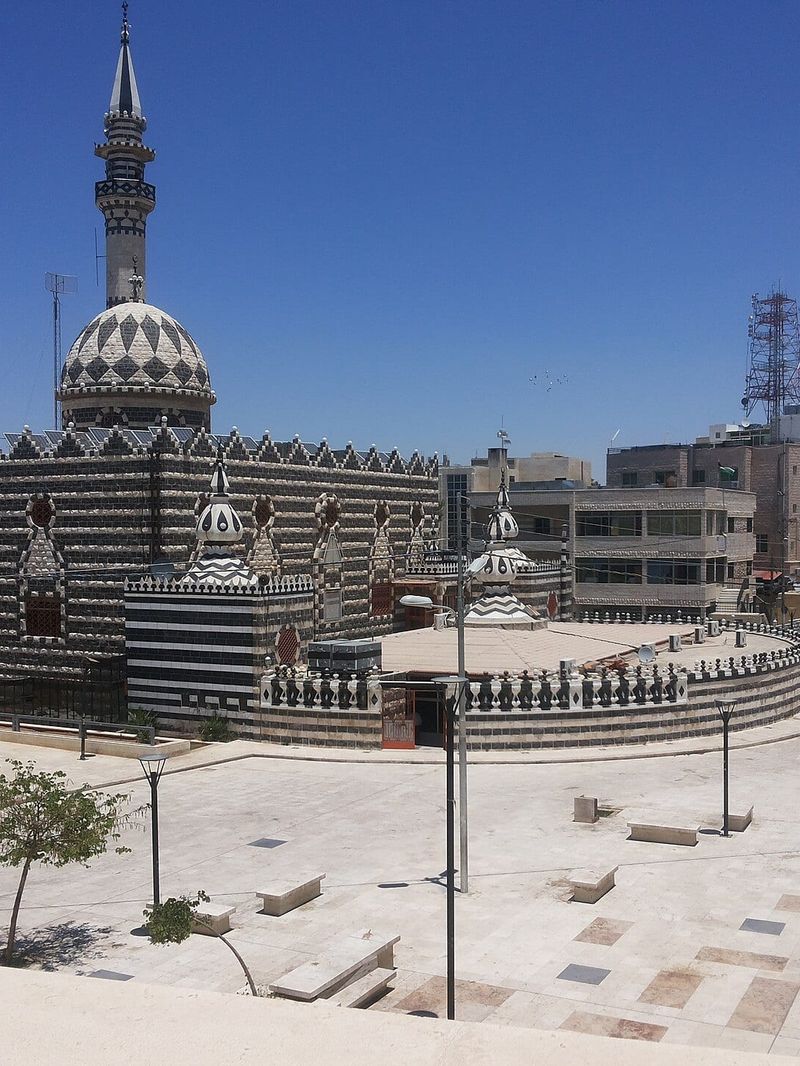
The Abu Darwish Mosque stands on the summit of Jabal al-Ashrafiyeh, one of the original hills of Amman and one of the highest points in the city. It is recognisable from across the valley by its walls of black and white stone. The courses run in bold horizontal bands and chequered panels, the Levantine tradition of ablaq masonry taken to a graphic extreme.
A Circassian founder
The mosque was built in 1961 and paid for by Hasan Mustafa Sharkas, a Circassian known locally as Abu Darwish, who owned land on the hilltop. It reflects the Circassian roots of modern Amman. Circassian families, settled here by the Ottomans after their expulsion from the Caucasus, re-founded the town in 1878 among the Roman ruins.
Building and setting
The mosque combines domes, a tall minaret and striped arcades. In front of it a public square opens onto one of the widest panoramas in Amman, over the downtown valley, the Citadel and the hills of East Amman. The mosque is in daily use. Non-Muslim visitors see it from the square and the surrounding streets.
Exhibo editorial
Nothing else in the Arab world looks like it. The first sight usually comes from a car window on the opposite hill and it reads less like a mosque than a piece of op art left on the skyline. Up close the stripes turn back into stone. The story behind them is small and personal: a man from the Caucasus, a hilltop he owned, a city still small enough for one person's taste to set its landmark.
Go at golden hour. Families from the neighbourhood fill the square, the white bands turn pink and East Amman, the half of the city most visitors never see, spreads out below.
Gallery
How to find it
On the summit of Jabal al-Ashrafiyeh, south of downtown. Take a taxi to Abu Darwish Street. The mosque fills the top of the hill with the public square in front of the main facade. Street parking around the square.
Similar places
All places
News by Exhibo
Editorial coverage on Exhibo
Filmed, but Not Recorded: The Arab World’s Missing Film Locations
Wikidata knows Gladiator was filmed in Morocco. It doesn’t know where.
Ouarzazate is the second most filmed place in the Middle East and North Africa, yet 25 of its 27 productions are recorded only in Wikipedia prose. We compared filming records worldwide and found that in the Arab world, Wikidata usually knows the country but not the place.
Why Every Sci-Fi Desert Looks Arab
From Arrakis to Tatooine, when a film wants a desert to feel ancient, prophetic and alien, it reaches for an Arab and Berber vocabulary — and reveals more about the West that built it than the region it borrows from.
The wrapped faces, the trilling women, the barely-displaced Arabic: cinema's alien deserts keep sounding Arab. But the vocabulary was assembled in the West — from Orientalist painting to Lawrence to Dune — and it says more about who is looking than about anyone being looked at.
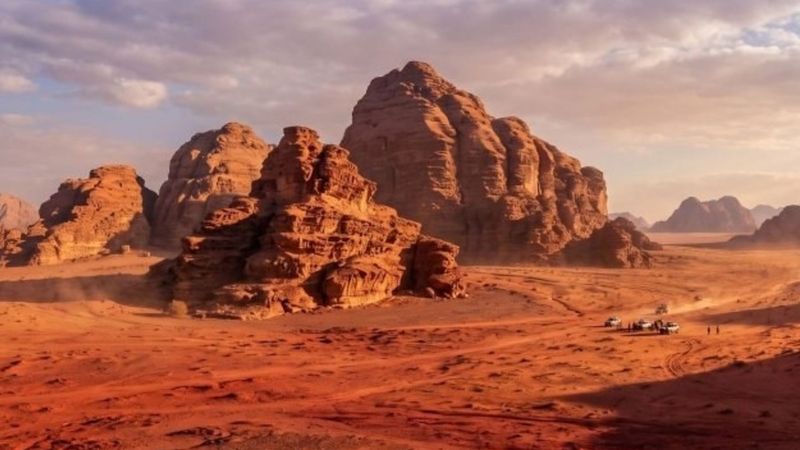
Why Wadi Rum Keeps Playing Mars: A Desert That Is Right About the Wrong Planet
A valley in southern Jordan has become cinema's favourite Mars — not because it is like the planet, but because it looks like the one we carry in our heads.
Put Wadi Rum beside a rover photograph and you can't tell which is Mars. But the desert shares almost nothing with the real planet except its colour — and lately, the illusion has grown powerful enough that real space missions have come to Jordan to rehearse.