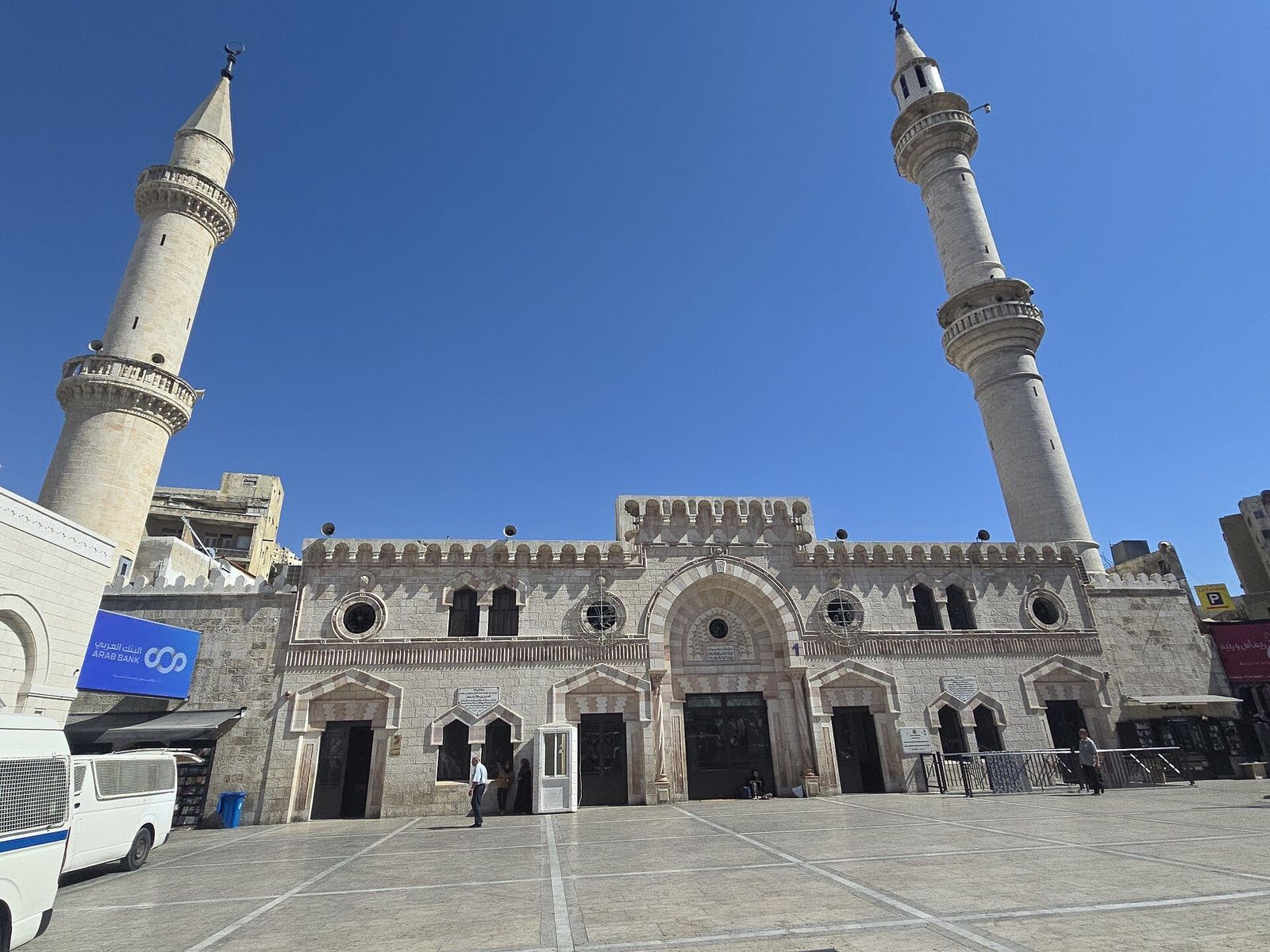
Grand Husseini Mosque
The striped stone mosque at the heart of downtown, rebuilt by Emir Abdullah I in 1924.
The mosque of downtown
The Grand Husseini Mosque, al-Masjid al-Husseini al-Kabir, is the main mosque of downtown Amman and the centre of the old market quarter around King Faisal Street. The present building was put up in 1924 by Emir Abdullah I, founder of the Emirate of Transjordan. He named it after his father, Sharif Hussein bin Ali, leader of the Arab Revolt.
History
It stands on the site of a much older mosque in what was the civic centre of Roman Philadelphia. Tradition holds that a mosque has stood on this spot since the early Islamic period. When Abdullah rebuilt it, Amman was a small town of a few thousand people. The building became the first major mosque of the new capital. It was renovated and enlarged in 1987.
Architecture
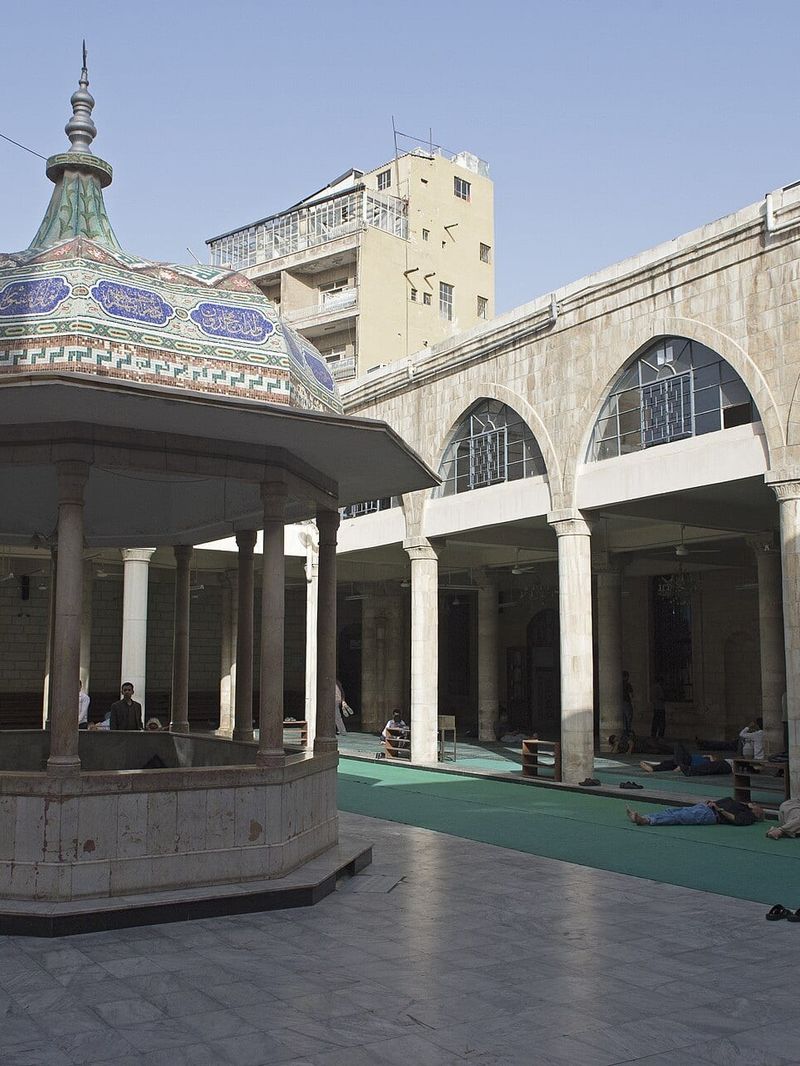
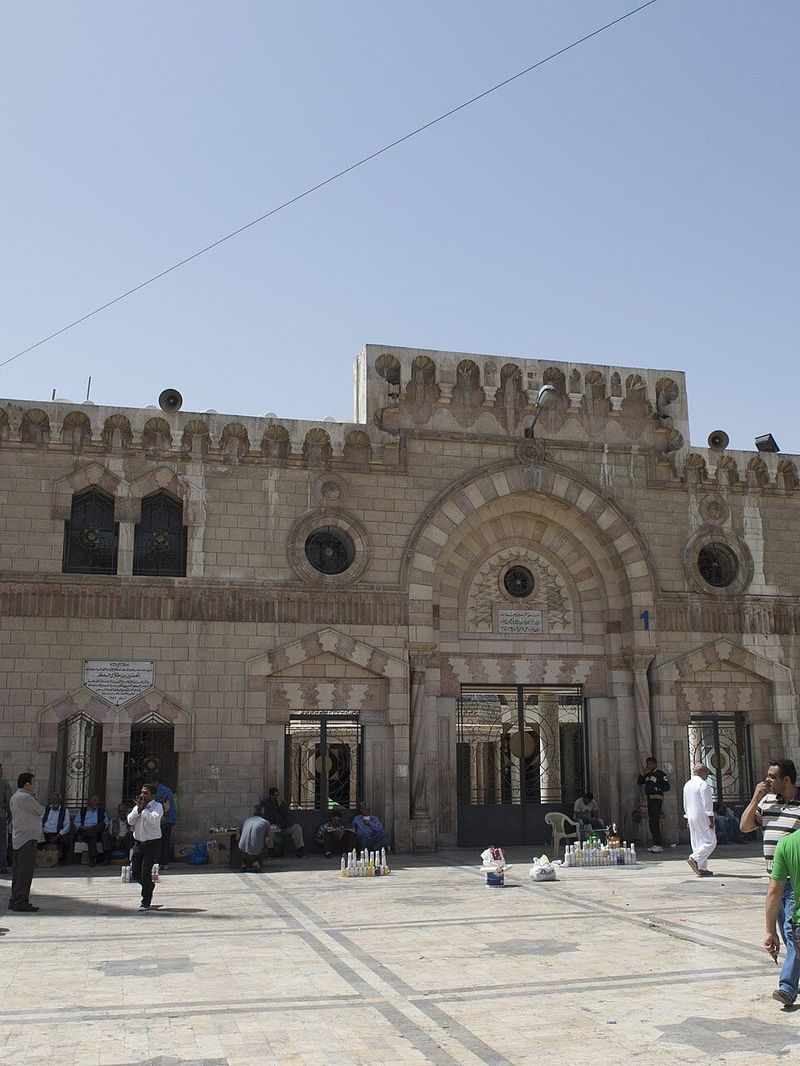
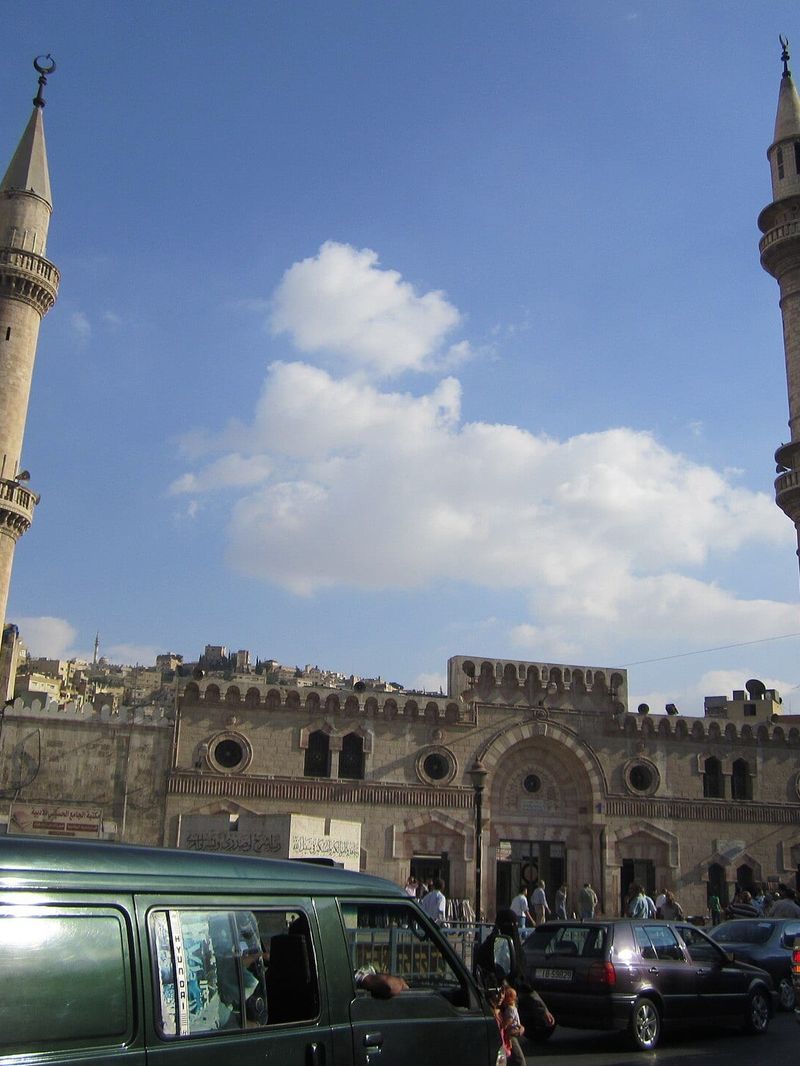
The mosque is built of pink and white limestone in the style of its time, with two minarets and an arcaded courtyard. It is modest in scale next to the great state mosques built later in the century. Its striped facade has become one of the defining images of Al Balad.
Around it
The streets outside are among the busiest in the city. The gold souk, spice and coffee sellers and the vegetable market are all within a few minutes' walk, as are the Roman Theatre and the Nymphaeum.
Exhibo editorial
Come on a Friday a little before noon. The whole of downtown seems to lean toward this one building. Shutters come down, prayer mats spread over the pavement, the call echoes off the shopfronts of King Faisal Street. An hour later the street is a market again.
It is not a grand monument and does not try to be. The striped stone is the colour of the city before concrete. The mosque still does what it was built for in 1924, when Amman was small enough to fit inside its courtyard on a feast day.
Gallery
How to find it
In the centre of Al Balad at the junction of King Talal Street and King Faisal Street, a five-minute walk west of the Roman Theatre. Look for the pink and white facade facing the busy square. The gold souk opens off the streets just behind it.
Similar places
All places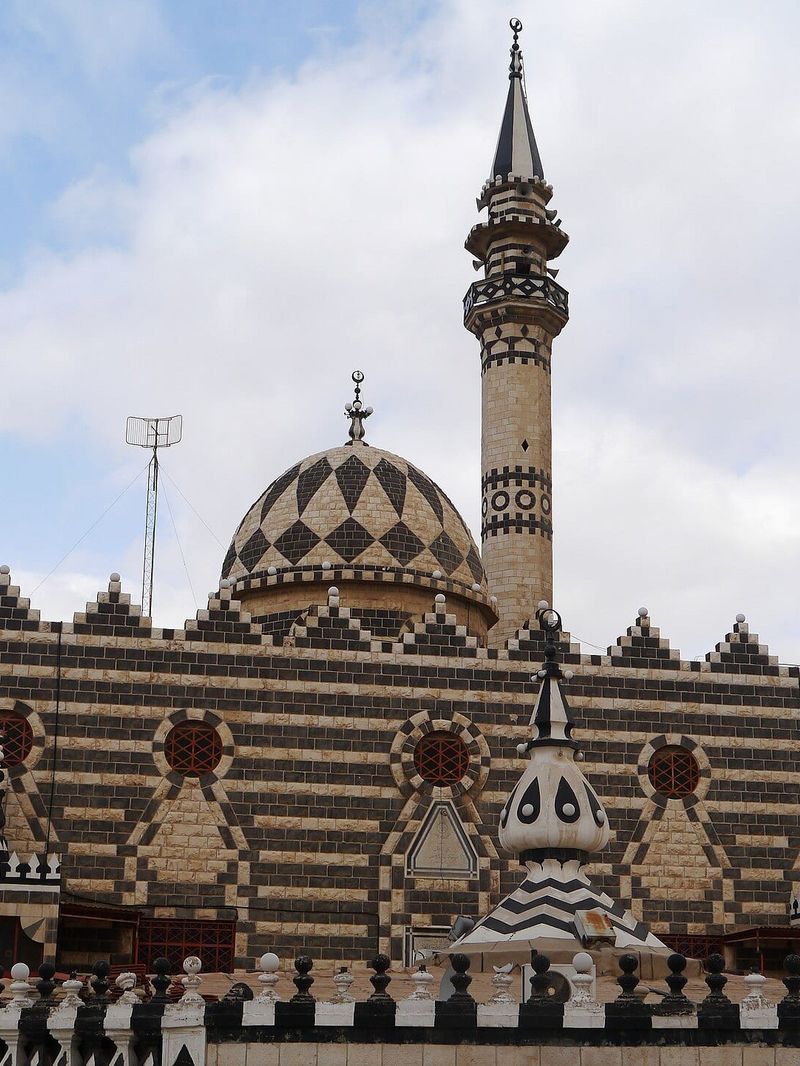
News by Exhibo
Editorial coverage on Exhibo
Filmed, but Not Recorded: The Arab World’s Missing Film Locations
Wikidata knows Gladiator was filmed in Morocco. It doesn’t know where.
Ouarzazate is the second most filmed place in the Middle East and North Africa, yet 25 of its 27 productions are recorded only in Wikipedia prose. We compared filming records worldwide and found that in the Arab world, Wikidata usually knows the country but not the place.
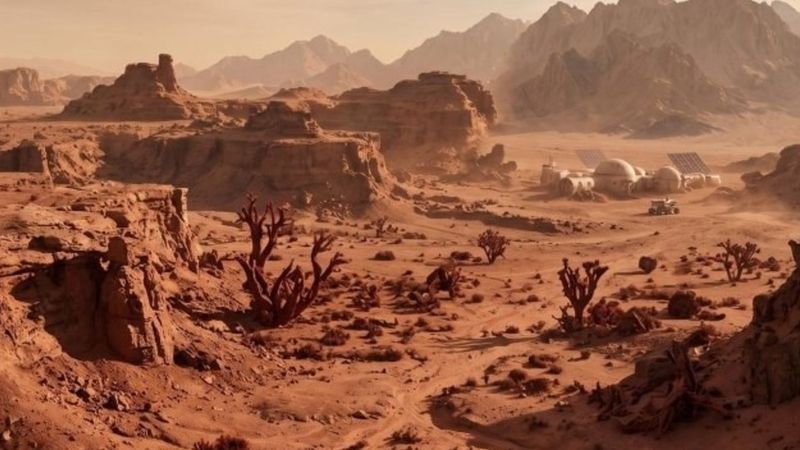
Why Every Sci-Fi Desert Looks Arab
From Arrakis to Tatooine, when a film wants a desert to feel ancient, prophetic and alien, it reaches for an Arab and Berber vocabulary — and reveals more about the West that built it than the region it borrows from.
The wrapped faces, the trilling women, the barely-displaced Arabic: cinema's alien deserts keep sounding Arab. But the vocabulary was assembled in the West — from Orientalist painting to Lawrence to Dune — and it says more about who is looking than about anyone being looked at.
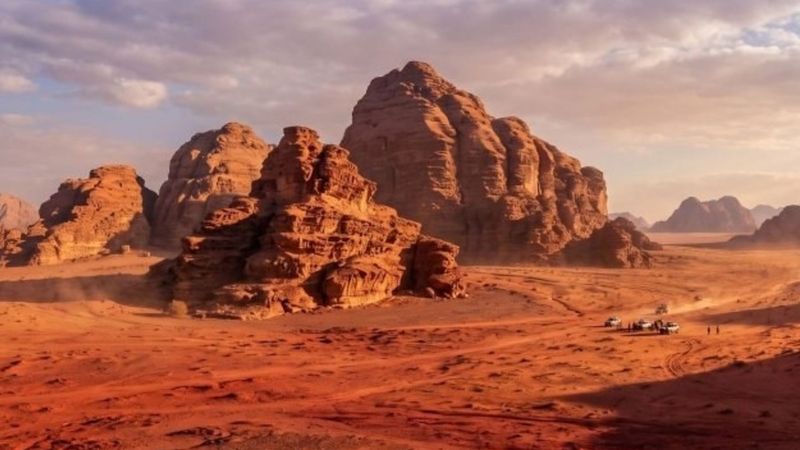
Why Wadi Rum Keeps Playing Mars: A Desert That Is Right About the Wrong Planet
A valley in southern Jordan has become cinema's favourite Mars — not because it is like the planet, but because it looks like the one we carry in our heads.
Put Wadi Rum beside a rover photograph and you can't tell which is Mars. But the desert shares almost nothing with the real planet except its colour — and lately, the illusion has grown powerful enough that real space missions have come to Jordan to rehearse.