Cave of the Seven Sleepers (Ahl al-Kahf)
A Byzantine rock tomb on the edge of Amman linked to the sleepers of the Qur'an's Surah al-Kahf.
The People of the Cave
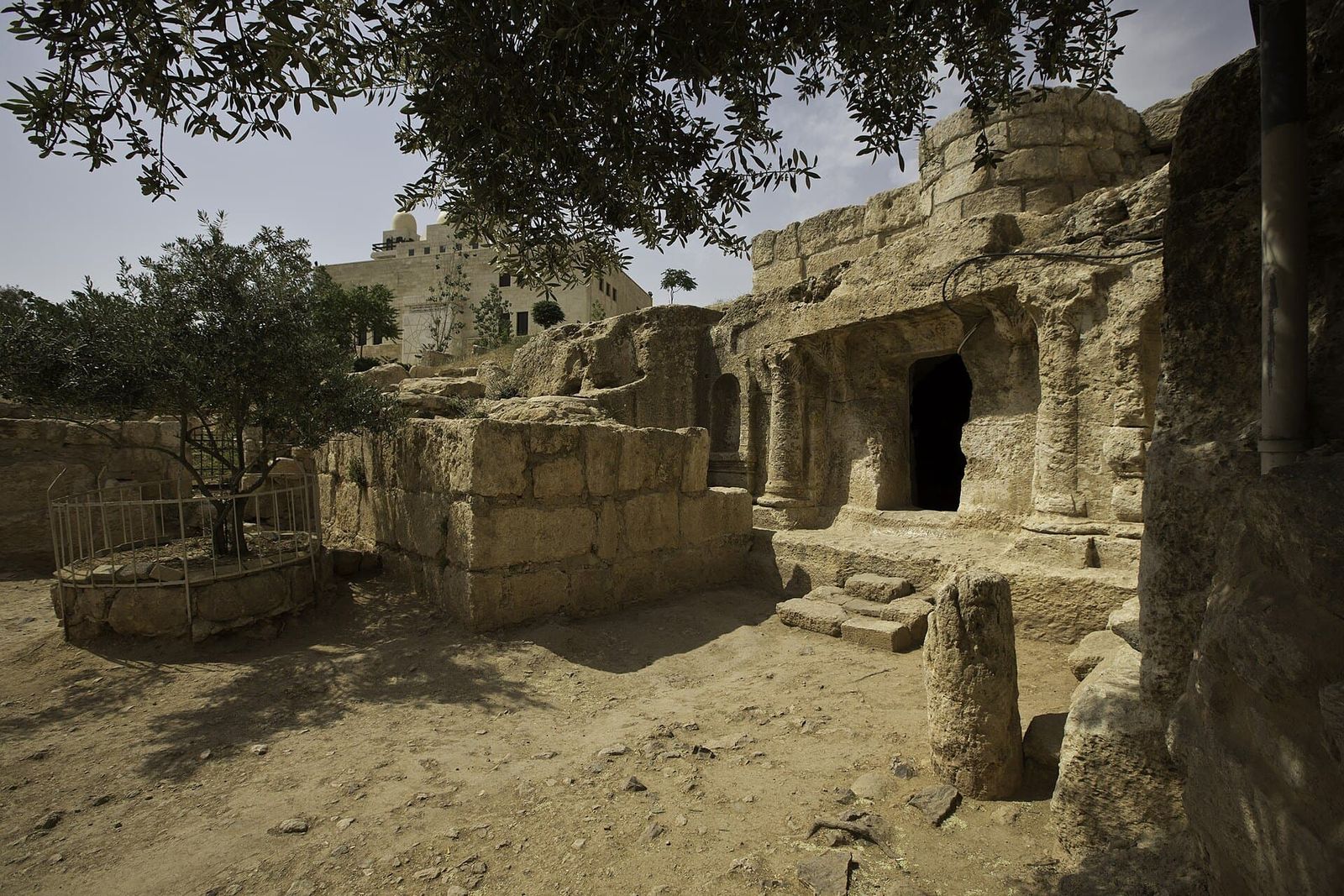
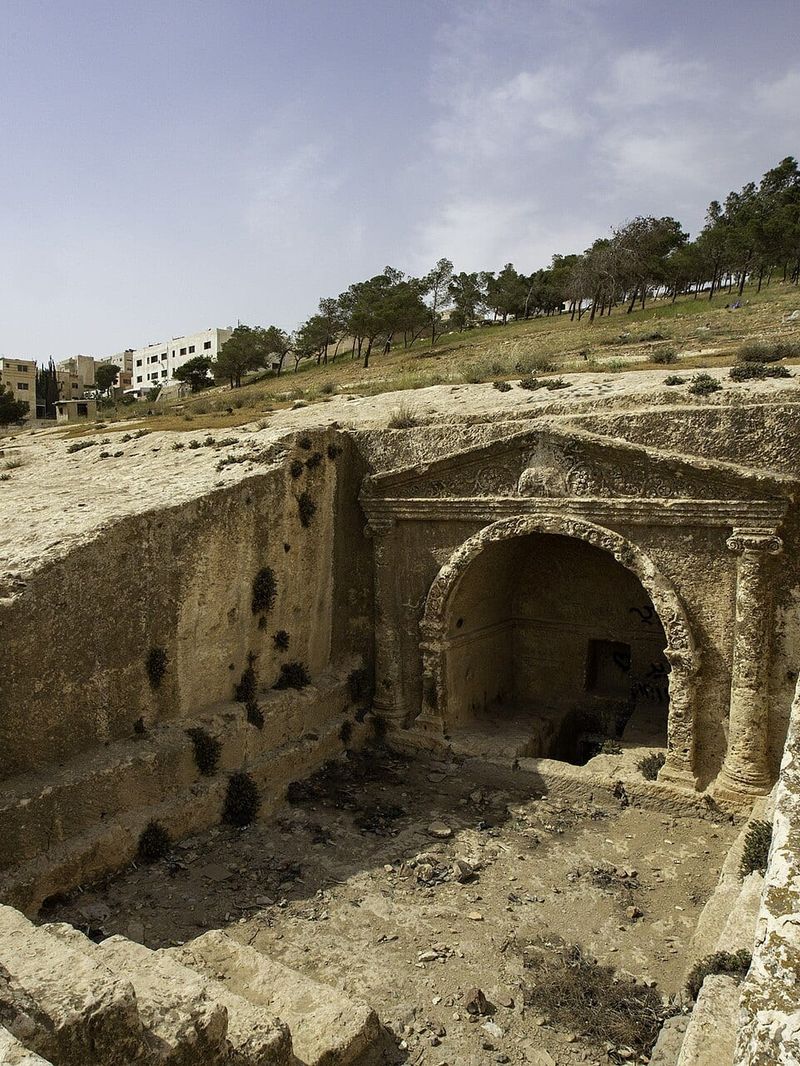
The Cave of the Seven Sleepers, Kahf Ahl al-Kahf, also called al-Raqim, is a rock-cut tomb in the village of Al-Rajib on the south-eastern edge of Amman. Local tradition links it with the People of the Cave in Surah al-Kahf, the eighteenth chapter of the Qur'an: young believers who fled persecution, slept in a cave for centuries and woke into a changed world. Christian tradition tells the same story as the Seven Sleepers of Ephesus.
The tomb
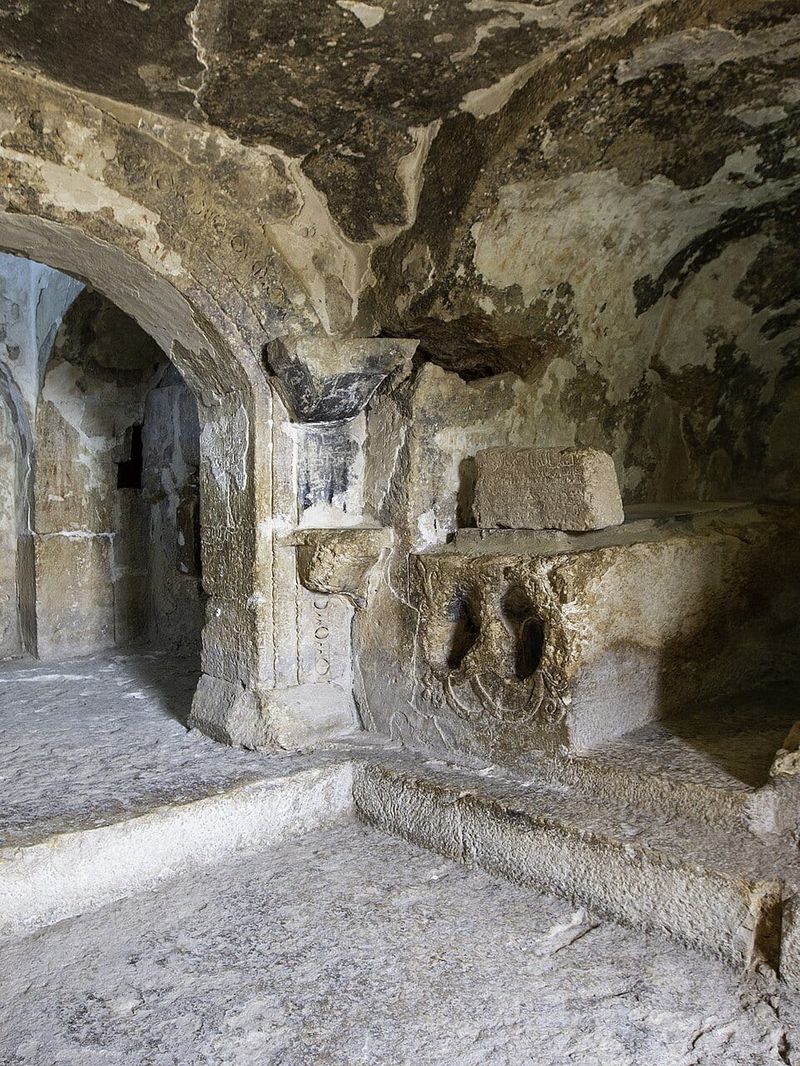
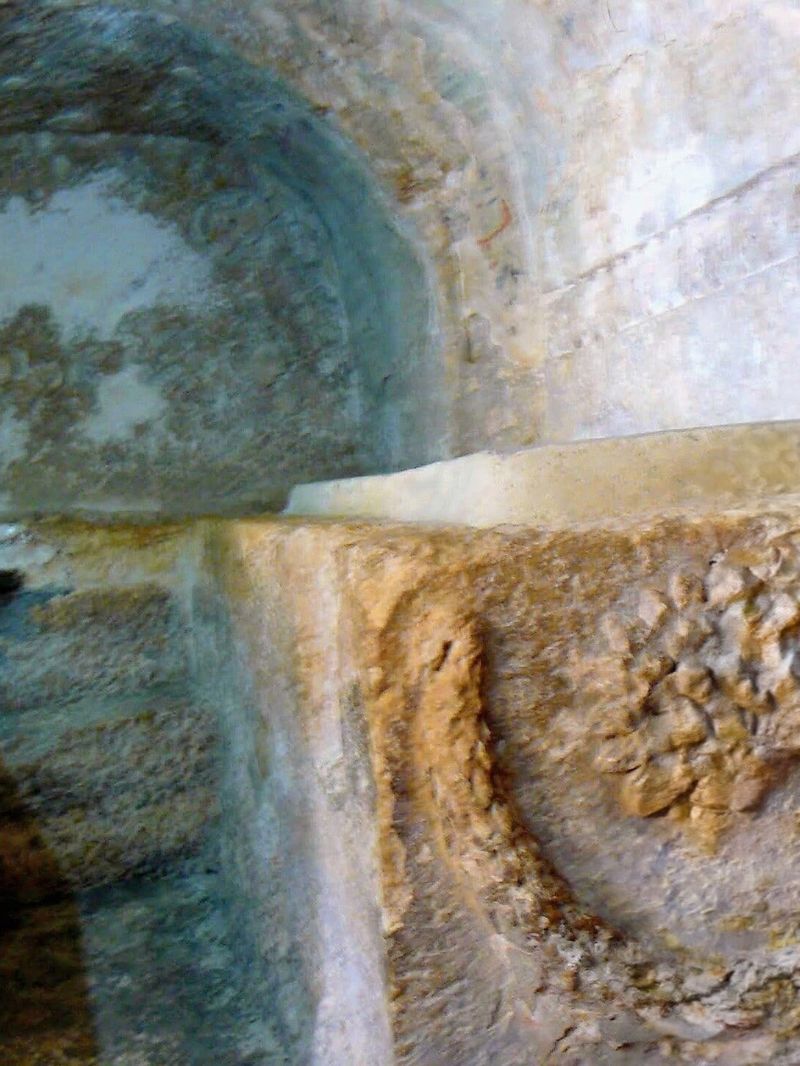
The cave is a tomb of the Roman and Byzantine period cut into the hillside, with a carved entrance and an inner chamber holding eight sarcophagi. In 1963 the Jordanian archaeologist Rafiq Wafa al-Dajani excavated the site. He found the remains of a Byzantine church above the cave, later turned into a mosque.
Today
A large modern mosque stands beside the ancient site. Muslim and Christian pilgrims visit the cave, as do travellers. Entry is free. A torch helps in the inner chamber.
Exhibo editorial
The story draws people here. The young men, their dog stretched across the doorway, the old coin that gave them away when one went to buy bread centuries later. The cave itself is smaller than the story. It is cool, dim, low enough to make you stoop.
On a weekday you may share it with a family on a pilgrimage, a church group with a priest and two students filming on their phones. Two religions tell the legend their own way. Here the versions sit side by side without argument.
Gallery
How to find it
In the village of Al-Rajib, about 10 km south-east of downtown Amman. Follow the road signs for Ahl al-Kahf. The cave is cut into the hillside beside the large modern mosque, with the entrance on the lower terrace. Bring a torch for the inner chamber.
Similar places
All places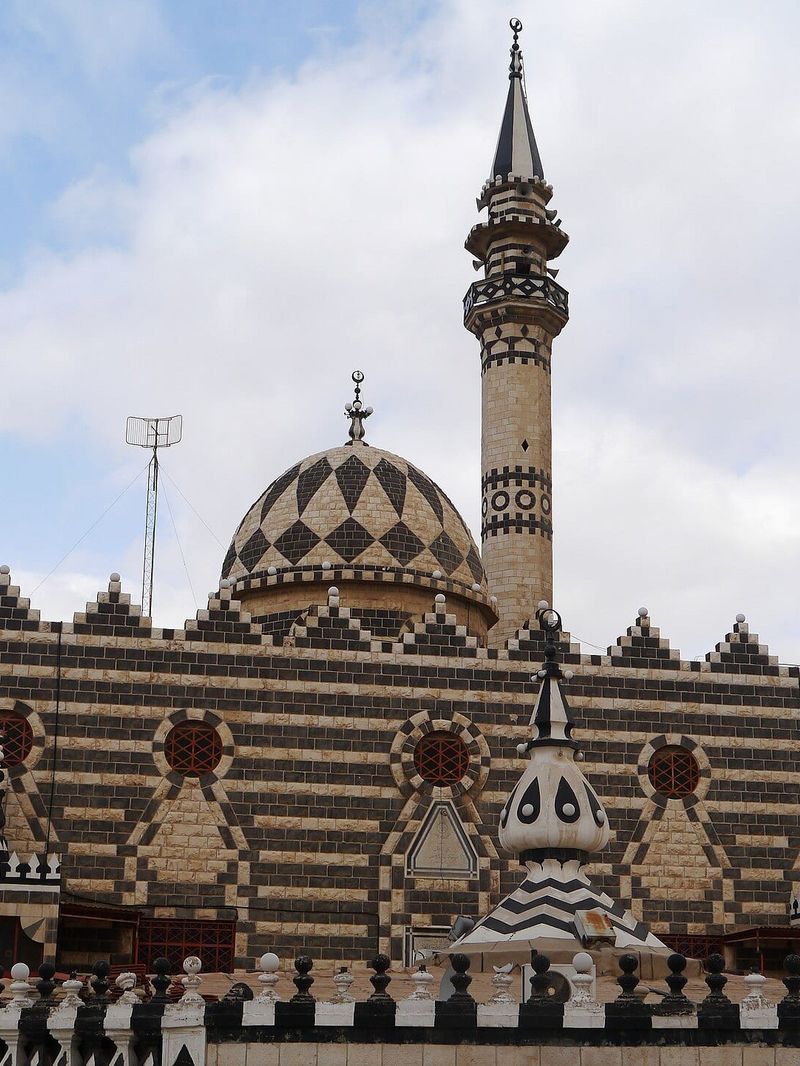
News by Exhibo
Editorial coverage on Exhibo
Filmed, but Not Recorded: The Arab World’s Missing Film Locations
Wikidata knows Gladiator was filmed in Morocco. It doesn’t know where.
Ouarzazate is the second most filmed place in the Middle East and North Africa, yet 25 of its 27 productions are recorded only in Wikipedia prose. We compared filming records worldwide and found that in the Arab world, Wikidata usually knows the country but not the place.
Why Every Sci-Fi Desert Looks Arab
From Arrakis to Tatooine, when a film wants a desert to feel ancient, prophetic and alien, it reaches for an Arab and Berber vocabulary — and reveals more about the West that built it than the region it borrows from.
The wrapped faces, the trilling women, the barely-displaced Arabic: cinema's alien deserts keep sounding Arab. But the vocabulary was assembled in the West — from Orientalist painting to Lawrence to Dune — and it says more about who is looking than about anyone being looked at.
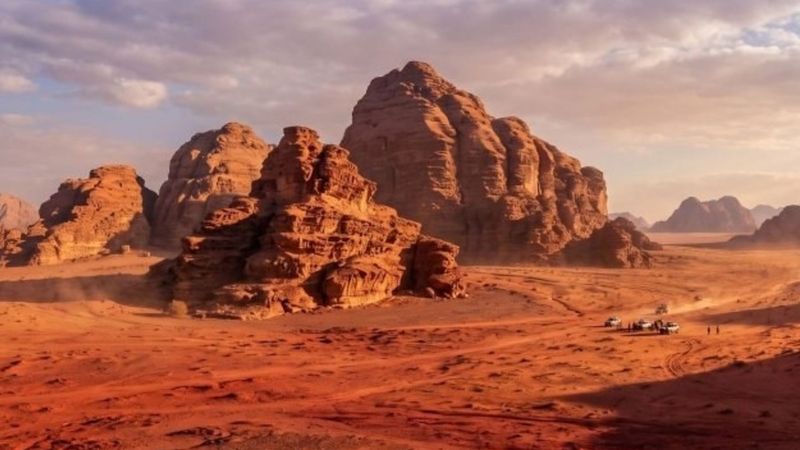
Why Wadi Rum Keeps Playing Mars: A Desert That Is Right About the Wrong Planet
A valley in southern Jordan has become cinema's favourite Mars — not because it is like the planet, but because it looks like the one we carry in our heads.
Put Wadi Rum beside a rover photograph and you can't tell which is Mars. But the desert shares almost nothing with the real planet except its colour — and lately, the illusion has grown powerful enough that real space missions have come to Jordan to rehearse.