
Qasr al-Azraq (Azraq Castle)
A black basalt fortress at the Azraq oasis, used by Romans, Ayyubids, Ottomans and T. E. Lawrence.
The fort of the oasis
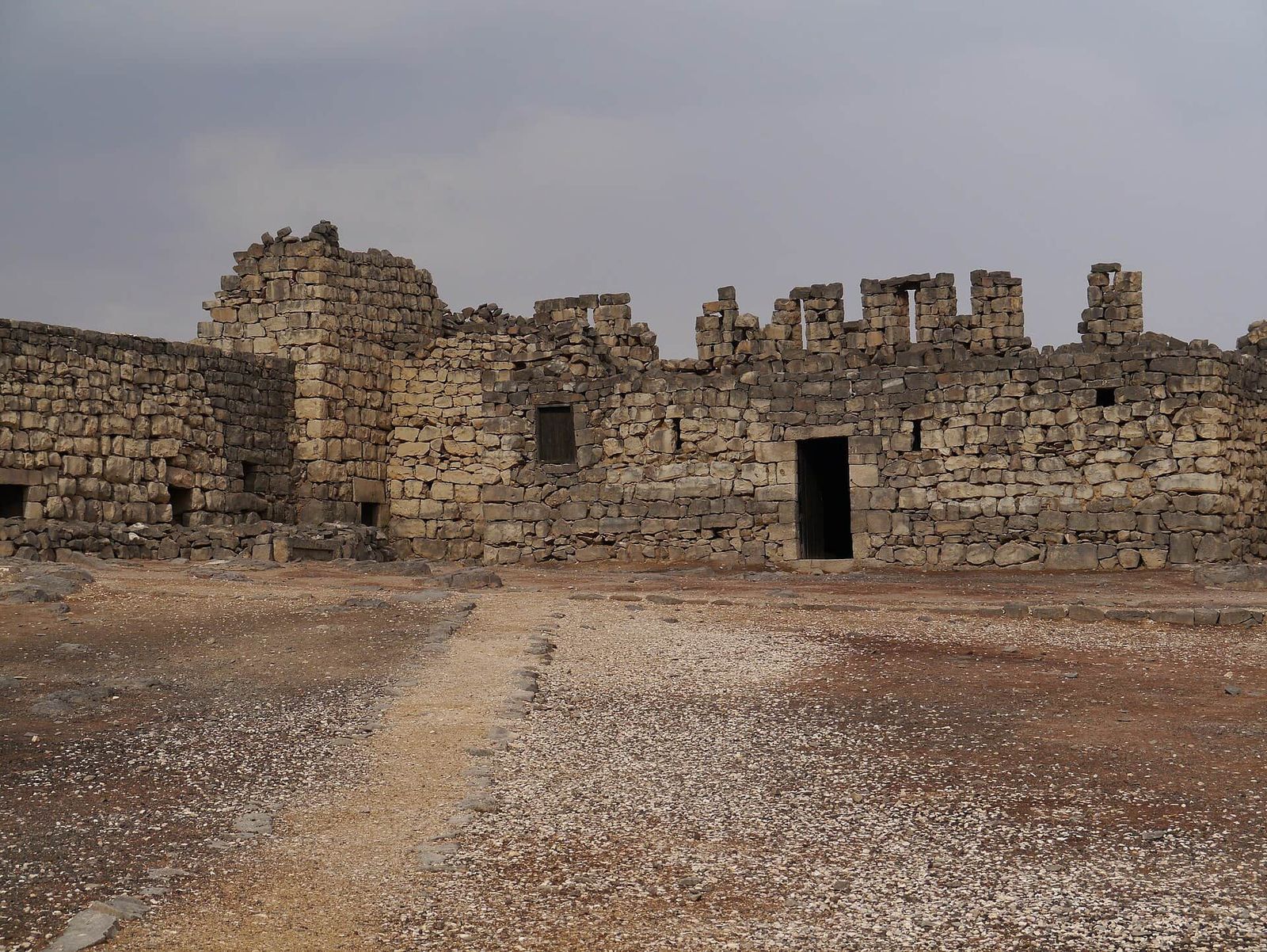
Qasr al-Azraq is a fortress of black basalt in the town of Azraq, beside the only permanent oasis of the eastern desert of Jordan. For two thousand years whoever held Azraq held the route between inner Arabia and Syria. The castle keeps many of those layers in one building.
History
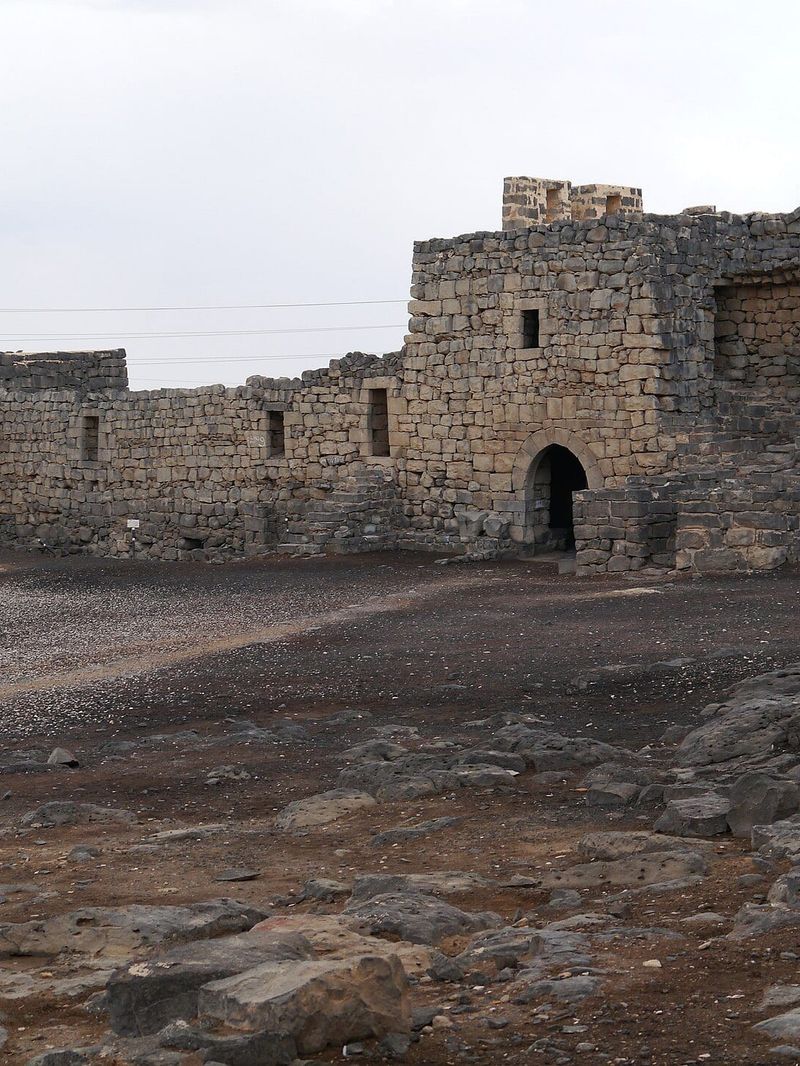
A Roman fort stood here by about AD 300. The site stayed in use under the Byzantines and the Umayyads. The castle seen today was largely rebuilt in 1237 by the Ayyubid emir Izz al-Din Aybak, as an inscription over the entrance records. The Ottomans later kept a garrison here. In the winter of 1917 to 1918, during the Arab Revolt, T. E. Lawrence and Sharif Ali bin Hussein made the fort their base. Lawrence describes it in Seven Pillars of Wisdom.
What to see
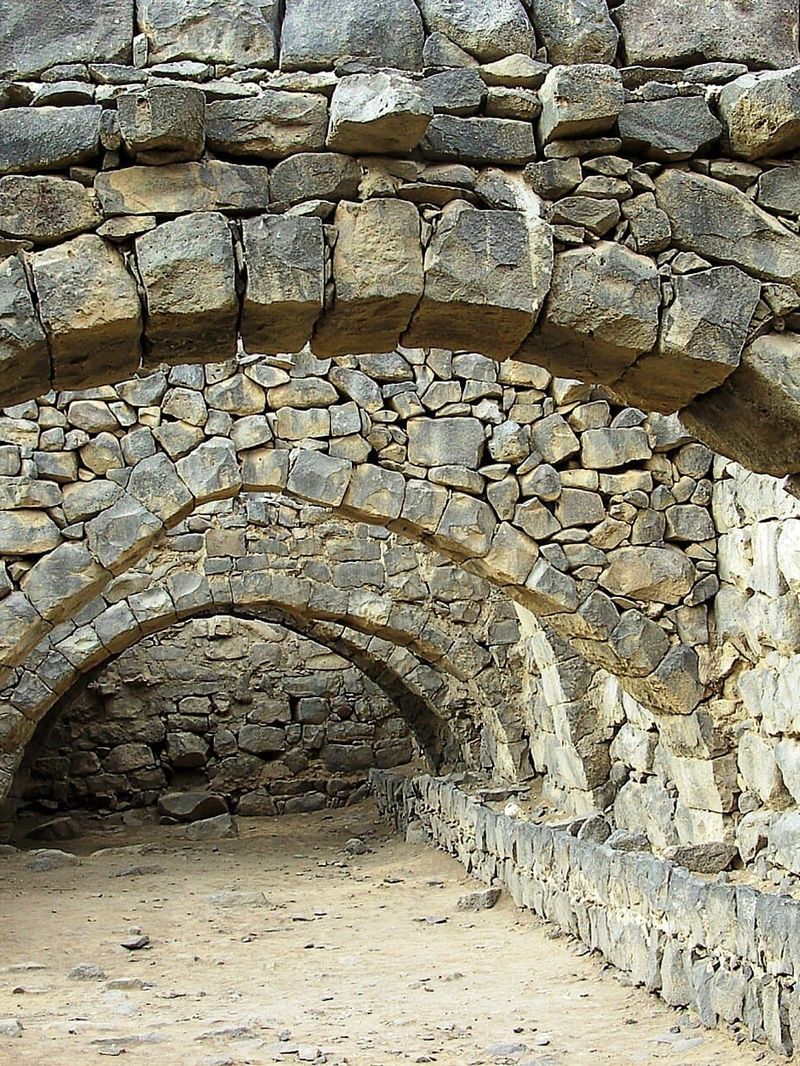
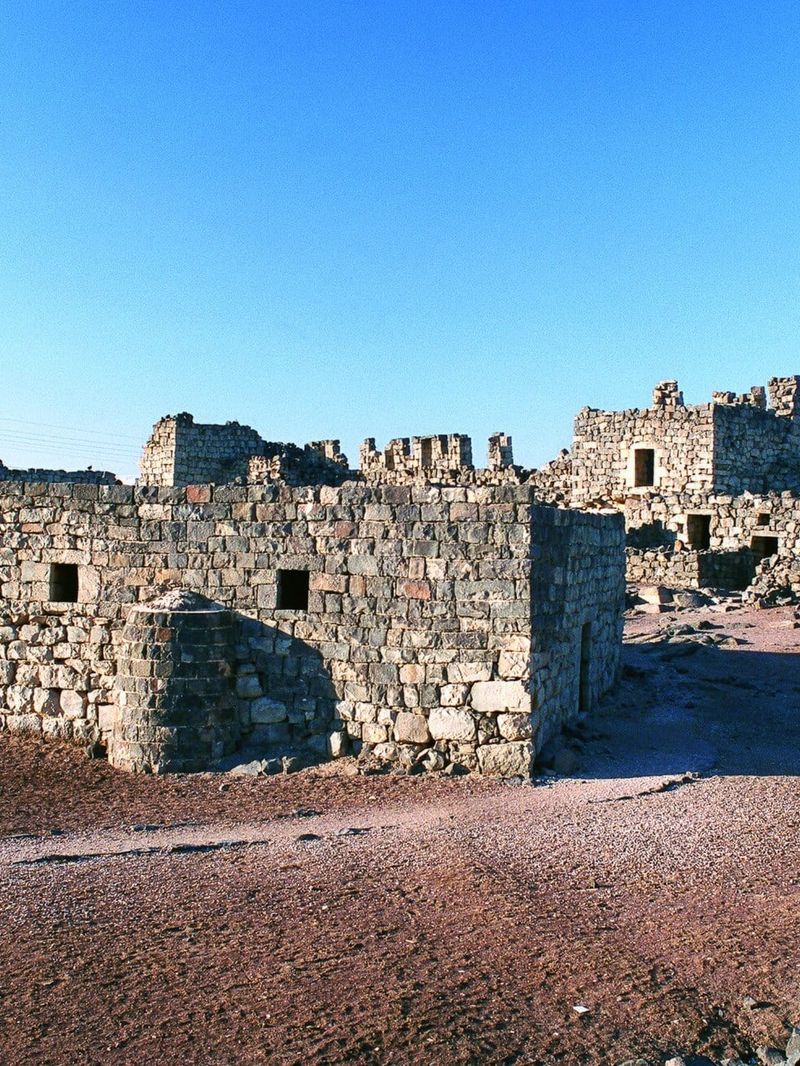
Vaulted rooms line the courtyard, with a small mosque in the middle and a tower over the main gate. The great gate is a single slab of basalt that still turns on stone pivots. The room above the gate is traditionally known as Lawrence's room.
Azraq
The town grew around the oasis and is home to Druze and Chechen communities. The Azraq Wetland Reserve nearby protects part of the old wetlands for migrating birds. On the road back to Amman lie Qusayr Amra and Qasr Kharana.
Exhibo editorial
Everything here is dark: walls, floors, the door. It makes the oasis around it feel greener than it is. The gate still keeps its door, a single slab of basalt set on stone pivots. Wood would not have lasted out here. Stone did.
Lawrence spent a hard, cold winter here and still wrote of the place with affection. Come early, read the Ayyubid inscription over the gate. Then remember that before Lawrence, Romans and Ayyubid emirs watched the same spring.
Gallery
How to find it
In the town of Azraq, about 100 km east of Amman at the end of Highway 40. The castle is on the main road through northern Azraq, on the east side. Park in front of the gate. Lawrence's room is upstairs above the entrance.
Similar places
All places
News by Exhibo
Editorial coverage on Exhibo
Filmed, but Not Recorded: The Arab World’s Missing Film Locations
Wikidata knows Gladiator was filmed in Morocco. It doesn’t know where.
Ouarzazate is the second most filmed place in the Middle East and North Africa, yet 25 of its 27 productions are recorded only in Wikipedia prose. We compared filming records worldwide and found that in the Arab world, Wikidata usually knows the country but not the place.
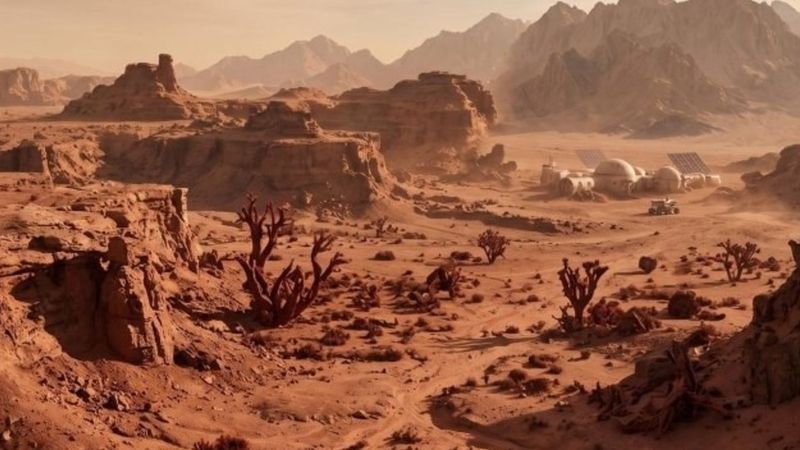
Why Every Sci-Fi Desert Looks Arab
From Arrakis to Tatooine, when a film wants a desert to feel ancient, prophetic and alien, it reaches for an Arab and Berber vocabulary — and reveals more about the West that built it than the region it borrows from.
The wrapped faces, the trilling women, the barely-displaced Arabic: cinema's alien deserts keep sounding Arab. But the vocabulary was assembled in the West — from Orientalist painting to Lawrence to Dune — and it says more about who is looking than about anyone being looked at.
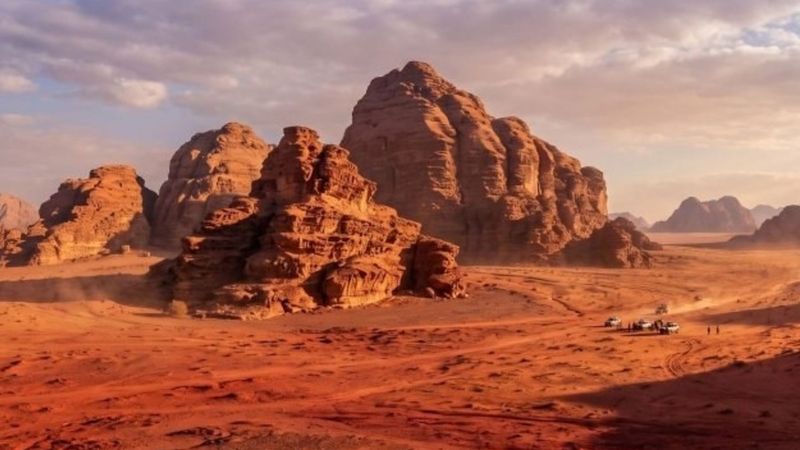
Why Wadi Rum Keeps Playing Mars: A Desert That Is Right About the Wrong Planet
A valley in southern Jordan has become cinema's favourite Mars — not because it is like the planet, but because it looks like the one we carry in our heads.
Put Wadi Rum beside a rover photograph and you can't tell which is Mars. But the desert shares almost nothing with the real planet except its colour — and lately, the illusion has grown powerful enough that real space missions have come to Jordan to rehearse.