King Abdullah I Mosque
The blue-domed mosque in Abdali that opens its doors to visitors of every faith.
A memorial to a king
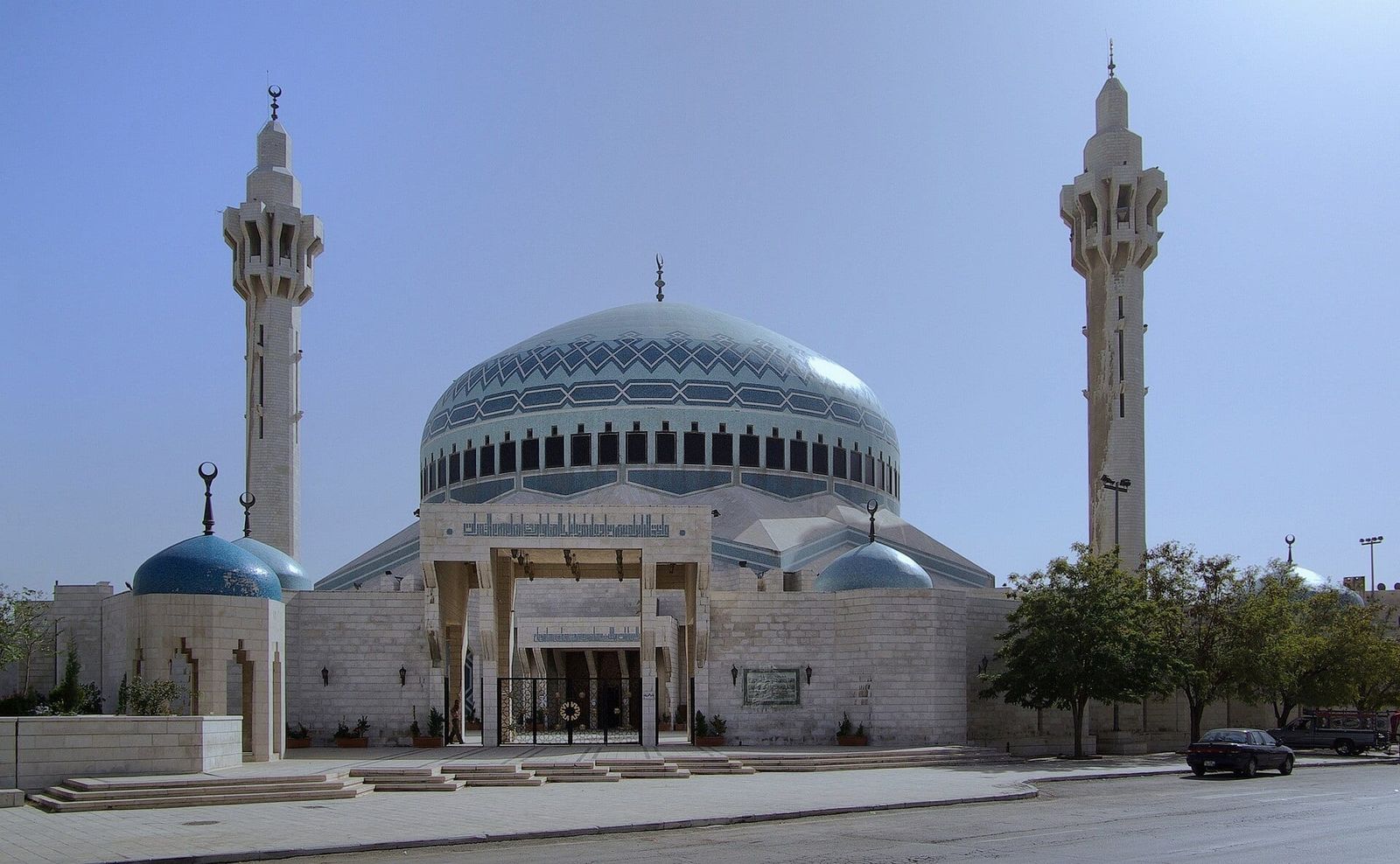
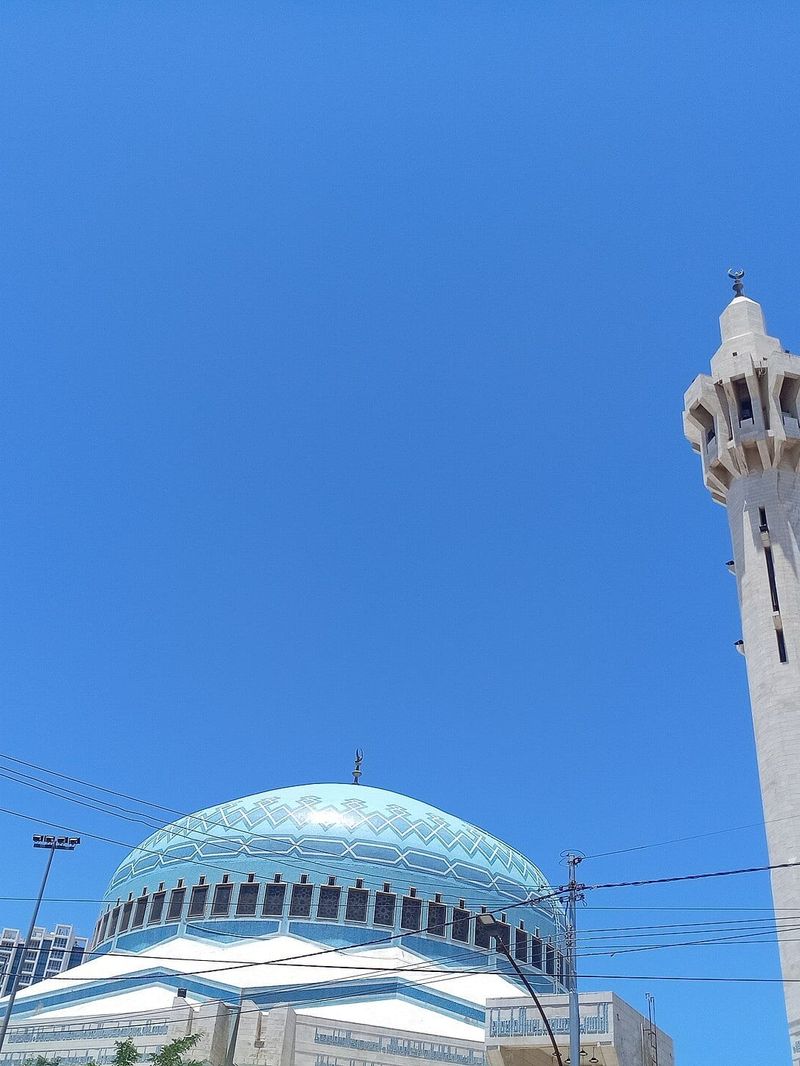
The King Abdullah I Mosque in Abdali is one of the most visible landmarks of Amman, its blue mosaic dome rising above the surrounding streets. King Hussein built it between 1982 and 1989 in memory of his grandfather, King Abdullah I, founder of modern Jordan, who was assassinated in Jerusalem in 1951.
The dome
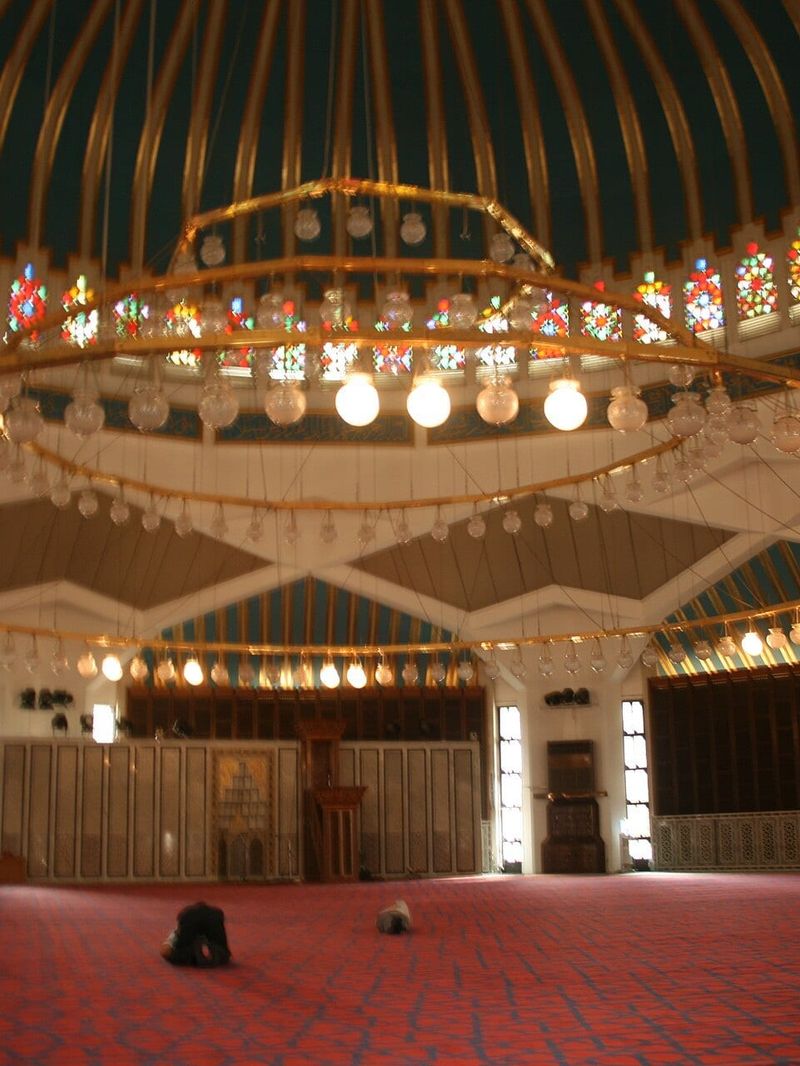
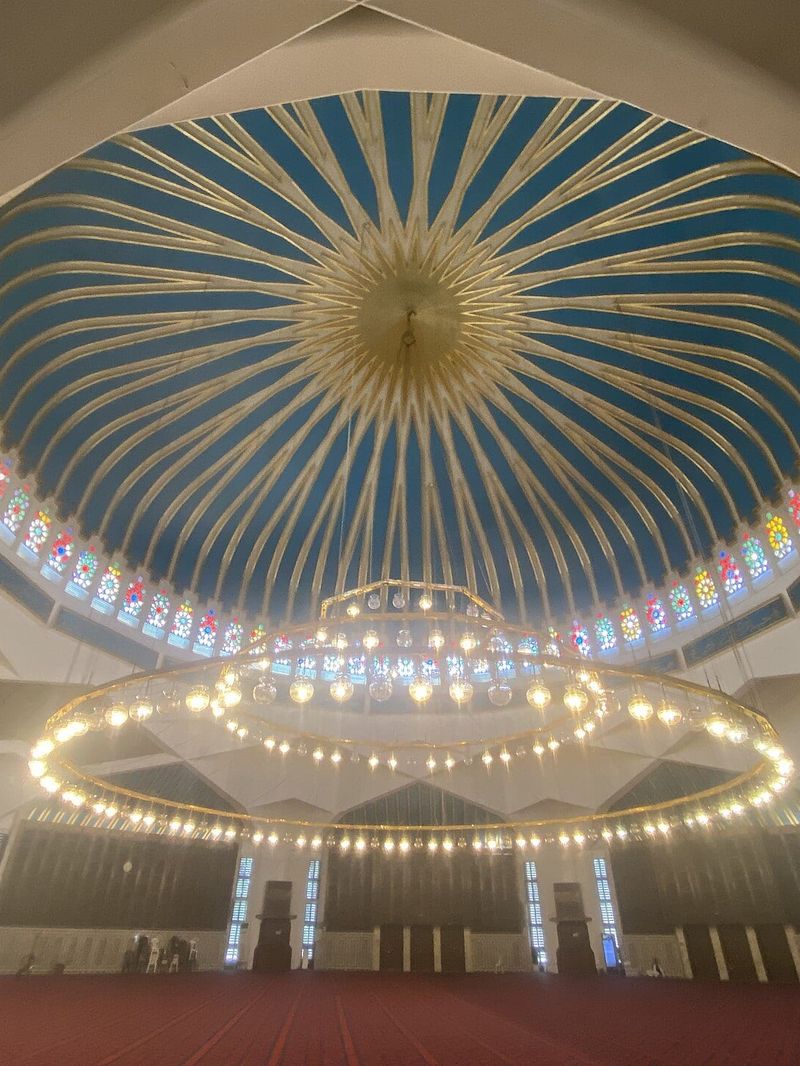
The prayer hall is an octagon roofed by a dome about 35 metres across, clad in blue mosaic. A band of Qur'anic verses runs around its base. The hall holds about 3,000 worshippers, with room for thousands more in the courtyard. Two minarets frame the complex. The decoration draws on Islamic geometric and calligraphic traditions in a modern idiom.
Visiting
It is the main mosque in Amman that welcomes non-Muslim visitors, through a separate visitor entrance with a small fee. Women are lent a long robe and headscarf at the door. Everyone takes off their shoes. The complex also has a small Islamic museum with personal belongings and photographs of King Abdullah I, together with pottery, coins and inscriptions from across Jordan.
Exhibo editorial
From the street it is a blue dome among office blocks. Inside the scale changes. The octagon gathers everything, the light from the windows of the drum, the red carpet, the ring of gold script, toward one point above your head. People lower their voices without being asked.
It is also the easiest way into a working mosque for a first-time visitor. Someone hands you a robe, someone else points out the inscriptions. The afternoon prayer goes on around you at its own pace.
Gallery
How to find it
In Abdali, on the slope below Jabal Lweibdeh, about ten minutes by car from downtown. Use the visitor entrance on the side of the complex, not the main gate for worshippers. Robes and headscarves are handed out at the ticket desk. Street parking around the mosque.
Similar places
All places
News by Exhibo
Editorial coverage on Exhibo
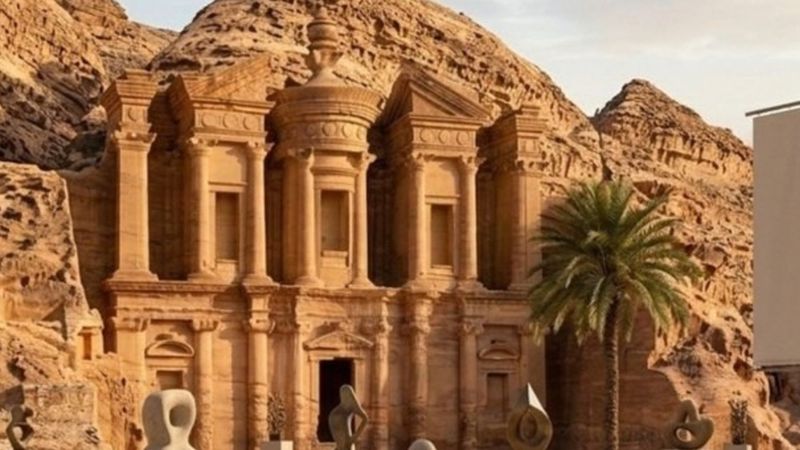
Petra Beyond Indiana Jones
The 1989 film gave Petra a façade and invented everything behind it. The real story is in the water systems, the aniconic sculpture, the painter who framed your photograph in 1839 and the families moved out so the world could come in.
Spielberg's crew filmed the Treasury's façade in Jordan, then built the Grail chamber on a soundstage in Hertfordshire — because the real interior of Al-Khazneh is a plain, undecorated room. It's a perfect miniature of how Petra is understood: one wall, photographed a million times a year, standing in for a city that is mostly still unexcavated.
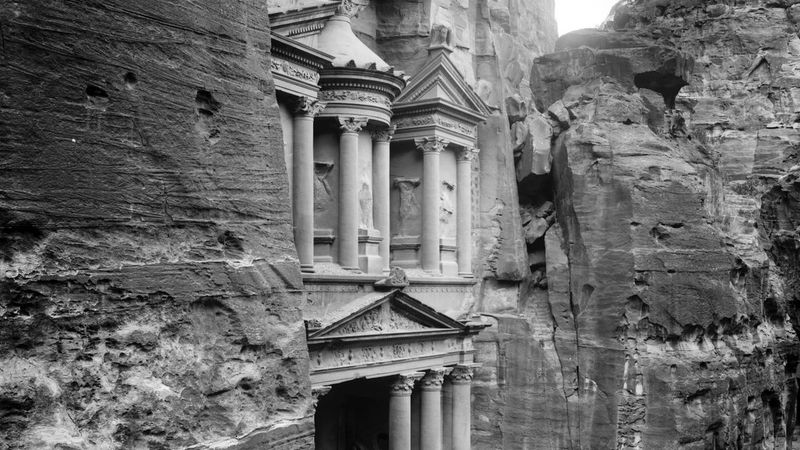
Filmed, but Not Recorded: The Arab World’s Missing Film Locations
Wikidata knows Gladiator was filmed in Morocco. It doesn’t know where.
Ouarzazate is the second most filmed place in the Middle East and North Africa, yet 25 of its 27 productions are recorded only in Wikipedia prose. We compared filming records worldwide and found that in the Arab world, Wikidata usually knows the country but not the place.
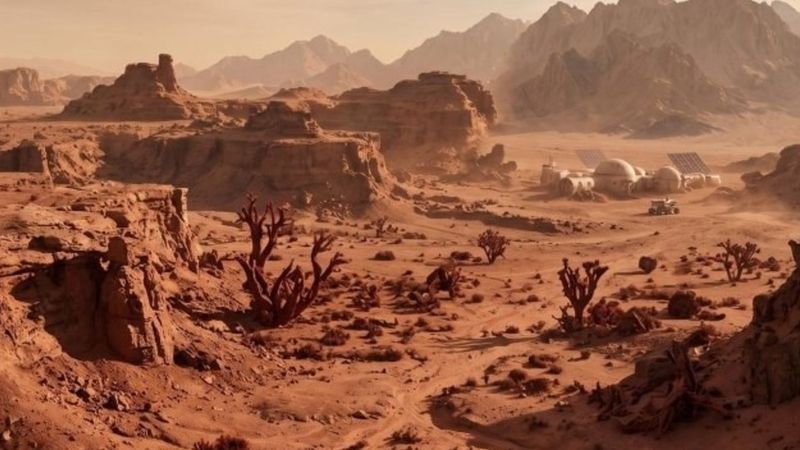
Why Every Sci-Fi Desert Looks Arab
From Arrakis to Tatooine, when a film wants a desert to feel ancient, prophetic and alien, it reaches for an Arab and Berber vocabulary — and reveals more about the West that built it than the region it borrows from.
The wrapped faces, the trilling women, the barely-displaced Arabic: cinema's alien deserts keep sounding Arab. But the vocabulary was assembled in the West — from Orientalist painting to Lawrence to Dune — and it says more about who is looking than about anyone being looked at.