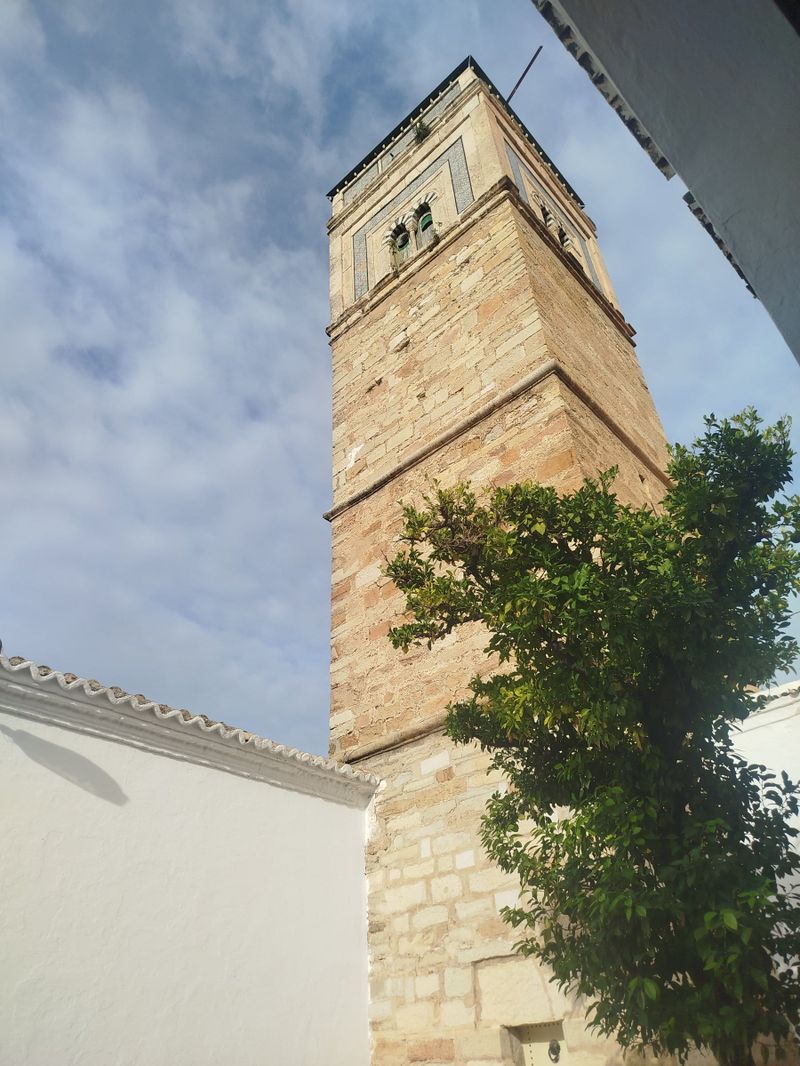
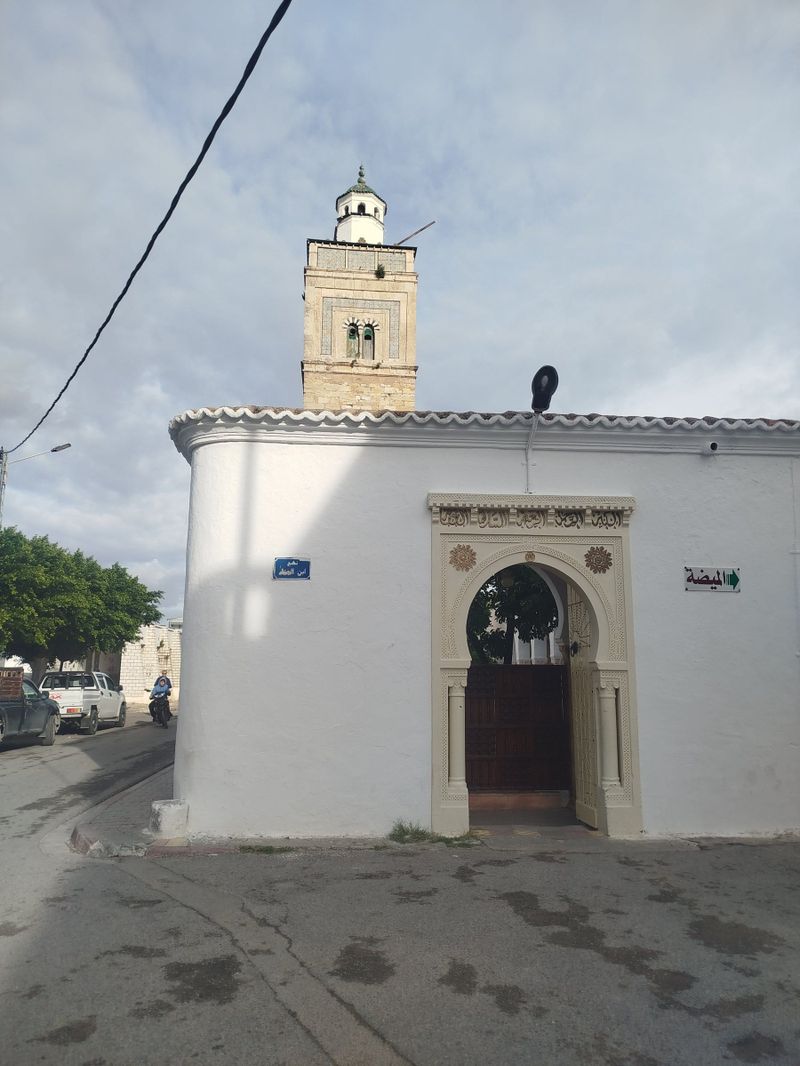
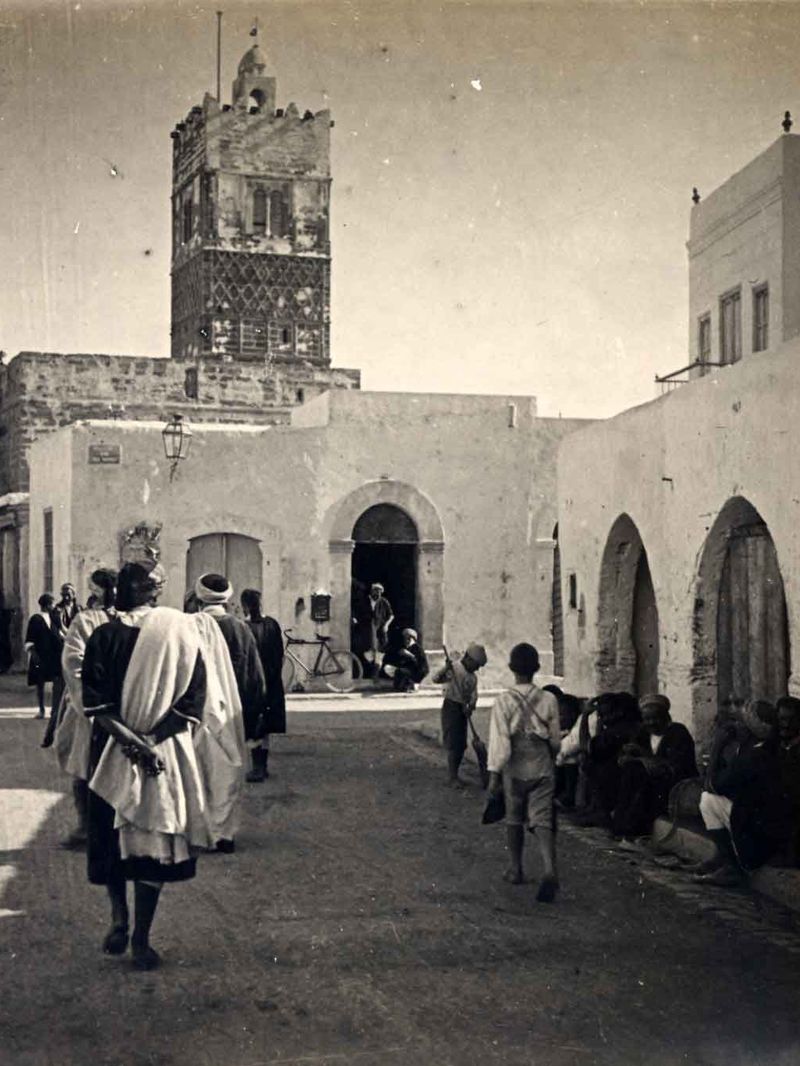
The Great Mosque stands at the heart of Soliman, a small town at the base of the Cap Bon peninsula, about thirty kilometres south-east of Tunis. It is the oldest monument of the town and its emblem: a white mosque with a tall square minaret that rises over the old market square.
Soliman took its present form in the early seventeenth century, when Muslims expelled from Spain, the Moriscos, settled here after the great expulsions that began in 1609. Testour and Zaghouan received refugees in the same years. The newcomers turned Soliman into a prosperous farming town and gave it the features of a small city, with mosques and a market at its centre.
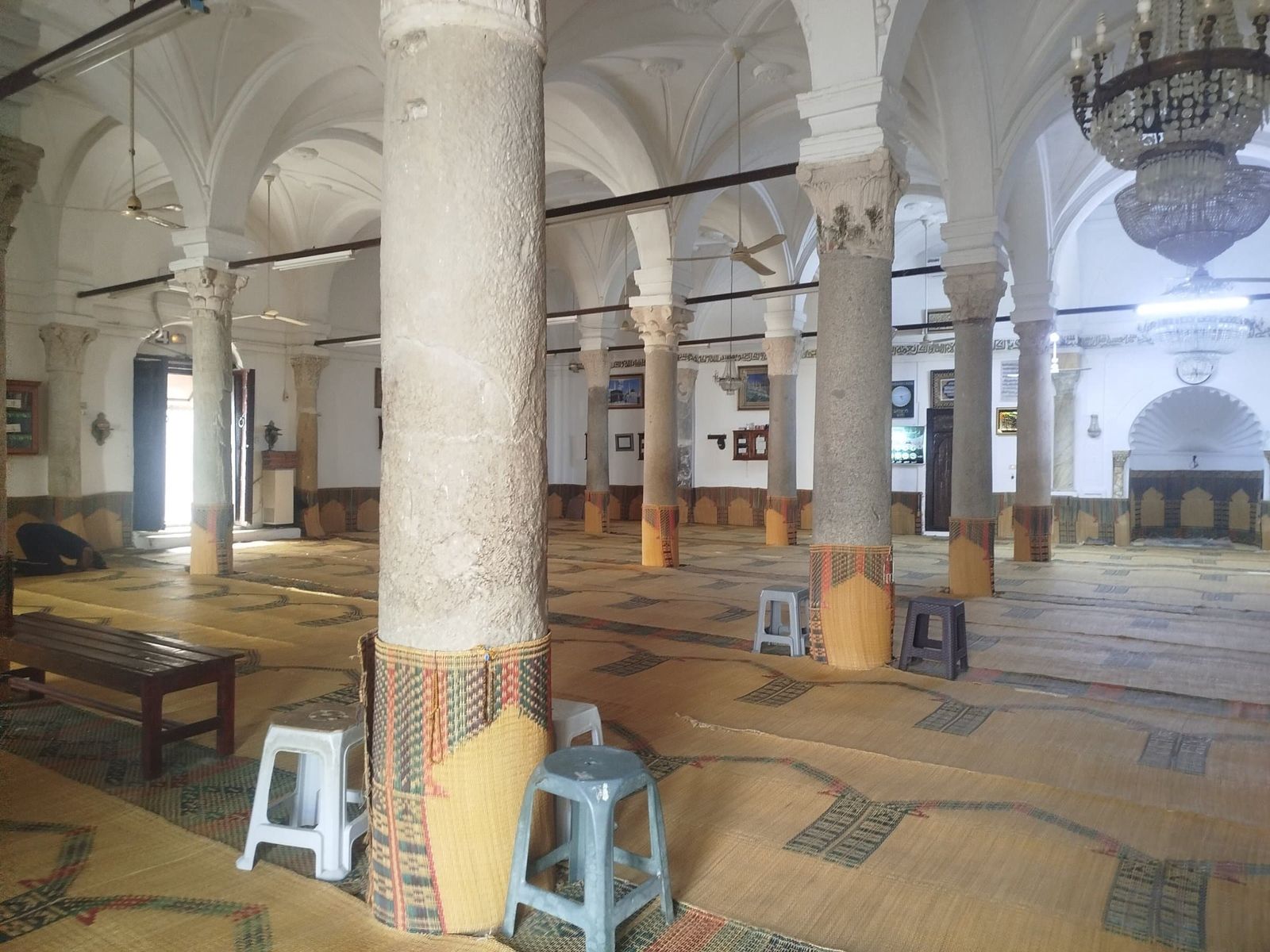
The Great Mosque was built around 1616. It follows the Maliki rite, the most common in Tunisia. It carries the memory of its builders in its architecture. The prayer hall is roofed with half-round Andalusian tiles laid over an inner ceiling, a way of building typical of Spain rather than of Tunisia. Inside, rows of arches rest on columns and capitals of different origins, many of them taken from Roman ruins in the area.
In 2016 the town celebrated the four hundredth anniversary of the mosque. Local associations used the occasion to call for its restoration, especially of the minaret. The mosque remains in daily use and is still the symbol of the town's Andalusian identity.
Exhibo editorial
Soliman is easy to drive through. It sits on the road to the beaches and the spas of Korbous. Most people never stop. They miss one of the most touching buildings in the region.
Look up at the roof before you look at anything else. Those curved clay tiles belong to Andalusia, not to North Africa. Four centuries ago a community that had lost its country brought them here, along with its craftsmen and its habits. Then sit in the café on the square under the minaret. It is the best way to feel how ordinary and how remarkable that survival was. Zaghouan, another town renewed by the Moriscos, has the Temple of the Waters at Zaghouan and makes a good second stop.
Gallery
How to find it
The mosque is in the centre of Soliman, beside the old market square, about forty minutes by road from Tunis. Its minaret is visible from the main street. Non-Muslim visitors can usually see the exterior and the courtyard entrance; access to the prayer hall depends on the guardian.
Similar places
All places
News by Exhibo
Editorial coverage on Exhibo
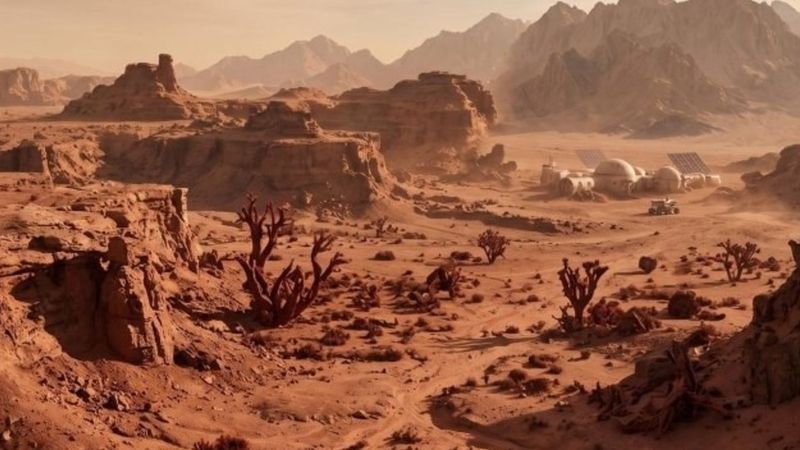
Why Every Sci-Fi Desert Looks Arab
From Arrakis to Tatooine, when a film wants a desert to feel ancient, prophetic and alien, it reaches for an Arab and Berber vocabulary — and reveals more about the West that built it than the region it borrows from.
The wrapped faces, the trilling women, the barely-displaced Arabic: cinema's alien deserts keep sounding Arab. But the vocabulary was assembled in the West — from Orientalist painting to Lawrence to Dune — and it says more about who is looking than about anyone being looked at.
The Real Aladdin: The Story That Belonged to No Country
Aladdin has no Arabic manuscript older than its French translation. Behind the gap stands a young man from Aleppo, catalogued for a century as anonymous.
The most famous "Arabian" tale in the world is missing from the oldest Arabic manuscript of the Thousand and One Nights — because before a French translator wrote it down in Paris, there was no manuscript of it to be missing from.
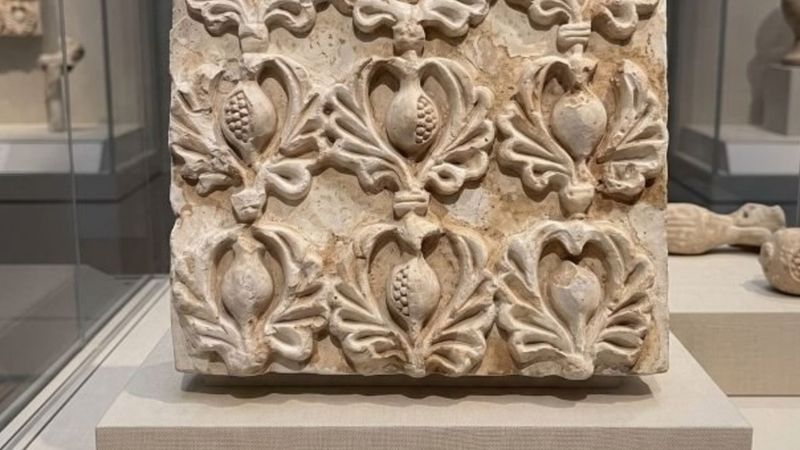
The Fruit We Are Sure We Recognize
How the pomegranate became one of the most confidently named motifs in Islamic ornament — and one of the least confidently identified — across a thousand years of tile, silk and stucco, with meanings we mostly attached later.
A slab of sixth-century plaster in the Met shows a fruit you recognise at a glance: a pomegranate, and surely it means paradise. Hold that certainty up to the light and it dissolves. Across a thousand years of tile, silk and stucco, the pomegranate is the shape we name most confidently and identify least — blurring into the artichoke and the palmette, its meanings attached by later viewers, its very name partly a nineteenth-century invention