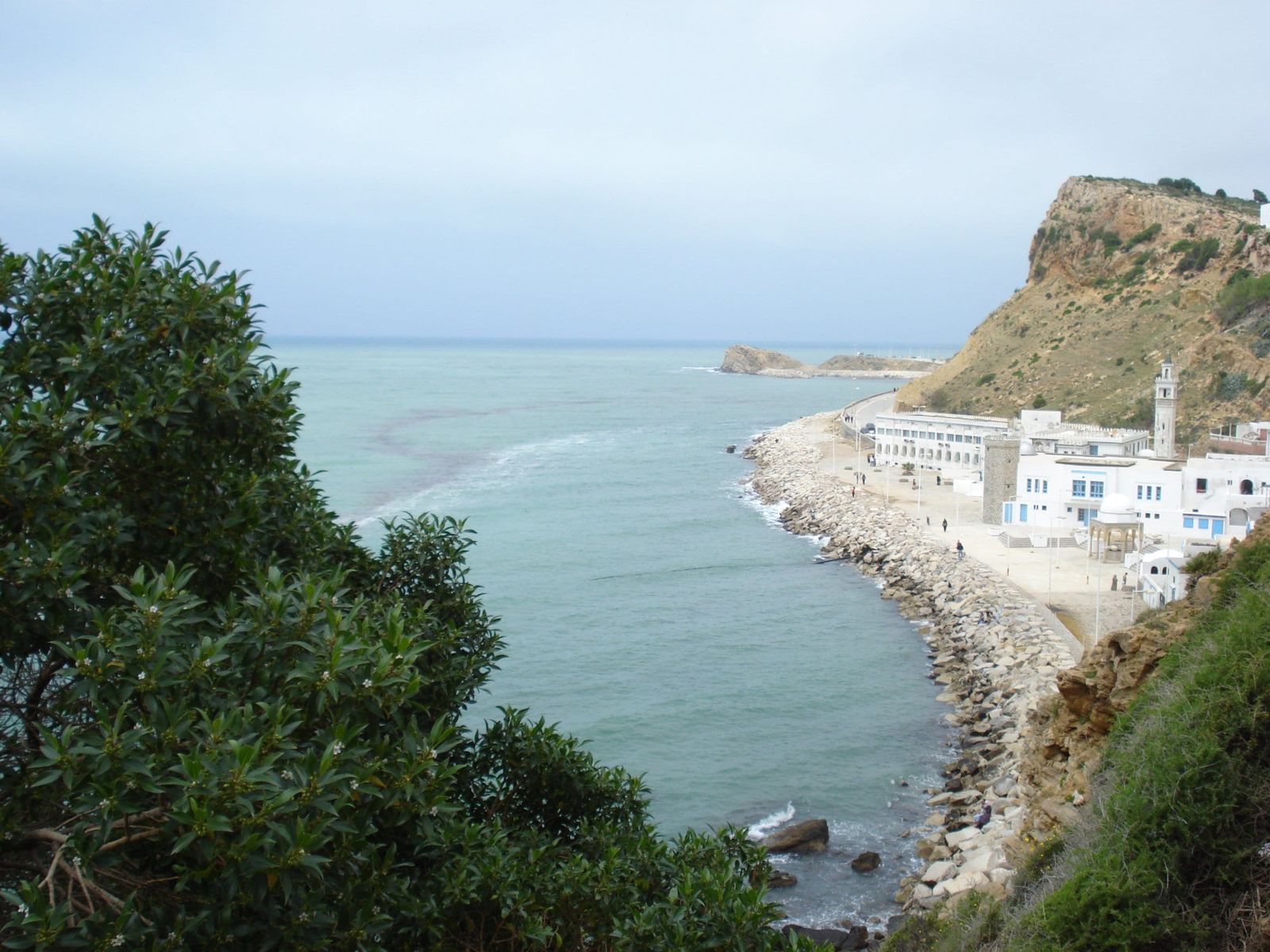
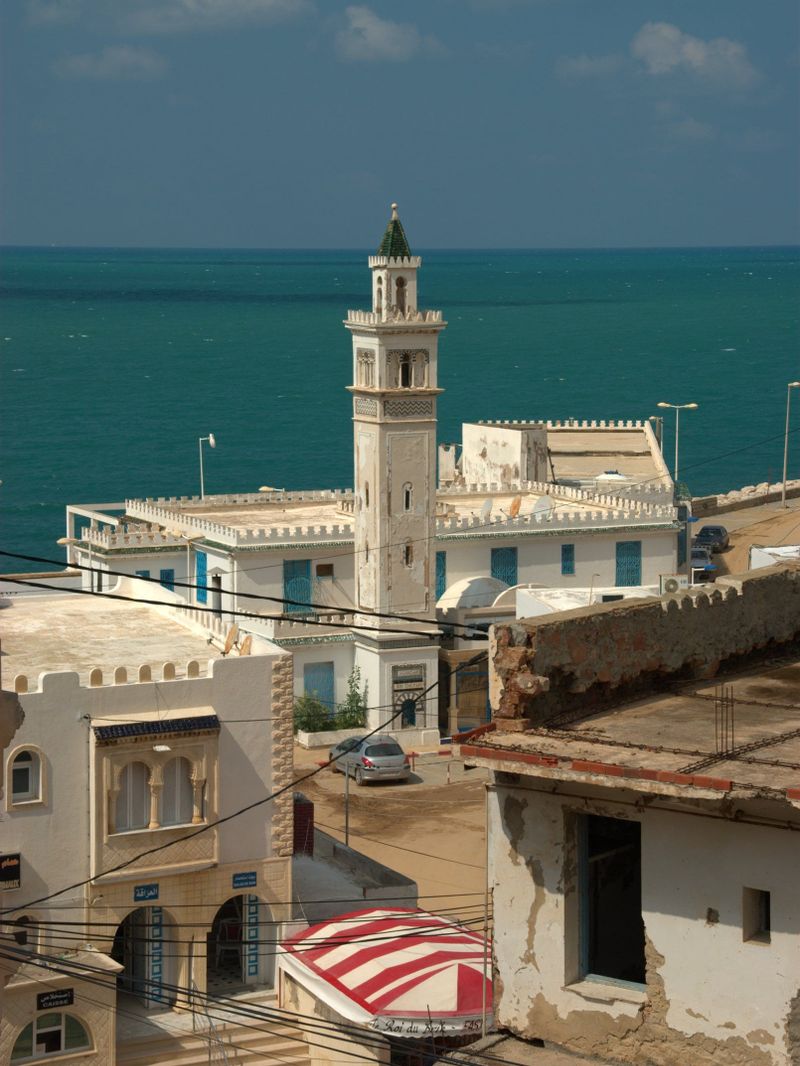
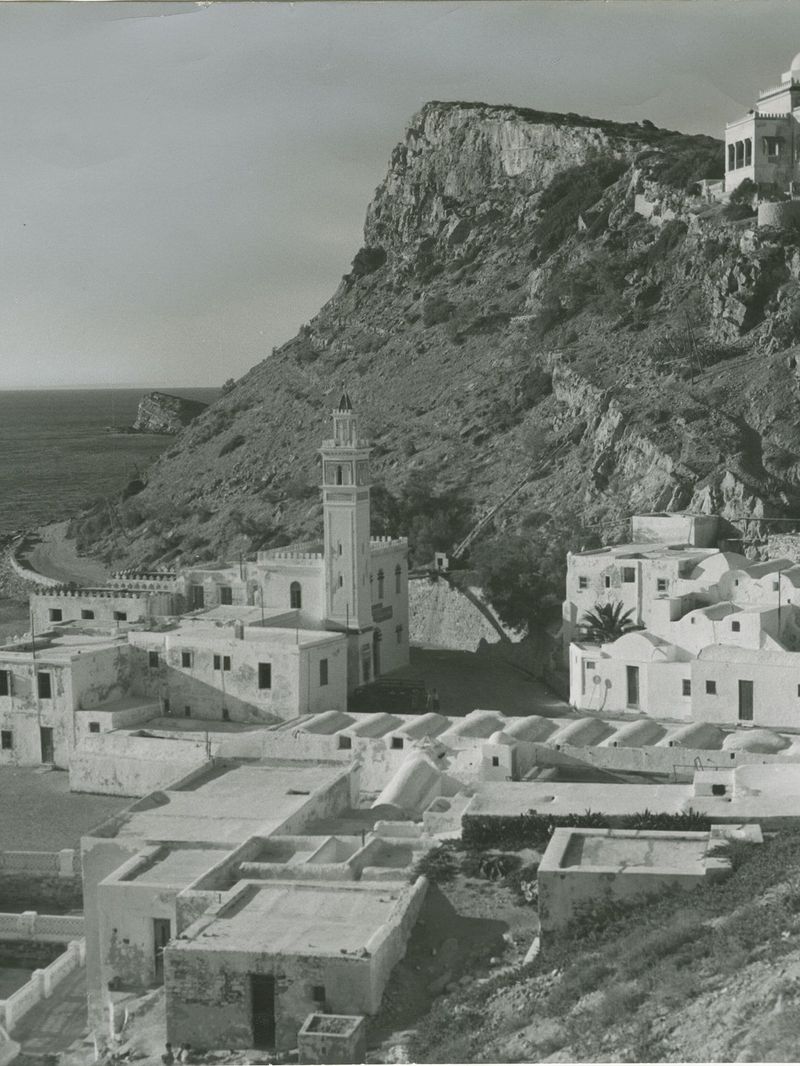
Korbous is a small village on the western coast of the Cap Bon peninsula, about sixty kilometres from Tunis by road, facing the capital across the Gulf of Tunis. It lies in a narrow ravine where the mountains drop straight into the sea. Its white houses, a mosque and the old bath buildings are packed into the gap at the bottom.
The village owes its existence to its hot springs. The Romans knew them as Aquae Calidae Carpitanae. After the Arab conquest the baths were largely forgotten. In the nineteenth century Ahmed Bey, ruler of Tunisia from 1837 to 1855, rediscovered them and had a bath pavilion built beside the water. The modern spa developed from the early twentieth century and the bey's pavilion is now part of the thermal establishment.
There are seven springs, each with its own name and reputation. Their water is rich in salt and minerals and comes out of the ground at between 40 and 60 °C. The best known for cures is Aïn Echfa, the healing spring. Others include Aïn El Kbira, the great spring, Aïn Sbia, the spring of the virgin. El Arraka is a steam grotto.
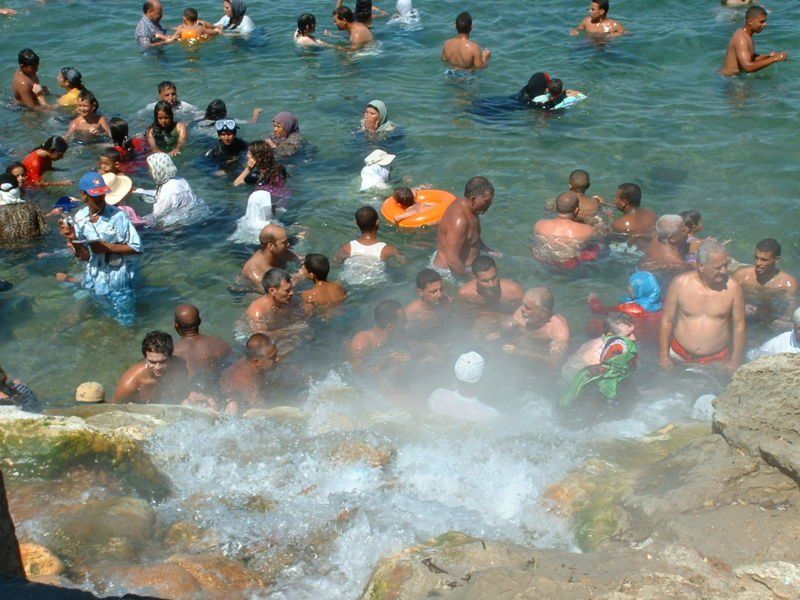
The most famous is Aïn Atrous, the spring of the billy goat, just outside the village. Its water runs from the rocks directly into the sea, so that a pool of warm water forms in the shallows. Bathers stand in it all year round, even in winter, while the steam rises around them. The coast road beyond it is one of the most spectacular in Tunisia, cut into folded cliffs above coves of clear water.
Exhibo editorial
Korbous does not look like a spa. There are no grand hotels and no promenade. It is one road, a few houses and a lot of steam, squeezed under a mountain. That is exactly why people love it.
Go to Aïn Atrous on a cold winter morning. Families stand chest-deep in the sea while hot water tumbles over the rocks behind them, everyone talking at once, the air smelling faintly of minerals. It is a two-thousand-year-old habit carried on without any ceremony. Drive back along the cliffs in the afternoon and stop for the Great Mosque of Soliman on the way.
Gallery
How to find it
Korbous is reached by the coast road from Soliman, or from the Cap Bon towns via Sidi Raïs. Aïn Atrous is beside the coast road just outside the village; park on the roadside and walk down to the rocks. The spa buildings are in the centre of the village.
Similar places
All places
News by Exhibo
Editorial coverage on Exhibo
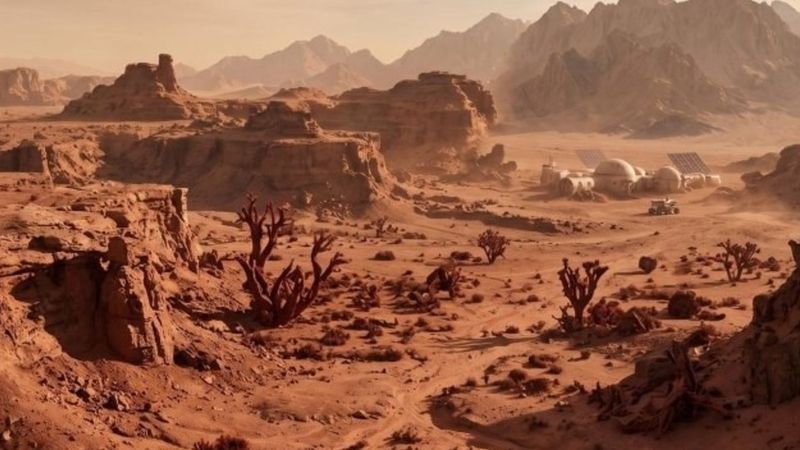
Why Every Sci-Fi Desert Looks Arab
From Arrakis to Tatooine, when a film wants a desert to feel ancient, prophetic and alien, it reaches for an Arab and Berber vocabulary — and reveals more about the West that built it than the region it borrows from.
The wrapped faces, the trilling women, the barely-displaced Arabic: cinema's alien deserts keep sounding Arab. But the vocabulary was assembled in the West — from Orientalist painting to Lawrence to Dune — and it says more about who is looking than about anyone being looked at.
The Real Aladdin: The Story That Belonged to No Country
Aladdin has no Arabic manuscript older than its French translation. Behind the gap stands a young man from Aleppo, catalogued for a century as anonymous.
The most famous "Arabian" tale in the world is missing from the oldest Arabic manuscript of the Thousand and One Nights — because before a French translator wrote it down in Paris, there was no manuscript of it to be missing from.
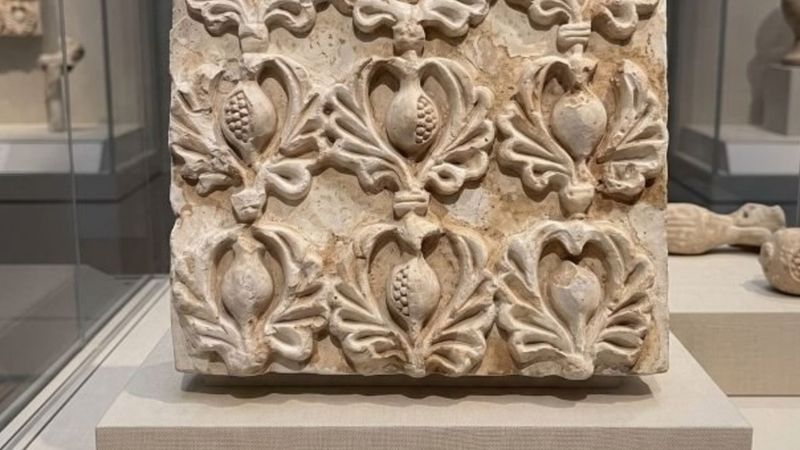
The Fruit We Are Sure We Recognize
How the pomegranate became one of the most confidently named motifs in Islamic ornament — and one of the least confidently identified — across a thousand years of tile, silk and stucco, with meanings we mostly attached later.
A slab of sixth-century plaster in the Met shows a fruit you recognise at a glance: a pomegranate, and surely it means paradise. Hold that certainty up to the light and it dissolves. Across a thousand years of tile, silk and stucco, the pomegranate is the shape we name most confidently and identify least — blurring into the artichoke and the palmette, its meanings attached by later viewers, its very name partly a nineteenth-century invention