
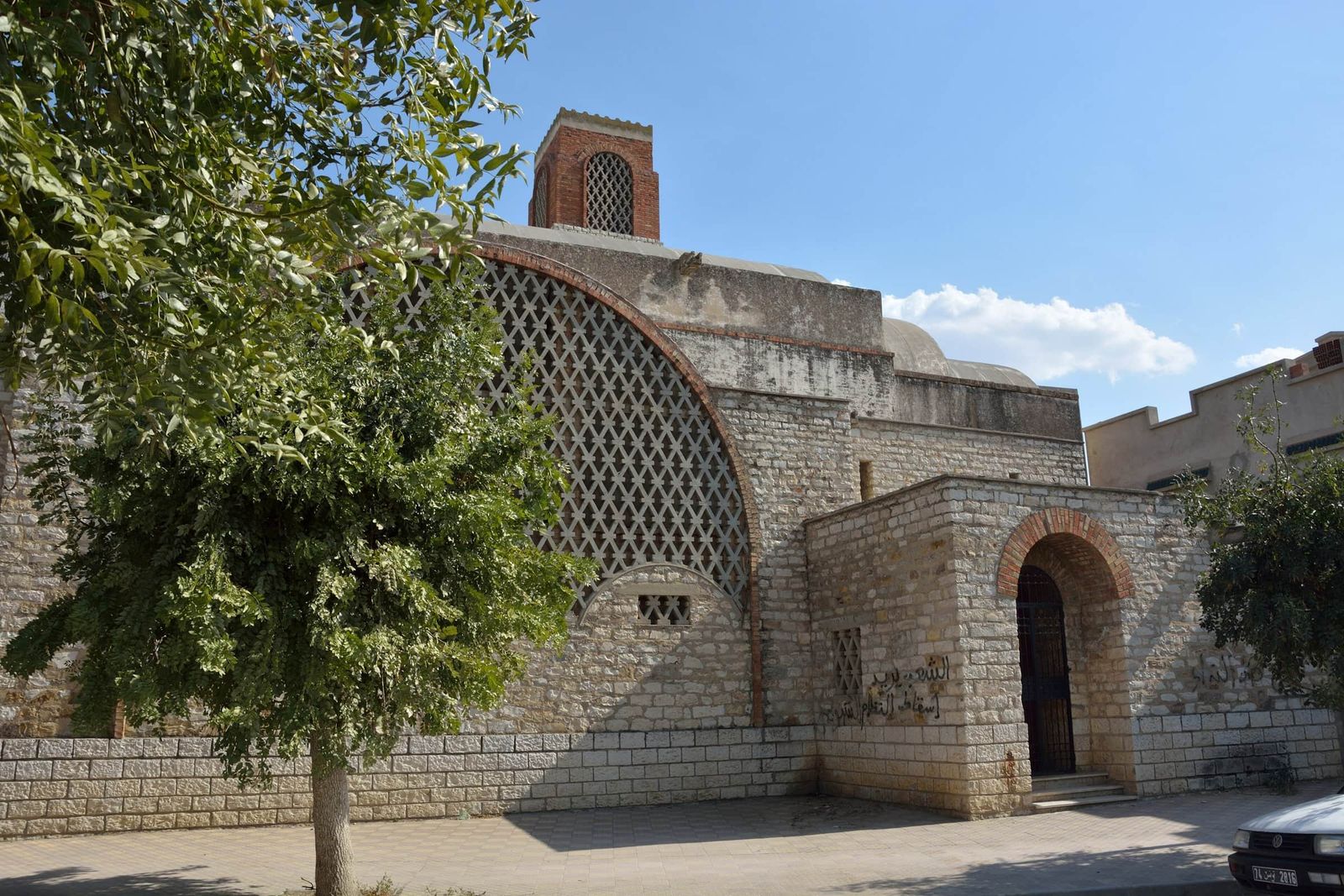
The former Church of Saints Perpetua and Felicity stands in the centre of Tebourba, a market town in the Medjerda valley about thirty kilometres west of Tunis. In antiquity the town was Thuburbo Minus. The church is dedicated to two of the most famous early Christian martyrs of North Africa, Perpetua and Felicity, who were put to death in the arena at Carthage in 203.
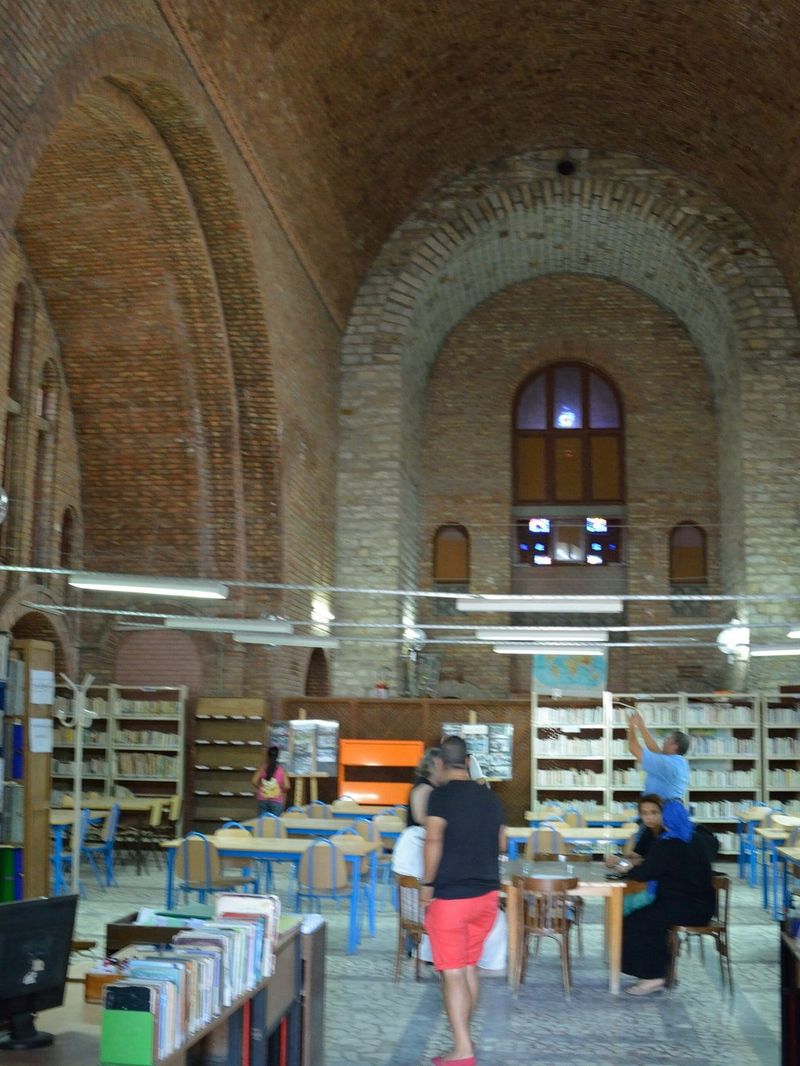
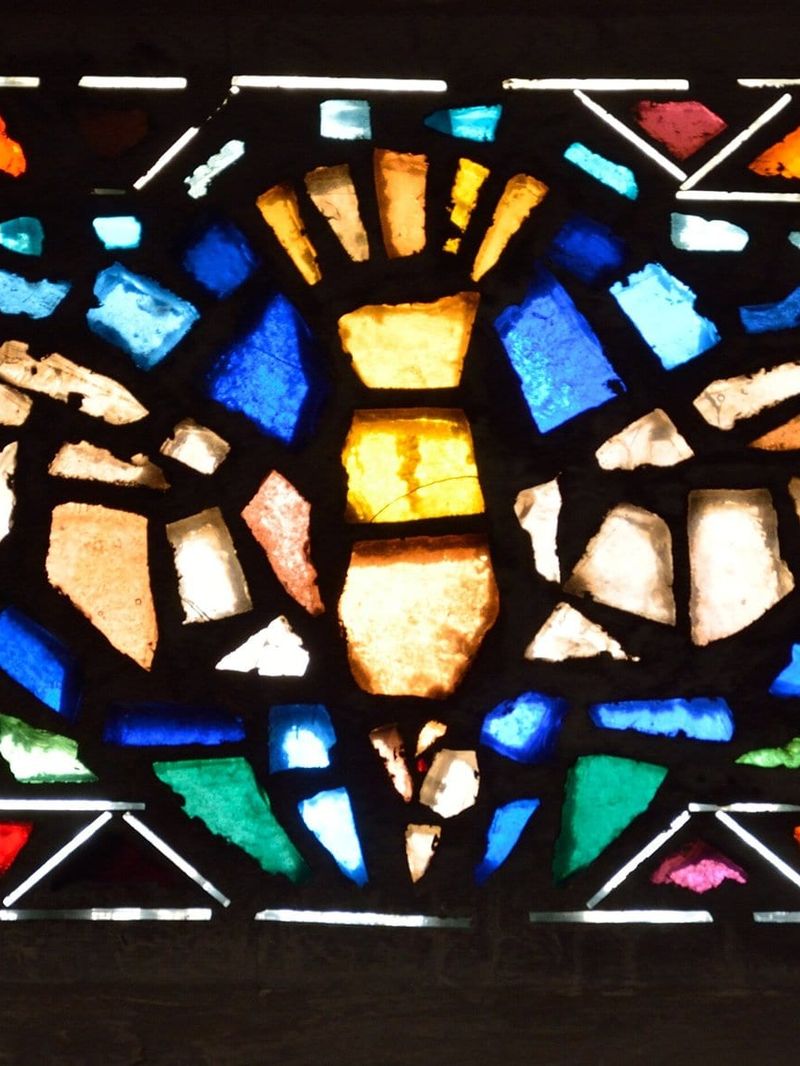
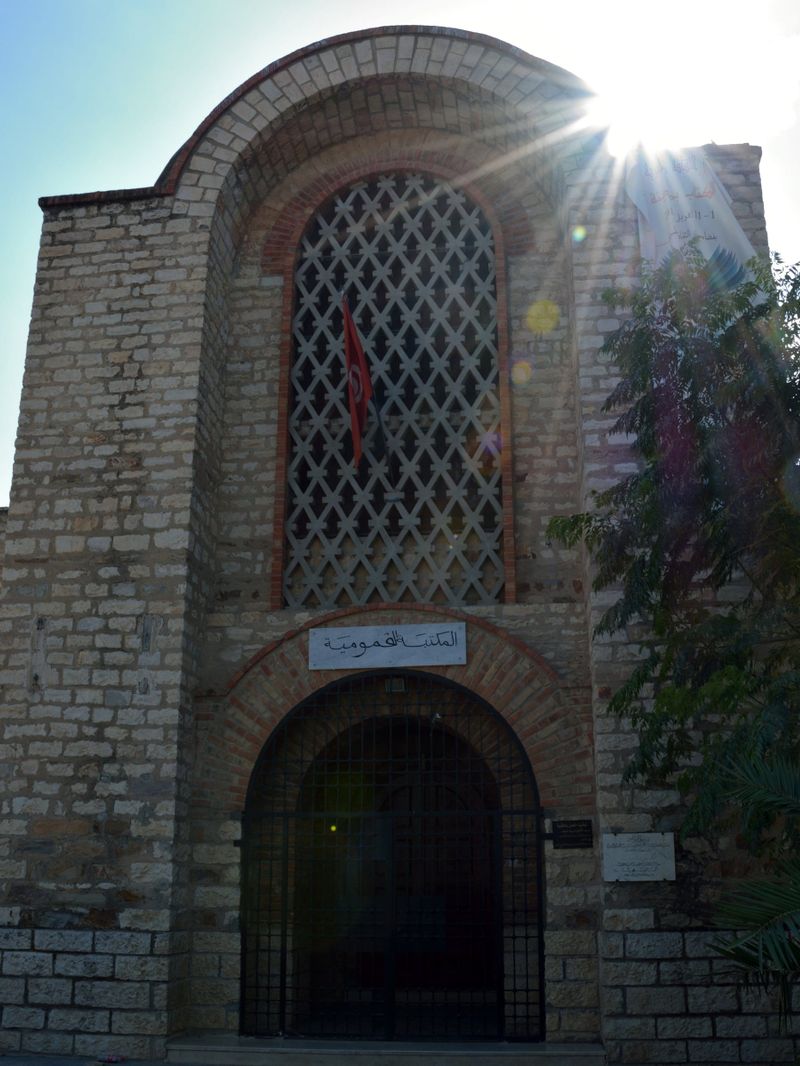
The first church was begun in 1903 and completed in 1905. During the fighting in Tunisia in the Second World War it was destroyed at the end of 1942. It was rebuilt in 1947 in a very different style. The new building is a compact block of pale cut stone and brick. Its facade is dominated by a great round arch filled with a brick lattice. Inside, the nave is covered by tall brick vaults and lit through modern stained-glass windows in bright, abstract colours.
Later the church became the public library of Tebourba and served the town for more than thirty years. It closed in 2019. In 2026 the Ministry of Cultural Affairs announced its conversion into an art gallery, the first in the governorate of Manouba, with the work supervised by the national heritage institute. The gallery is planned to open in 2027.
Exhibo editorial
This is one of the most unexpected buildings in northern Tunisia. From the street it looks almost Byzantine, a box of brick and stone with an enormous latticed arch. Inside, brick vaults and coloured glass give it the warmth of a much older place.
It has already had two lives, as a church and as a library full of schoolchildren. A third is on the way. For now you will see it from outside. Come back when the gallery opens. Together with the bridge-dam of El Battan nearby, it makes a short and surprising detour from Tunis.
Gallery
How to find it
The church is in the centre of Tebourba, on the main avenue near the municipal library and the lycée Hannibal. Tebourba is reached by road or train from Tunis. The building is closed during its conversion and can be seen from the street. Further west along the Medjerda lie the Medjez-el-Bab War Cemetery and the Andalusian town of Testour with its Great Mosque.
Similar places
All places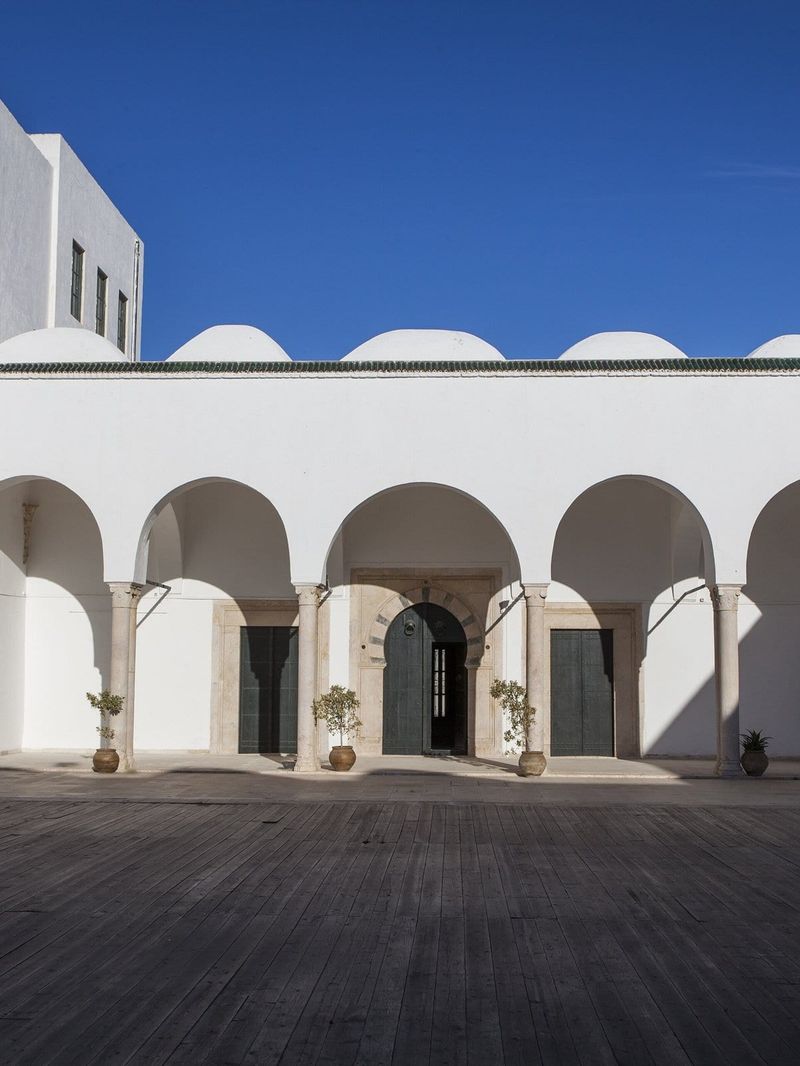
News by Exhibo
Editorial coverage on Exhibo
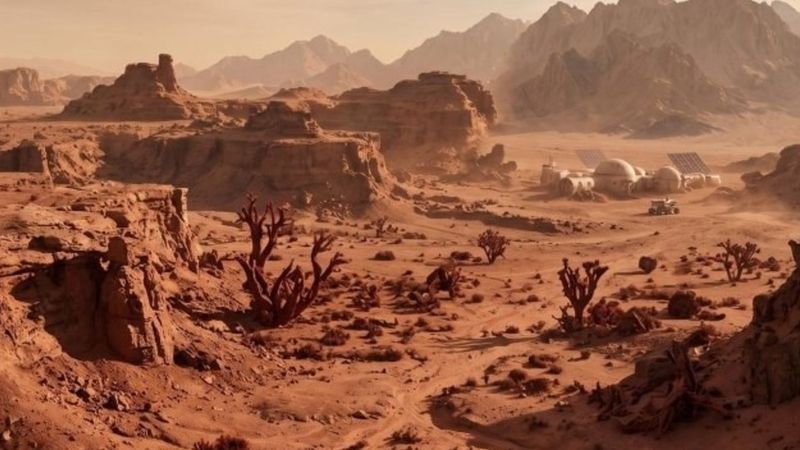
Why Every Sci-Fi Desert Looks Arab
From Arrakis to Tatooine, when a film wants a desert to feel ancient, prophetic and alien, it reaches for an Arab and Berber vocabulary — and reveals more about the West that built it than the region it borrows from.
The wrapped faces, the trilling women, the barely-displaced Arabic: cinema's alien deserts keep sounding Arab. But the vocabulary was assembled in the West — from Orientalist painting to Lawrence to Dune — and it says more about who is looking than about anyone being looked at.
The Real Aladdin: The Story That Belonged to No Country
Aladdin has no Arabic manuscript older than its French translation. Behind the gap stands a young man from Aleppo, catalogued for a century as anonymous.
The most famous "Arabian" tale in the world is missing from the oldest Arabic manuscript of the Thousand and One Nights — because before a French translator wrote it down in Paris, there was no manuscript of it to be missing from.
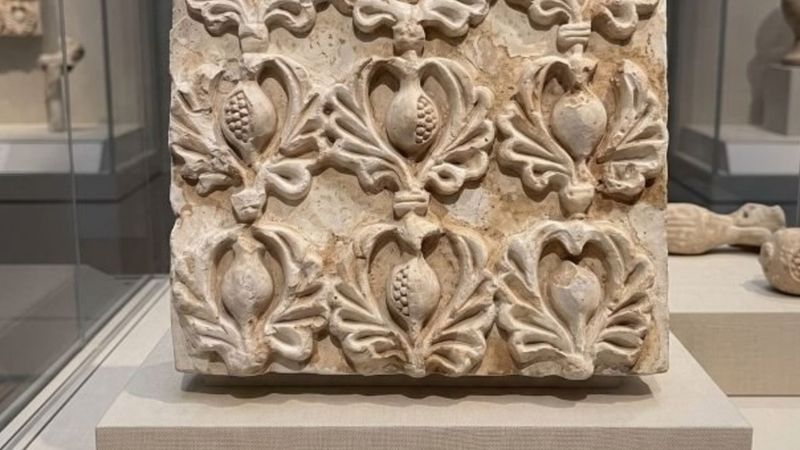
The Fruit We Are Sure We Recognize
How the pomegranate became one of the most confidently named motifs in Islamic ornament — and one of the least confidently identified — across a thousand years of tile, silk and stucco, with meanings we mostly attached later.
A slab of sixth-century plaster in the Met shows a fruit you recognise at a glance: a pomegranate, and surely it means paradise. Hold that certainty up to the light and it dissolves. Across a thousand years of tile, silk and stucco, the pomegranate is the shape we name most confidently and identify least — blurring into the artichoke and the palmette, its meanings attached by later viewers, its very name partly a nineteenth-century invention