
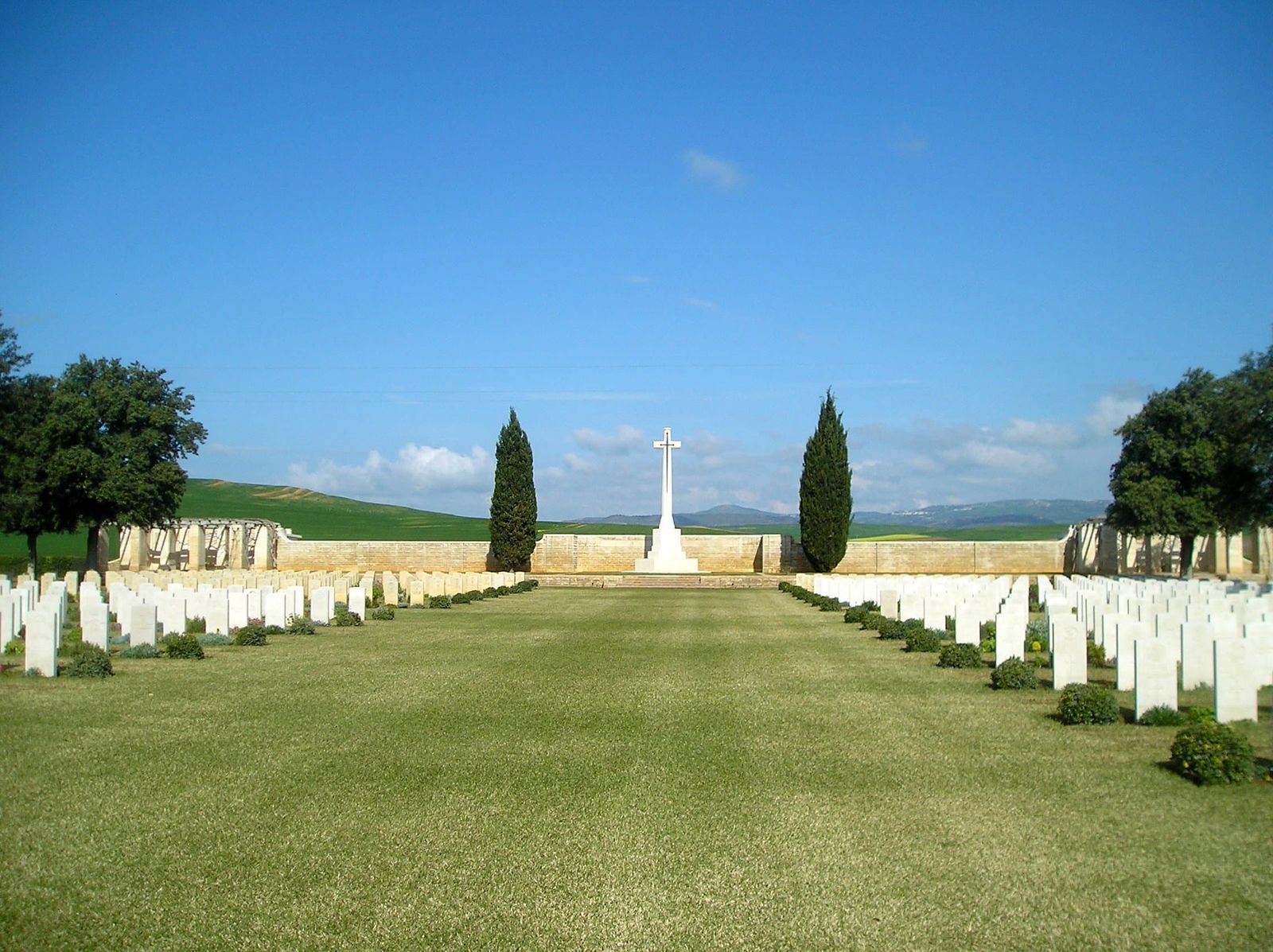
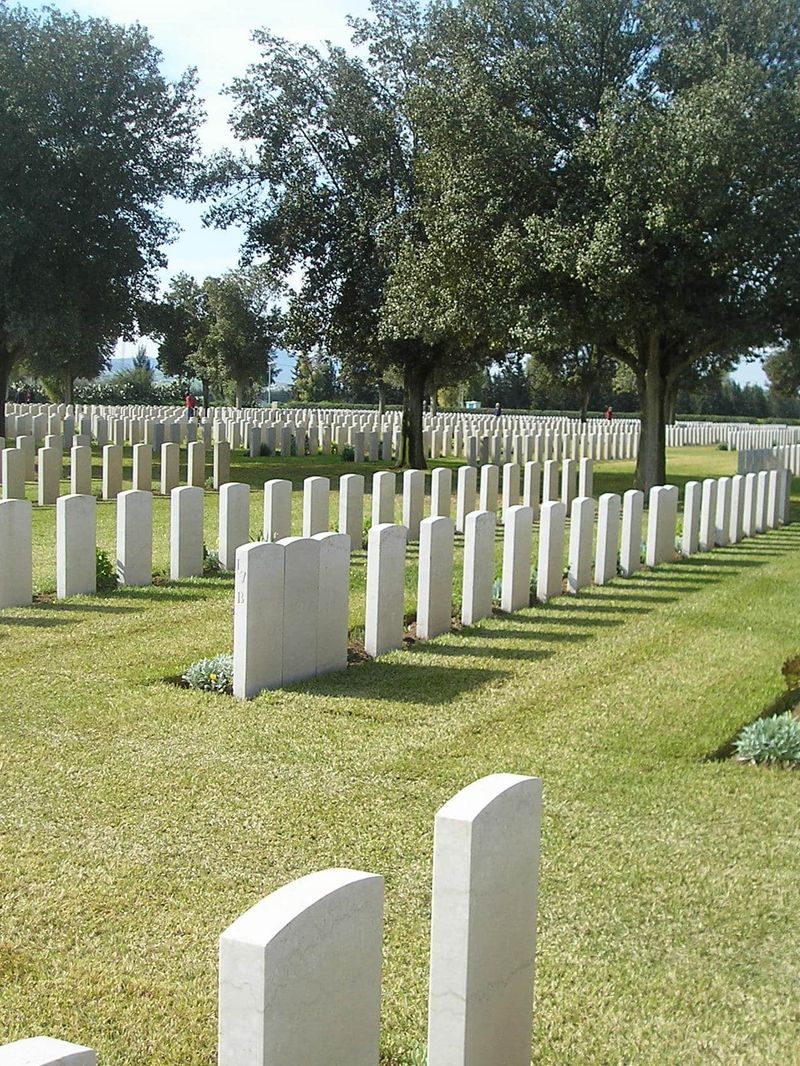
Medjez-el-Bab War Cemetery lies in open farmland about five kilometres west of the town of Medjez el Bab, in the valley of the Medjerda river. It is about sixty kilometres south-west of Tunis. It is one of the Commonwealth war cemeteries of the Second World War in Tunisia. The Commonwealth War Graves Commission looks after it. Nearly three thousand servicemen are buried here.
In November 1942 Allied armies landed in Morocco and Algeria and pushed east towards Tunis. Medjez el Bab, with its bridge over the Medjerda, marked the limit of their advance in December 1942. The town then stayed on the front line through the whole winter. The fighting ended only with the final Allied offensives of April and May 1943, which brought the war in North Africa to a close.
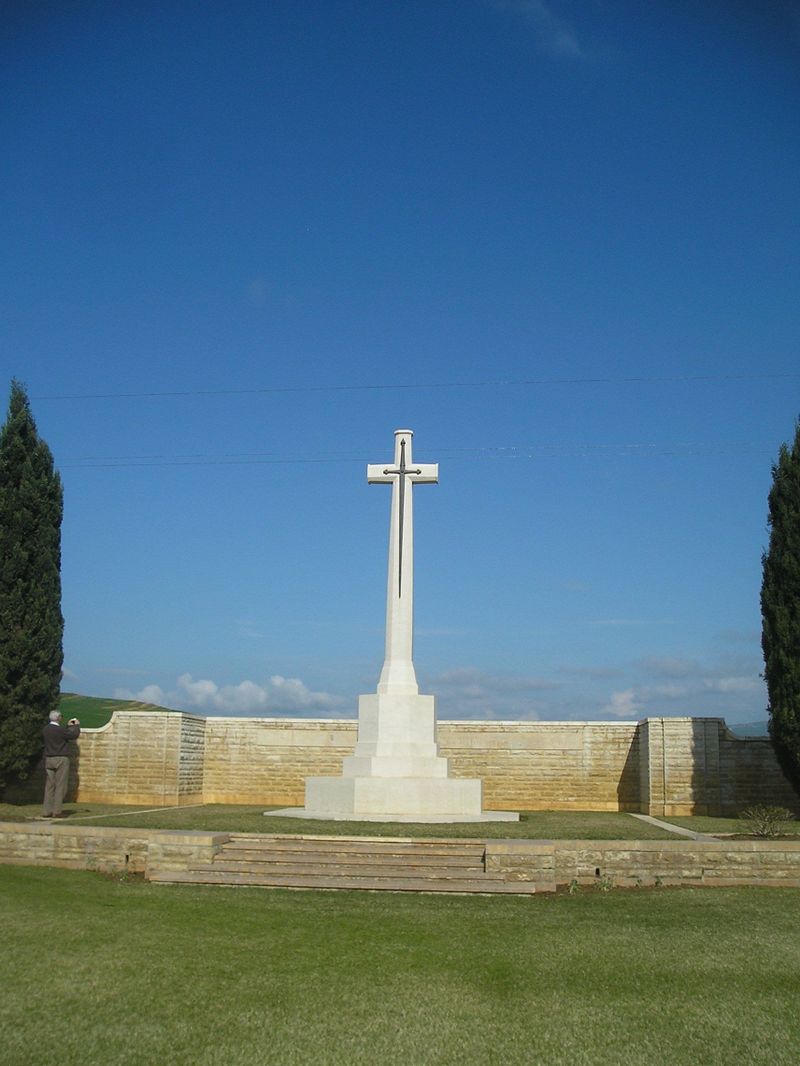
The cemetery was designed by the architect Sir Hubert Worthington. Two square stone pavilions flank the entrance gateway. The Stone of Remembrance stands beyond. Long rows of white headstones run across the lawns towards a raised terrace at the far end. There a long wall with a pergola at each end frames the Cross of Sacrifice.
The pergolas carry the Medjez-el-Bab Memorial. Its panels bear the names of almost two thousand soldiers of the First and Eighth Armies who died in Algeria and Tunisia and have no known grave. The memorial was unveiled on 16 November 1957.
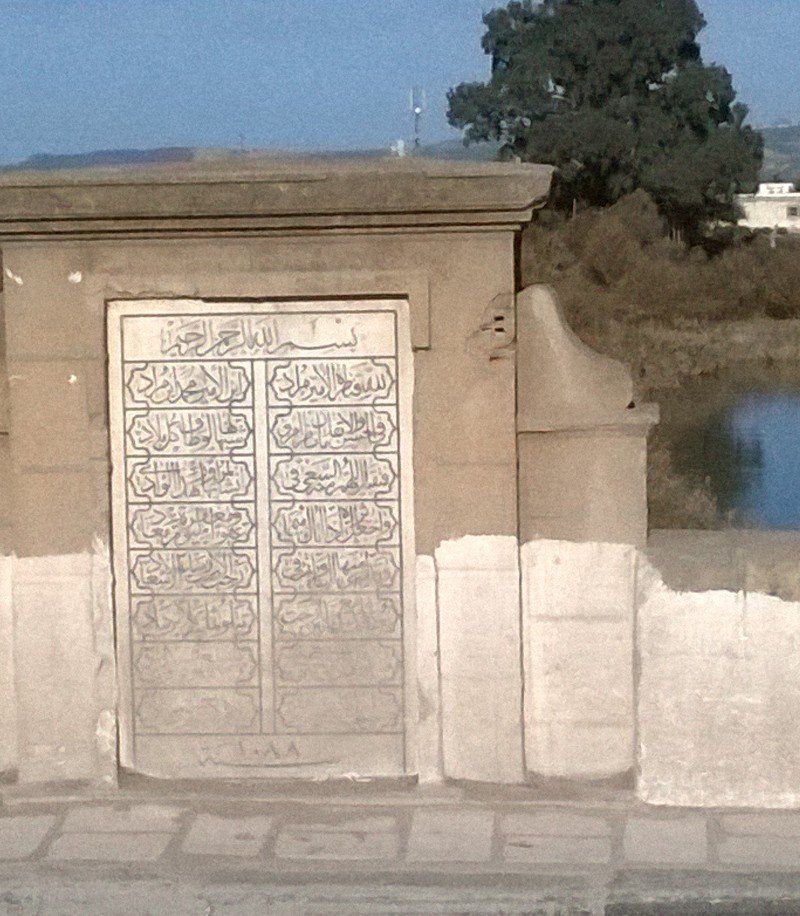
The town itself grew up at a crossing of the Medjerda. Its old stone bridge, known in Arabic as the Muradid bridge, dates from 1677 and still carries traffic. A carved inscription panel stands on its parapet.
Exhibo editorial
The road west from Tunis runs through wheat and olive groves. Then a long white wall appears in the fields and behind it the headstones, row after row, so regular that from a distance they look like a crop of their own. Cypresses mark the far end. Beyond them the hills where the front line sat all winter are still in plain view.
Walk down the central lawn to the cross and then turn round. From the terrace the whole cemetery lies below you. Then read the panels of names on the pergolas, men with no grave at all. It is very quiet here. On the way back, the old church of Tebourba and the bridge-dam of El Battan tell an older story of the same valley.
Gallery
How to find it
The cemetery is just west of Medjez el Bab, off the main road that runs through the town along the Medjerda valley. The entrance gateway faces the road; the Cross of Sacrifice is at the far end of the central lawn. The old bridge is in the town centre.
Similar places
All places
News by Exhibo
Editorial coverage on Exhibo

Why Every Sci-Fi Desert Looks Arab
From Arrakis to Tatooine, when a film wants a desert to feel ancient, prophetic and alien, it reaches for an Arab and Berber vocabulary — and reveals more about the West that built it than the region it borrows from.
The wrapped faces, the trilling women, the barely-displaced Arabic: cinema's alien deserts keep sounding Arab. But the vocabulary was assembled in the West — from Orientalist painting to Lawrence to Dune — and it says more about who is looking than about anyone being looked at.
The Real Aladdin: The Story That Belonged to No Country
Aladdin has no Arabic manuscript older than its French translation. Behind the gap stands a young man from Aleppo, catalogued for a century as anonymous.
The most famous "Arabian" tale in the world is missing from the oldest Arabic manuscript of the Thousand and One Nights — because before a French translator wrote it down in Paris, there was no manuscript of it to be missing from.
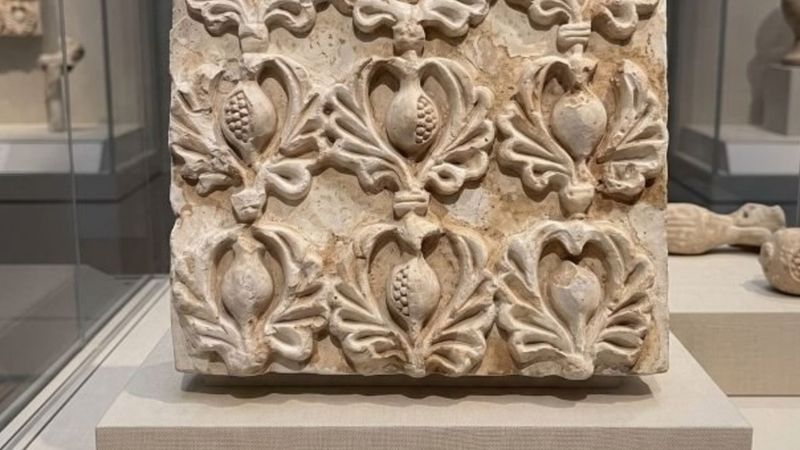
The Fruit We Are Sure We Recognize
How the pomegranate became one of the most confidently named motifs in Islamic ornament — and one of the least confidently identified — across a thousand years of tile, silk and stucco, with meanings we mostly attached later.
A slab of sixth-century plaster in the Met shows a fruit you recognise at a glance: a pomegranate, and surely it means paradise. Hold that certainty up to the light and it dissolves. Across a thousand years of tile, silk and stucco, the pomegranate is the shape we name most confidently and identify least — blurring into the artichoke and the palmette, its meanings attached by later viewers, its very name partly a nineteenth-century invention