
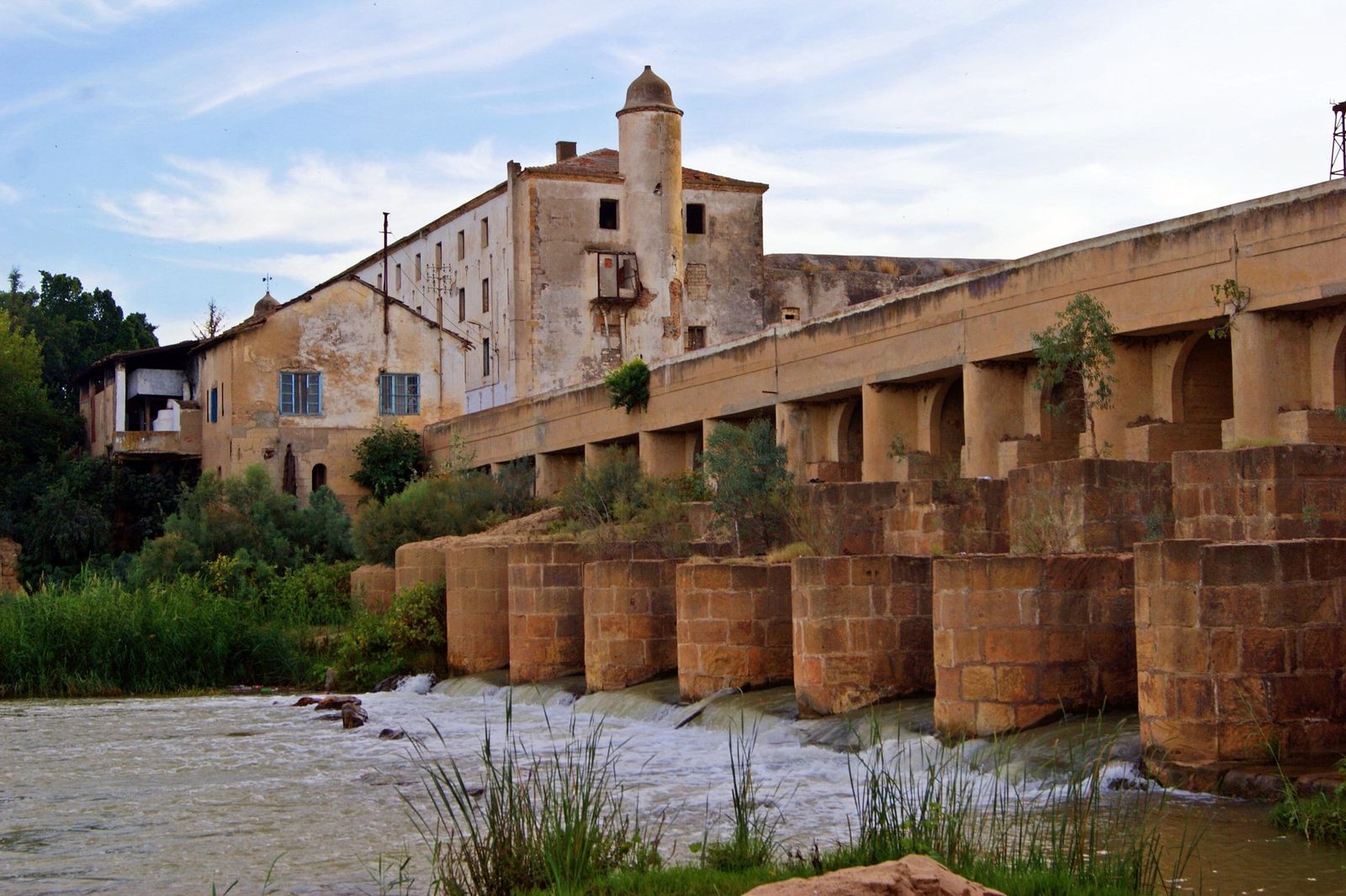
The bridge-dam of El Battan crosses the Medjerda, Tunisia's main river, at the small town of El Battan in the governorate of Manouba, about thirty-five kilometres west of Tunis. It is at once a bridge, a weir and the reason the town exists. It is still the way into El Battan from the main road.
The region was settled in the seventeenth century by Moriscos, Muslims expelled from Spain, who brought their farming and craft skills to the Medjerda valley. The present bridge was built in 1690 by Mohamed Bey el-Mouradi, who ruled Tunisia from 1686 to 1696. It is about 114 metres long. Its arches and massive rounded piers hold back the river and raise the water level, which served to irrigate the plain and to power mills.
Those mills gave the town its name. El Battan comes from the Spanish batán, a fulling mill used to soften woollen cloth. Beside the bridge stood a mill where wool was washed and felted for the chechia, the red felt cap that is the traditional headwear of Tunisia.
The bridge-dam is listed as a historic monument. The old factory buildings stand on the bank beside it. The river runs through the gaps between the piers below.
Exhibo editorial
El Battan is not on many itineraries, which makes it all the better. The bridge is heavy, honey-coloured and strangely beautiful, with water foaming between rounded piers that look more like a row of towers than a crossing.
What makes it extraordinary is the purpose. This is a piece of industrial architecture from the seventeenth century, built to make hats. Stand on the bank and imagine the wheels turning and the felt going out to every head in the country. The old church of Tebourba is a few minutes away. Thuburbo Majus lies further south on the same plain.
Gallery
How to find it
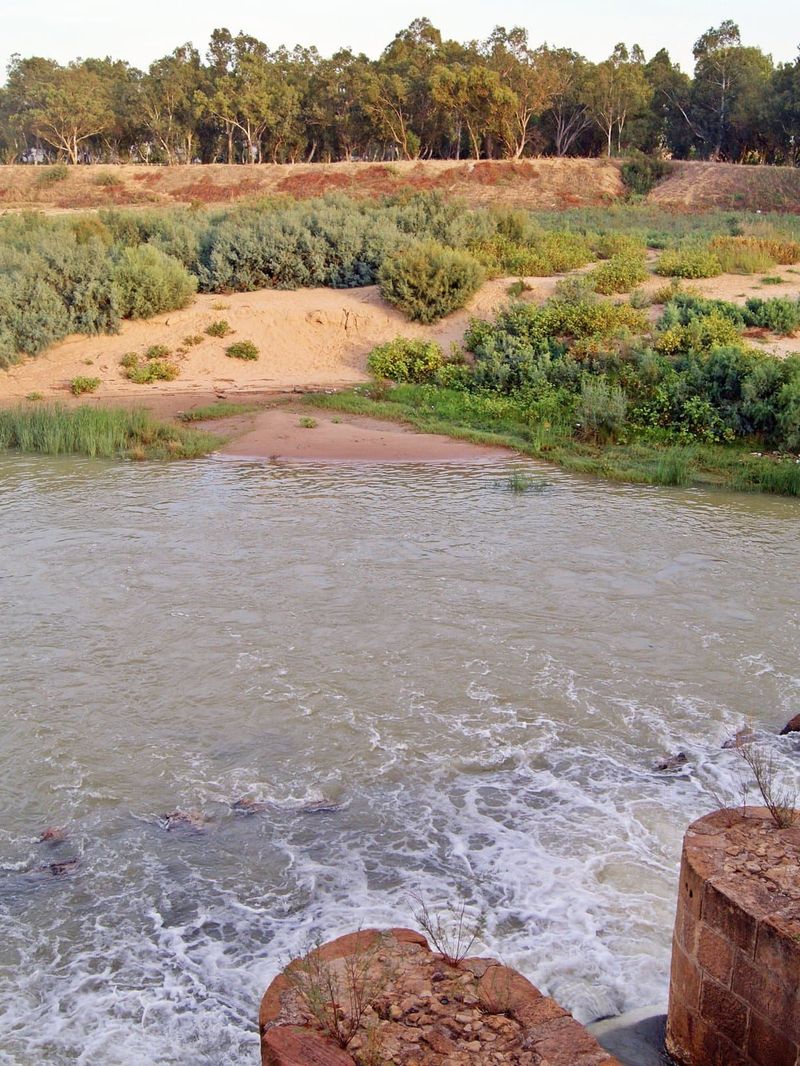
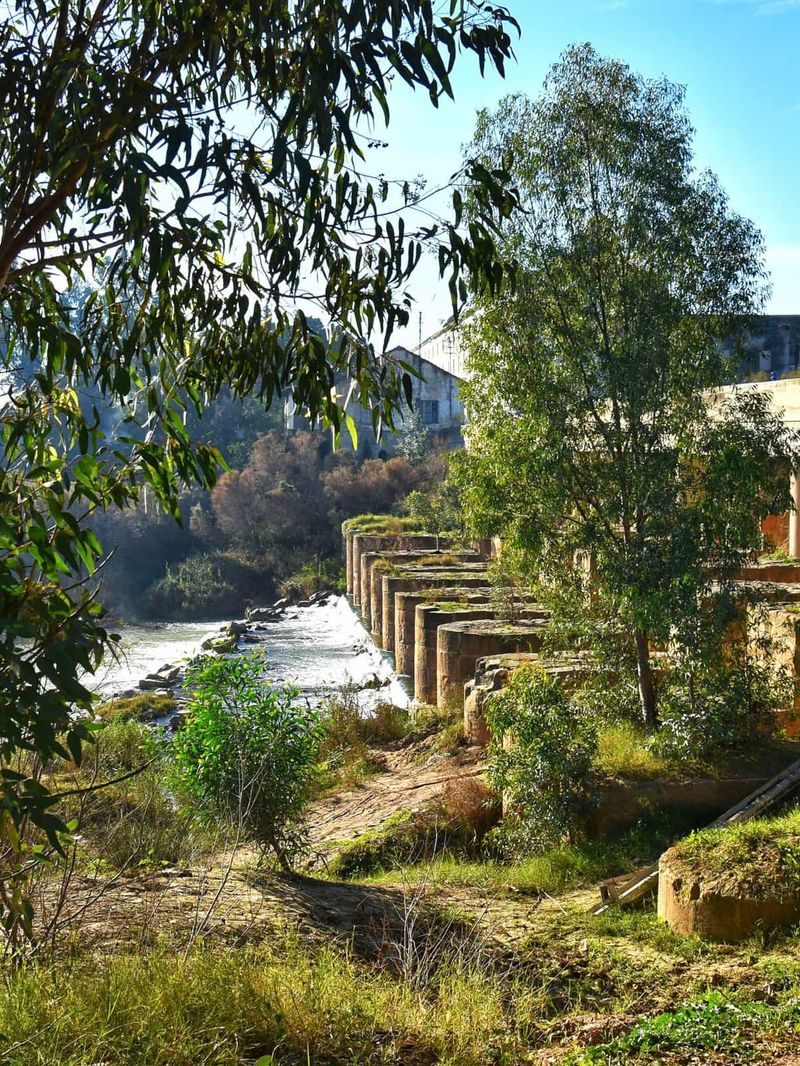
El Battan is west of Tunis on the road through Tebourba. The bridge carries the road into the town; there is space to park on the far bank. The best view is from the riverbank downstream, below the piers.
Similar places
All places
News by Exhibo
Editorial coverage on Exhibo
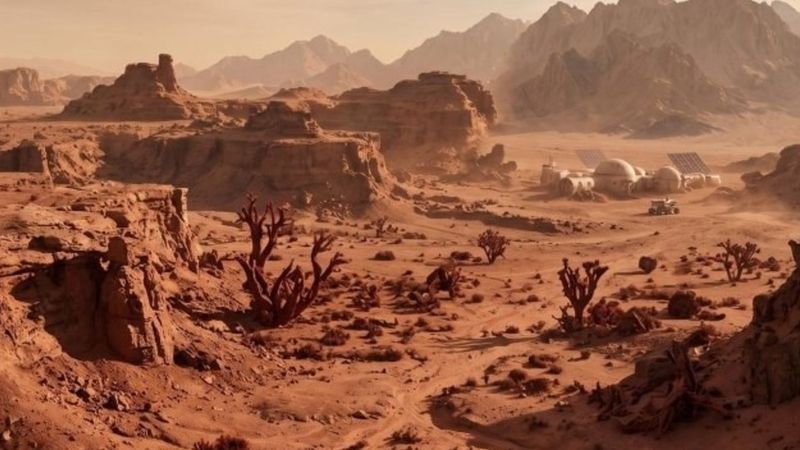
Why Every Sci-Fi Desert Looks Arab
From Arrakis to Tatooine, when a film wants a desert to feel ancient, prophetic and alien, it reaches for an Arab and Berber vocabulary — and reveals more about the West that built it than the region it borrows from.
The wrapped faces, the trilling women, the barely-displaced Arabic: cinema's alien deserts keep sounding Arab. But the vocabulary was assembled in the West — from Orientalist painting to Lawrence to Dune — and it says more about who is looking than about anyone being looked at.

The Real Aladdin: The Story That Belonged to No Country
Aladdin has no Arabic manuscript older than its French translation. Behind the gap stands a young man from Aleppo, catalogued for a century as anonymous.
The most famous "Arabian" tale in the world is missing from the oldest Arabic manuscript of the Thousand and One Nights — because before a French translator wrote it down in Paris, there was no manuscript of it to be missing from.
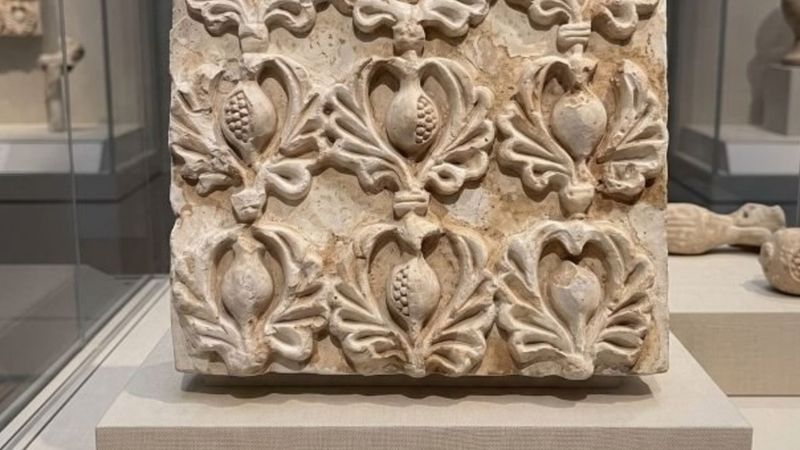
The Fruit We Are Sure We Recognize
How the pomegranate became one of the most confidently named motifs in Islamic ornament — and one of the least confidently identified — across a thousand years of tile, silk and stucco, with meanings we mostly attached later.
A slab of sixth-century plaster in the Met shows a fruit you recognise at a glance: a pomegranate, and surely it means paradise. Hold that certainty up to the light and it dissolves. Across a thousand years of tile, silk and stucco, the pomegranate is the shape we name most confidently and identify least — blurring into the artichoke and the palmette, its meanings attached by later viewers, its very name partly a nineteenth-century invention