
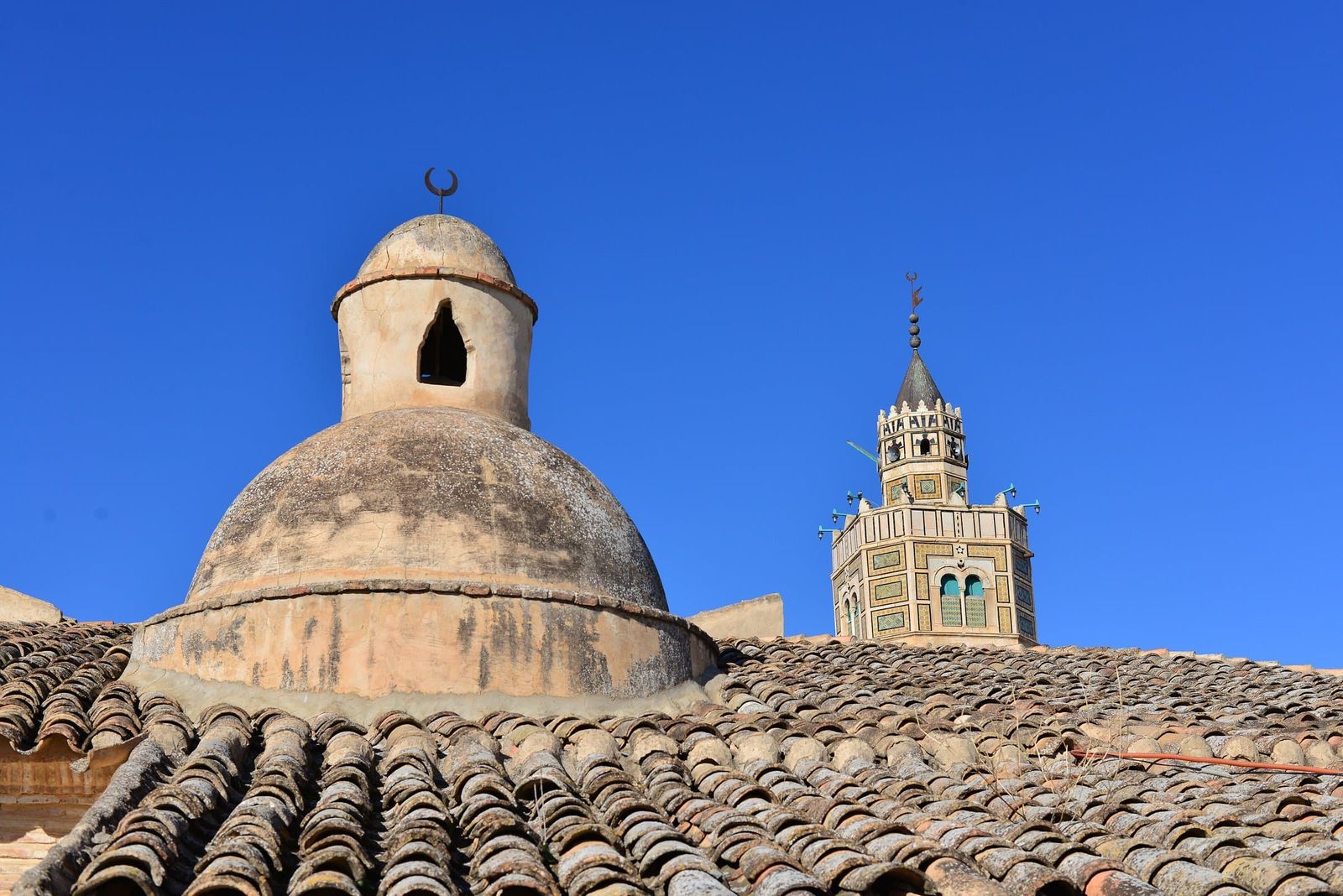
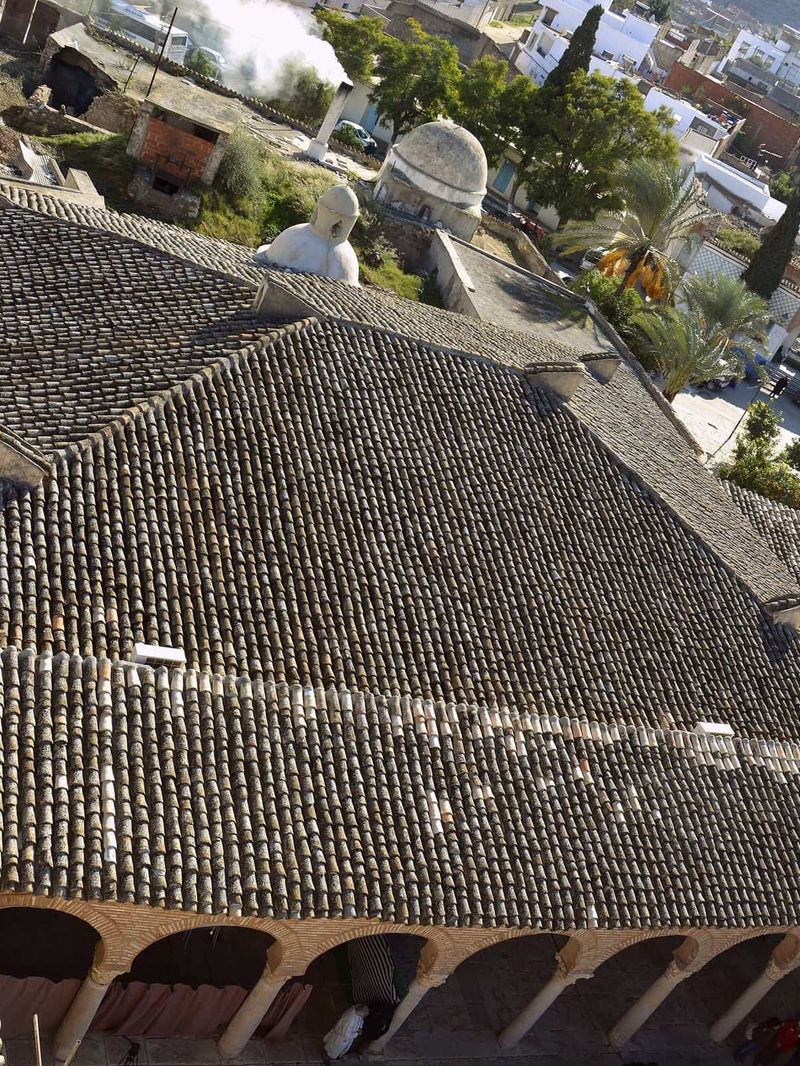
Testour is a small town on the Medjerda in the governorate of Béja, about seventy kilometres west of Tunis. It stands on the site of the Roman town of Tichilla. It is the most Andalusian of Tunisian towns. It was founded by Moriscos, the Muslims of Spain who were driven out after the general expulsion decreed by King Philip III in 1609. Its tiled roofs still recall the towns of southern Spain.
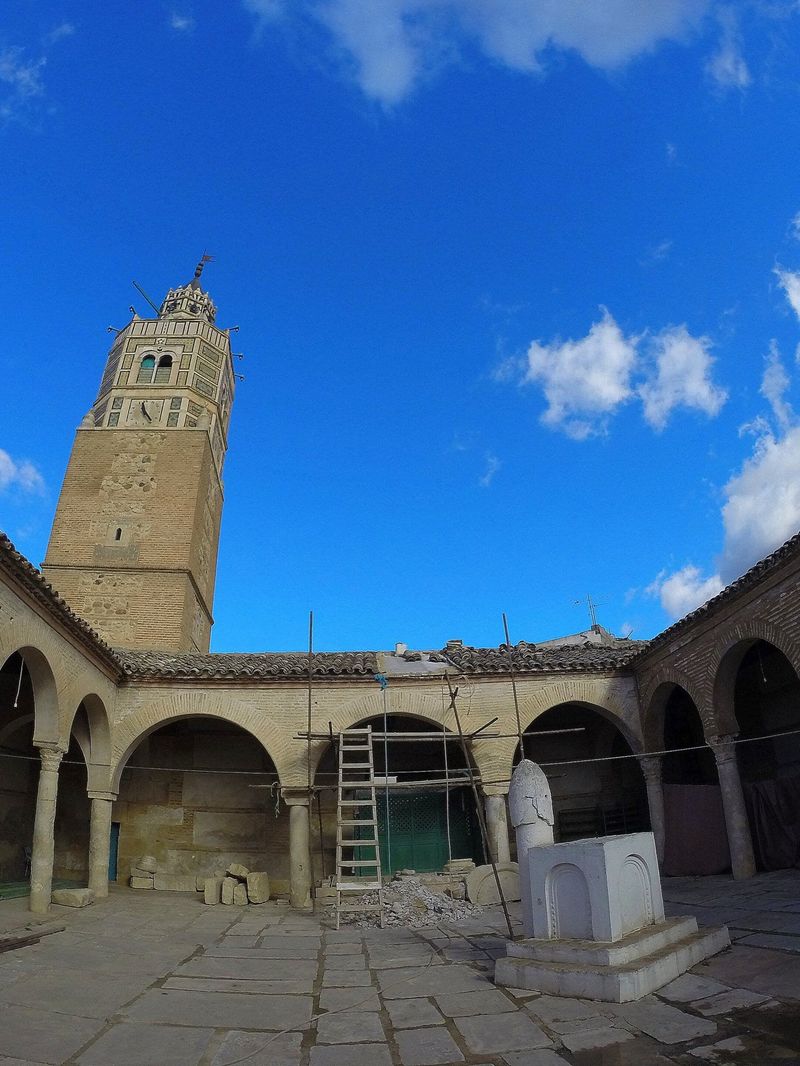
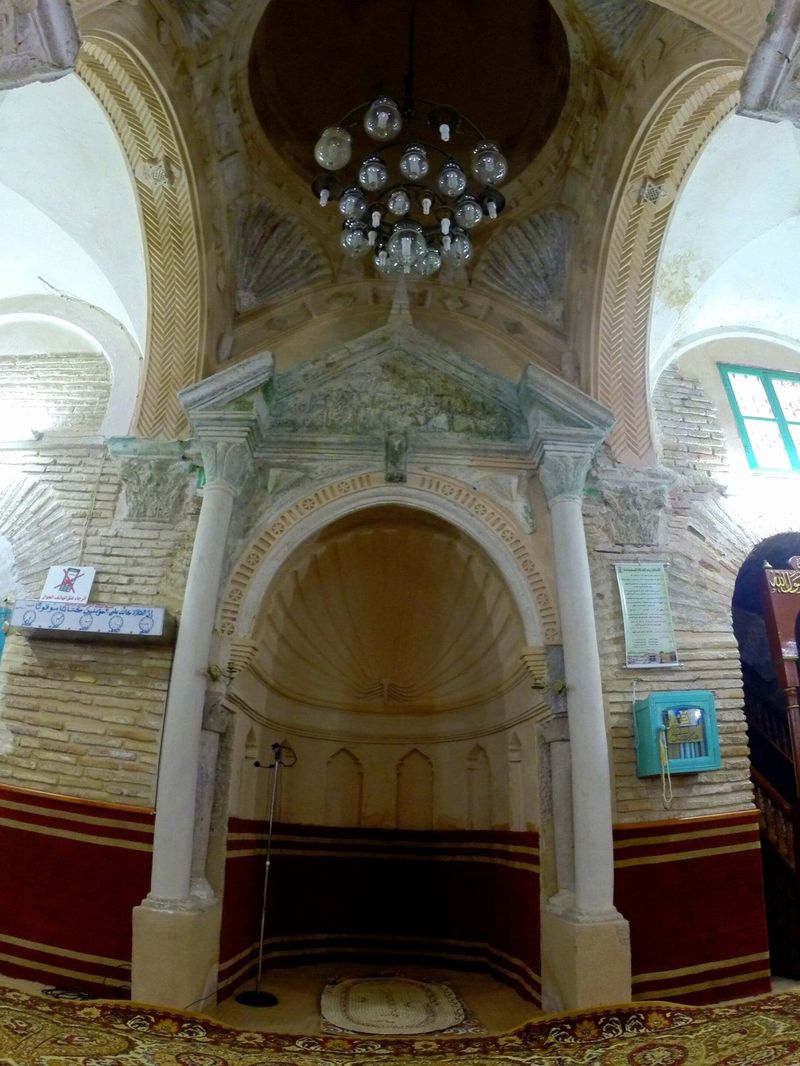
The Great Mosque is the town's landmark. It was founded around 1630 by the Andalusian Mohamed Tagharino. It was built in part with stone taken from Roman ruins nearby. Arcades on columns surround its courtyard. The prayer hall is covered with a roof of half-round clay tiles in the Andalusian manner. Inside, Roman columns and capitals carry the arches.
The minaret rises on the north-east side. It is a square tower crowned by two octagonal stages, which recalls a church bell tower more than a Tunisian minaret. It is decorated with cornices, paired windows and panels of glazed tiles. Six-pointed stars are set into its upper part. They are usually read as a sign of tolerance towards the other peoples of the Book.
High on the minaret is a clock whose hands turn the opposite way to every ordinary clock; its numerals run in reverse too. The best-known explanation is nostalgia: a people in exile wished to turn time back to Andalusia. The clock stood still for centuries. A local campaign brought it back to working order in 2014.
Each summer for more than half a century Testour has hosted an international festival of malouf, the Andalusian music tradition of Tunisia.
Exhibo editorial
Stand in the courtyard and look up. The minaret is wrong in every way that matters. It looks like a Spanish bell tower. It wears a six-pointed star. Its clock runs backwards. Each of these details tells the same story, of people who arrived here with their whole country packed into their memory and built it again in brick.
Come in the morning when the courtyard is quiet and the light falls on the tiles. Then walk the streets around the mosque and look at the roofs. The Great Mosque of Soliman was built by the same exiles at the same moment. Together they are the clearest picture of Andalusia in Tunisia. The ruins of Thignica are a short drive away on the road to Dougga.
Gallery
How to find it
The Great Mosque is in the centre of Testour on the street that bears its name; the minaret is visible across the town. Testour lies on the main road from Tunis through Medjez el Bab towards Téboursouk and Dougga. Visitors can usually see the courtyard; access to the prayer hall depends on the guardian.
Similar places
All places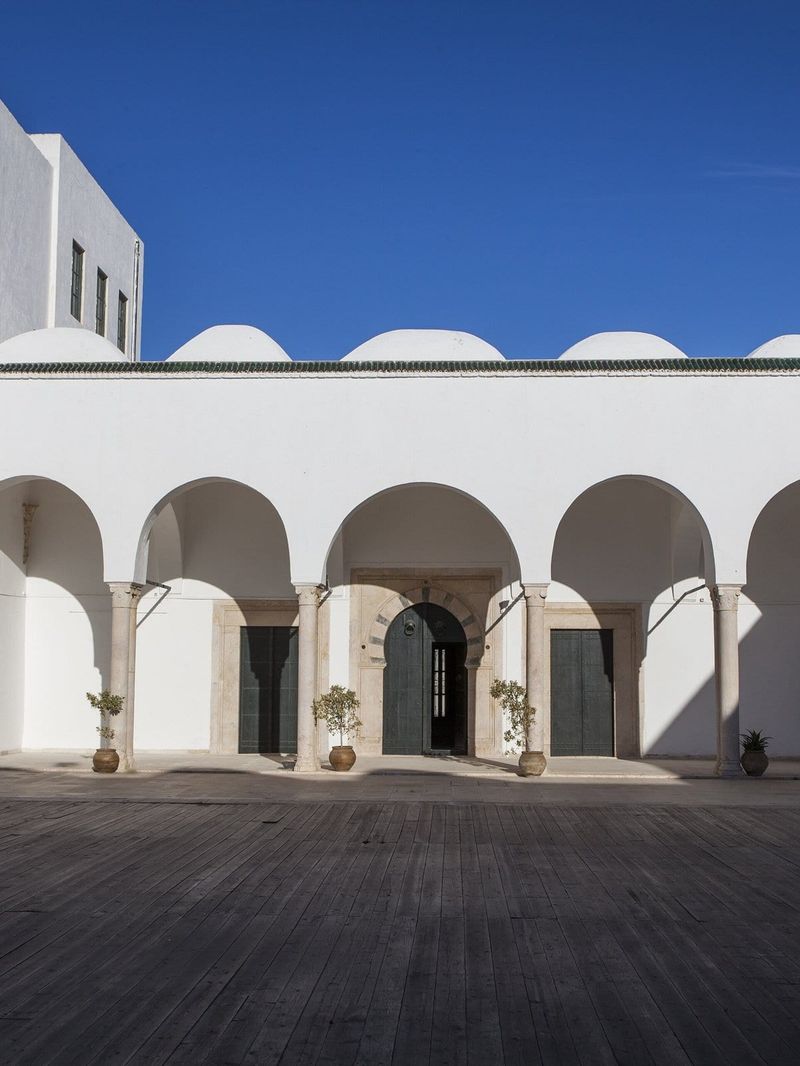
News by Exhibo
Editorial coverage on Exhibo
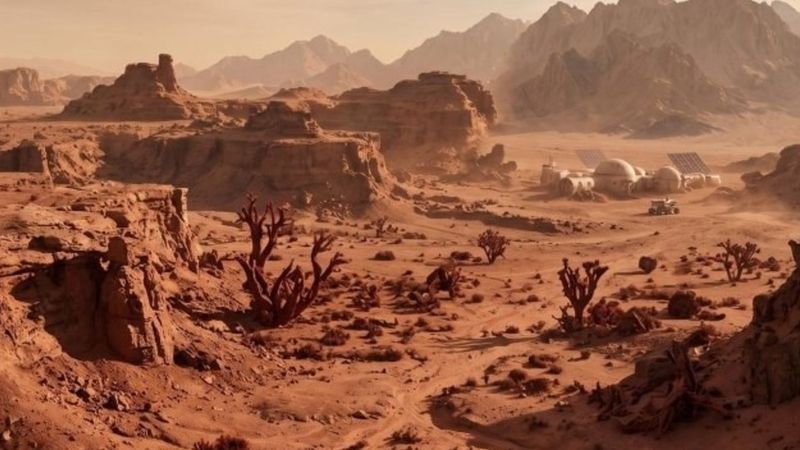
Why Every Sci-Fi Desert Looks Arab
From Arrakis to Tatooine, when a film wants a desert to feel ancient, prophetic and alien, it reaches for an Arab and Berber vocabulary — and reveals more about the West that built it than the region it borrows from.
The wrapped faces, the trilling women, the barely-displaced Arabic: cinema's alien deserts keep sounding Arab. But the vocabulary was assembled in the West — from Orientalist painting to Lawrence to Dune — and it says more about who is looking than about anyone being looked at.
The Real Aladdin: The Story That Belonged to No Country
Aladdin has no Arabic manuscript older than its French translation. Behind the gap stands a young man from Aleppo, catalogued for a century as anonymous.
The most famous "Arabian" tale in the world is missing from the oldest Arabic manuscript of the Thousand and One Nights — because before a French translator wrote it down in Paris, there was no manuscript of it to be missing from.
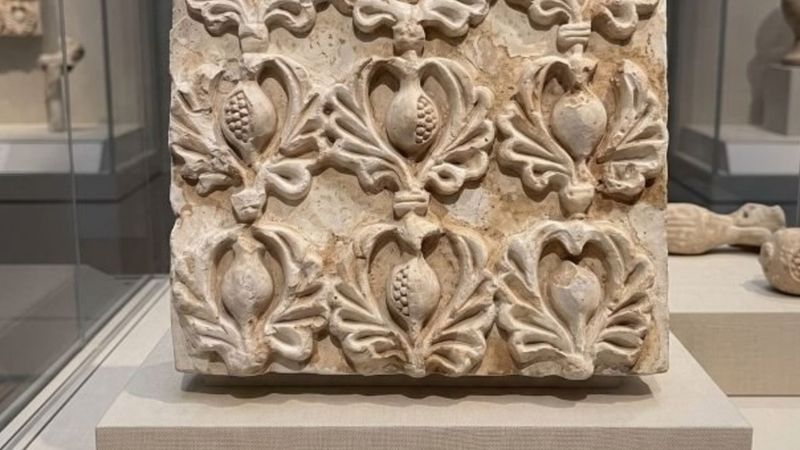
The Fruit We Are Sure We Recognize
How the pomegranate became one of the most confidently named motifs in Islamic ornament — and one of the least confidently identified — across a thousand years of tile, silk and stucco, with meanings we mostly attached later.
A slab of sixth-century plaster in the Met shows a fruit you recognise at a glance: a pomegranate, and surely it means paradise. Hold that certainty up to the light and it dissolves. Across a thousand years of tile, silk and stucco, the pomegranate is the shape we name most confidently and identify least — blurring into the artichoke and the palmette, its meanings attached by later viewers, its very name partly a nineteenth-century invention