Dougga (Thugga)
A Numidian hill town turned Roman city, with its temple, theatre and streets standing above an olive valley.
A Numidian capital
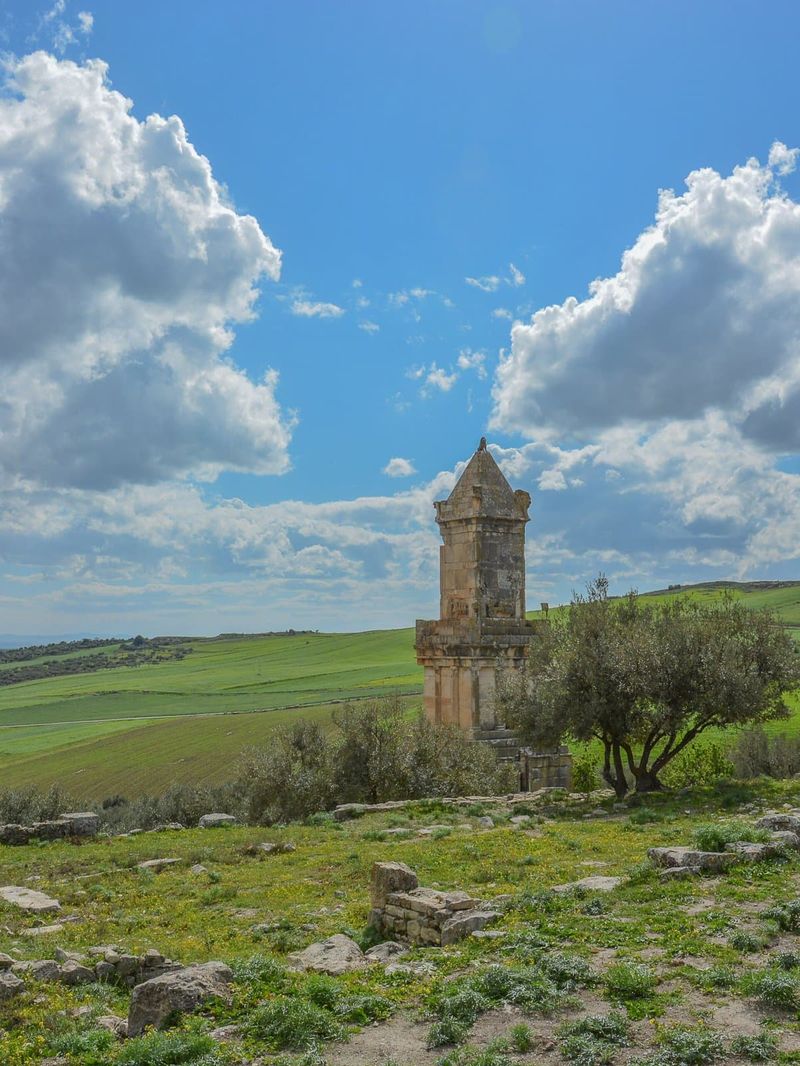
Dougga, ancient Thugga, stands on a hill 571 metres high above the fertile valley of the Oued Khalled in north-west Tunisia, about 50 km north-east of Le Kef and 110 km south-west of Tunis. Long before Rome it was an important Numidian town. It had existed for more than six centuries before Rome annexed Numidia. It was probably an early capital of the Numidian kingdom. Its finest monument from that time is the Libyco-Punic Mausoleum, a royal tomb of the 2nd century BC.
A Roman city
Under Rome, Thugga became a prosperous provincial town. For some two and a half centuries two communities lived side by side: the local Numidians and a settlement of Roman citizens. Most of its great public buildings date from the 2nd and 3rd centuries AD.
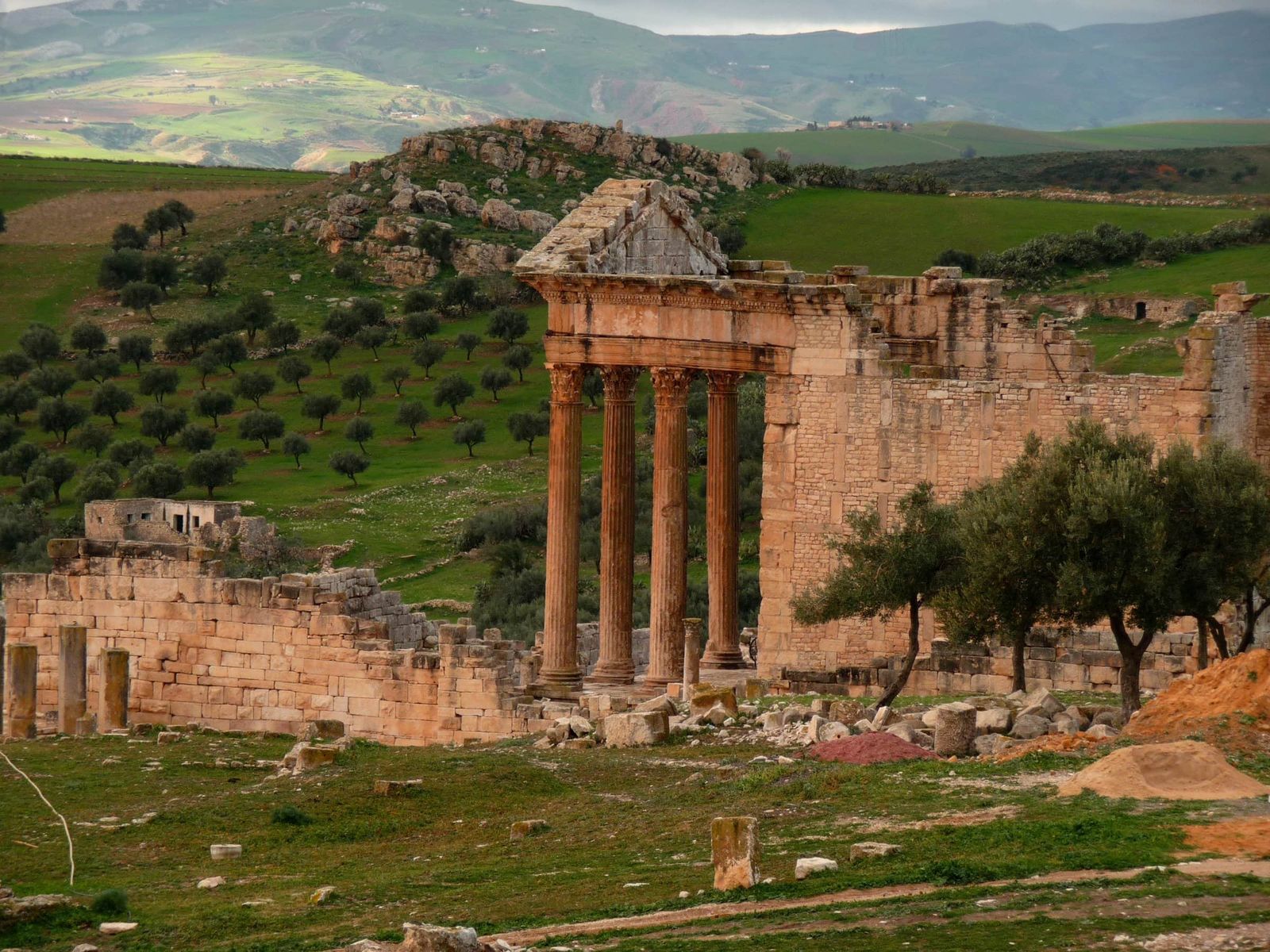
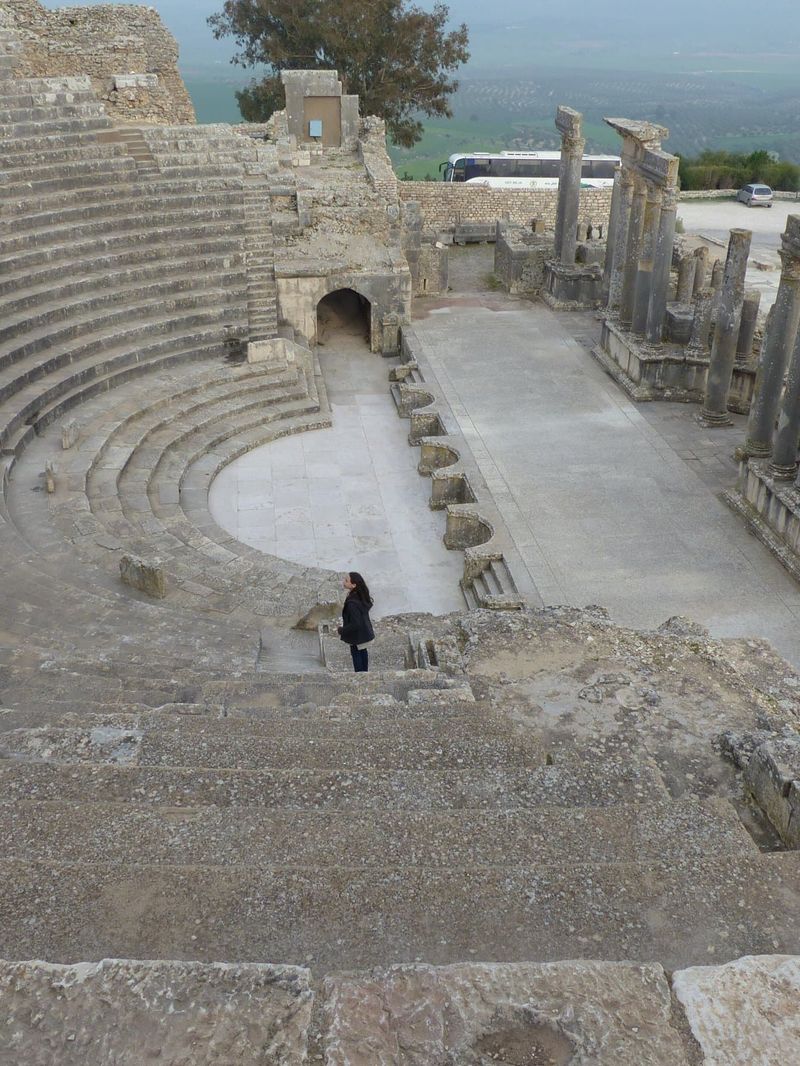
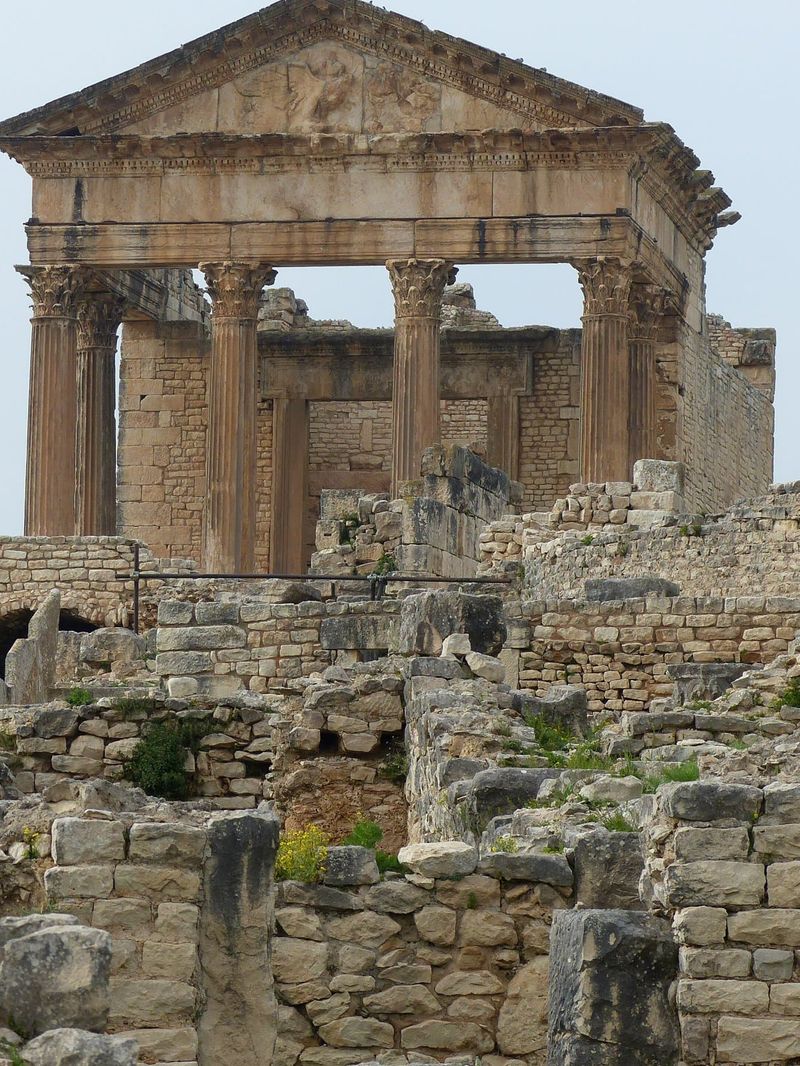
The Capitol, the temple of Jupiter, Juno and Minerva, was built in 166 to 167 during the joint reign of Marcus Aurelius and Lucius Verus. It still stands almost whole, with its tall columns and the remains of its carved pediment. Around it lie the forum, a market and the paved square known as the Square of the Rose of the Winds, where a wind rose is cut into the stones. The theatre, built into the slope a few years later, could seat several thousand spectators. There are also temples, public baths, houses with mosaic floors, cisterns and a circus.
The best preserved Roman town of Africa
The site covers about 75 hectares. More than 2,000 inscriptions in Libyan, Punic, Greek and Latin have been found here. They helped scholars decipher the Libyan script. UNESCO inscribed Dougga on the World Heritage List in 1997 as the best preserved Roman town in North Africa. Many of its mosaics are in the Bardo National Museum in Tunis.
Exhibo editorial
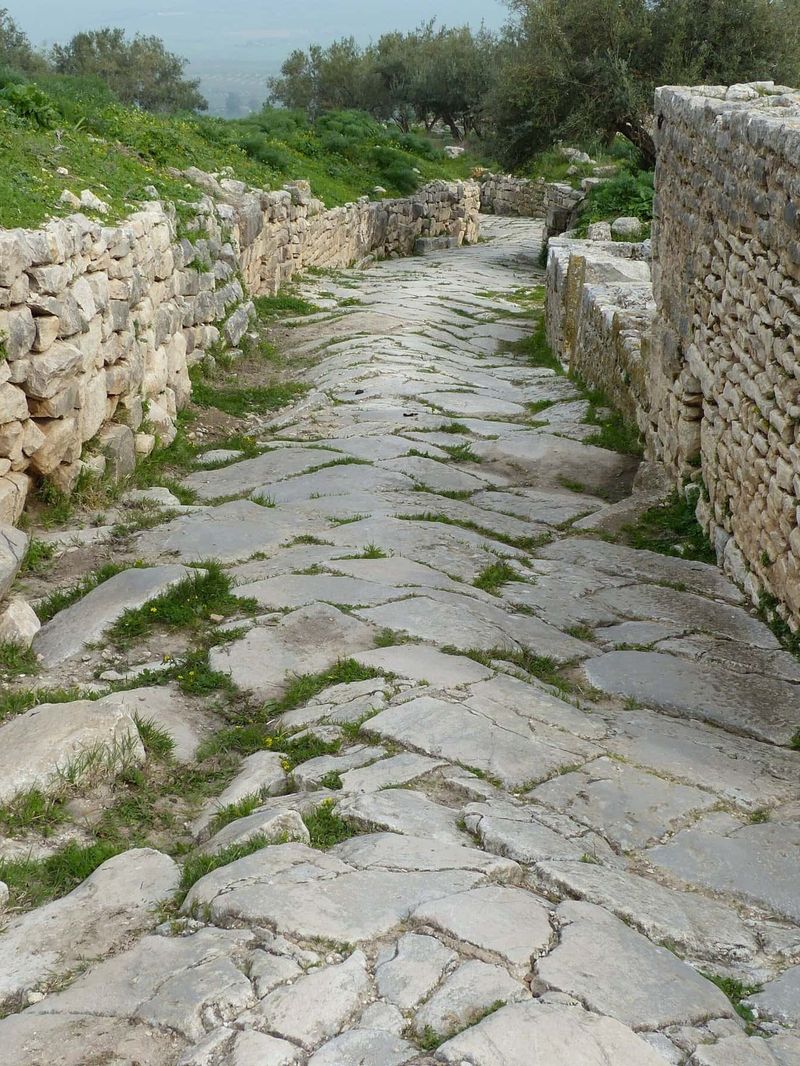
Most Roman cities in North Africa were laid out on flat ground with a grid. Dougga was not. It kept the shape of the Numidian hill town it was built on. Its streets twist and climb, so the temples and houses fall away down the slope in terraces.
Come early, before the coaches from Tunis. Climb to the top row of the theatre and look across the Capitol to the green valley and the olive groves below. It is easy to see why people chose to live here for seventeen centuries.
Gallery
How to find it
Dougga is about 50 km north-east of Le Kef and 110 km south-west of Tunis. From the capital it is roughly two hours by car via Medjez el Bab and Téboursouk. The site lies just above the village of Dougga, a few kilometres from Téboursouk. There is no direct public transport to the gate; most visitors drive or come on a day tour from Tunis. Allow at least three hours and wear good shoes for the steep, uneven paths.