
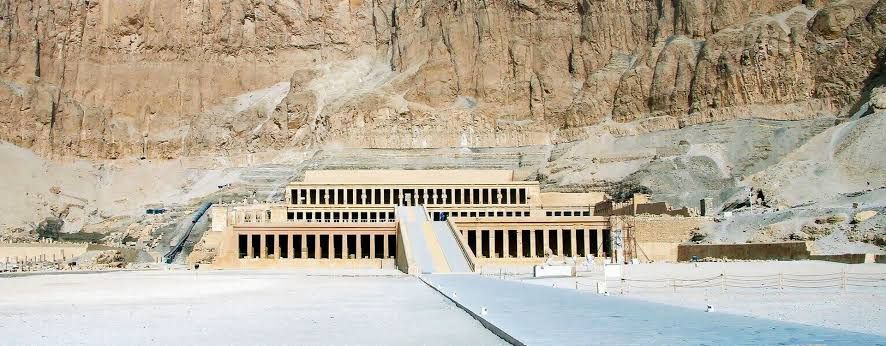
Valley of the Queens
The necropolis of queens and royal children on the west bank — home of Nefertari's tomb and the colourful tombs of Ramesses III's sons.
A necropolis for the royal family
The Valley of the Queens, known in antiquity as Ta-Set-Neferu, "the place of beauty", lies at the southern end of the Theban necropolis on Luxor's west bank. From the New Kingdom onwards it served as a burial ground for queens, princes and princesses and other members of the royal family. More than ninety tombs have been identified, many of them small and undecorated, but a few rank among the finest painted tombs in Egypt.
The tomb of Nefertari
The most famous is the tomb of Nefertari (QV66), the beloved principal wife of Ramesses II, discovered by the Italian archaeologist Ernesto Schiaparelli in 1904. Its walls are covered with paintings of exceptional delicacy and colour, showing the queen being received by the gods and making her way through the underworld, set against a deep blue ceiling scattered with stars. Restored in the late 1980s and early 1990s by the Getty Conservation Institute with Egyptian authorities, it has been opened to visitors only with strict limits; according to the latest information, it has been closed to visitors since March 2024, with no announced date for reopening.
The princes' tombs
Other tombs offer a vivid alternative. The tomb of Amenherkhepeshef (QV55), a son of Ramesses III, shows the young prince led by his father before the gods, its colours still bright; the tomb of Khaemwaset (QV44), another son of Ramesses III, has similarly well-preserved scenes; and the tomb of Queen Titi (QV52) shows the queen before the gods of the underworld. Which tombs are open varies over time.
Visiting
The Valley of the Queens is quieter than the Valley of the Kings and is part of the UNESCO World Heritage Site of Ancient Thebes with its Necropolis. It is often combined with Medinet Habu and Deir el-Medina nearby.
Exhibo editorial
It is the gentler of Luxor's two valleys, and far less crowded. The tombs are smaller and more intimate, and the best of them — the princes' tombs of Ramesses III's sons — glow with colour: a boy in a side-lock of hair, his father holding his hand, presenting him to gods with the heads of falcons and ibises. Pharaonic art suddenly becomes a family portrait.
Nefertari's tomb, the most beautiful of all, has been closed since 2024; if it reopens, it is worth any price. Until then, come early, see two or three tombs at your own pace, and combine the visit with Medinet Habu a few minutes away.
How to find it
The Valley of the Queens lies at the southern end of the West Bank necropolis, about 1 km south-west of Medinet Habu, reached by taxi or car. From the ticket checkpoint, walk up the valley path; the open tombs are signposted along it.
Similar places
All places
News by Exhibo
Editorial coverage on Exhibo
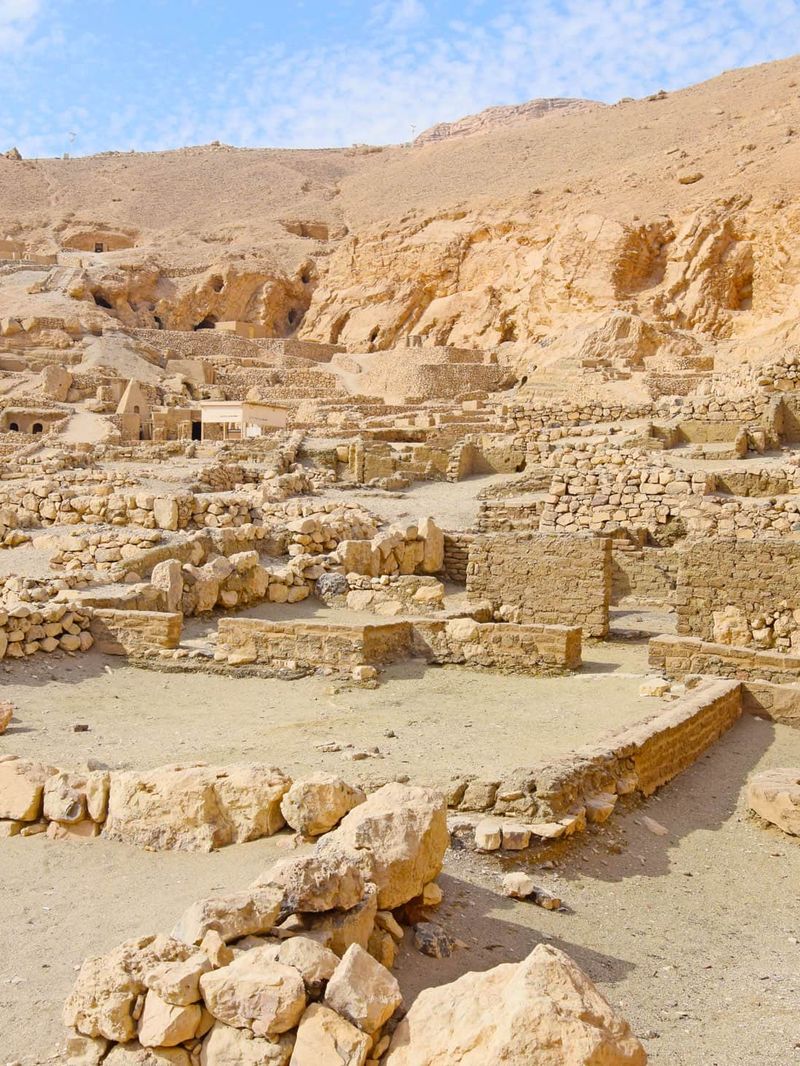
Unearthing the Golden City: Daily Life in Ancient Egypt
How a newly excavated workers' quarter reframes pharaonic history
A major survey travels to the West Coast, bringing ancient artefacts that shift focus from royal opulence to the daily lives of those who built the empire.
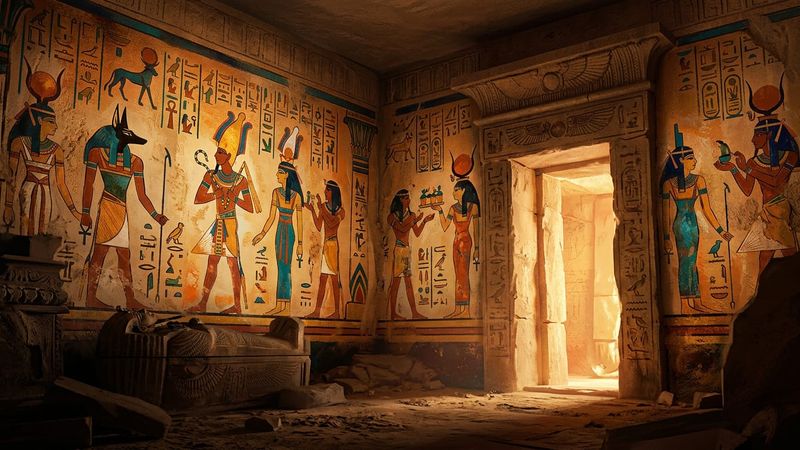
Ancient Egyptian Tomb with Vibrant Murals Unearthed in Luxor
Dutch excavation reveals well-preserved Ramesside period burial with rare coloured wall paintings
Archaeologists have uncovered a 3,000-year-old tomb on Luxor's west bank featuring brightly painted murals that provide valuable insights into elite burial practices during Egypt's New Kingdom period.