
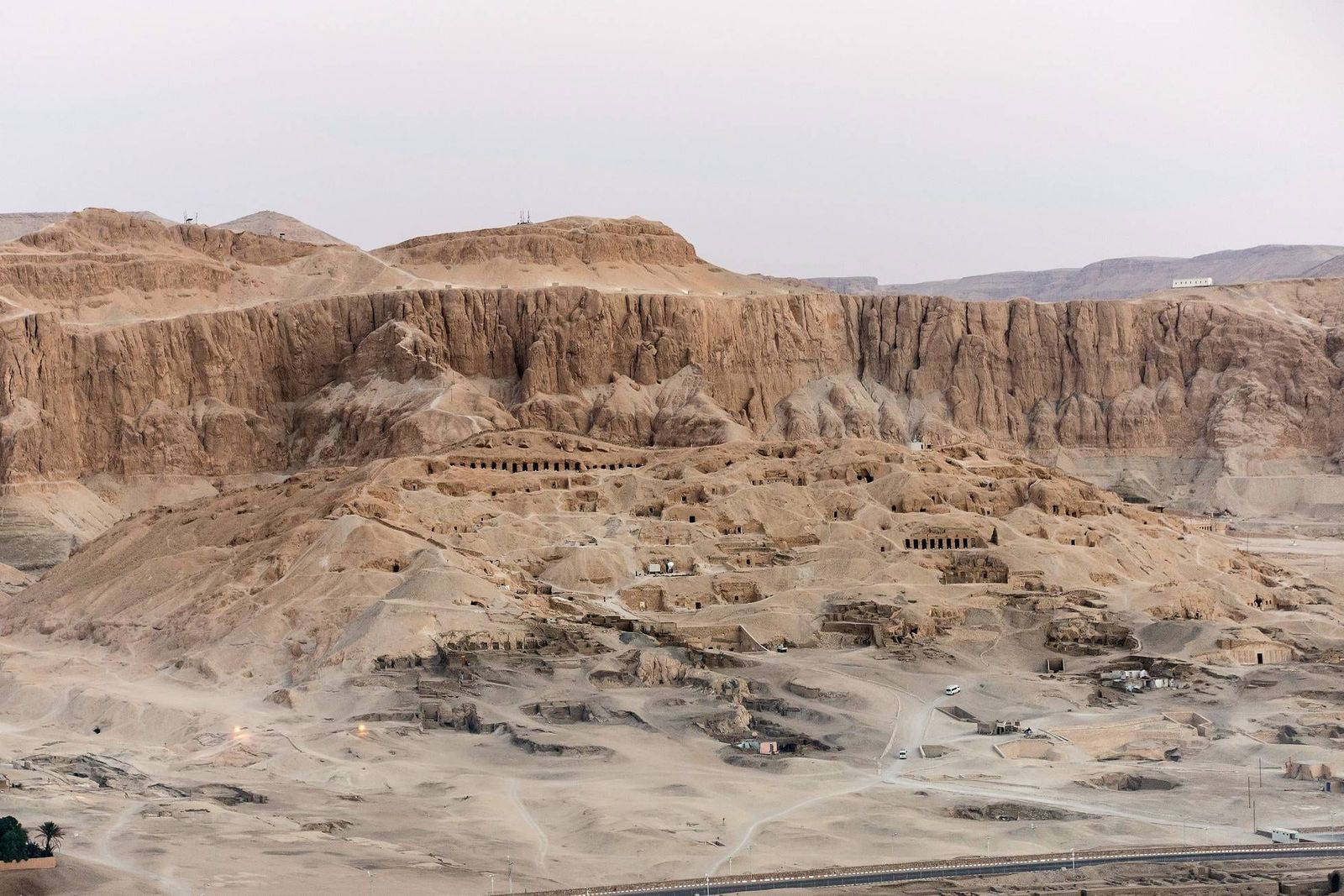
Tombs of the Nobles (Sheikh Abd el-Qurna and el-Khokha)
The liveliest painting of ancient Egypt — banquets, harvests, craftsmen and hunts in the tombs of Theban officials.
The officials' cemetery
On the hillsides of Sheikh Abd el-Qurna and el-Khokha, on Luxor's west bank between the Ramesseum and Deir el-Bahari, lie hundreds of rock-cut tombs of the high officials, priests and administrators of New Kingdom Thebes. Where the royal tombs are filled with austere texts about the underworld, these private tombs are decorated with scenes of the world their owners hoped to enjoy forever — and are among the most vivid and human paintings to survive from the ancient world.
Masterpieces of the hillside
A handful of tombs are open to visitors in rotating groups. The tomb of Rekhmire (TT100), vizier of Thutmose III and Amenhotep II, contains the most detailed scenes of daily life and work in Egypt — craftsmen, brickmakers, sculptors, and foreign envoys bringing tribute — together with an important text on the duties of the vizier. The tomb of Ramose (TT55), vizier at the end of Amenhotep III's reign and the beginning of Akhenaten's, contains reliefs of extraordinary refinement, some carved in the classic style and others in the new Amarna manner. The small tombs of Menna (TT69), a scribe of the fields, and Nakht (TT52), an astronomer of Amun, are famous for their brilliantly coloured paintings of harvests, fishing and fowling in the marshes, and banquets with musicians. The tomb of Sennefer (TT96), mayor of Thebes, is known as the "tomb of the vines" for the bunches of grapes painted across its uneven ceiling.
New discoveries at el-Khokha
In el-Khokha, recently opened tombs such as those of Amenhotep Rabuiu and his son Samut (TT416 and TT417), with scenes of daily life and offerings to the harvest goddess Renenutet, continue to add to the hillside's riches. The modern village of Gurna that once covered the hillside was cleared in the 2000s, and its residents were rehoused elsewhere. The cemetery is part of the UNESCO World Heritage Site of Ancient Thebes with its Necropolis.
Exhibo editorial
If the Valley of the Kings shows you how pharaohs prepared for eternity, the nobles' tombs show you what everyone else wanted to take with them: a good harvest, a full table, a boat on the marsh, music, friends. In the tomb of Nakht a blind harpist plays for the guests; in Menna's a girl pulls a thorn from another's foot; in Sennefer's, grapes hang from the ceiling as if you were sitting in an arbour.
These are small, intimate rooms, and you may have them to yourself. Buy the tickets for two or three groups, go in the morning before the heat, and look closely: the details — a cat under a chair, a man dozing in a field — are where ancient Egypt suddenly becomes people.
How to find it
The Tombs of the Nobles lie on the hillside between the Ramesseum and Deir el-Bahari on the West Bank. Buy tickets for the tomb groups at the West Bank ticket office near the Colossi of Memnon or at the site, then follow the signposted paths up the hill to each group; the el-Khokha tombs are on the lower slope to the south-east of Sheikh Abd el-Qurna.
Similar places
All places
News by Exhibo
Editorial coverage on Exhibo
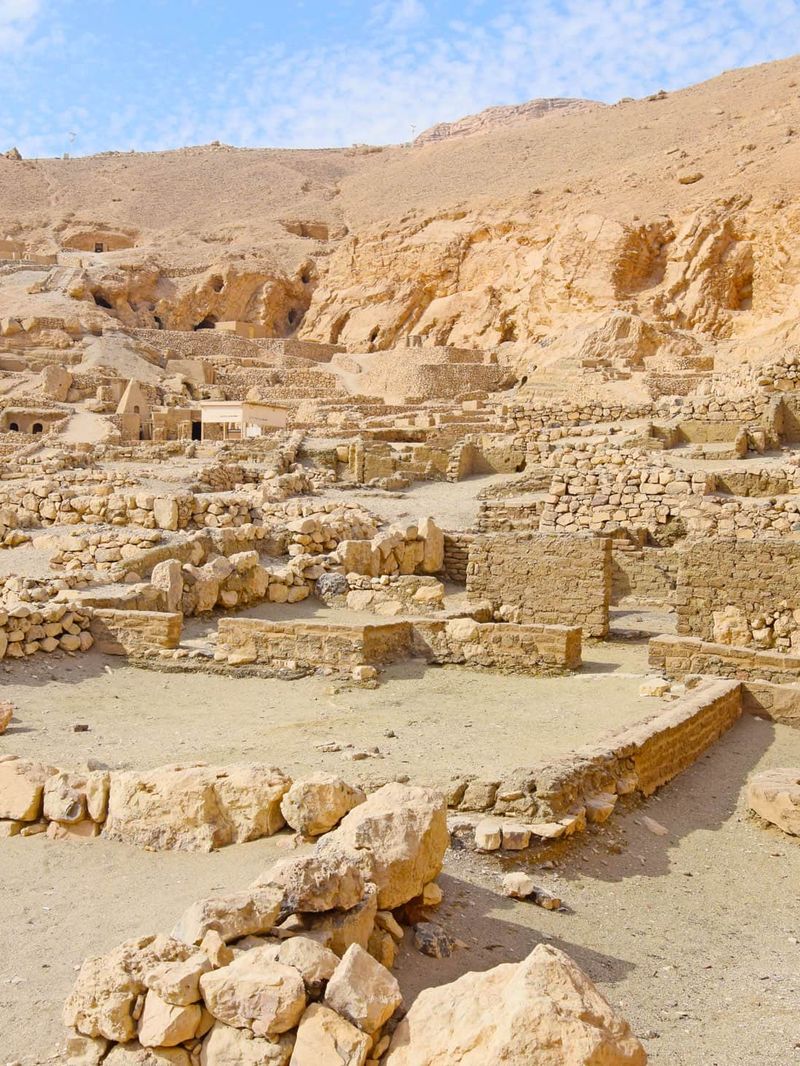
Unearthing the Golden City: Daily Life in Ancient Egypt
How a newly excavated workers' quarter reframes pharaonic history
A major survey travels to the West Coast, bringing ancient artefacts that shift focus from royal opulence to the daily lives of those who built the empire.
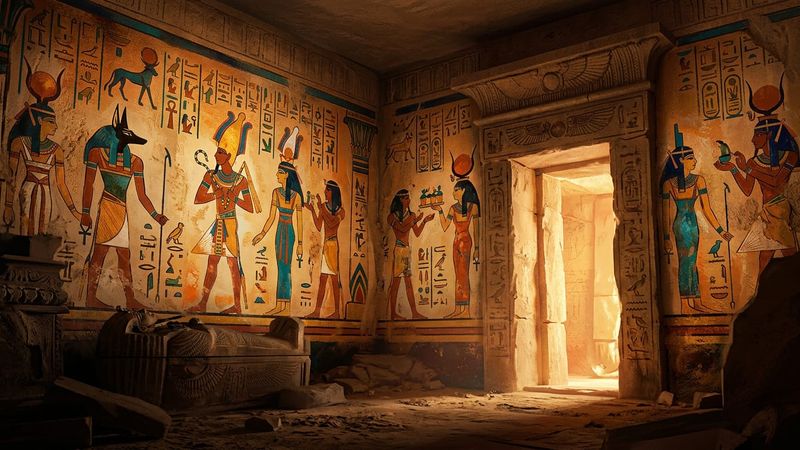
Ancient Egyptian Tomb with Vibrant Murals Unearthed in Luxor
Dutch excavation reveals well-preserved Ramesside period burial with rare coloured wall paintings
Archaeologists have uncovered a 3,000-year-old tomb on Luxor's west bank featuring brightly painted murals that provide valuable insights into elite burial practices during Egypt's New Kingdom period.