Hatta Heritage Village
A restored mountain settlement of around 30 buildings — fort, mosque, watchtowers and a falaj — rebuilt in clay, stone and palm frond in the Hajar Mountains.
A village in the mountains
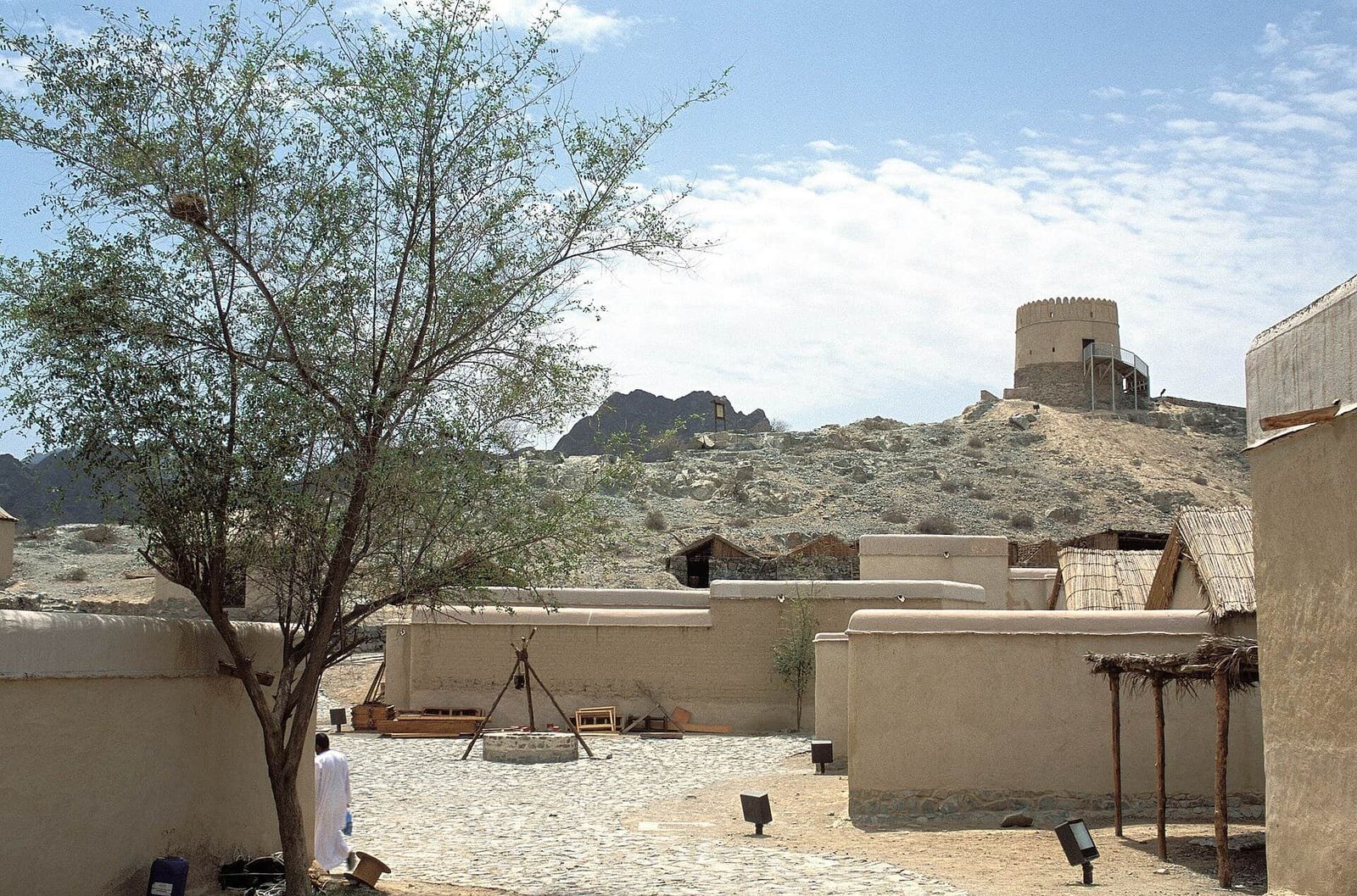
Hatta Heritage Village is a restored mountain settlement in the heart of Hatta, the enclave of Dubai in the Hajar Mountains about 115 kilometres south-east of the city. It opened to visitors in 2001 as an open-air museum of life in the mountains before oil. The old village was known as Al Hajrain, after the two mountains that frame it. Today it holds about 30 buildings, restored with the same materials they were first built with: stone from the mountains, clay, straw and palm wood.
The fort and the towers
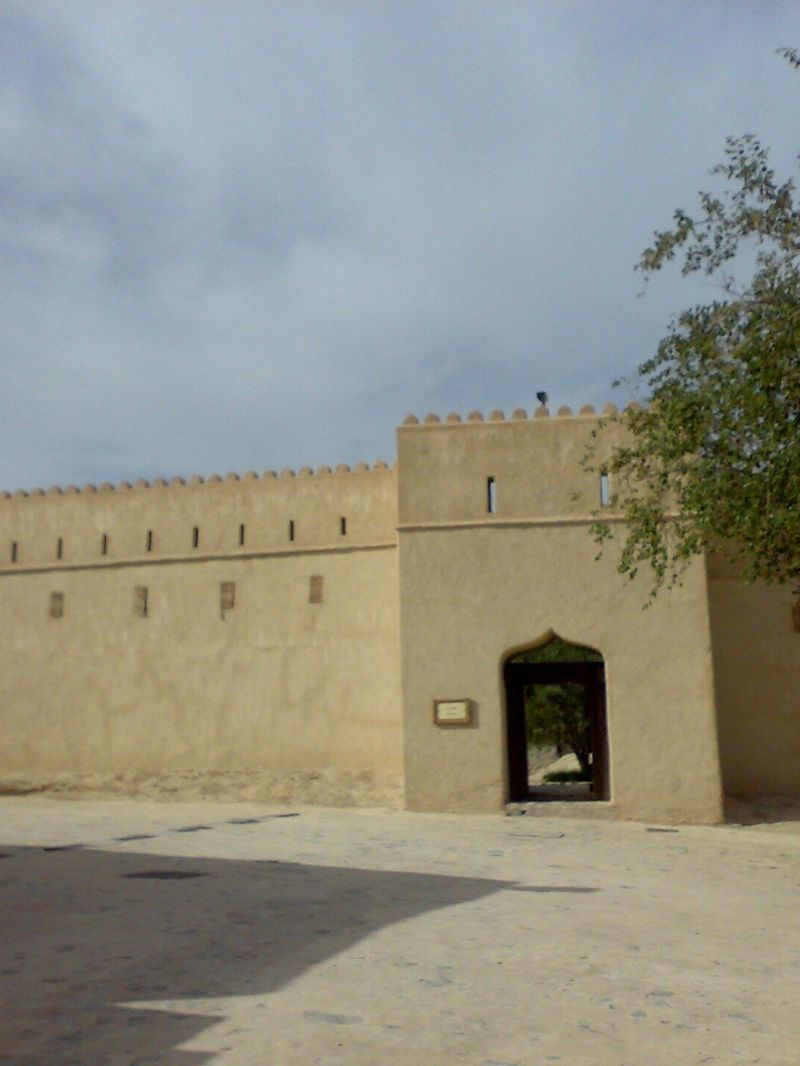
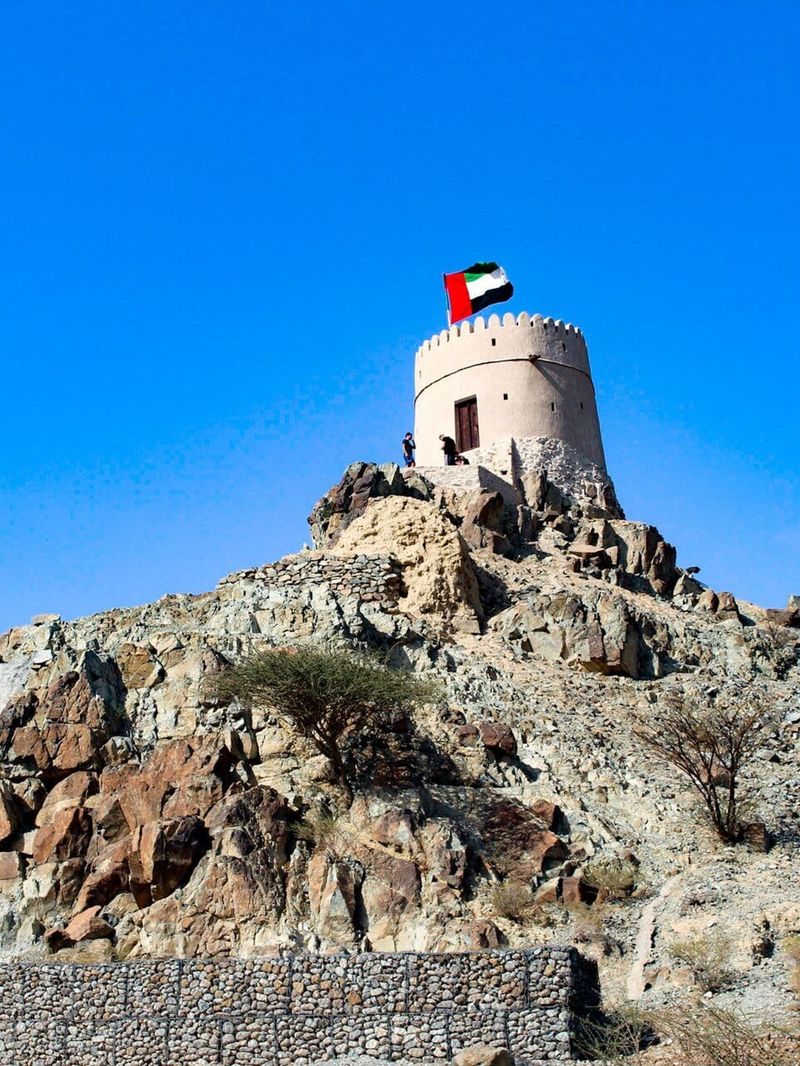
The largest building is Hatta Fort, built in 1896 by Sheikh Maktoum bin Hasher Al Maktoum. It served as the seat of the local governor and the place for public meetings, with a council room and the governor's own quarters. Today its tower displays the kinds of firearms once used in the region. Above the village the two round Hatta Watchtowers stand on the summits of the neighbouring hills. They date from the 1880s and once kept watch over the valley and the routes through the mountains.
Houses of everyday life
Most of the village is given over to the houses of ordinary life, each arranged around its own yard. A traditional house shows the rooms of a mountain family: the majlis, bedrooms, a store, a kitchen and a pen for animals. The Folklore House is devoted to Nabati poetry, songs, drums and musical instruments. The Social Life House shows the customs of the community. Others hold the workshops of the blacksmith and the perfume maker, the trade in cloth and tobacco and the many uses of the date palm, including a model of the press that made date syrup. One house explains how the village itself was restored.
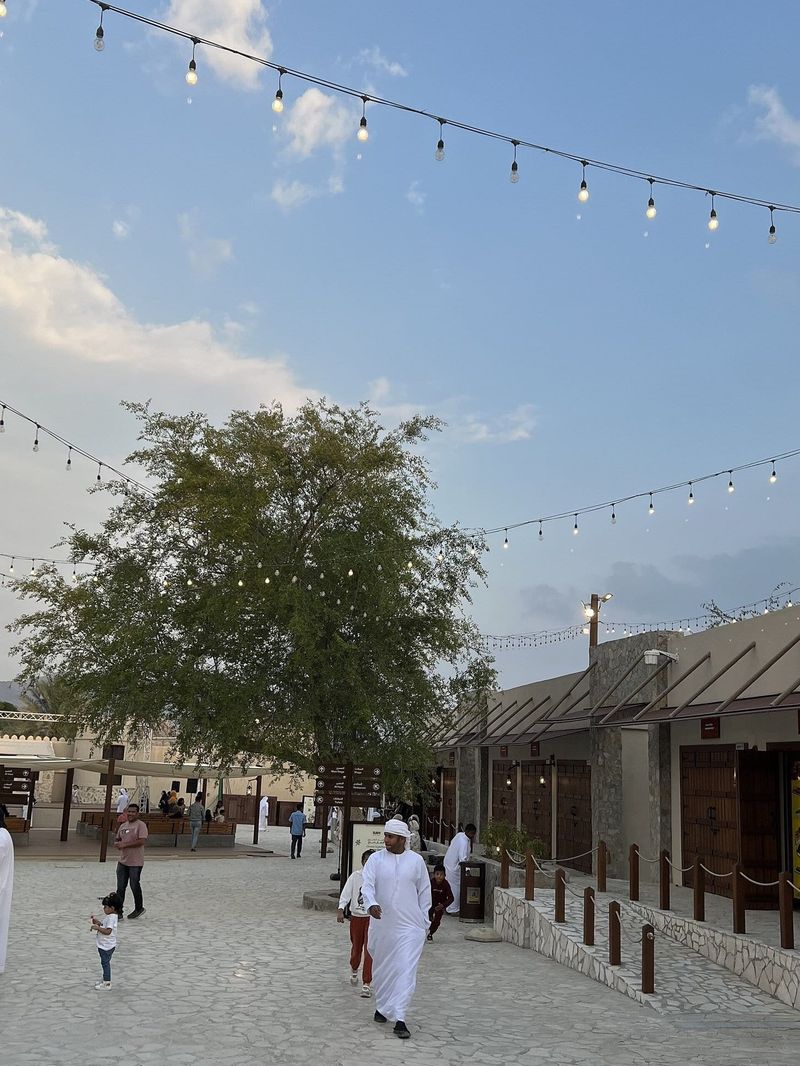
Around them stand reconstructions of the lighter dwellings of the region, the barasti and arish huts of palm fronds. A newer market area has a café, a heritage majlis and a row of small shops.
Water and palms
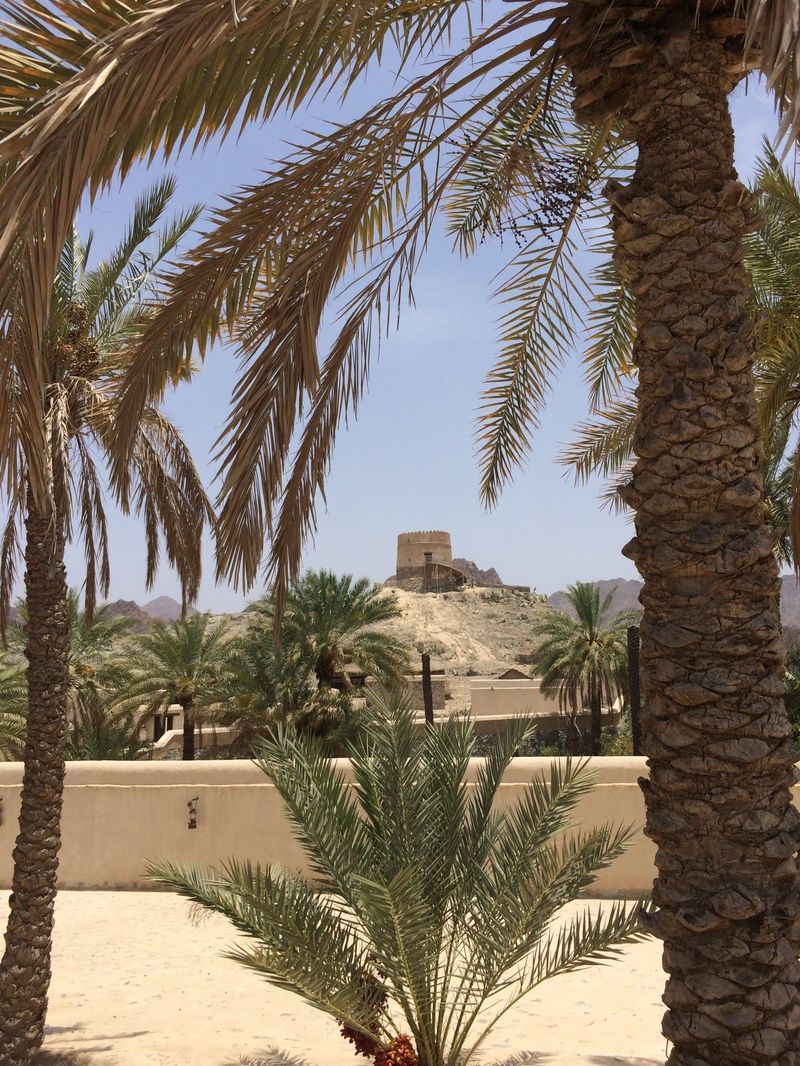
The village sits beside the Sharia, where the Hatta Falaj runs down from the mountain slopes and waters the palm gardens below. Next to it is the Al Sheraa Heritage Area with its mosque, more than two hundred years old. A short drive south, Hatta Dam holds the waters of the wadi in a turquoise lake between the peaks.
Exhibo editorial
Dubai's other heritage quarters sit on the flat coast by the Creek. This one climbs a hill. You walk up stone lanes between clay walls, past the fort and the date palms. At every turn the Hajar Mountains stand behind the rooftops, bare and grey, close enough to show how hard a living this valley once was.
The watchtowers give it away. Two round towers on two summits, watching the routes into the valley: this was a frontier, not a postcard. Go in the morning before the heat. Do the fort first, then the houses. Then climb the path to a tower and look down at the whole village fitting into its fold of the mountains.
Gallery
How to find it
Hatta lies about 115 km south-east of central Dubai by the Dubai–Hatta road (E44). The village sits on a hillside in the heart of Hatta, with paved car parks by the main gate. Enter through the gate and start with the fort, then walk up through the lanes of houses. Paths climb on to the watchtowers on the hills above. The Al Sheraa area and its old mosque are next to the village.
Similar places
All places
News by Exhibo
Editorial coverage on Exhibo
Hatta: The Valley That Changed Hands
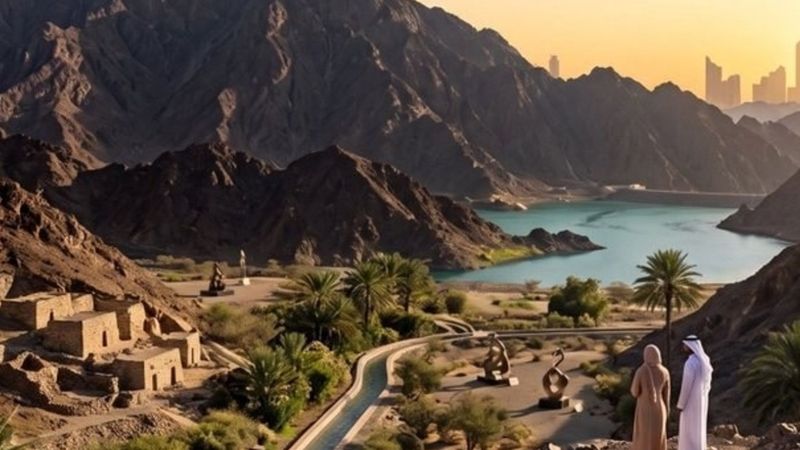
Ninety minutes from Dubai, a mountain town where the same water has shaped human settlement for four thousand years.
Most guides to Hatta list its fort, its dam and its trails. This is the valley told differently — through the single physical problem that has shaped every era of its life. From Bronze Age tombs sited by the water to a mosque timed by shadow to a hydro plant that answers Dubai in ninety seconds, one question runs through four thousand years: where does the water go, and whose turn is it?
Why the Middle East Keeps Building Venice
From the Red Sea to the Gulf, canal towns keep getting called Venice. The water was usually about something else — and Venice was never quite Venice either.
The Middle East is full of “Venices”. Most began as a way to manufacture shoreline; the name usually arrived later, in English, from the people selling it.
Elie Khouri's New Foundation Takes Shape in Dubai
A private villa in Jumeirah 1 becomes the home for Ekaf
Collector Elie Khouri transforms a historic Jumeirah 1 residence into a contemporary art venue opening in 2028.