Mosque of Amr ibn al-As
Egypt's first mosque, founded in 641 at the birth of Fustat, a vast courtyard of ancient columns in Old Cairo.
The first mosque in Egypt
The Mosque of Amr ibn al-As stands in Old Cairo, close to the Babylon Fortress and Coptic Cairo. It was founded in 641–642 by Amr ibn al-As, the Arab commander who conquered Egypt for the caliph Umar, at the centre of his new military capital, Fustat, the settlement that would grow into the first Islamic city of Egypt and, eventually, part of Cairo. It was the first mosque built in Egypt and is regarded as the oldest in Africa. The original building was modest: a rectangle of mud brick with palm-trunk columns and a roof of palm fronds, large enough for the soldiers of Amr's army.
A building rebuilt many times
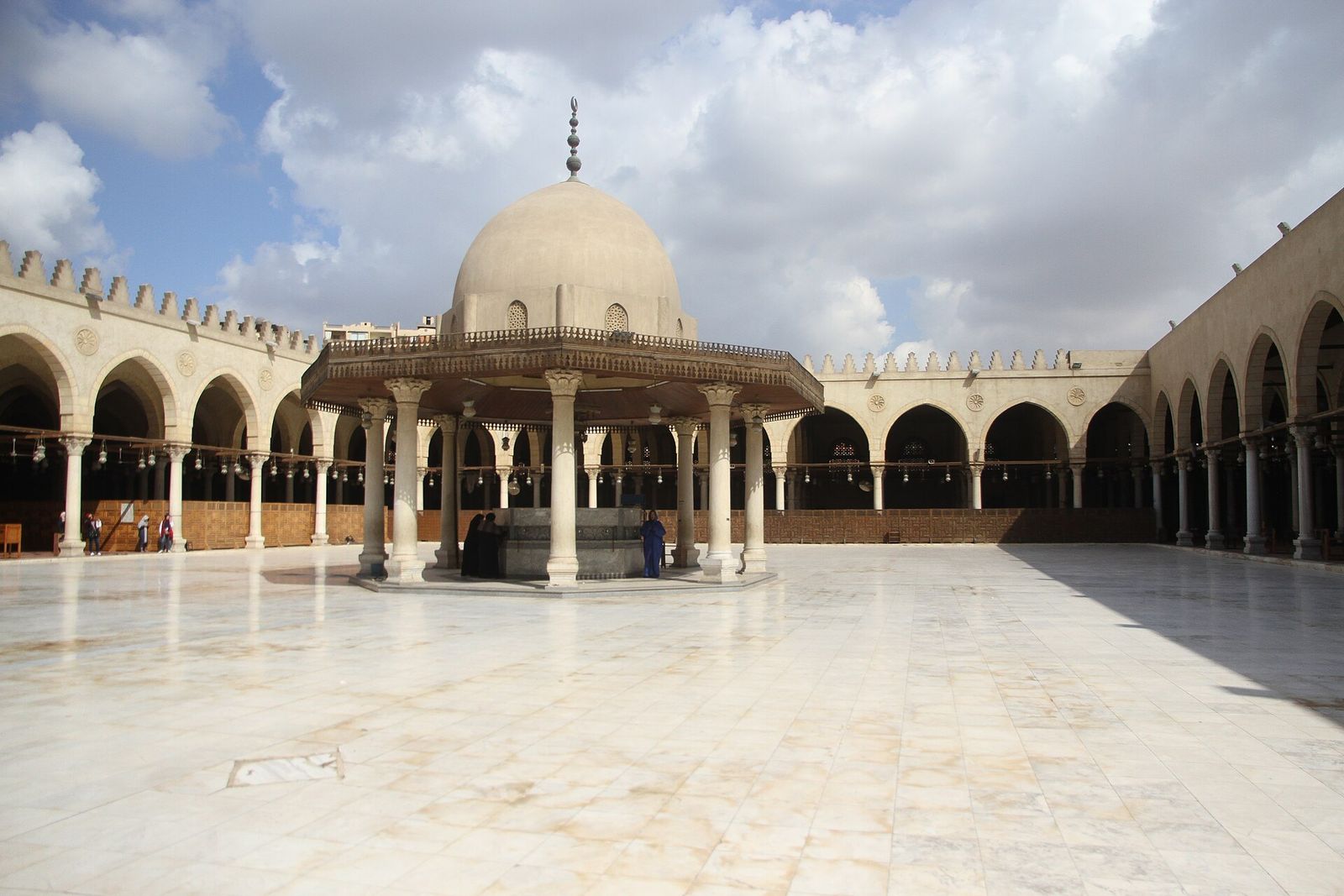
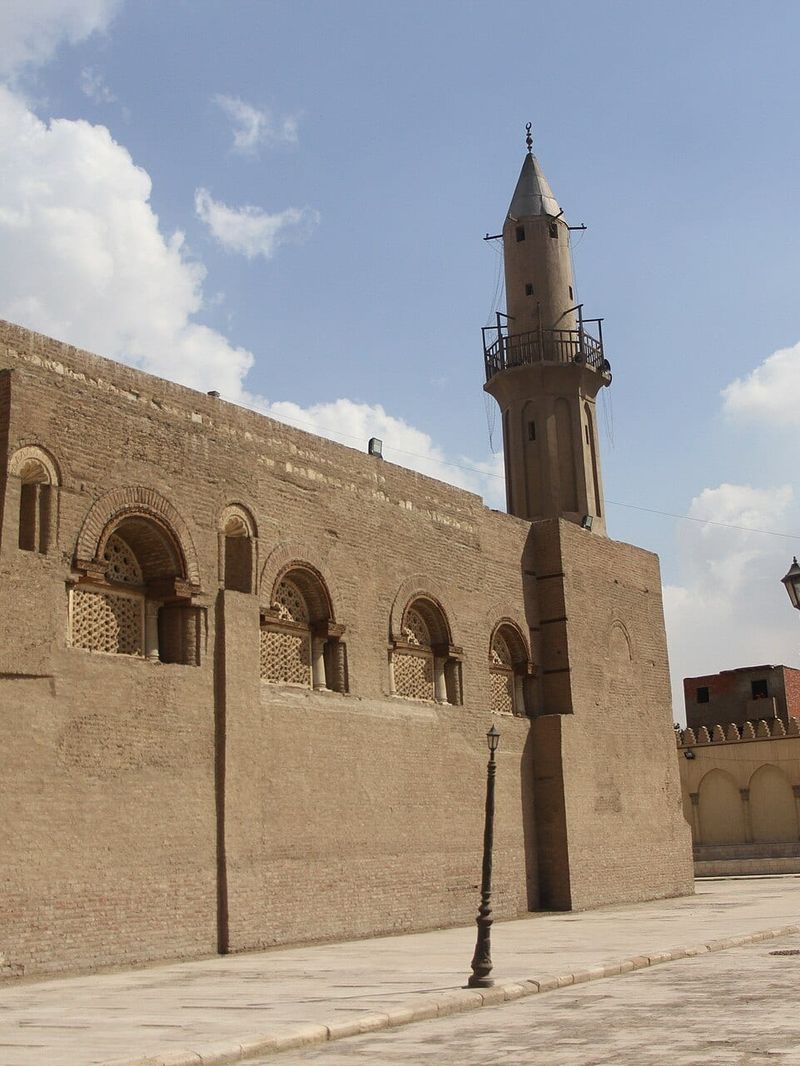
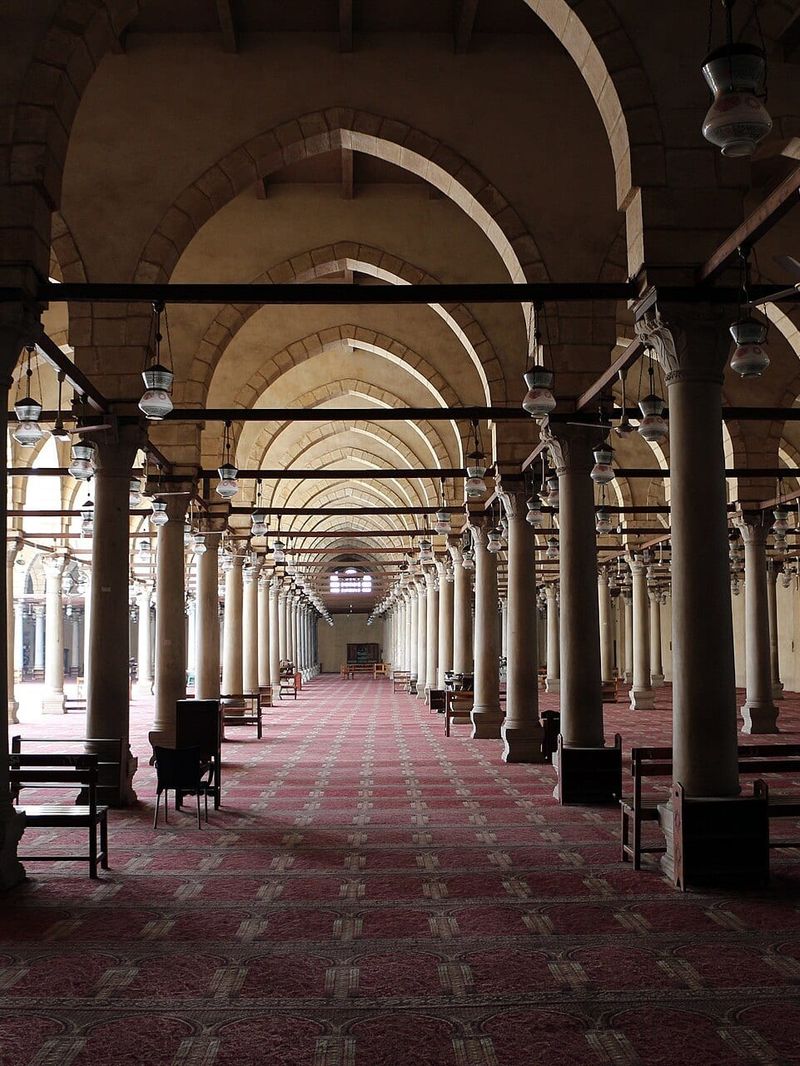
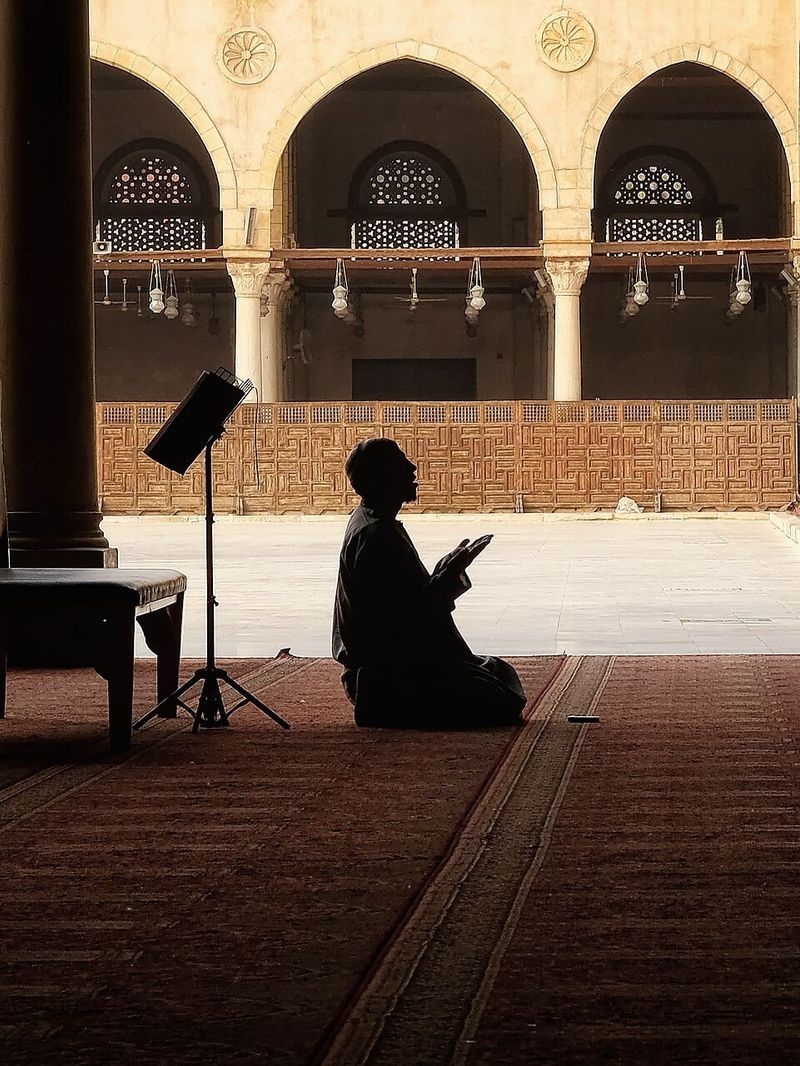
As Fustat grew, the mosque was repeatedly enlarged and rebuilt. Major expansions came under the Umayyads and Abbasids, notably in 827, when the governor Abd Allah ibn Tahir gave it roughly its present dimensions and later rulers restored it after fires and earthquakes. In 1796–1797, on the eve of the French invasion, the Mamluk emir Murad Bey rebuilt it, reducing and realigning the arcades; further restorations followed in the twentieth century. Almost nothing of the seventh-century building survives, but the mosque preserves the plan of an early congregational mosque: a vast open courtyard surrounded by arcades, with a deep prayer hall whose forest of marble columns, many reused from Roman and Byzantine buildings, each slightly different, is the mosque's most memorable feature.
A living mosque
The Mosque of Amr remains an active place of worship and draws enormous congregations during Ramadan, especially for the prayers of the last nights of the month. It stands at the edge of the old Fustat district, a short walk from the Mar Girgis metro station and the churches of Coptic Cairo and is part of the UNESCO World Heritage Site of Historic Cairo.
Exhibo editorial
There is very little here to photograph and a great deal to feel. The courtyard is enormous and plain, the arcades run on and on. The columns in the prayer hall were taken from older buildings and rarely match, like a crowd that has gathered to pray.
What moves you is the address. Everything that came after in Cairo (al-Azhar, Sultan Hassan, the thousand minarets) starts from this spot, where an army camped beside a Roman fortress and built a shelter of mud and palm trunks to pray in. Come on a weekday afternoon when it is almost empty, sit against a column and let the scale of the room settle on you. If you are in Cairo in Ramadan, come back on one of the last nights.
Gallery
How to find it
Take the metro to Mar Girgis station. The mosque is about 400 metres north of the station, across the road from the Coptic quarter.
Similar places
All places
News by Exhibo
Editorial coverage on Exhibo
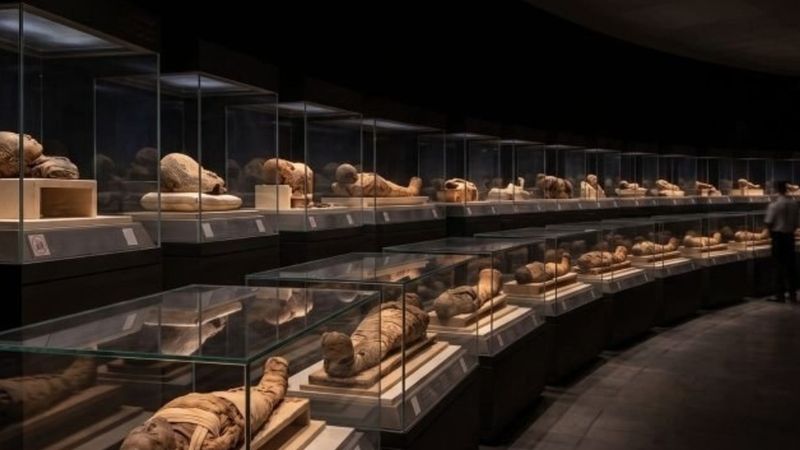
The Museum of Everything That Became a Tomb
Egypt built a museum to tell the story of an entire civilisation — seven thousand years of it, from flint tools to the present. The public knows it for one thing: the room where twenty dead kings lie in the dark.
In a black, hushed hall beneath the National Museum of Egyptian Civilization in Old Cairo lie the mummified bodies of Ramesses II, Hatshepsut, and eighteen other rulers of the New Kingdom — carried here in 2021 in a televised parade watched around the world.
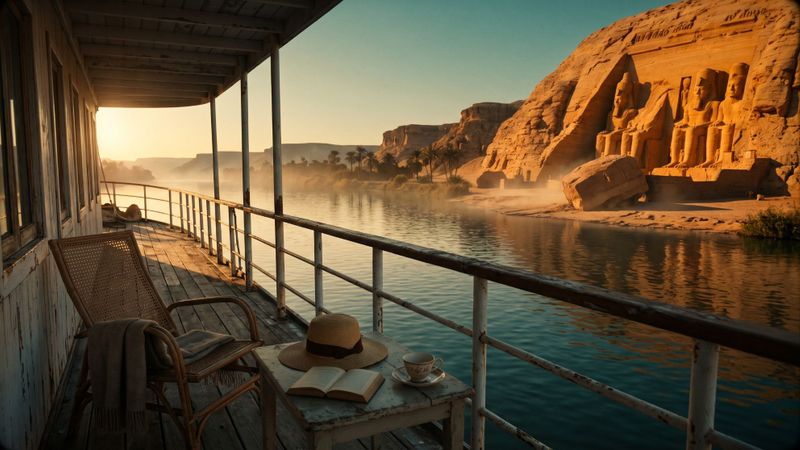
Agatha Christie's Egypt: Three Abu Simbels, a Pharaoh and a Murder on the Nile
Christie set one famous murder on the Nile and two lesser-known stories in ancient Egypt. The temples, letters and film sets behind all three.
The Abu Simbel of Death on the Nile has since moved up a hill. Christie's two other Egyptian stories lead to a pharaoh's dismantled temples at Karnak and a farmer's 4,000-year-old letters now in New York.
The Real Oasis of The Alchemist: Al-Fayoum and the Dream Coelho Borrowed
Paulo Coelho sent his shepherd to a real place in Egypt. What Santiago would have found there and where the story of the treasure at home came from.
Santiago's oasis is real. Al-Fayoum lies 100 km from Cairo, with Roman-era painted portraits, a temple on the caravan road and a dream story centuries older than Coelho.