Freedom Monument (Nasb al-Hurriyah)
Jewad Selim's 50-metre bronze frieze over Tahrir Square, Iraq's modern history read like a line of Arabic verse.
A banner over Tahrir Square
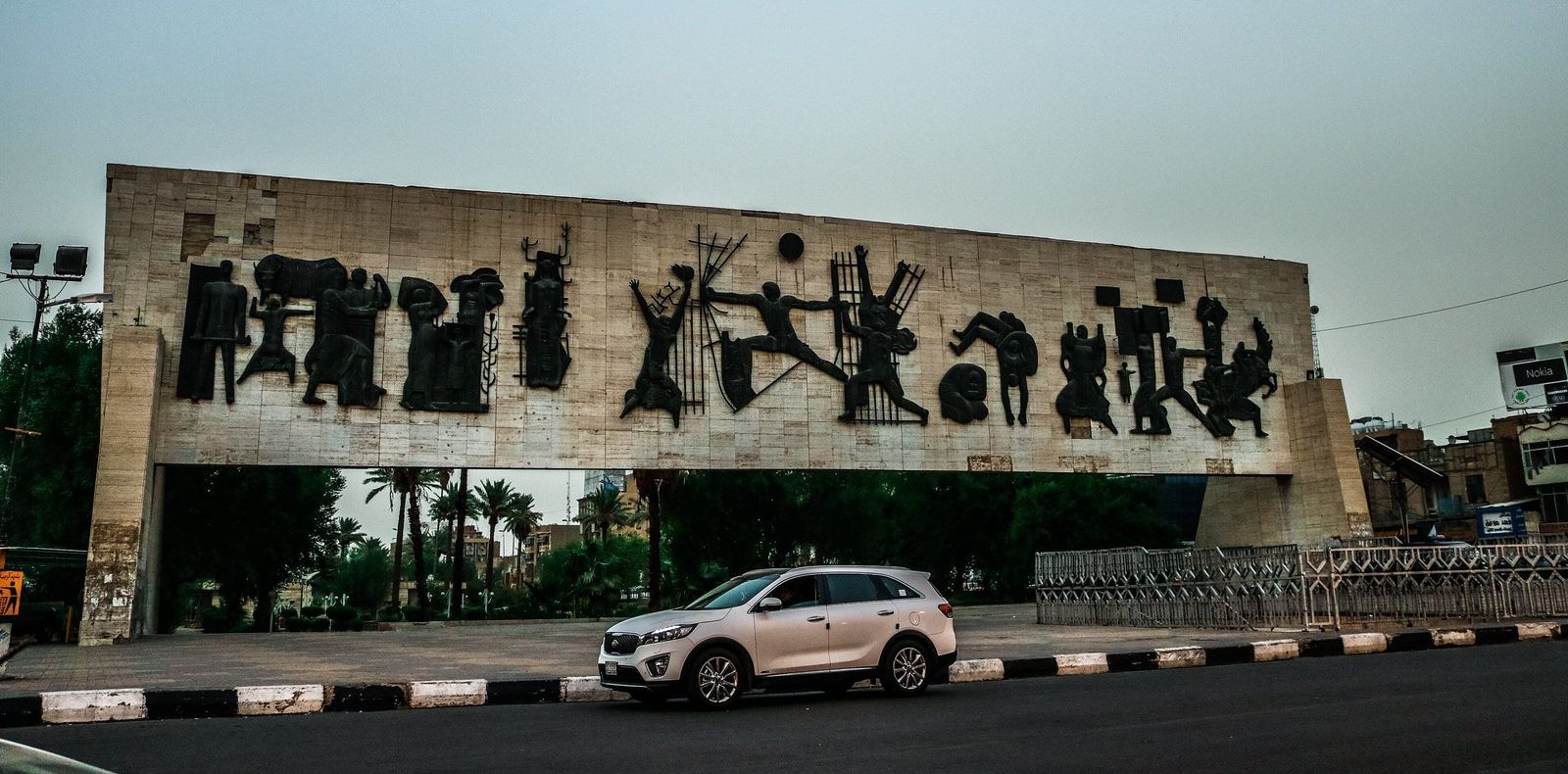
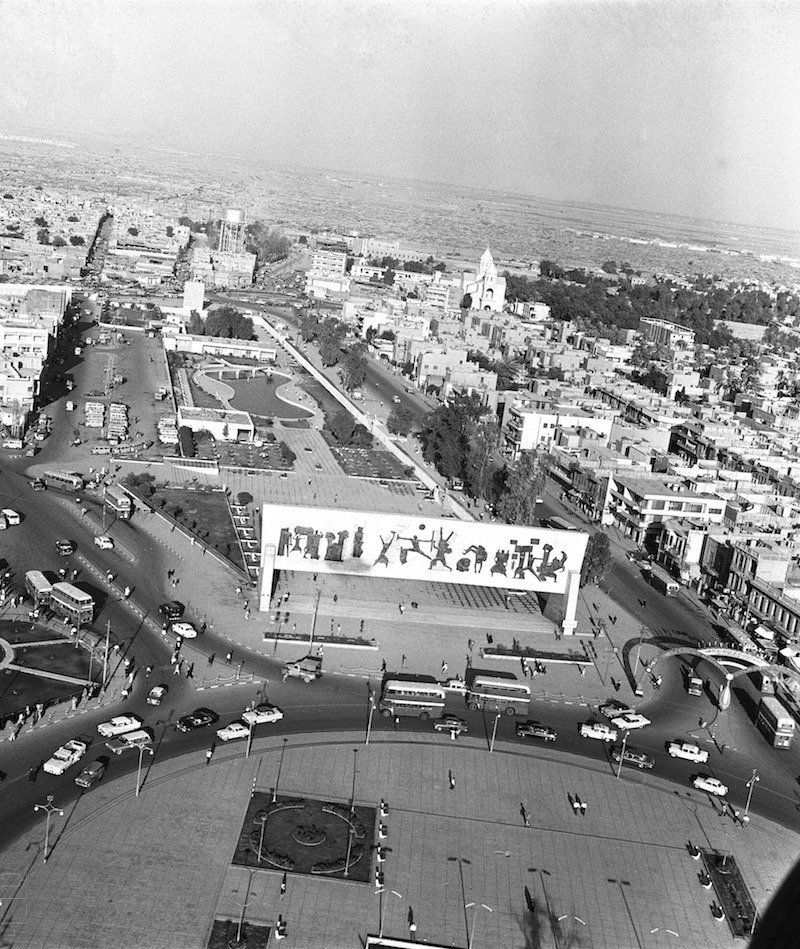
The Freedom Monument, Nasb al-Hurriyah, rises over Tahrir (Liberation) Square at Bab al-Sharqi, in the centre of Baghdad, close to the Jumhuriya Bridge over the Tigris. It is the masterpiece of Jewad Selim, the founding figure of modern Iraqi sculpture. Prime Minister Abd al-Karim Qasim commissioned it in 1959 to commemorate the revolution of 14 July 1958, which ended the monarchy and declared the republic.
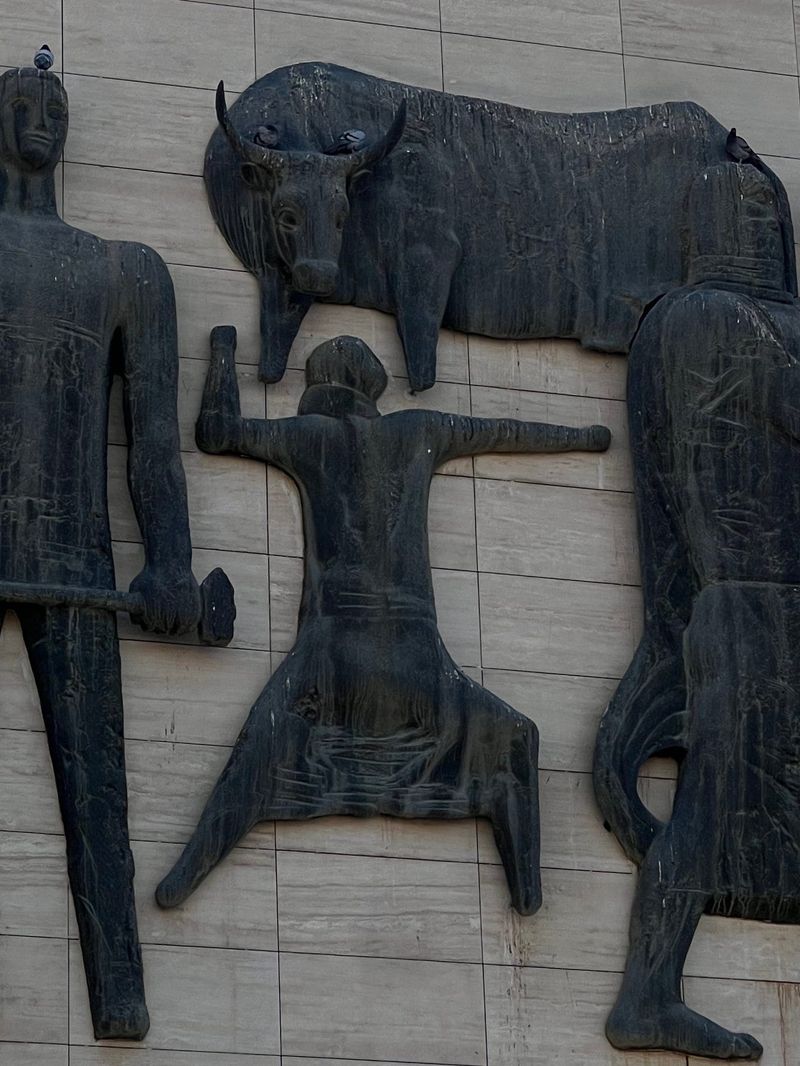
The architect Rifat Chadirji, Selim's close friend, designed its form. He proposed a banner that would stay hoisted forever. A long slab faced with travertine, about 50 metres long and 10 metres high, is lifted on two supports above a garden. Fourteen groups of bronze figures, cast in some seventeen pieces, stand out from its face.
Reading the frieze
The frieze is read from right to left, like a line of Arabic writing. It moves from oppression and protest to revolution and then to freedom and a peaceful working life. Near the centre a soldier breaks open the bars of a prison. Around him are a woman raising a torch, a mother with her child, peasants and workers. Selim drew on Sumerian, Babylonian and Abbasid art. He joined that inheritance with the modern sculpture he had studied in Paris, Rome and at the Slade School in London.
The making
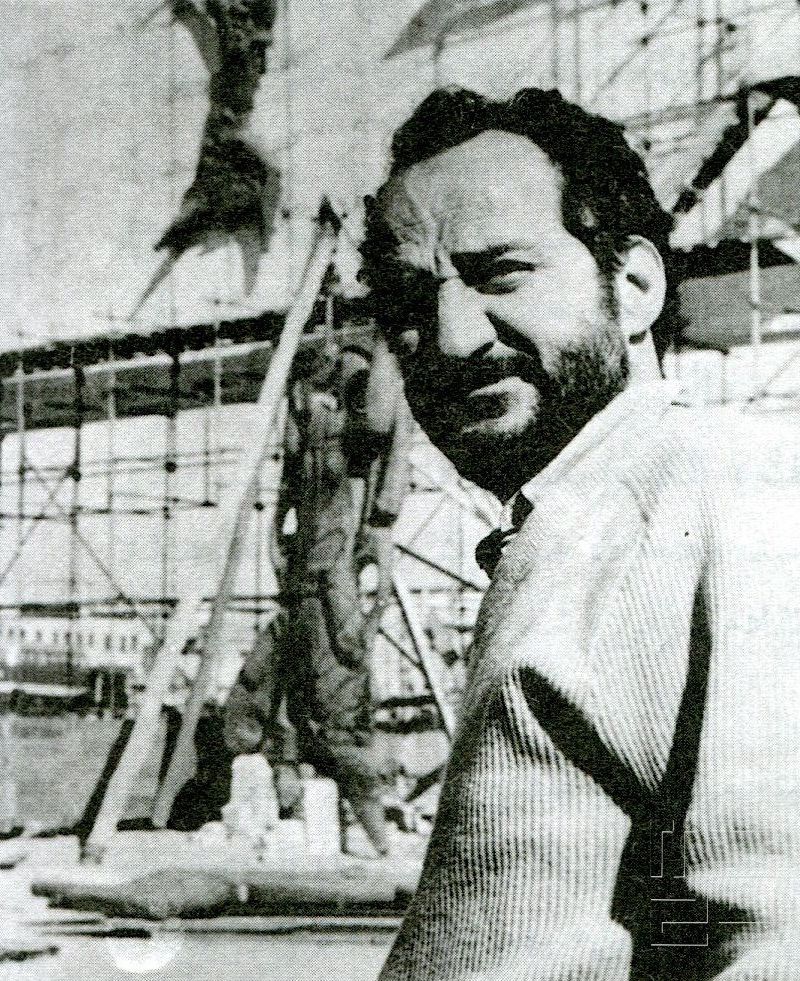
Selim made the bronzes in Italy. He travelled to Florence to cast them at a Tuscan foundry, assisted by the young sculptor Mohammed Ghani Hikmat, who later became famous for his own Baghdad monuments. Casting the huge frieze took about a year and a half. Selim returned to Baghdad to set the figures on Chadirji's structure. In January 1961, while the first bronzes were being installed, he fell gravely ill. He died on 23 January 1961 at the age of 42, with only part of the frieze in place.
His wife Lorna Selim, a painter he had met at the Slade, supervised the completion with Hikmat. The monument was unveiled in July 1961 for the third anniversary of the revolution.
The monument and the square
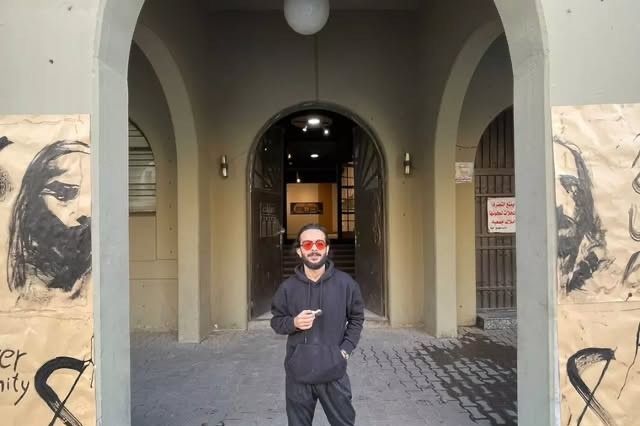
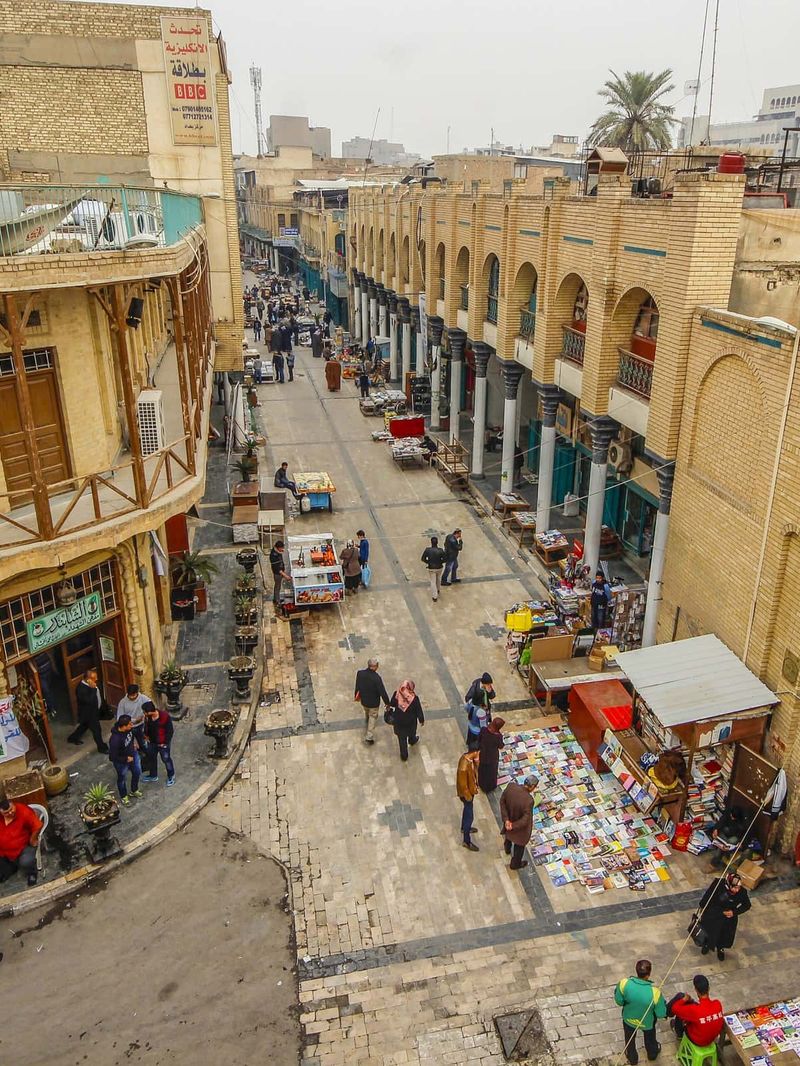
The Freedom Monument has survived every change of regime since. In October 2019 Tahrir Square became the centre of Iraq's mass protest movement. Thousands of protesters camped in the square for months. Young artists covered the walls of the Saadoun Tunnel under the square with murals. The square has since been renovated with gardens and lighting. From here it is a short drive to the old book market of Al-Mutanabbi Street and to the National Museum of Modern Art.
Exhibo editorial
Most monuments to a revolution end up as monuments to the regime that built them. This one did not. What Selim gave Baghdad is a sentence in bronze about ordinary people, from grief to anger to the first morning of something new.
Stand at the right-hand end and walk slowly left, reading it the way it was written. The figures are flat and angular, half Sumerian seal, half modernist poster. Selim never saw it finished. Sixty years later it was the backdrop to another generation's protest, under the same raised torch.
Gallery
How to find it
The monument stands over Tahrir Square at Bab al-Sharqi, near the Rusafa end of the Jumhuriya Bridge. It is best seen from the garden in front of it. Taxis can drop you at the square; the Saadoun Tunnel runs underneath it.
Similar places
All places
News by Exhibo
Editorial coverage on Exhibo
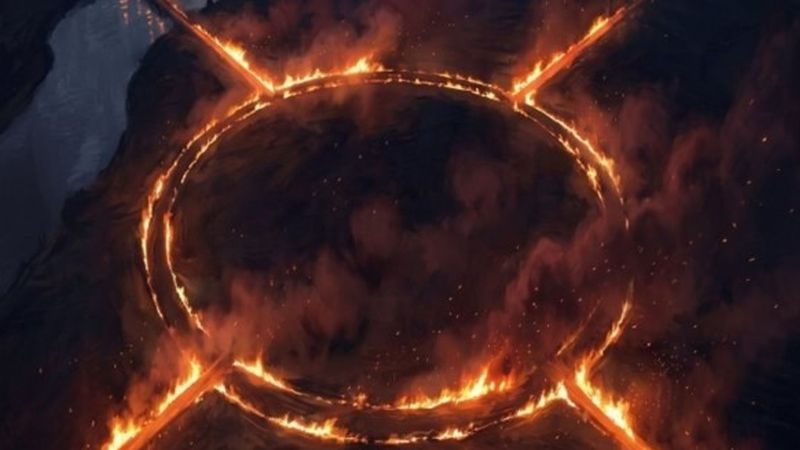
The City With No Ruins: What Is Left of Abbasid Baghdad
A caliph drew his capital in fire, the Mongols erased it, and a video game rebuilt it out of Isfahan and Samarkand. What actually survives of Abbasid Baghdad, where it is, and who else has tried to put it back.
Climb a viewpoint in Assassin's Creed Mirage and you see the Round City whole — double walls, four gates, the green dome at the centre. Nobody has ever seen that view. No excavated remains have been securely identified as any of it. This is what is actually left of ninth-century Baghdad, where you would have to go to stand in it, and why Ubisoft was the second team to rebuild a city that no longer exists.
The Civilisation That Bought Itself Back: A Field Guide to Collecting Arab Art
A field guide to collecting Arab and Middle Eastern art — who buys, what it costs, why prices lag cultural significance, and where collectors are looking now.
How the Arab world went from selling its art history to the West to building the fastest-growing market for Middle Eastern art on earth — who buys, why, what it costs, and where the smart money is looking now
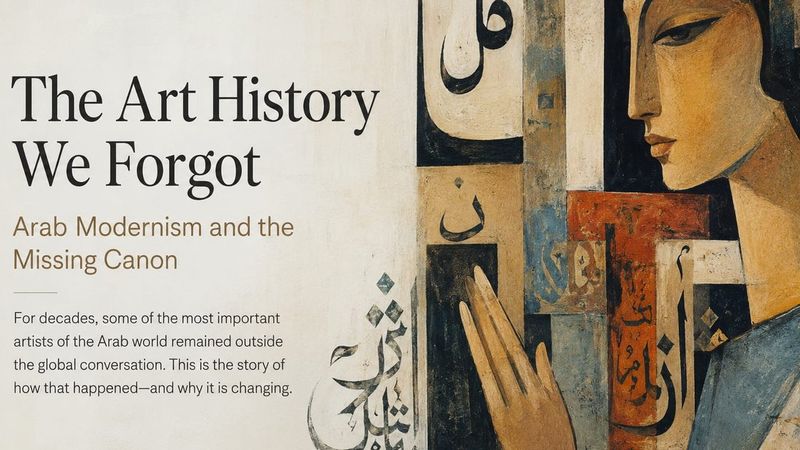
Arab Modernism 101: The Movement That Western Art History Forgot
An entire century of extraordinary painting, sculpture and radical thinking got written out of the global canon. Someone made that decision. And now the market — and the collectors who pay attention — are making a different one.
Great art does not become invisible by accident. Arab Modernism reveals how museums, markets and cultural institutions shape what the world sees — and what it overlooks. A story about artists, recognition and the blind spots that define art history.