Al-Mustansiriya Madrasa
A brick Abbasid college of 1234 on the Tigris, one of the oldest madrasas still standing anywhere.
An Abbasid college on the Tigris
Al-Mustansiriya Madrasa stands on the east bank of the Tigris in old Rusafa, right on the river beside Al-Shuhada Bridge. The Abbasid caliph al-Mustansir Billah, who ruled from 1226 to 1242, commissioned it in 1227 (625 AH). Building took six years. The college opened in April 1234 (Rajab 631 AH) with a ceremony attended by the vizier, judges, scholars and poets of Baghdad.
It is one of the oldest madrasas still standing anywhere. It was also the first known universal madrasa: a single college where all four Sunni schools of law, the Hanafi, Shafi'i, Maliki and Hanbali, were taught side by side, together with the study of hadith. Medieval sources say that sixty-two students were admitted for each school. Generous endowments paid for teachers' salaries and student stipends. Later writers describe a library, a hospital and a pharmacy attached to the college. Chroniclers also recorded a water clock in the entrance hall that marked the hours of prayer by day and night.
The building
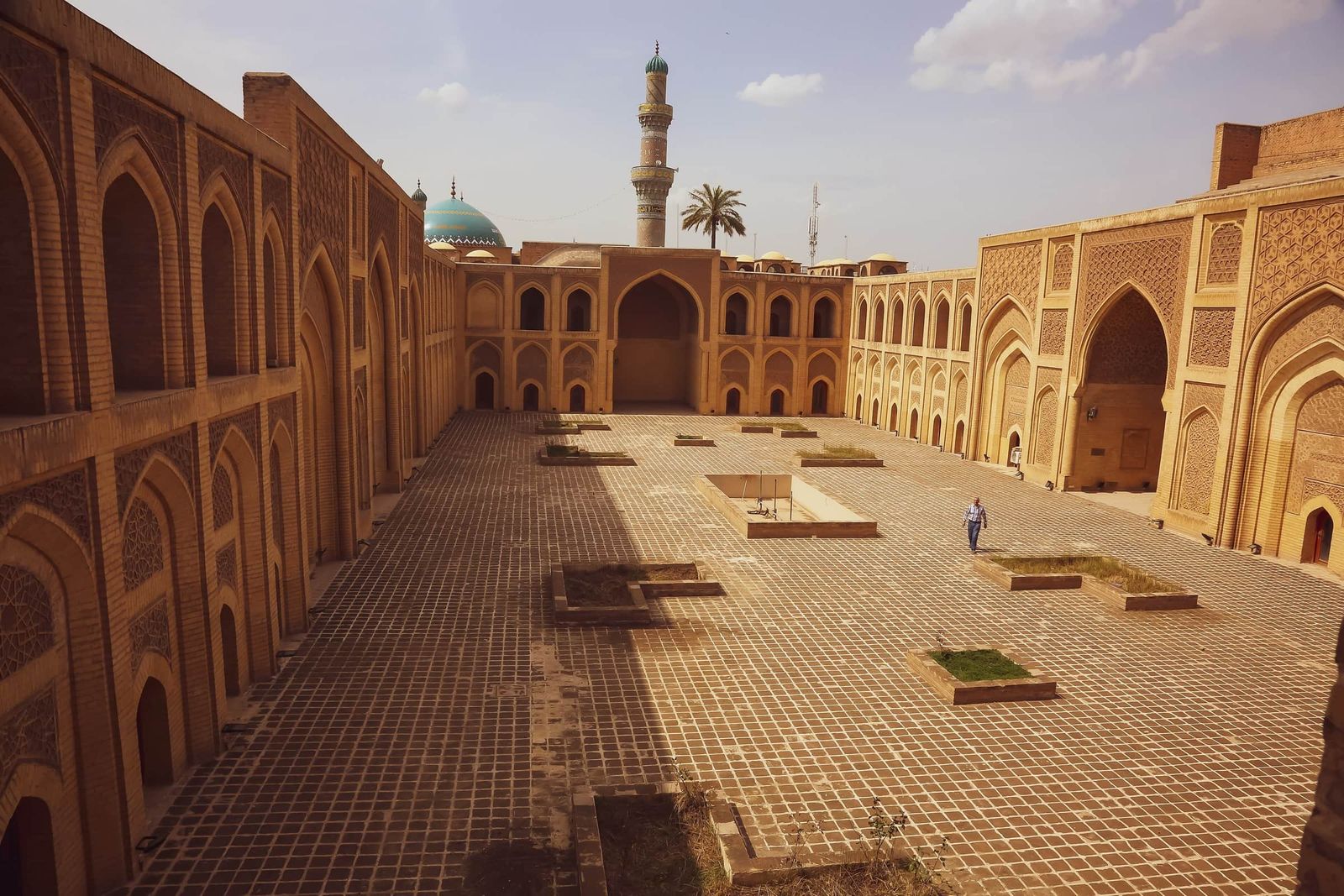
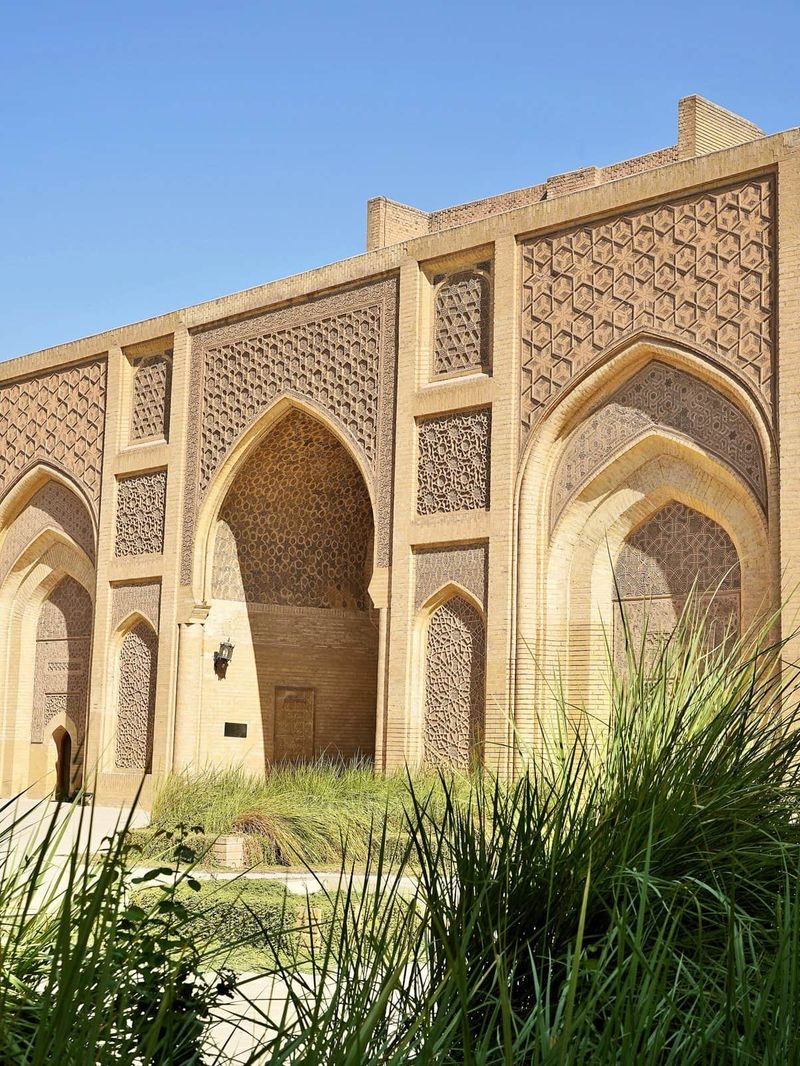
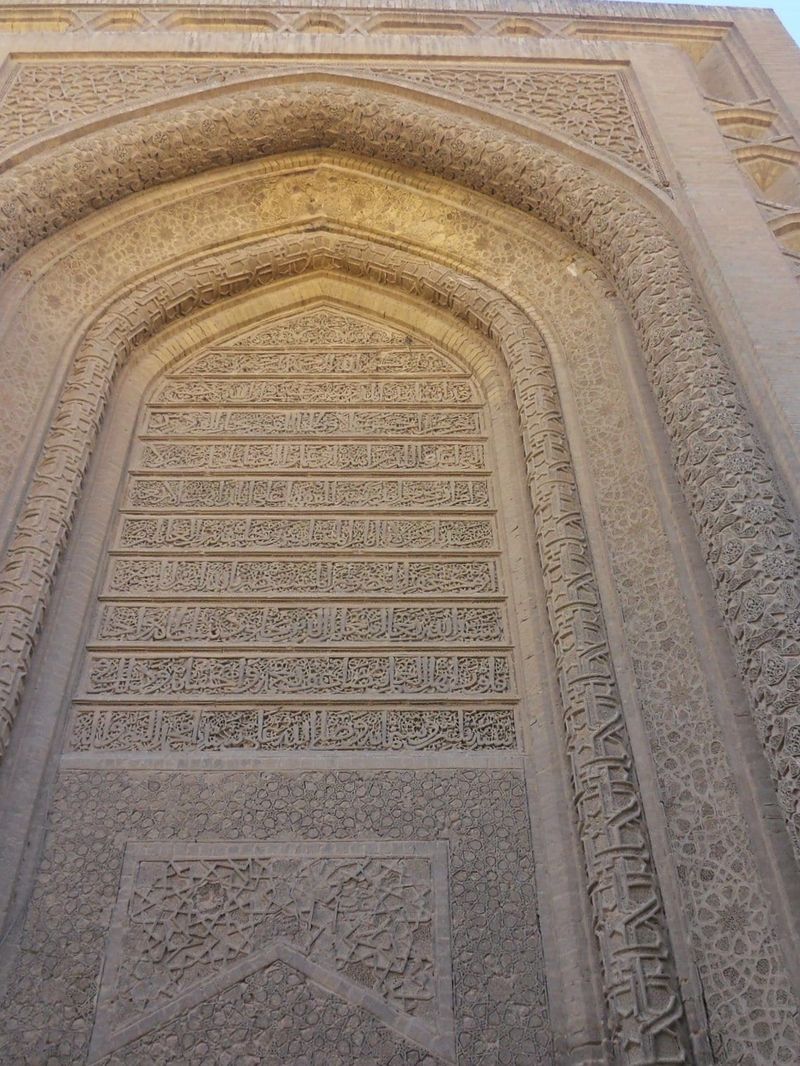
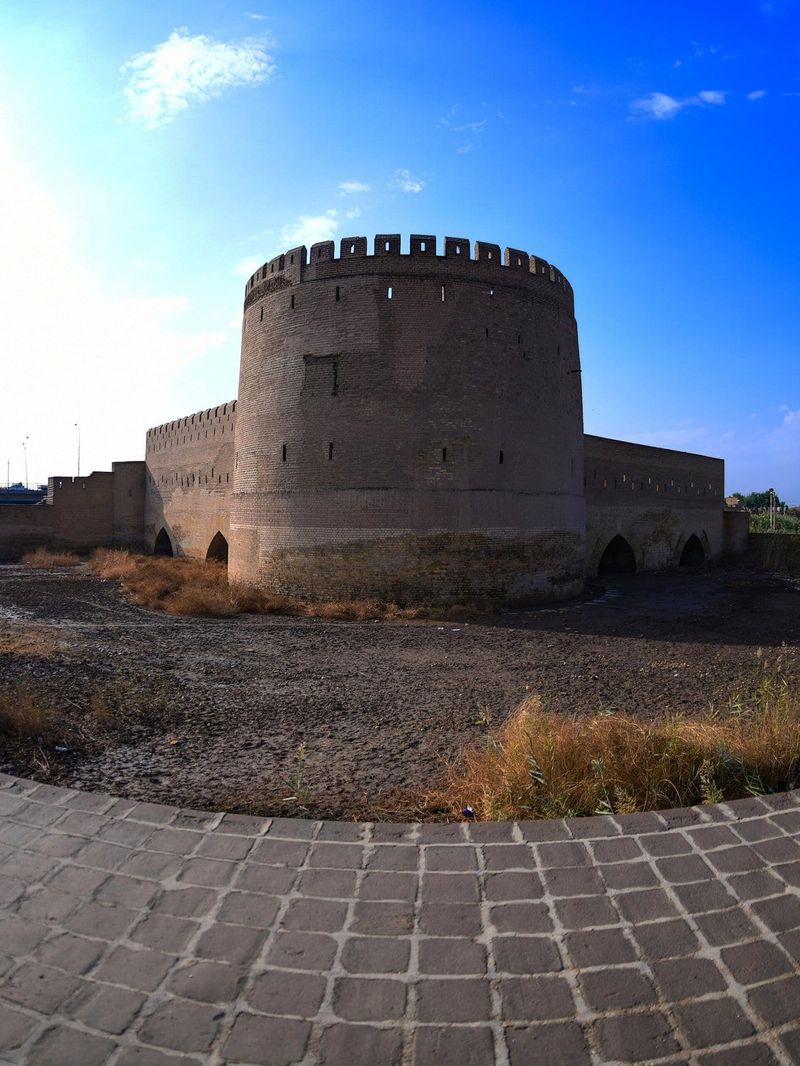
The madrasa is a long rectangle of fine yellow brick, about 106 by 50 metres. Its main entrance on the north-east side is a tall portal with a pointed arch. Above the door, within the arch, runs Caliph al-Mustansir's ten-line foundation inscription, framed by three bands of carved geometric star patterns.
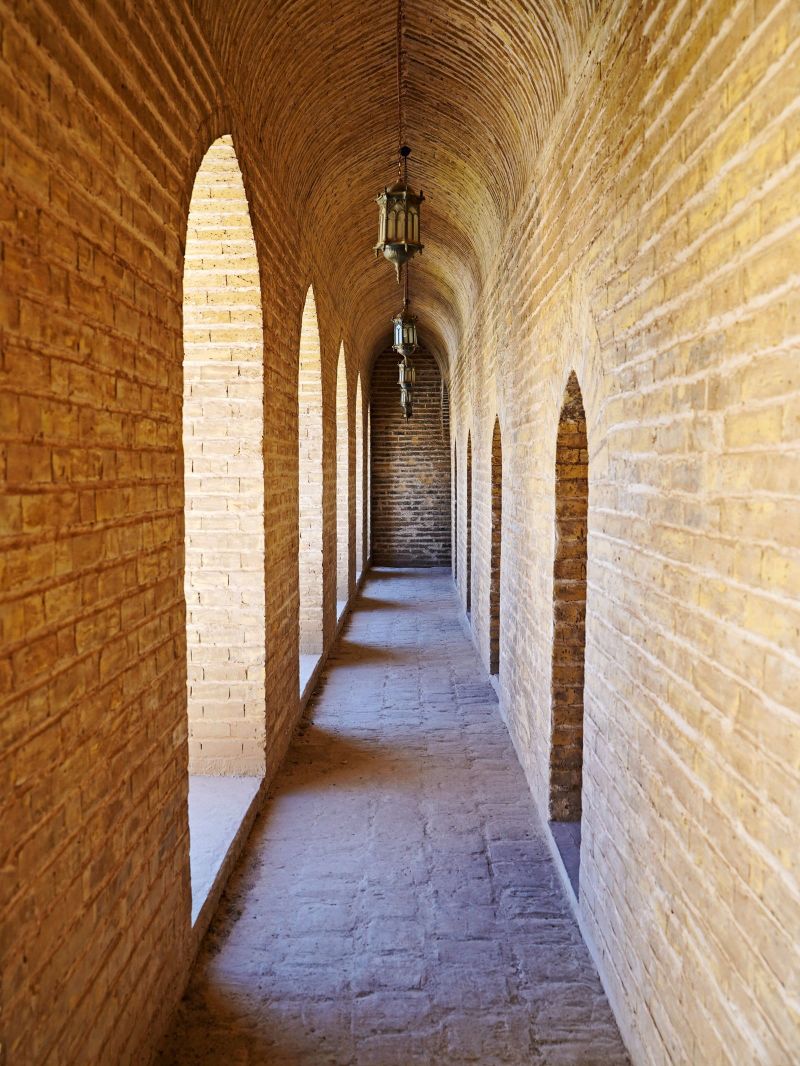
Inside, the entrance leads through an iwan into a long central courtyard. Opposite it a triple-arched portal opens into the prayer hall. Along both long sides run two storeys of pointed arcades, six arches on each side of the portals, leading to porticoes and the narrow cells where students lived. Large two-storey iwans stand in the middle of the short sides. The river façade is covered with a zigzag pattern of projecting brick plugs, above a long inscription band.
Later lives
The Mongol sack of Baghdad in 1258 ended the madrasa's golden age. Its library was probably lost. Over the following centuries the building fell out of use as a school and served as a kind of caravanserai. The Danish traveller Carsten Niebuhr found craftsmen working in it in the 18th century and copied its inscriptions. In 1865 the Ottoman administration turned it into a customs house. An inscription of Sultan Abdulaziz along the river front records repairs from that time.
In 1945 Iraq's Directorate of Antiquities began restoring the building and cleared the shops crowded around it. In 1960 it opened as Baghdad's Museum of Islamic Art. Restoration has continued ever since. Recent works have cleared the surrounding blocks to bring back the madrasa's original outline.
Exhibo editorial
Baghdad was the city of the House of Wisdom. Almost nothing of that Abbasid learning survives in brick. The Mustansiriya does. Walk into the courtyard and the scale is the surprise: arcade after arcade of small student rooms, enough for a whole university, built a generation before the Mongols arrived.
The building rewards slow looking. The brick is cut and laid so finely that the geometry reads like carved stone. Then step out to the river front and the Tigris, the reason the caliphs built here in the first place.
Gallery
How to find it
The madrasa is in old Rusafa on the east bank of the Tigris, at the Rusafa end of Al-Shuhada Bridge, a short walk from the Copper Market (Souq al-Safafeer) and Al-Mutanabbi Street. The main entrance is on the side away from the river. Walk round to the river front afterwards to see the brick façade and its inscription band.
Similar places
All places
News by Exhibo
Editorial coverage on Exhibo
The City With No Ruins: What Is Left of Abbasid Baghdad
A caliph drew his capital in fire, the Mongols erased it, and a video game rebuilt it out of Isfahan and Samarkand. What actually survives of Abbasid Baghdad, where it is, and who else has tried to put it back.
Climb a viewpoint in Assassin's Creed Mirage and you see the Round City whole — double walls, four gates, the green dome at the centre. Nobody has ever seen that view. No excavated remains have been securely identified as any of it. This is what is actually left of ninth-century Baghdad, where you would have to go to stand in it, and why Ubisoft was the second team to rebuild a city that no longer exists.
The Civilisation That Bought Itself Back: A Field Guide to Collecting Arab Art
A field guide to collecting Arab and Middle Eastern art — who buys, what it costs, why prices lag cultural significance, and where collectors are looking now.
How the Arab world went from selling its art history to the West to building the fastest-growing market for Middle Eastern art on earth — who buys, why, what it costs, and where the smart money is looking now
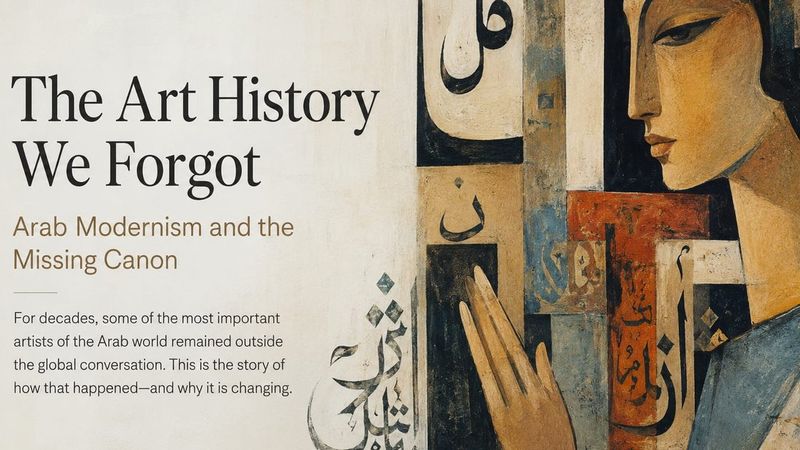
Arab Modernism 101: The Movement That Western Art History Forgot
An entire century of extraordinary painting, sculpture and radical thinking got written out of the global canon. Someone made that decision. And now the market — and the collectors who pay attention — are making a different one.
Great art does not become invisible by accident. Arab Modernism reveals how museums, markets and cultural institutions shape what the world sees — and what it overlooks. A story about artists, recognition and the blind spots that define art history.