Bab al-Wastani, the Abbasid Middle Gate
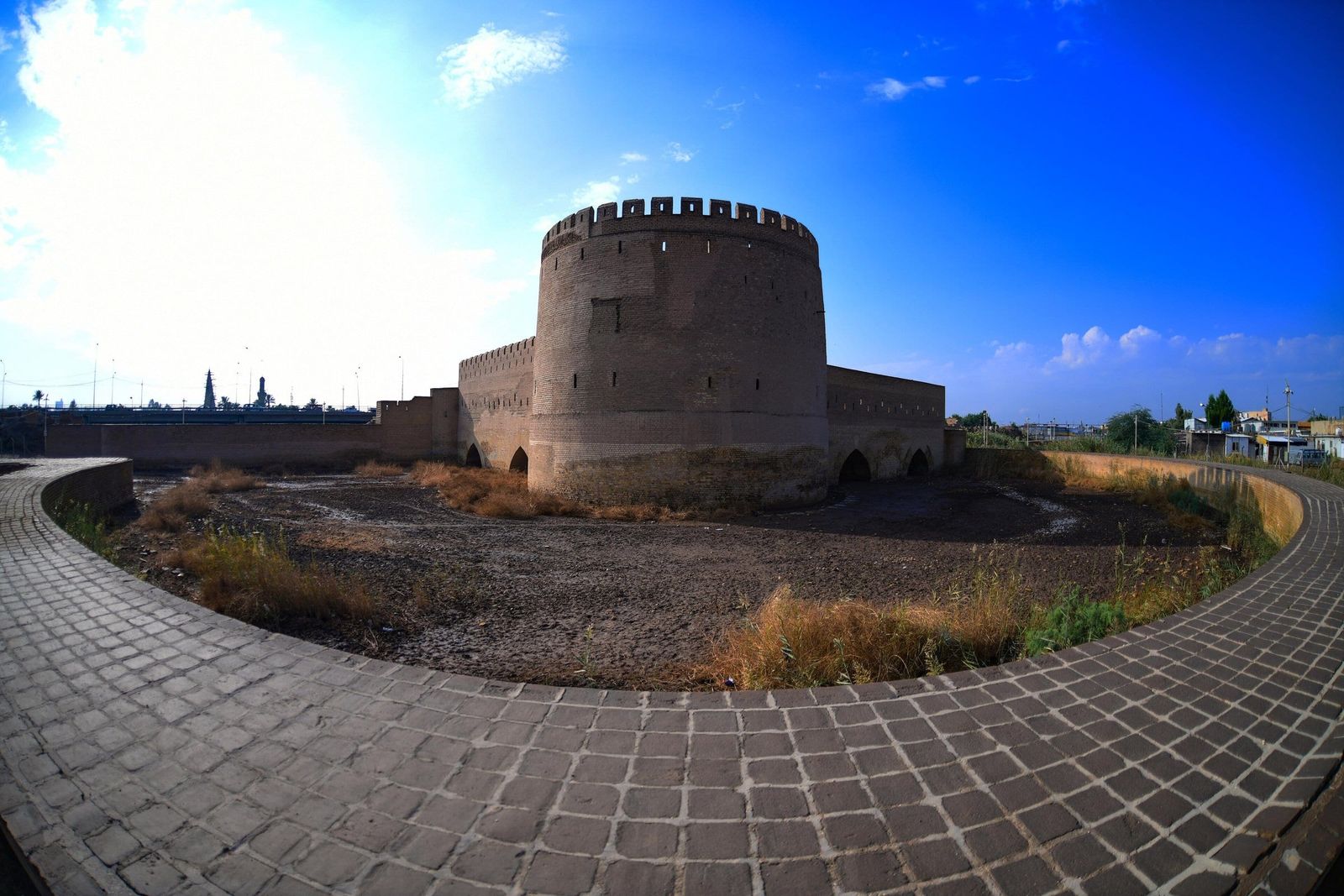
The last standing gate of Baghdad's medieval walls, a round brick tower over a dry moat in the Sheikh Omar quarter.
The last gate of Baghdad
Bab al-Wastani, the Middle Gate, stands in the Sheikh Omar quarter of Rusafa, on the east side of central Baghdad. It is the only gate of the city's medieval walls still standing. It is also known as Bab Khorasan, after the road that led east towards Persia. Old sources call it Bab al-Dhafariya.
After the Abbasid caliphs moved their palaces to the east bank of the Tigris, the new eastern city needed defences. A wall with a deep moat was raised round it in the early 12th century, between the reigns of the caliph al-Mustazhir and his son al-Mustarshid. Four main gates pierced it. Bab al-Mu'azzam stood in the north and Bab al-Basaliya in the south. Between them were Bab al-Dhafariya, today's Wastani, with Bab al-Halba, the famous Talisman Gate. Later caliphs repaired and strengthened the walls. The Talisman Gate survived until 1917, when retreating Ottoman troops blew it up. Of all the gates, only the Wastani remains.
Tower, passage and moat
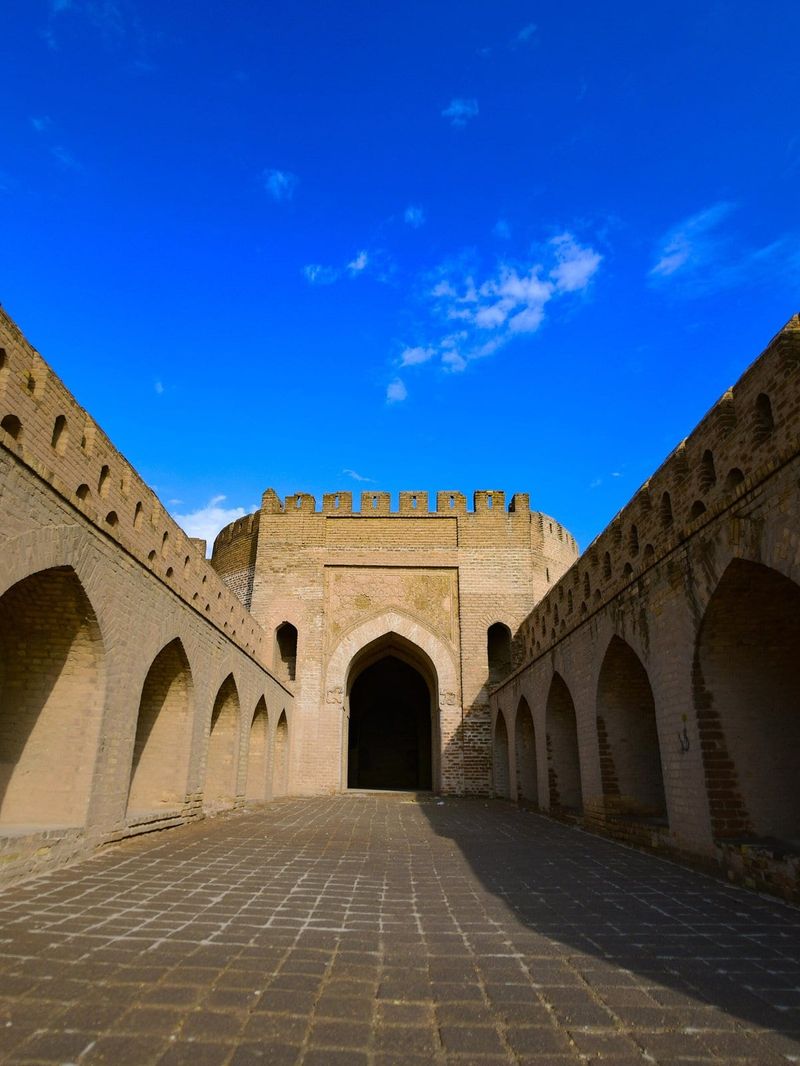
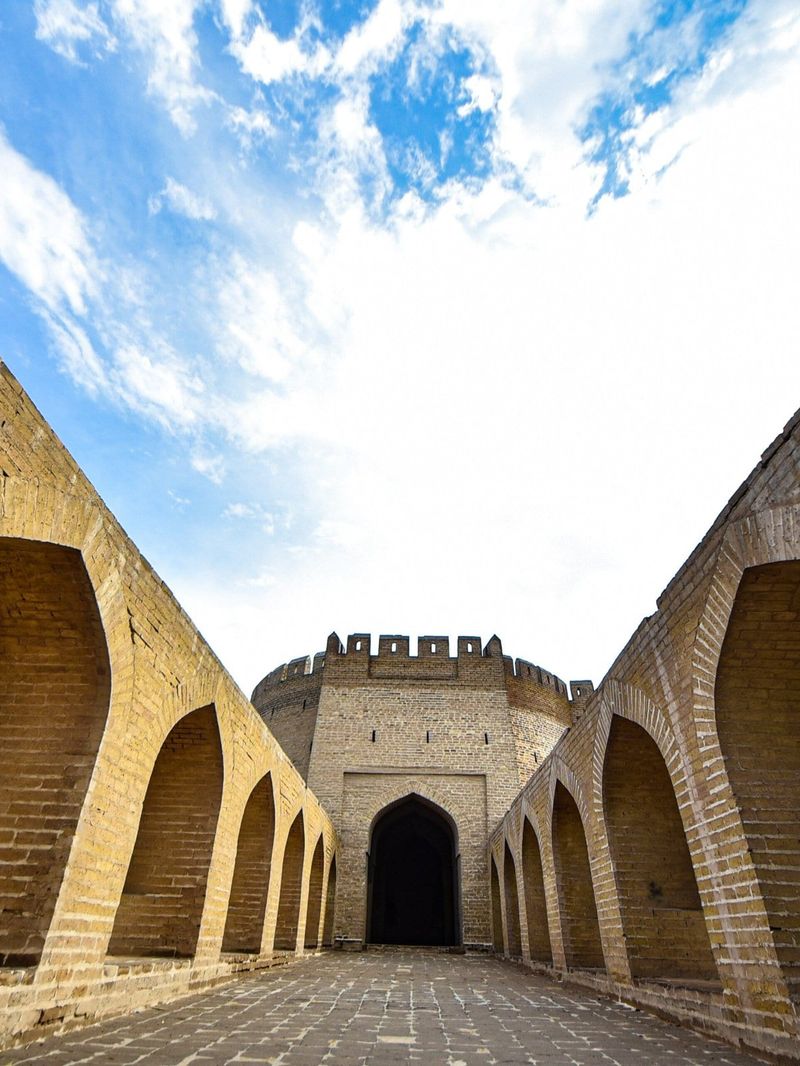
The gate is a massive round tower of fired brick, crowned with battlements and covered inside by a dome. A pointed doorway on one side opens onto a bridge over the old moat. From the tower a long brick passage runs between high walls lined with deep pointed niches. A second, larger bridge crossed the moat on the other side. Stretches of the brick city wall survive beside the gate.
Restoration and the shrine next door
The gate was restored in the 20th century. For a time it housed a museum of arms. In 2024 architecture students and professors led public walking tours of old Baghdad that stopped at the gate.
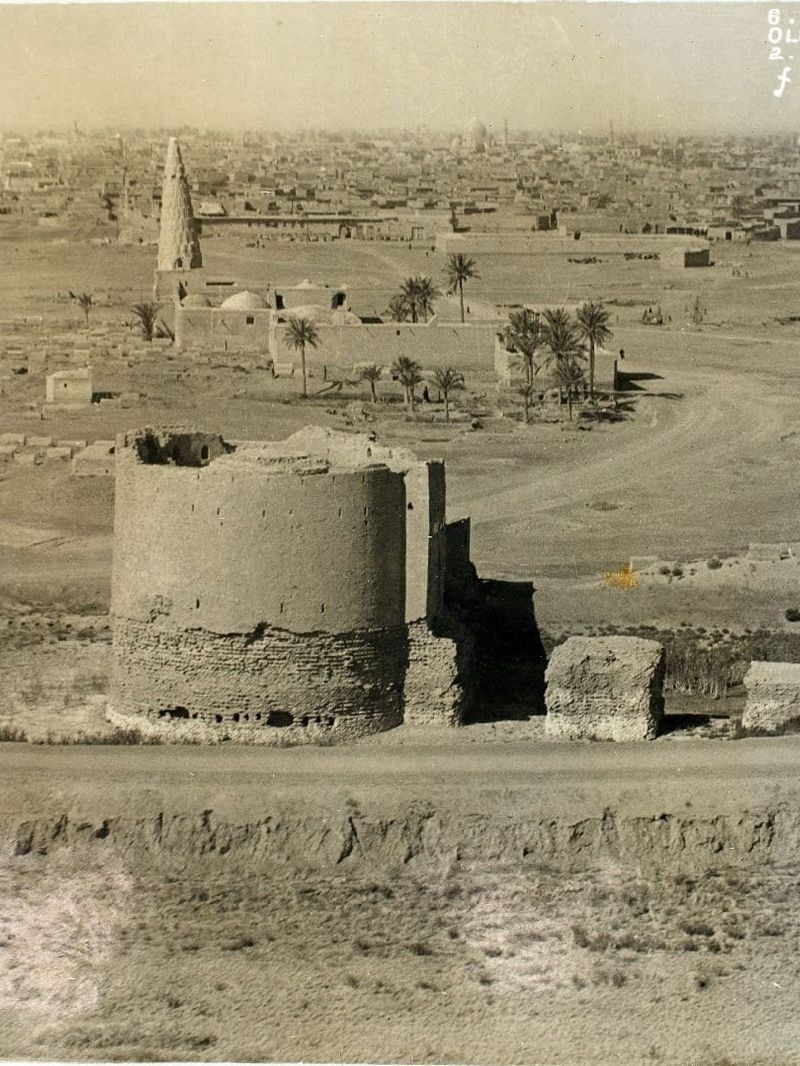
Right beside the gate, in the old cemetery that gives the quarter its name, stands the shrine of Shaykh Umar al-Suhrawardi. Suhrawardi was a Sufi master and Shafi'i jurist who taught in Baghdad and died there in 1234. His tomb is crowned by a tall conical dome of stepped muqarnas cells left bare on the outside, a type of dome typical of medieval Iraq. Old photographs show the gate and the shrine's cone standing together above the empty plain. A short drive south leads to the Suq al-Ghazl Minaret and Al-Mutanabbi Street.
Exhibo editorial
Everything else of the Abbasid walls has gone under roads and houses. This one tower survived. It still does what a gate is meant to do. It slows you down. You leave a busy Baghdad street, cross the bridge and walk the long corridor of niches before you reach the tower.
Then step out to the cemetery. The cone of Suhrawardi's dome rises over the graves, the same pairing that travellers photographed a century ago. Together they are as close as Baghdad gets to a picture of its medieval self.
Gallery
How to find it
Bab al-Wastani is in the Sheikh Omar quarter of Rusafa, north-east of the old centre, beside the Sheikh Omar cemetery and the shrine of Umar al-Suhrawardi. Take a taxi to the shrine of Sheikh Omar al-Suhrawardi; the gate stands next to it across the old moat.
Similar places
All places
News by Exhibo
Editorial coverage on Exhibo
The City With No Ruins: What Is Left of Abbasid Baghdad
A caliph drew his capital in fire, the Mongols erased it, and a video game rebuilt it out of Isfahan and Samarkand. What actually survives of Abbasid Baghdad, where it is, and who else has tried to put it back.
Climb a viewpoint in Assassin's Creed Mirage and you see the Round City whole — double walls, four gates, the green dome at the centre. Nobody has ever seen that view. No excavated remains have been securely identified as any of it. This is what is actually left of ninth-century Baghdad, where you would have to go to stand in it, and why Ubisoft was the second team to rebuild a city that no longer exists.
The Civilisation That Bought Itself Back: A Field Guide to Collecting Arab Art
A field guide to collecting Arab and Middle Eastern art — who buys, what it costs, why prices lag cultural significance, and where collectors are looking now.
How the Arab world went from selling its art history to the West to building the fastest-growing market for Middle Eastern art on earth — who buys, why, what it costs, and where the smart money is looking now
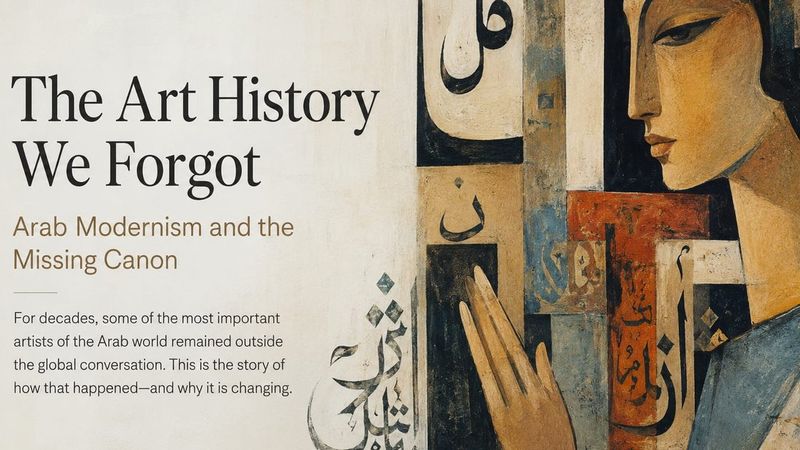
Arab Modernism 101: The Movement That Western Art History Forgot
An entire century of extraordinary painting, sculpture and radical thinking got written out of the global canon. Someone made that decision. And now the market — and the collectors who pay attention — are making a different one.
Great art does not become invisible by accident. Arab Modernism reveals how museums, markets and cultural institutions shape what the world sees — and what it overlooks. A story about artists, recognition and the blind spots that define art history.