
Qasr Mushatta
The largest Umayyad desert palace, left unfinished by the airport, whose carved facade is now in Berlin.
An unfinished palace
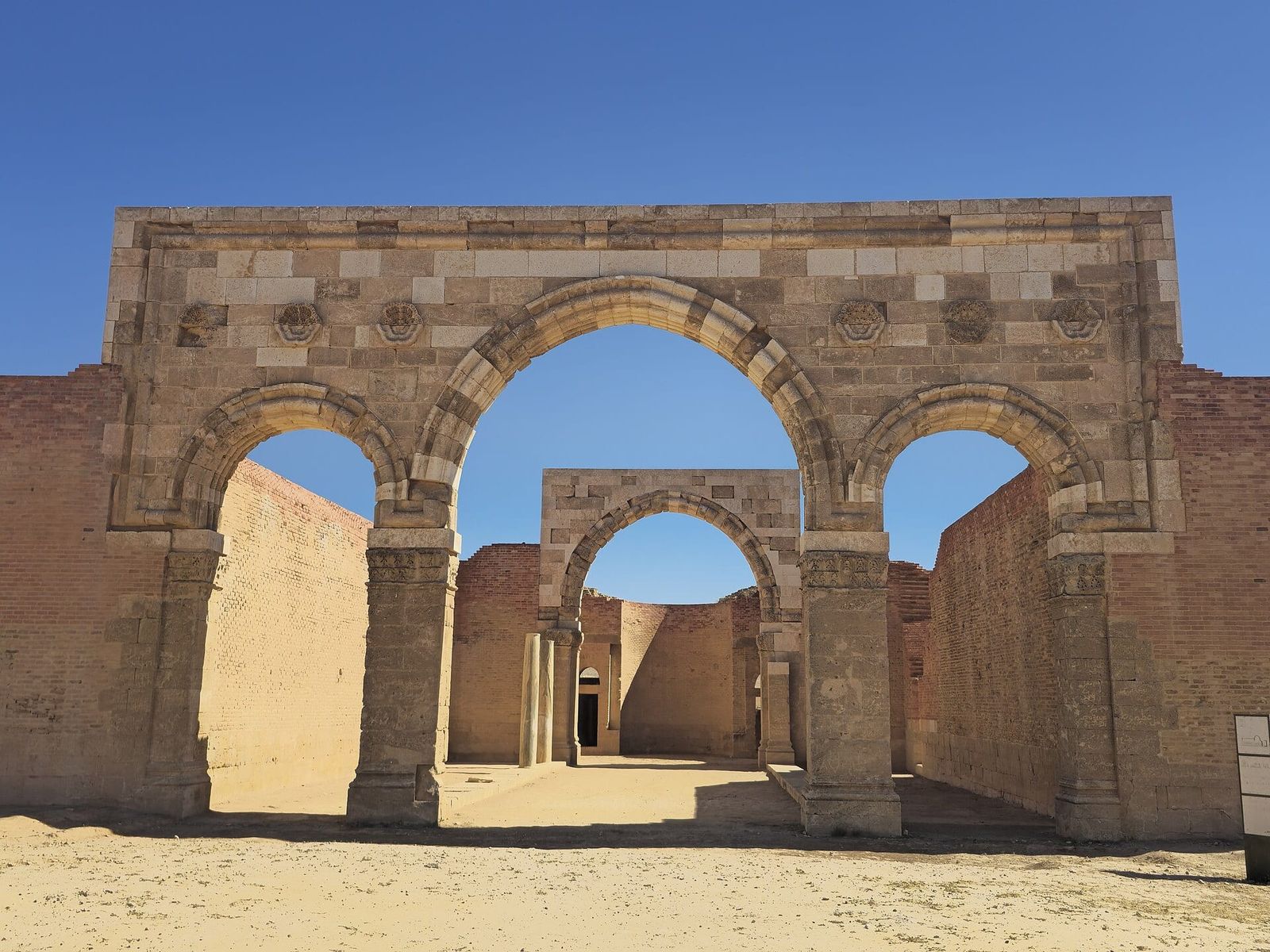
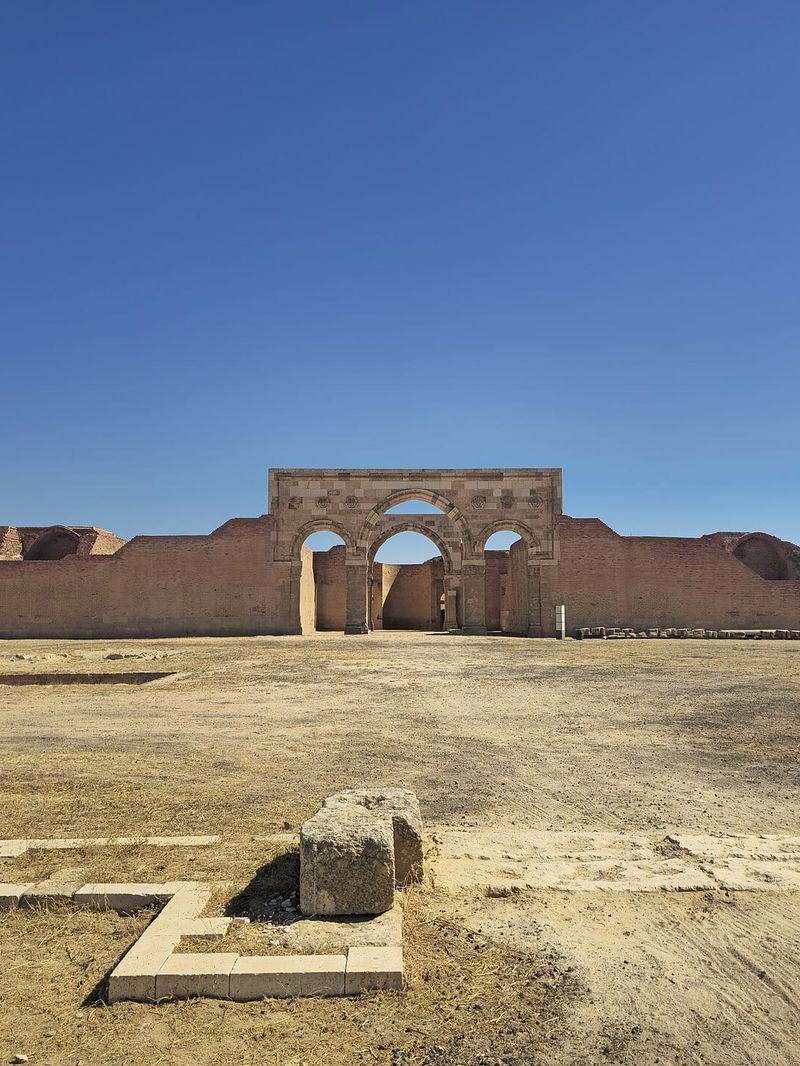
Qasr Mushatta, Qasr al-Mshatta, is the largest of the Umayyad desert palaces in Jordan: a square enclosure about 144 metres a side just north of Queen Alia International Airport. It was begun in the 740s, almost certainly for the caliph al-Walid II. Work stopped unfinished, probably after his murder in 744.
The building
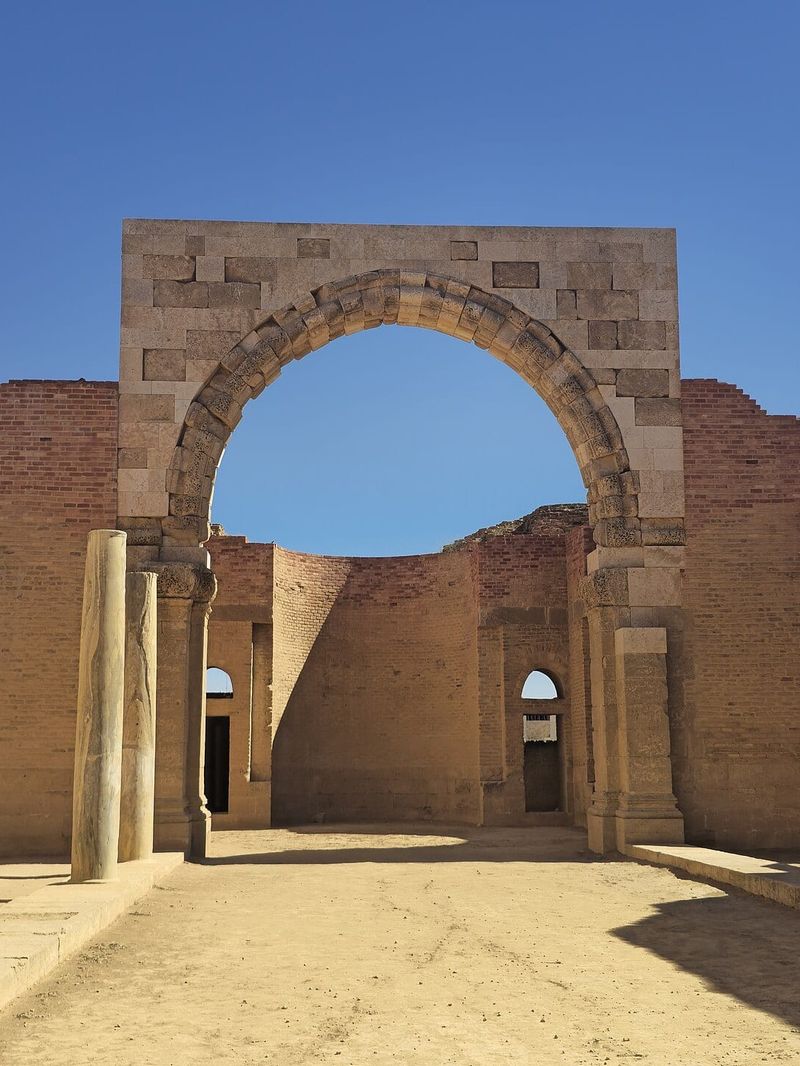
The outer wall was set with half-round towers. Inside, only the central strip was built: a gate complex, a courtyard and a throne block with an audience hall ending in three apses. The vaults are of fired brick, rare in a land of stone and a sign of builders and ideas arriving from Iraq. The rest of the plan was marked out but never raised.
The facade in Berlin
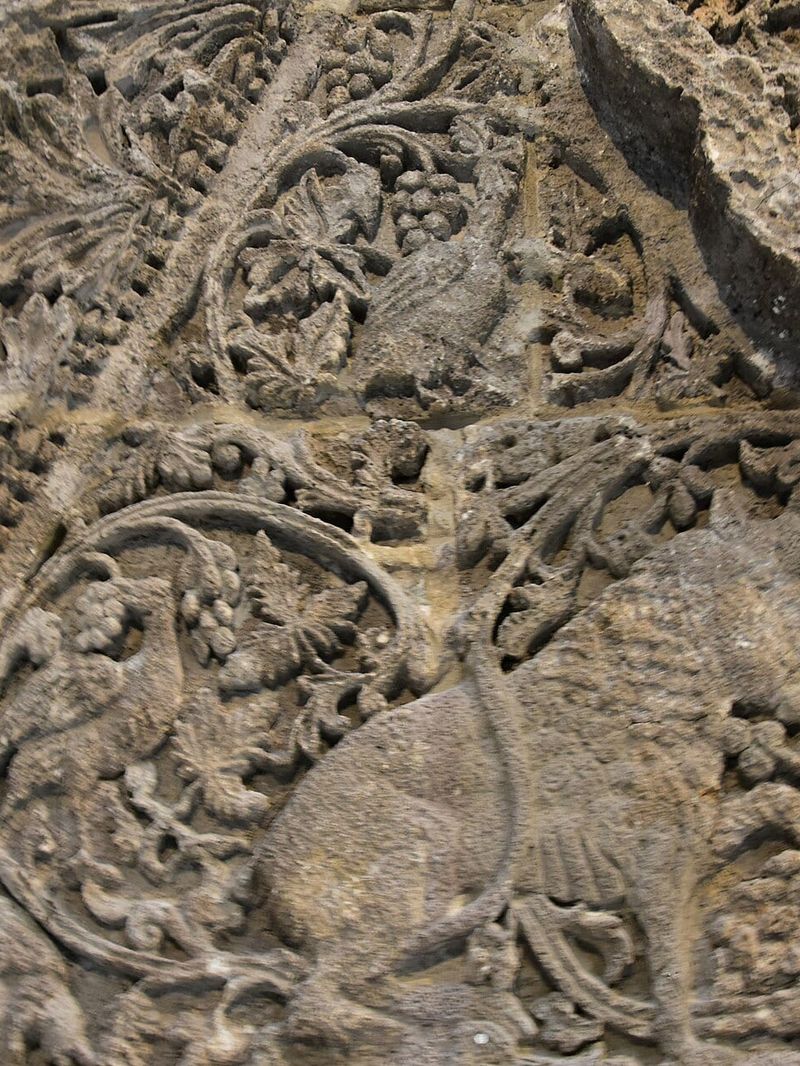
The palace is famous for its southern facade, a band of limestone carved with dense vine scrolls, rosettes, animals and mythical creatures set in great triangles. In 1903 the Ottoman sultan Abdul Hamid II gave the facade to the German emperor Wilhelm II. It was cut into blocks and shipped to Berlin, where it belongs to the Museum für Islamische Kunst in the Pergamonmuseum. On site the base of the facade and fragments of carving remain.
Visiting
Because the palace lies next to the airport, visitors may be asked for a passport on the access road. Among the other desert palaces, Qasr Kharana is the best preserved.
Exhibo editorial
Visiting Mushatta means imagining something that is not there. The best part of the building is in Berlin. What stays in Jordan are the bones: brick vaults, the trace of a plan, towers that never rose.
That is why it is worth an hour on the way to or from a flight. You see how the Umayyads planned, what they borrowed, where they stopped. You stand where the most famous carved wall of early Islam stood until a sultan gave it away.
Gallery
How to find it
On the northern edge of Queen Alia International Airport, about 35 km south of Amman. Approach from the airport road and follow the signposted service road along the perimeter, with your passport ready for the checkpoint. The enclosure is fenced, with parking by the entrance.
Similar places
All places
News by Exhibo
Editorial coverage on Exhibo
Filmed, but Not Recorded: The Arab World’s Missing Film Locations
Wikidata knows Gladiator was filmed in Morocco. It doesn’t know where.
Ouarzazate is the second most filmed place in the Middle East and North Africa, yet 25 of its 27 productions are recorded only in Wikipedia prose. We compared filming records worldwide and found that in the Arab world, Wikidata usually knows the country but not the place.
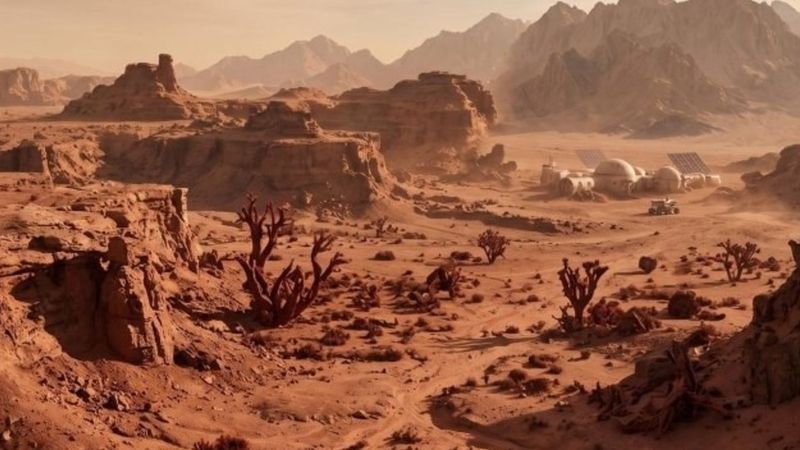
Why Every Sci-Fi Desert Looks Arab
From Arrakis to Tatooine, when a film wants a desert to feel ancient, prophetic and alien, it reaches for an Arab and Berber vocabulary — and reveals more about the West that built it than the region it borrows from.
The wrapped faces, the trilling women, the barely-displaced Arabic: cinema's alien deserts keep sounding Arab. But the vocabulary was assembled in the West — from Orientalist painting to Lawrence to Dune — and it says more about who is looking than about anyone being looked at.
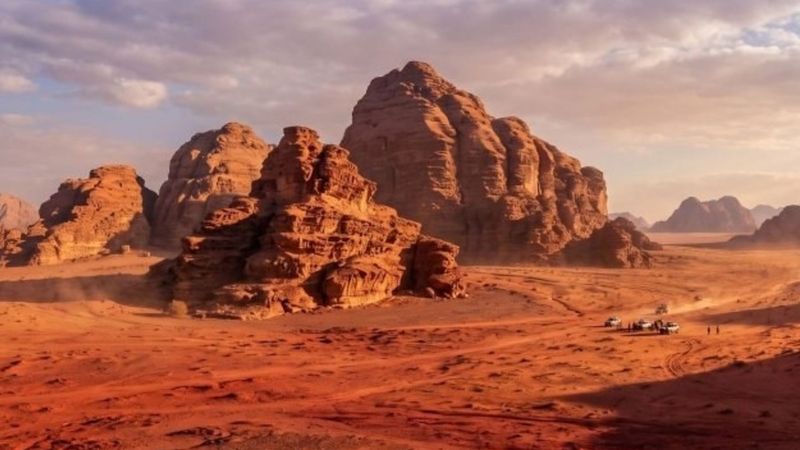
Why Wadi Rum Keeps Playing Mars: A Desert That Is Right About the Wrong Planet
A valley in southern Jordan has become cinema's favourite Mars — not because it is like the planet, but because it looks like the one we carry in our heads.
Put Wadi Rum beside a rover photograph and you can't tell which is Mars. But the desert shares almost nothing with the real planet except its colour — and lately, the illusion has grown powerful enough that real space missions have come to Jordan to rehearse.