Odeon, Amman
A small roofed Roman concert hall facing the great theatre across the old forum.
A theatre for music
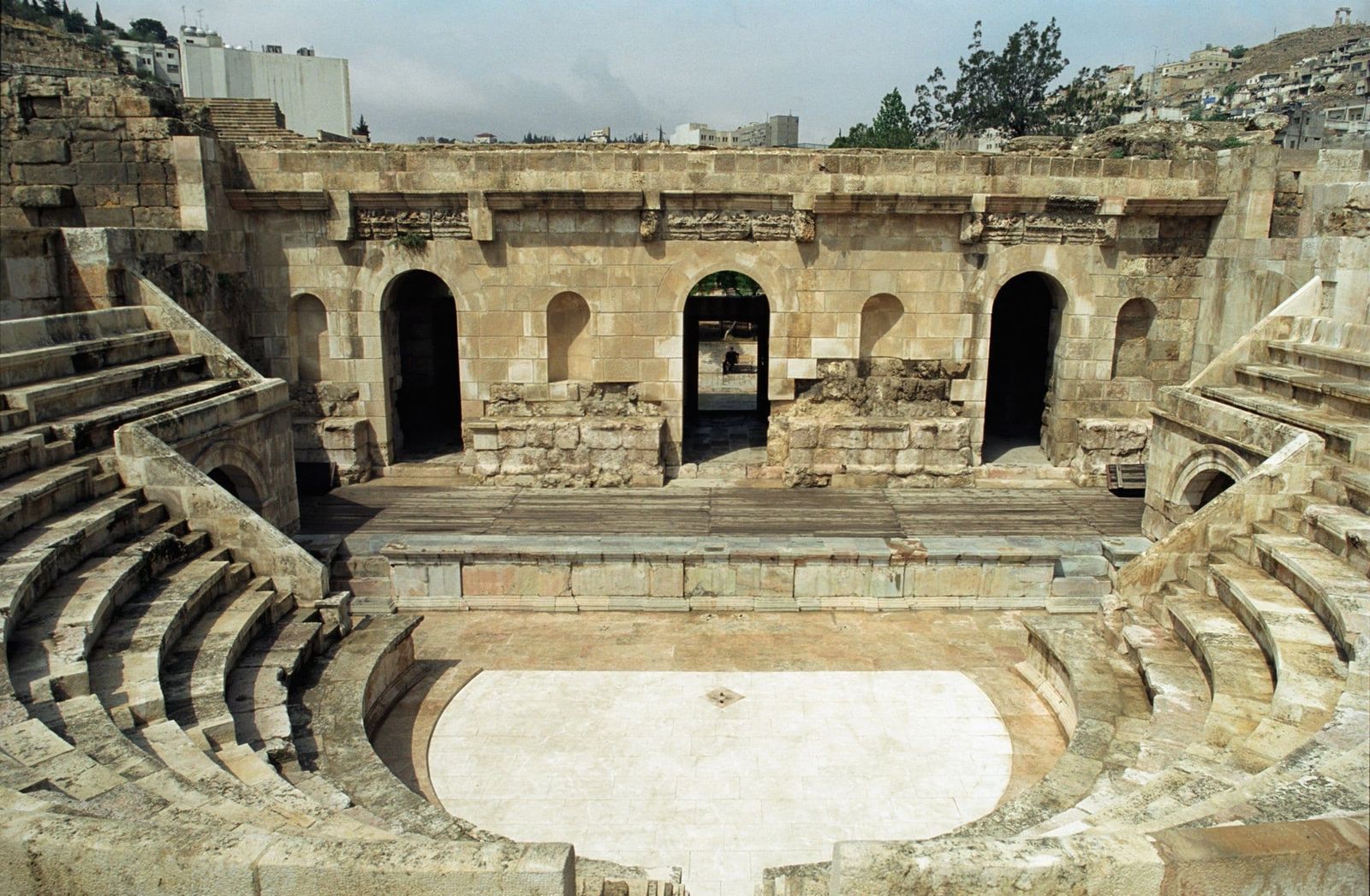
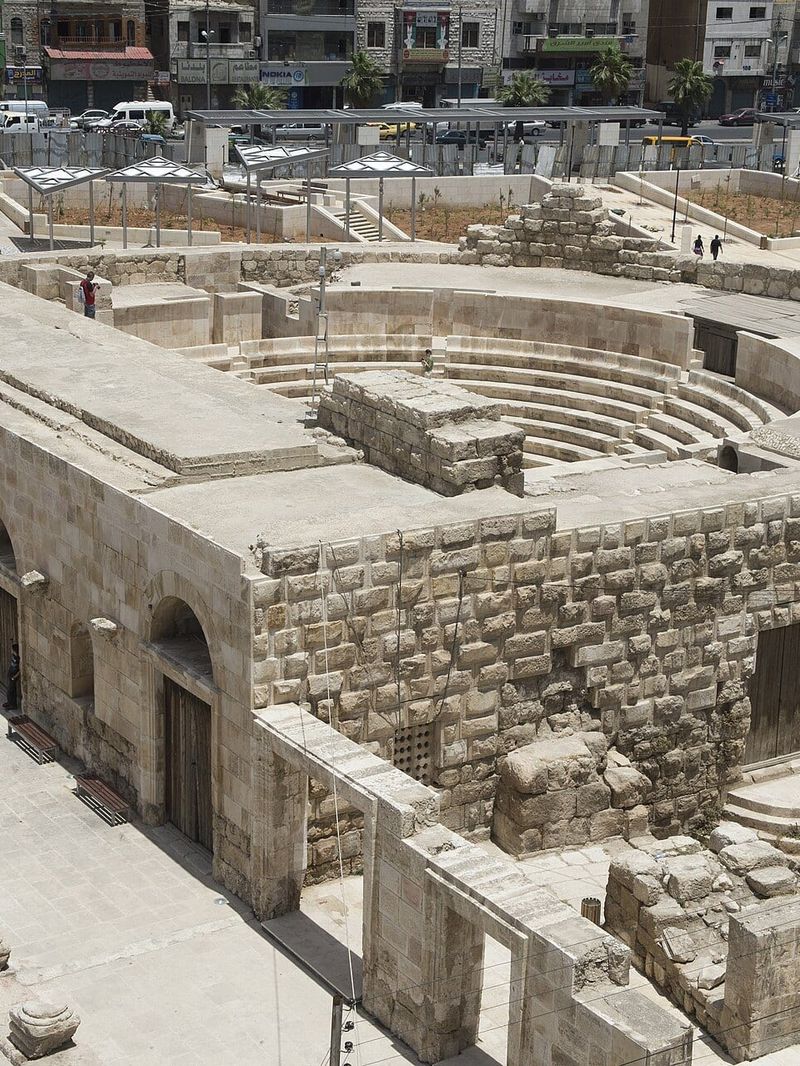
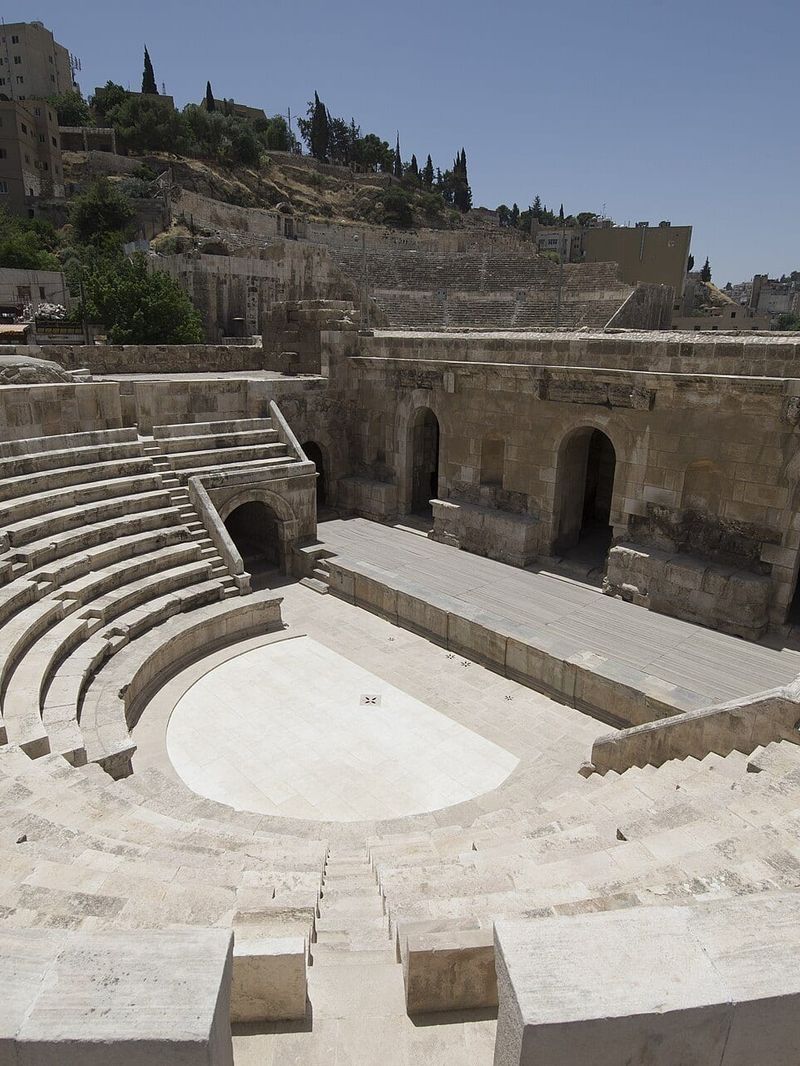
The Odeon is a small Roman theatre on the eastern side of the Hashemite Plaza in downtown Amman. It faces the great Roman Theatre across the space that was once the forum of Philadelphia. It was built in the second century AD and seated about 500 people.
Design
An odeon was built for music, poetry and smaller performances. It was usually roofed, most likely with timber or an awning, which helped the sound and sheltered performers and audience. The semicircular seating and the stage here have been heavily restored. In summer the Odeon hosts concerts during the city's festivals.
The forum
Between the Odeon and the Roman Theatre lay the forum of Philadelphia, among the largest in the Roman East. A restored row of columns along its southern side recalls the colonnade that framed it. The space is now the Hashemite Plaza, a public square where families gather in the evening.
Exhibo editorial
This is the theatre people photograph from the top rows of the big one and then forget to visit. Five minutes across the plaza are worth it. It is intimate: a few hundred seats, a small stage, the scale of a recital rather than a spectacle.
Sit in the middle rows for a minute. Philadelphia came here to hear poetry, a few steps from the market. In the evening the plaza outside fills with teenagers holding paper cups of coffee. The idea of the place has not moved very far.
Gallery
How to find it
On the eastern side of the Hashemite Plaza, a two-minute walk across the square from the entrance of the Roman Theatre.
Similar places
All places
News by Exhibo
Editorial coverage on Exhibo
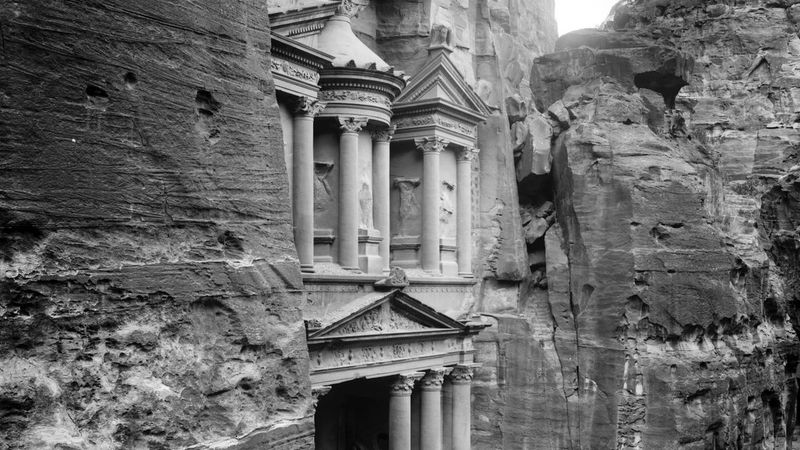
Filmed, but Not Recorded: The Arab World’s Missing Film Locations
Wikidata knows Gladiator was filmed in Morocco. It doesn’t know where.
Ouarzazate is the second most filmed place in the Middle East and North Africa, yet 25 of its 27 productions are recorded only in Wikipedia prose. We compared filming records worldwide and found that in the Arab world, Wikidata usually knows the country but not the place.
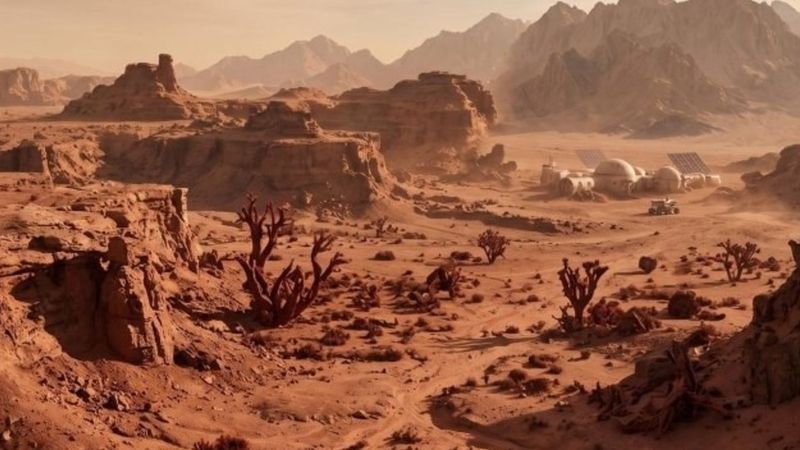
Why Every Sci-Fi Desert Looks Arab
From Arrakis to Tatooine, when a film wants a desert to feel ancient, prophetic and alien, it reaches for an Arab and Berber vocabulary — and reveals more about the West that built it than the region it borrows from.
The wrapped faces, the trilling women, the barely-displaced Arabic: cinema's alien deserts keep sounding Arab. But the vocabulary was assembled in the West — from Orientalist painting to Lawrence to Dune — and it says more about who is looking than about anyone being looked at.
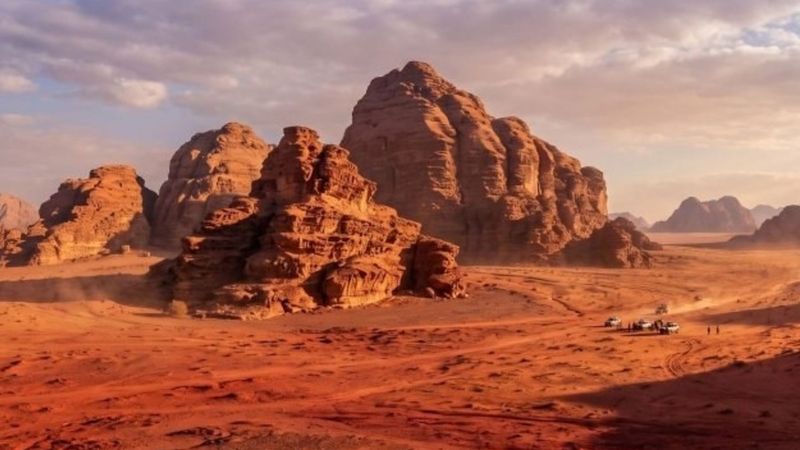
Why Wadi Rum Keeps Playing Mars: A Desert That Is Right About the Wrong Planet
A valley in southern Jordan has become cinema's favourite Mars — not because it is like the planet, but because it looks like the one we carry in our heads.
Put Wadi Rum beside a rover photograph and you can't tell which is Mars. But the desert shares almost nothing with the real planet except its colour — and lately, the illusion has grown powerful enough that real space missions have come to Jordan to rehearse.