News

Victoria and Albert Museum (V&A)

Editorial from Exhibo and official announcements from Victoria and Albert Museum (V&A).

News by Exhibo

Editorial coverage on Exhibo

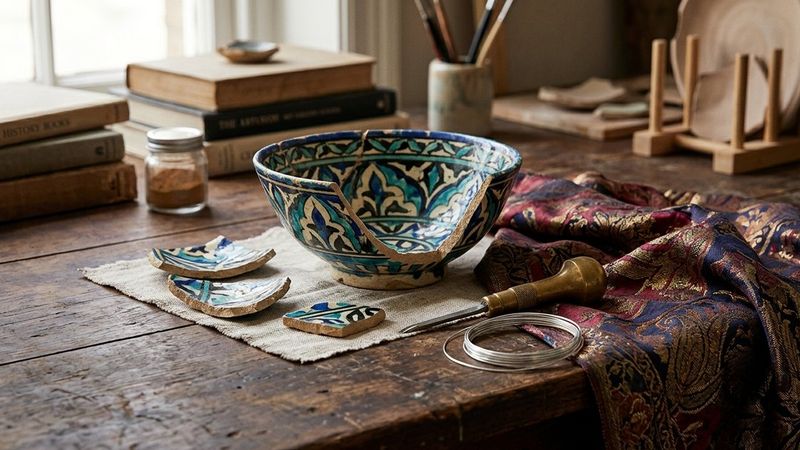
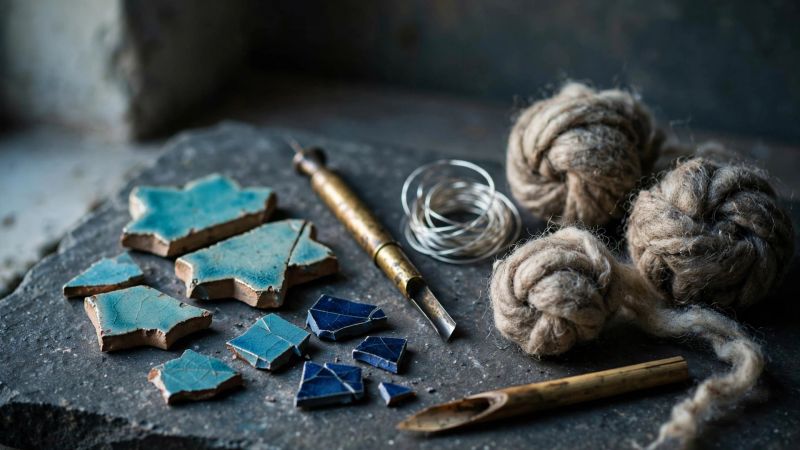
Workshop still life with Islamic ceramic bowl shards in cobalt and turquoise glaze, brass inlay tools and silk thread on a wooden bench in warm sidelight
Guide

Islamic Decorative Arts: Ceramics, Metalwork, Glass and Textiles

From Kashan luster bowls to Mamluk mosque lamps and Safavid silks: a museum survey of four luxury media with named works in London, New York and Doha

Islamic decorative arts are the portable luxury crafts of Muslim-ruled lands: pottery and tile, inlaid brass, enamelled glass, woven silk and knotted carpet. This survey follows workshop conditions, techniques and trade from Abbasid Iraq to Ottoman Istanbul, with four close readings and a media comparison table, while Iznik depth, arabesque theory and building programmes sit in sibling articles on the series hub.

Editorial still life of Islamic art workshop materials: cut glazed tile fragments, brass inlay tools, carpet wool skeins and a reed pen on dark stone under cool sidelight
Guide

What Is Islamic Art?

From Umayyad Damascus to Safavid Isfahan: a museum map of calligraphy, tile, carpet and metalwork with named works you can still visit

Islamic art is the visual culture of Muslim-ruled lands from the seventh century onward, not one decorative style. This hub walks patronage, media and workshop habits from early caliphates through Ottoman and Safavid courts, with dated objects in New York, London and Doha, then points muqarnas, aniconism and living Arab art to their own pages on the site.

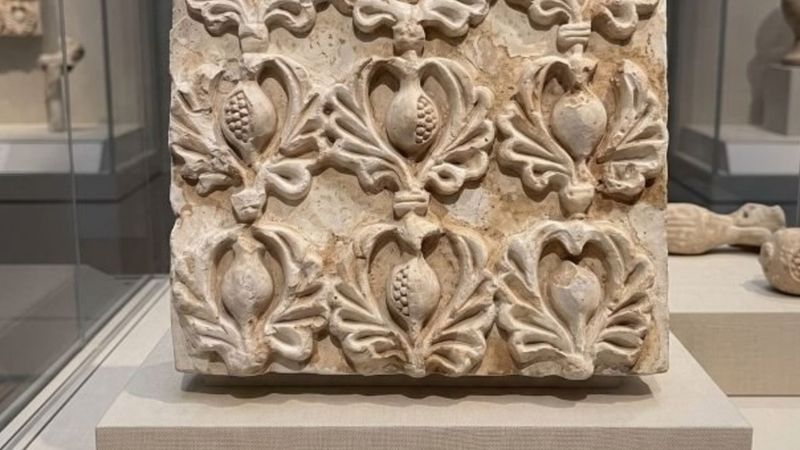
Sixth-century Sasanian moulded stucco panel showing a repeating pomegranate-in-palmette design, excavated near Ctesiphon, in the Metropolitan Museum of Art.
Editorial

The Fruit We Are Sure We Recognize

How the pomegranate became one of the most confidently named motifs in Islamic ornament — and one of the least confidently identified — across a thousand years of tile, silk and stucco, with meanings we mostly attached later.

A slab of sixth-century plaster in the Met shows a fruit you recognise at a glance: a pomegranate, and surely it means paradise. Hold that certainty up to the light and it dissolves. Across a thousand years of tile, silk and stucco, the pomegranate is the shape we name most confidently and identify least — blurring into the artichoke and the palmette, its meanings attached by later viewers, its very name partly a nineteenth-century invention

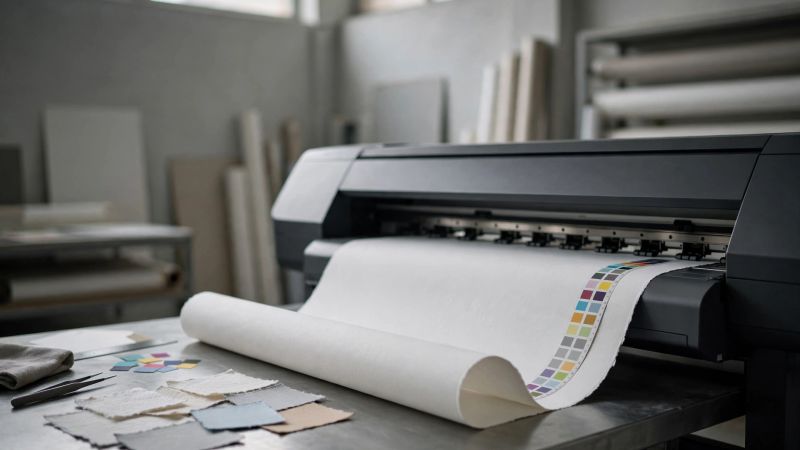
Wide-format pigment inkjet printer feeding cotton rag paper in a fine-art print studio, with colour test strips on a side table under neutral daylight.
Guide

What Is a Giclée Print?

Archival pigment inkjet on cotton rag or canvas: how fine-art reproduction printing works, where the French trade name came from, and what separates it from a poster

A giclée print is a fine-art inkjet made with pigment inks on archival paper or canvas, usually from a high-resolution scan or born-digital file. The word is a 1990s trade coinage for spray-deposited ink. This page covers materials, process, history, lightfastness, and how the method differs from lithography and poster printing.

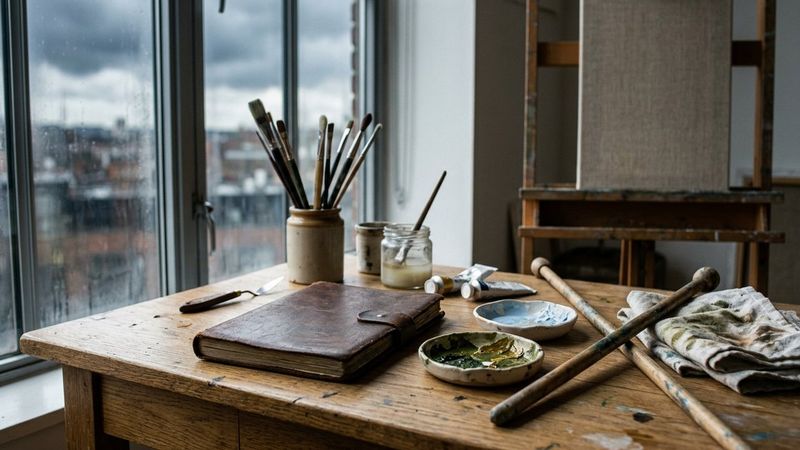
Oak studio table with a worn leather sketchbook, earth-green and sky-blue pigments in ceramic dishes, and a rain-heavy sky beyond a north-facing window, suggesting European landscape practice.
Guide

Landscape Painting: A History

How Western painters turned scenery from a backdrop into a genre, from Dutch mills and Claude’s ports to Constable and Impressionist weather

Landscape painting became a European specialism in the seventeenth century, then a vehicle for national feeling, scientific looking and modern colour. This history follows the genre from antiquity’s backgrounds through Dutch naturalism, Claude, the picturesque, Romantic weather and Impressionist light, with four works read in museum collections.

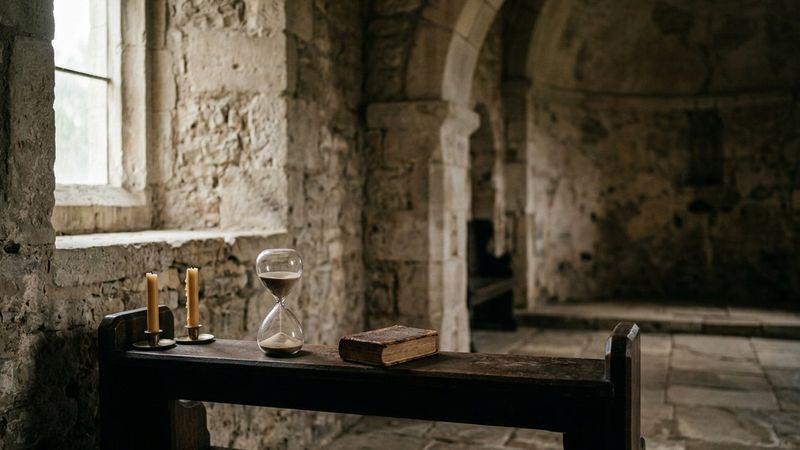
Candlelit stone chapel with an hourglass, closed leather-bound book and unlit beeswax tapers on an oak bench, cool north window light, no figures.
Guide

Memento Mori: A Cultural History

From a slave's whisper on a Roman chariot to Tudor rings, printed knights and later fashion, Europe kept death in daily view.

Latin tags and skull rings sit in search results next to stoic merch. The older story is public ritual: triumphs, cadaver tombs, rosary beads, marriage portraits and prints that put mortality on a body you could wear or a wall you had to pass. This guide tracks that history without turning it into a Dutch still-life lesson or a tattoo catalogue.