Tehran

Shariati

1 gallery · 1 museum · 0 places

About this district

Shariati is one of the long north–south avenues of eastern Tehran, running from the central city up toward the north-eastern heights — a busy commercial artery that holds, near its Seyed Khandan end, one of the finest museums in the country. Its draw is that single institution: a compact treasury of Persian art often called a National Museum in miniature. The register is a working avenue with a jewel set into it. The museum is the reason to come.

Galleries

Museums

Places

No published places in this district yet.

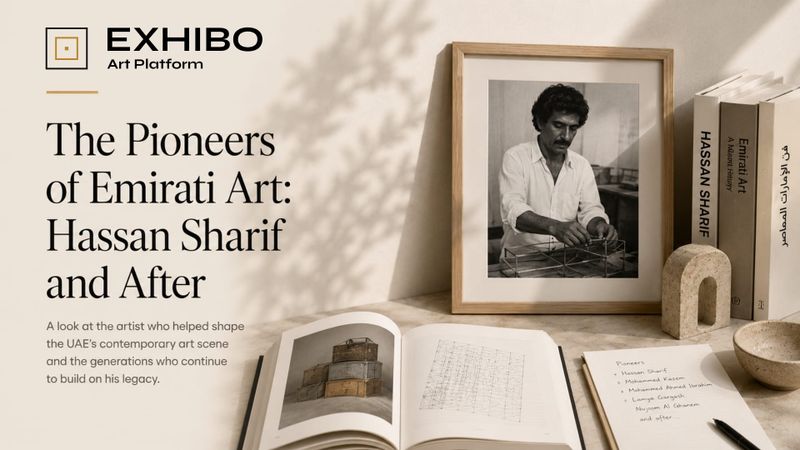
The Pioneers of Emirati Art: Hassan Sharif and After
Editorial

The Pioneers of Emirati Art: Hassan Sharif and After

How Hassan Sharif and the artists known as "the Five" built conceptual art in the UAE from nothing

Before the Louvre came to Abu Dhabi and Alserkal filled with galleries, a small group of artists made conceptual art in the UAE with almost no audience and a great deal of ridicule. This is the story of Hassan Sharif and the pioneers who built a scene from nothing — and why their work still anchors Emirati art today.
Editorial artwork inspired by Arab Modernism, featuring a stylised figure, Arabic calligraphy and abstract geometric elements symbolising the rediscovery of overlooked artists and cultural histories.
Editorial

Arab Modernism 101: The Movement That Western Art History Forgot

An entire century of extraordinary painting, sculpture and radical thinking got written out of the global canon. Someone made that decision. And now the market — and the collectors who pay attention — are making a different one.

Great art does not become invisible by accident. Arab Modernism reveals how museums, markets and cultural institutions shape what the world sees — and what it overlooks. A story about artists, recognition and the blind spots that define art history.

A cross-section of a medieval bathhouse: bathers above, and below them two horned fire spirits tending the furnace that heats the water.
Editorial

The Real Jinn: How the Middle East Imagined Them Before Disney

Seven kings, one for each day of the week. A portrait of Fever. Two spirits keeping a bathhouse warm. What the manuscripts actually show — and what the lamp replaced.

Folio 35v of a manuscript in Oxford shows the public baths at Tiberias in cutaway. Upstairs, people washing. Downstairs, two jinn tending the furnace, mid-conversation. It is not what most of the world expects — and it is much closer to what the unseen was actually understood to be for. A long read across twelve centuries of manuscripts, fieldwork, survey data and horror cinema.