Tehran

Karim Khan Zand

7 galleries · 1 museum · 0 places

About this district

Karim Khan Zand is the dense heart of Tehran's commercial gallery scene — a stretch of central avenue and the small streets running off it that together hold the highest concentration of contemporary galleries in the country. This is where the city's art world does its everyday work: openings on Friday afternoons, a gallery every few doors along the side alleys, decades-old spaces beside young ones. It is central, urban and walkable. The scene here is at full strength, and it shows.

Galleries

Museums

Places

No published places in this district yet.

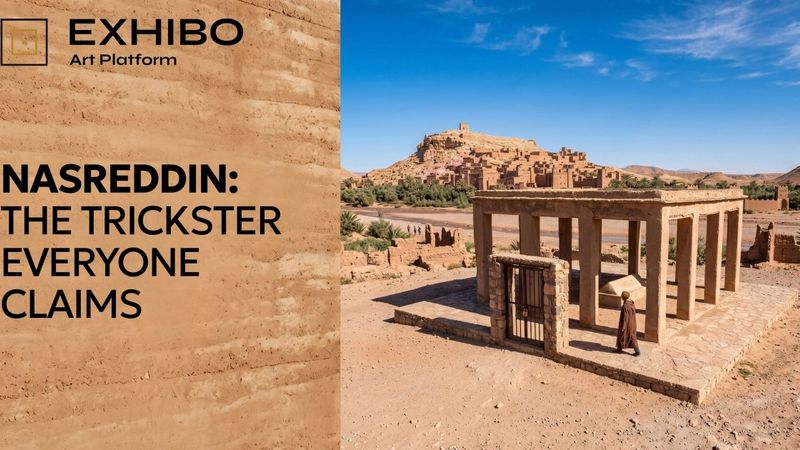
An open, columned tomb pavilion with a padlocked iron gate standing on one side and no walls around it, so the locked gate can simply be walked around.
Editorial

Nasreddin: The Trickster Everyone Claims

A padlocked gate with no walls, two rival graves, and stories told among two dozen peoples: how the wise fool of the Islamic world became a shape every culture fills with itself.

In Akşehir, a tomb said to hold Nasreddin Hodja stands in an open pavilion behind a heavy padlocked gate — with no wall on either side. It is the perfect monument to a man who may not be in it. The stories told under his name belong to more than one tradition and more than one century: Turkish, Persian, Arab, Central Asian, Uyghur. Reformist satirists, Soviet novelists, Chinese animators and UNESCO have each tried to give him a fixed home.

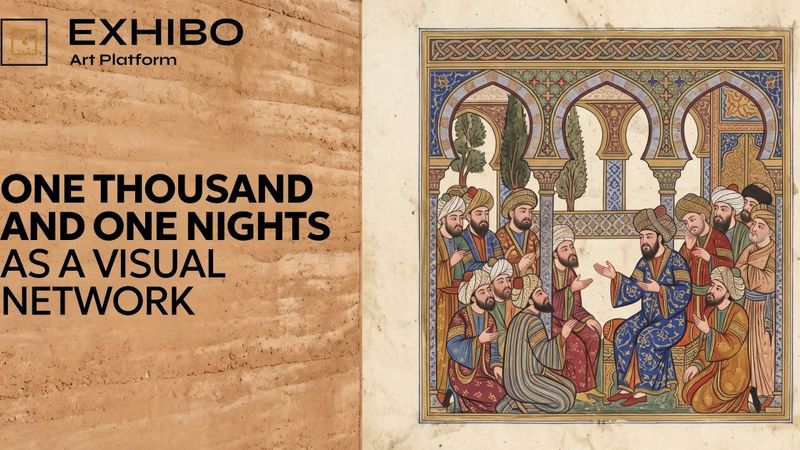
An illustrated miniature in the style of the medieval Baghdad school: robed figures gathered under arches, painted in flat jewel colours with gold outlining.
Editorial

One Thousand and One Nights as a Visual Network

The book that taught Europe to picture the East arrived with no pictures at all. Three centuries of illustrators — Dutch, Egyptian, Persian, French, German, Iraqi — each gave it a face, and every face was a self-portrait.

Open Galland's Thousand and One Nights, the edition that conquered Europe, and there is nothing to look at: no genie, no lamp, not one illustration. The most visually imagined book in the world began blind — and because its text was never fixed either, no picture of it could ever be a copy.

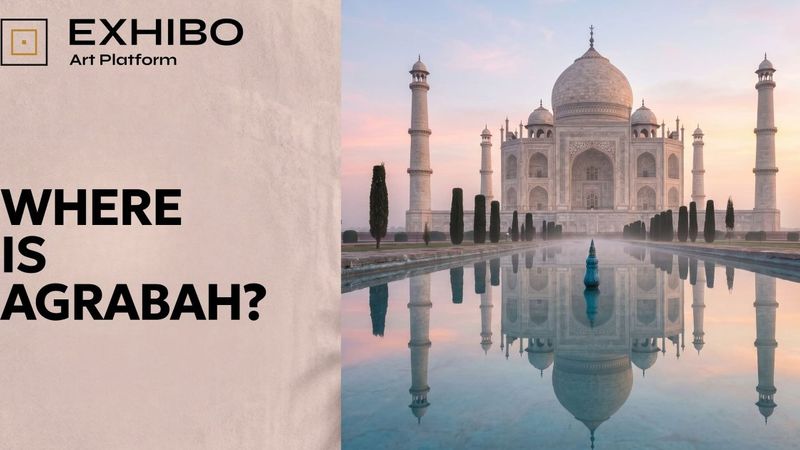
The white marble dome and framing minarets of the Taj Mahal in Agra, mirrored in the still water of its reflecting pool at dawn.
Editorial

Where Is Agrabah? The City Disney Assembled From Real Places

Agrabah was going to be Baghdad. A war made it fictional — and then Disney built it back out of real places, from a tomb in Agra to a valley in Jordan that usually plays Mars.

The Sultan's palace where Princess Jasmine feels trapped has the silhouette of the Taj Mahal — which is not a palace at all, but a tomb. That is how Agrabah works. Disney's fairy-tale city was going to be Baghdad, until the Gulf War made the name impossible; the studio invented a place that could not be found on a map, then quietly rebuilt it out of real ones — Isfahan and Agra, Marrakesh and Mandalay, a Jordanian desert that has played both Arabia and Mars.

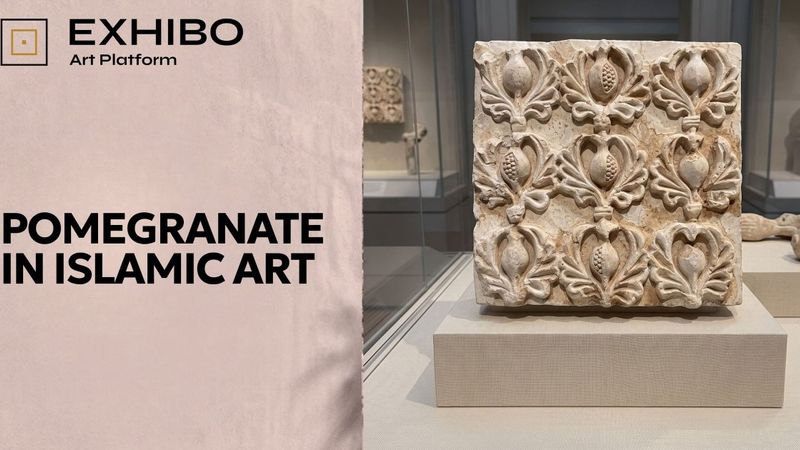
Sixth-century Sasanian moulded stucco panel showing a repeating pomegranate-in-palmette design, excavated near Ctesiphon, in the Metropolitan Museum of Art.
Editorial

The Fruit We Are Sure We Recognize

How the pomegranate became one of the most confidently named motifs in Islamic ornament — and one of the least confidently identified — across a thousand years of tile, silk and stucco, with meanings we mostly attached later.

A slab of sixth-century plaster in the Met shows a fruit you recognise at a glance: a pomegranate, and surely it means paradise. Hold that certainty up to the light and it dissolves. Across a thousand years of tile, silk and stucco, the pomegranate is the shape we name most confidently and identify least — blurring into the artichoke and the palmette, its meanings attached by later viewers, its very name partly a nineteenth-century invention