Cairo

Giza

1 gallery · 7 museums · 0 places

About this district

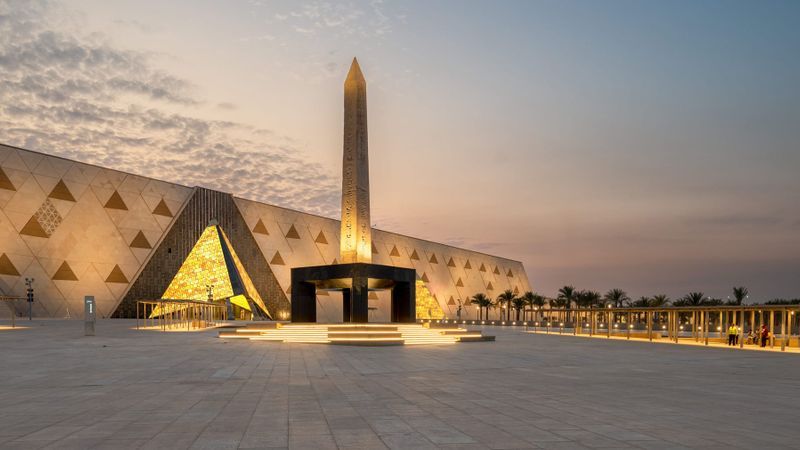
The plateau and the district beneath it — the Pyramids, the Sphinx and, two kilometres away, the Grand Egyptian Museum: 500,000 square metres on the edge between the city and the desert, holding over 100,000 objects, including the complete five-thousand-piece Tutankhamun collection shown together for the first time since 1922.

Galleries

Museums

Places

No published places in this district yet.

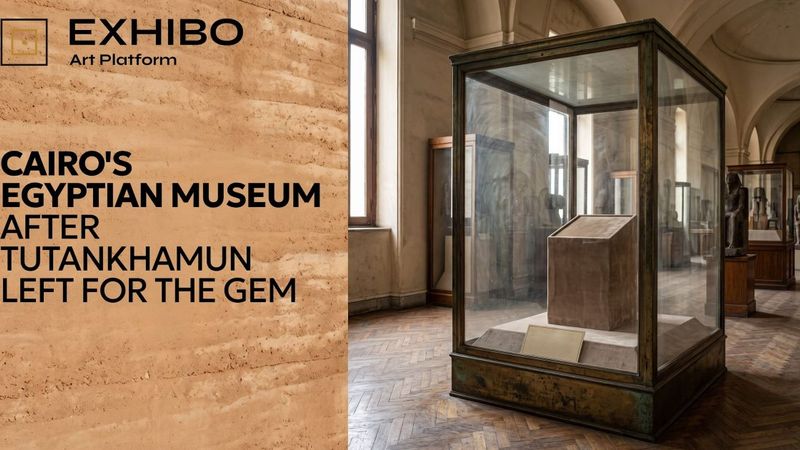
The empty glass case on the upper floor of the Egyptian Museum in Cairo where Tutankhamun's golden mask stood for decades, before its 2025 transfer to the Grand Egyptian Museum.
Editorial

The House Whose Famous Guests All Moved Out

When Tutankhamun's mask left Cairo's Egyptian Museum for the Grand Egyptian Museum, it took the crowds with it — but not the collection. What remains in the old building on Tahrir Square turns out to be a stranger and more interesting museum than the one that emptied.

For most of a century, the golden mask of Tutankhamun stood behind glass on the upper floor of the Egyptian Museum in Cairo. In October 2025 it was driven out to Giza, and it was not the only thing to go: the royal mummies, the whole Tutankhamun collection, tens of thousands of objects have left the old museum for Egypt's gleaming new institutions.
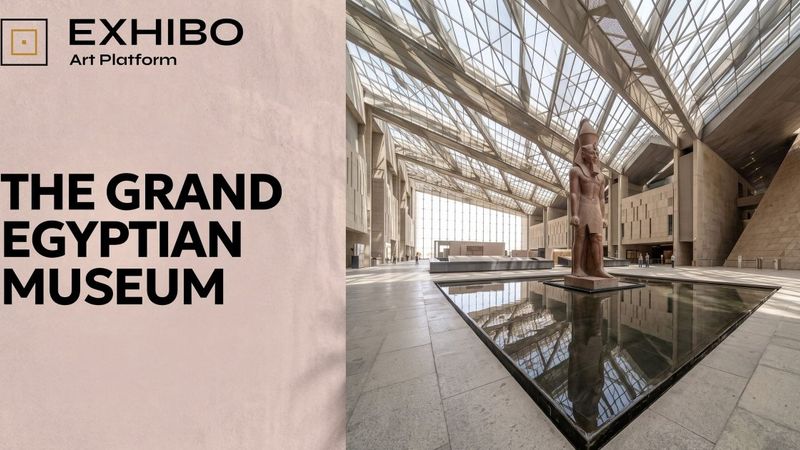
The colossal statue of Ramses II standing in the sunlit atrium of the Grand Egyptian Museum, reflected in the shallow pool at its base, with daylight falling through the roof.
Editorial

The Museum That Reflects Everything, Including You

How the world's largest single-civilisation museum gathers a nation's heritage, national story, tourism economy and repatriation claims under one reflective roof — and what those mirrored surfaces quietly ask of everyone who walks in.

Around the colossus of Ramses II, shallow pools mirror the floor so exactly that visitors keep stepping in. It is a small, faintly comic thing — and a way into a much larger question about the Grand Egyptian Museum. A civilisation is gathered here and made whole, while its three most famous faces stay abroad. A home for a nation's heritage opens, and the nation queues outside it. A monument to Egyptian sovereignty rises, financed largely from Tokyo.

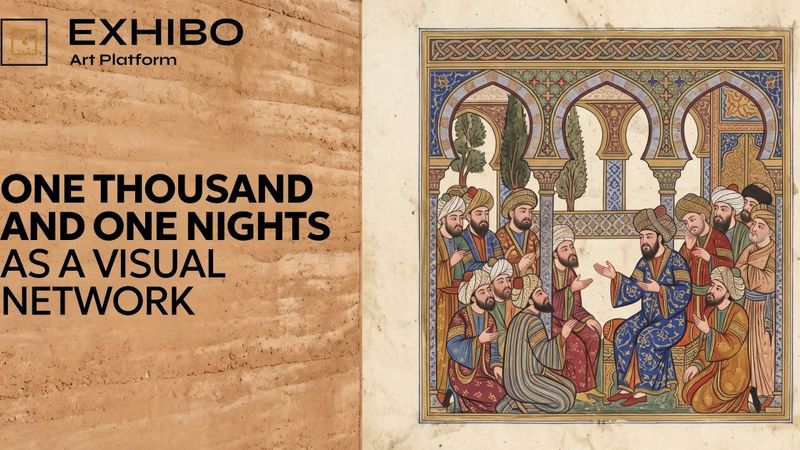
An illustrated miniature in the style of the medieval Baghdad school: robed figures gathered under arches, painted in flat jewel colours with gold outlining.
Editorial

One Thousand and One Nights as a Visual Network

The book that taught Europe to picture the East arrived with no pictures at all. Three centuries of illustrators — Dutch, Egyptian, Persian, French, German, Iraqi — each gave it a face, and every face was a self-portrait.

Open Galland's Thousand and One Nights, the edition that conquered Europe, and there is nothing to look at: no genie, no lamp, not one illustration. The most visually imagined book in the world began blind — and because its text was never fixed either, no picture of it could ever be a copy.