
Abu Dhabi · United Arab Emirates
Renoir's Double Portrait of Berthe Morisot Joins the Permanent Galleries at Louvre Abu Dhabi
The 1894 painting, the latest addition to the Abu Dhabi Masterpieces Collection, will be on view for a year alongside Monet, Japanese prints and photography that trace Impressionism's cross-cultural roots.
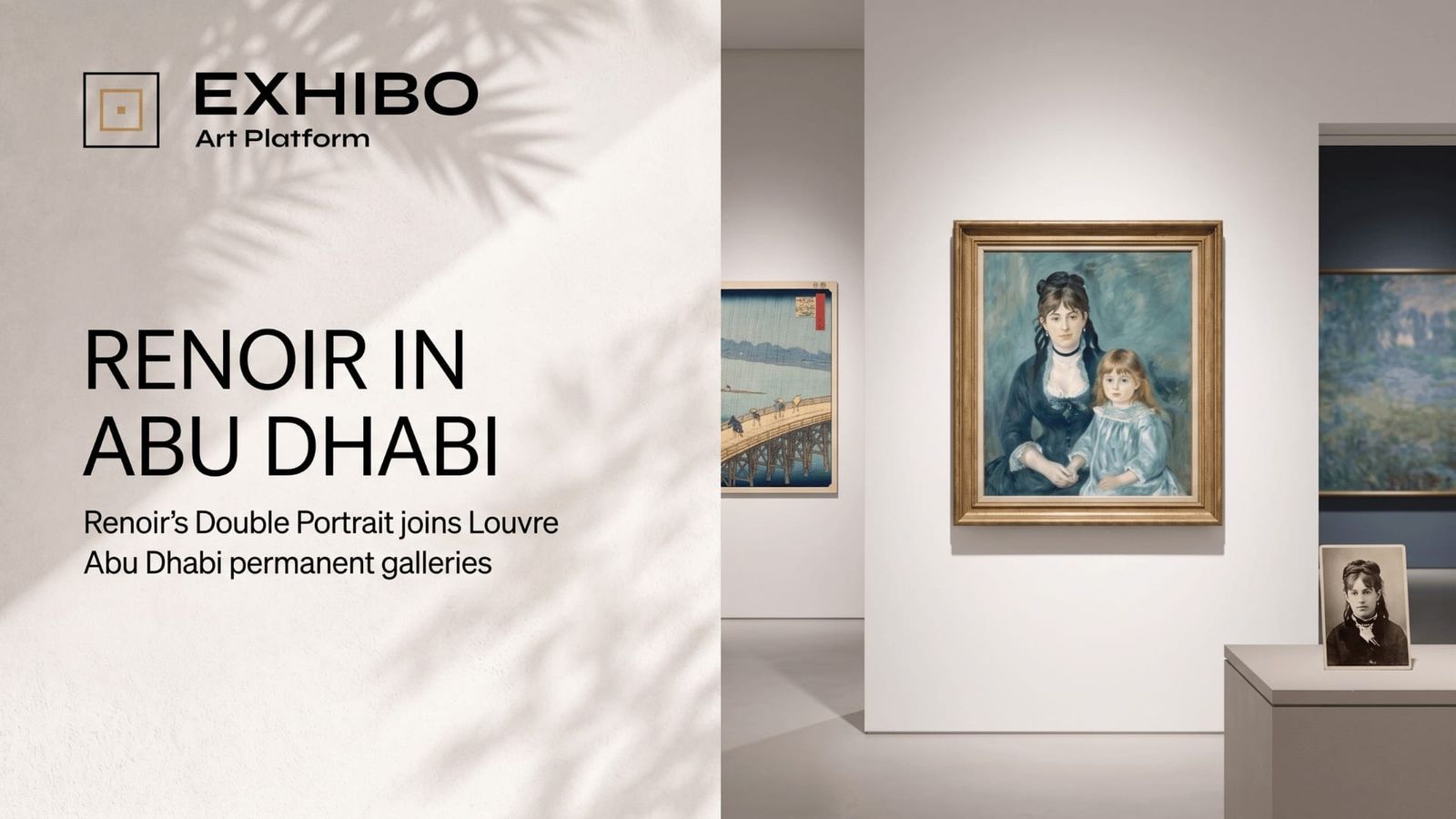
Pierre-Auguste Renoir's double portrait Berthe Morisot and Her Daughter, Julie Manet is now on display at Louvre Abu Dhabi, brought into the museum's permanent galleries for a one-year presentation. The painting is the latest major work to enter the Abu Dhabi Masterpieces Collection, an initiative that assembles works spanning artistic movements, geographies and civilisations under Abu Dhabi's cultural authority.
Painted in 1894, the double portrait depicts the French Impressionist painter Berthe Morisot together with her daughter, Julie Manet. Magdalena Ruiz, Senior Curator at Louvre Abu Dhabi, has described the work as a masterpiece of Impressionism that also opens up conversations around friendship, family, motherhood and social change at the close of the nineteenth century.
PRACTICAL INFORMATION
Work | Berthe Morisot and Her Daughter, Julie Manet, 1894 |
Artist | Pierre-Auguste Renoir |
Venue | Louvre Abu Dhabi, permanent galleries |
Collection | Abu Dhabi Masterpieces Collection |
On view | One year (from July 2026) |
Displayed alongside | Claude Monet, Japanese prints, period photography |
A Portrait Weighted With Loss and Legacy
The painting carries a particular emotional charge beyond its technical achievement: Morisot died just a year after it was completed, and the portrait consequently doubles as a document of grief and continuity. Julie Manet, only a teenager at the time, went on to play a significant role in preserving her mother's artistic legacy in the decades that followed — making the painting as much a record of inherited responsibility as of a single family moment.
Renoir and Morisot were close professional and personal contemporaries within the Impressionist circle, and the portrait reflects a working relationship that spanned roughly two decades. Seen in that light, the painting documents not only a mother and daughter but the collaborative, socially embedded artistic culture from which Impressionism itself emerged.
Extending the Abu Dhabi Masterpieces Collection
The Renoir joins a growing roster of major works previously presented through the Abu Dhabi Masterpieces Collection, including pieces by Nicolas Poussin, Pierre Bonnard, Zao Wou-Ki, Jean-Baptiste-Siméon Chardin and Jean-Michel Basquiat, several of which were shown in earlier presentations at Manarat Al Saadiyat between late 2025 and April 2026.
Mohamed Khalifa Al Mubarak, Chairman of the Department of Culture and Tourism – Abu Dhabi, has said the Renoir adds to the collection's wider cross-cultural narrative — a body of work deliberately assembled to move between periods, regions and traditions rather than sit within a single canon.
Placed in Dialogue, Not Isolation
At Louvre Abu Dhabi, the painting has been positioned alongside a work by Claude Monet, Japanese woodblock prints and period photography — a curatorial choice intended to draw out Impressionism's cross-cultural influences and underline the universality of its central concerns: family, domestic life and portraiture. The Renoir's placement echoes Louvre Abu Dhabi's founding curatorial premise, most visibly demonstrated in its 2022 exhibition Impressionism: Pathways to Modernity, which similarly placed French Impressionist masterpieces from the Musée d'Orsay in conversation with the museum's own permanent collection to trace connections across geography and time.
For a museum whose identity rests on cross-cultural dialogue rather than a single national tradition, the addition gives Impressionism — a movement usually presented through a distinctly Parisian lens — a setting that actively reframes its themes as shared rather than culturally bound.
Galleries mentioned
Museums mentioned
Exhibitions mentioned
Artworks mentioned
Related reading
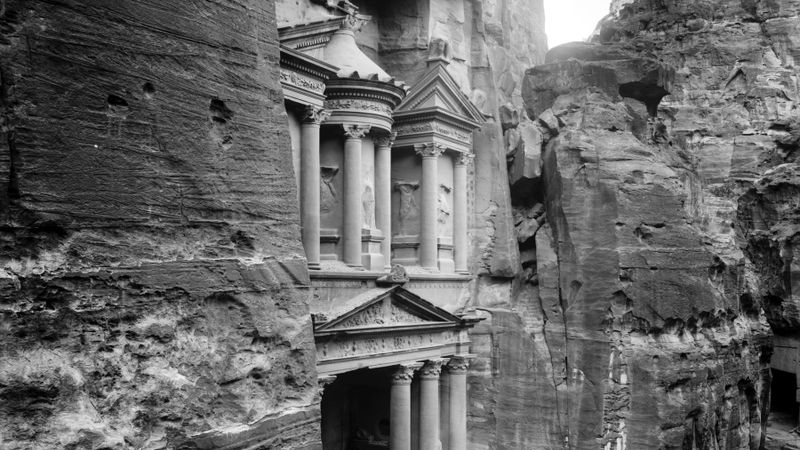
Filmed, but Not Recorded: The Arab World’s Missing Film Locations
Wikidata knows Gladiator was filmed in Morocco. It doesn’t know where.
Why Every Sci-Fi Desert Looks Arab
From Arrakis to Tatooine, when a film wants a desert to feel ancient, prophetic and alien, it reaches for an Arab and Berber vocabulary — and reveals more about the West that built it than the region it borrows from.
Why Wadi Rum Keeps Playing Mars: A Desert That Is Right About the Wrong Planet
A valley in southern Jordan has become cinema's favourite Mars — not because it is like the planet, but because it looks like the one we carry in our heads.