
Abu Dhabi · 22/11/2023
Abu Dhabi Art Fair
Abu Dhabi
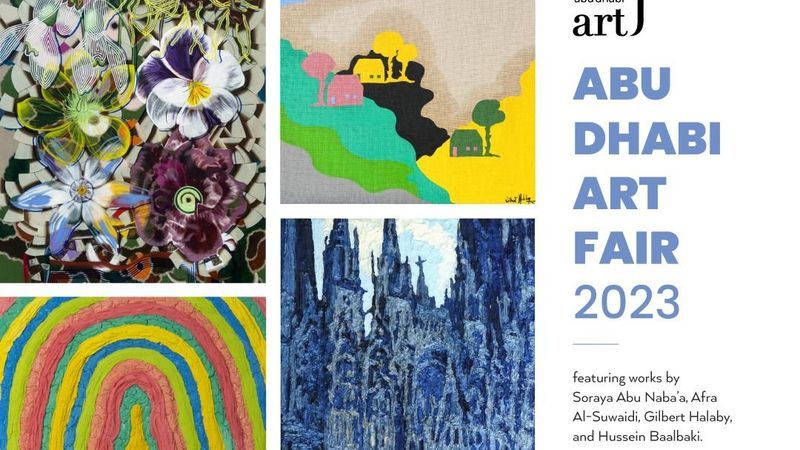
Artbooth Gallery is pleased to participate in the Abu Dhabi Art Fair 2023 for the first time, featuring works by Soraya Abu Naba’a, Afra Al-Suwaidi, Gilbert Halaby, and Hussein Baalbaki. The gallery's art fair selection captures diverse works by emerging and established artists from the Middle East who employ a wealth of materials and represent a variety of styles, examining an array of different subjects. Artbooth Gallery will be presented in the 'Special Projects’ segment under booth A28. Soraya Abu Naba’a participates with three pieces from her renowned floral series, Dreamlike Figuration, meticulously crafted with fascinating floral compositions. Through this series, Soraya examines how secret messages were conveyed through flowers, making references to the Victorian era. Afra Al-Suwaidi presents five multimedia installations which are created with environmentally friendly materials and recycled materials. Through her works Al Suwaidi explores the relationship between technology and humanity, seamlessly blending virtual and physical worlds to create thought-provoking and visually stunning works of art. Gilbert Halaby's works are a manifestation of his artistic evolution. The artist presents four artworks inspired by his adopted city, Rome, where he has lived and worked for many years. Through his paintings, Gilbert creates a dialogue that bridges poetry and art, the past and present, and his former and present selves. Hussein Baalbaki presents five of his works inspired by Notre Dame Cathedral and five abstract work. Baalbaki's paintings have a textured surface that offsets the subtlety of a soft palette. This "illustration" invokes a particular state or human experience that possesses its own distinct philosophy. The implication of light that is seen with the manipulation of color is essential to his paintings, as it indicates variation and movement and suggests infinite space and time
Participants
Works


News by Exhibo
Editorial coverage on Exhibo

Working in a Commercial Gallery
Front-of-house, sales support and the mid-level track inside dealer spaces: duties, pay ranges and how people get hired
A gallery assistant job is front-of-house and administration inside a commercial space that sells art. This guide maps the role ladder, day-to-day work, sourced salary bands in the UK and US, museum versus trade distinctions, and regional hiring patterns, without promising pay or teaching artists how to sell.
Museum Jobs, Explained
An organogram of museum employment families, from collections and learning to security, retail and the routes people use to enter them
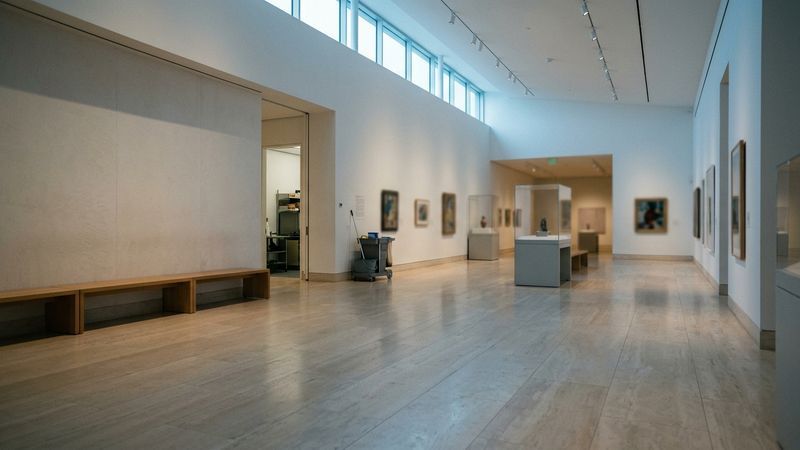
Museums hire curators, but they also hire registrars, educators, conservators, handlers, visitor hosts, fundraisers and facilities teams. This guide maps the employment families behind a working museum, how major institutions organise those teams, what a working week looks like in each cluster, and how pay and entry routes vary by region.
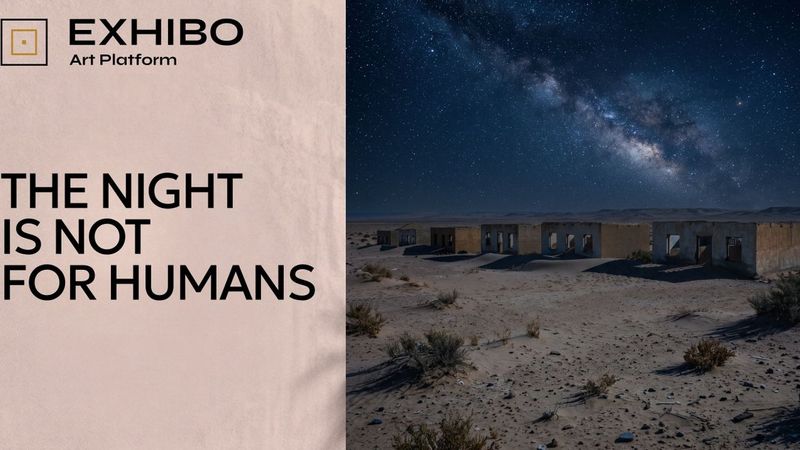
The Night Is Not for Humans: Umm Al Duwais and the Women of Emirati Folklore
A village half-buried in sand an hour from Dubai, a name that means "she of the little sickle," and what Emirati sources actually say.
The houses at Al Madam went up around 1980 and stood empty by the mid-1990s. People will tell you she lives there — not in the old stories, though. That attachment is recent, and it is the interesting part.
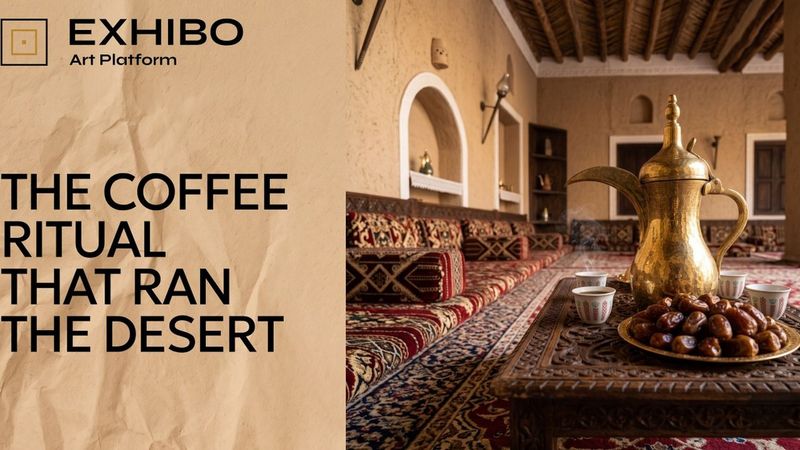
The Coffee Ritual That Ran the Desert
A cup of coffee in the desert was a contract, a test, a truce, and a promise of protection — a whole social order in the tilt of a small white cup.
Among the Bedouin of Arabia, serving coffee was never just hospitality — it was a code. The order of the cups, the amount poured, the shake of the wrist that says enough: a whole unwritten language for turning a dangerous stranger into a guest, and sometimes an ally. The story of Arabic coffee as the social law of the desert — and how it lives on in the region's museums and art.
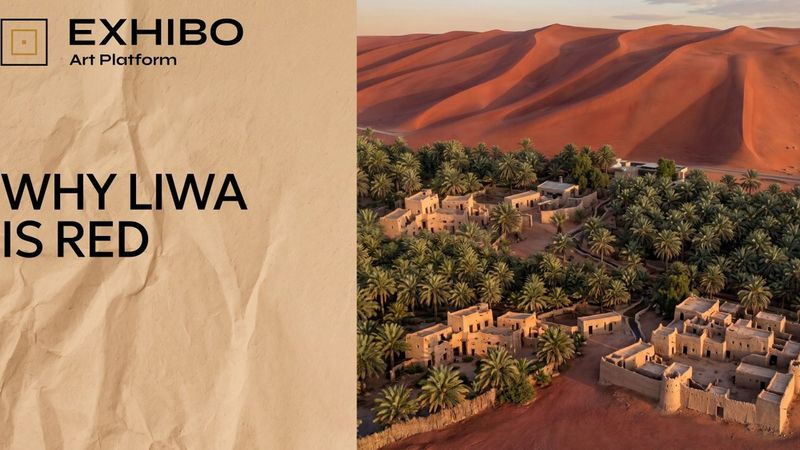
Why Liwa Is Red
The red of the world's tallest dunes isn't a fact about the sand — it's a record of everywhere the sand has been. A drowned sea, an ice-age wind and a buried green Arabia, all pressed into a single colour.
Everyone knows why Liwa is red: iron in the sand. It's true the way "the Gulf is white to reflect heat" is true — the first sentence of a much longer story. The red is a microscopically thin coat of rust on grains of clear quartz, and where those grains came from is almost impossible to picture from the dunes: the floor of a sea that no longer exists, lifted grain by grain and stacked three hundred metres high.
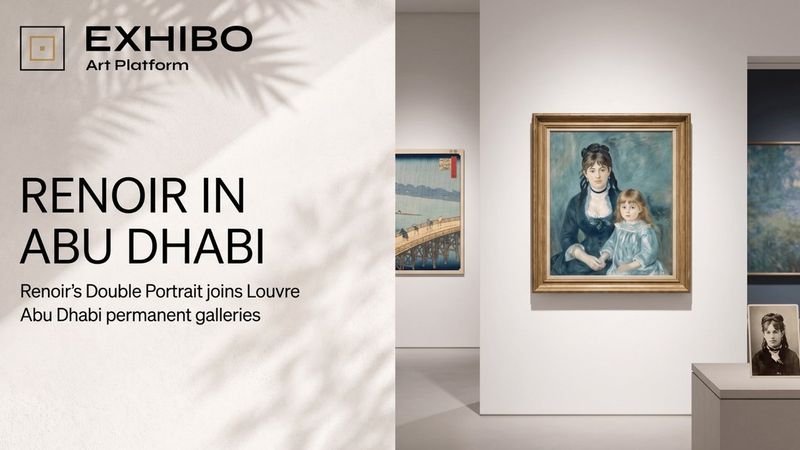
Renoir's Double Portrait of Berthe Morisot Joins the Permanent Galleries at Louvre Abu Dhabi
The 1894 painting, the latest addition to the Abu Dhabi Masterpieces Collection, will be on view for a year alongside Monet, Japanese prints and photography that trace Impressionism's cross-cultural roots.
Pierre-Auguste Renoir's 1894 double portrait of Berthe Morisot and her daughter, Julie Manet, is now on display in the permanent galleries of Louvre Abu Dhabi for one year — the latest addition to the Abu Dhabi Masterpieces Collection, placed in dialogue with Monet, Japanese prints and period photography.