
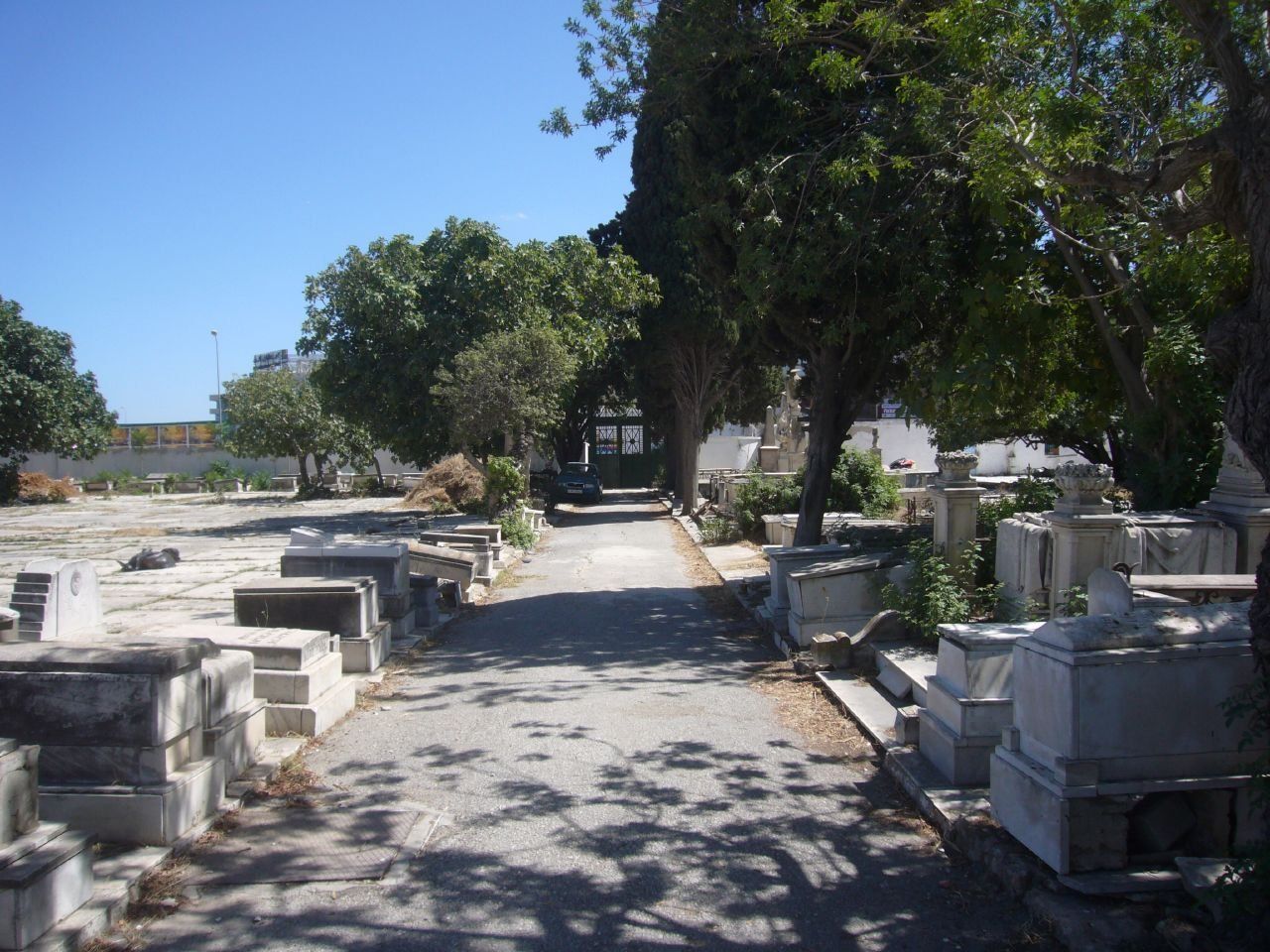
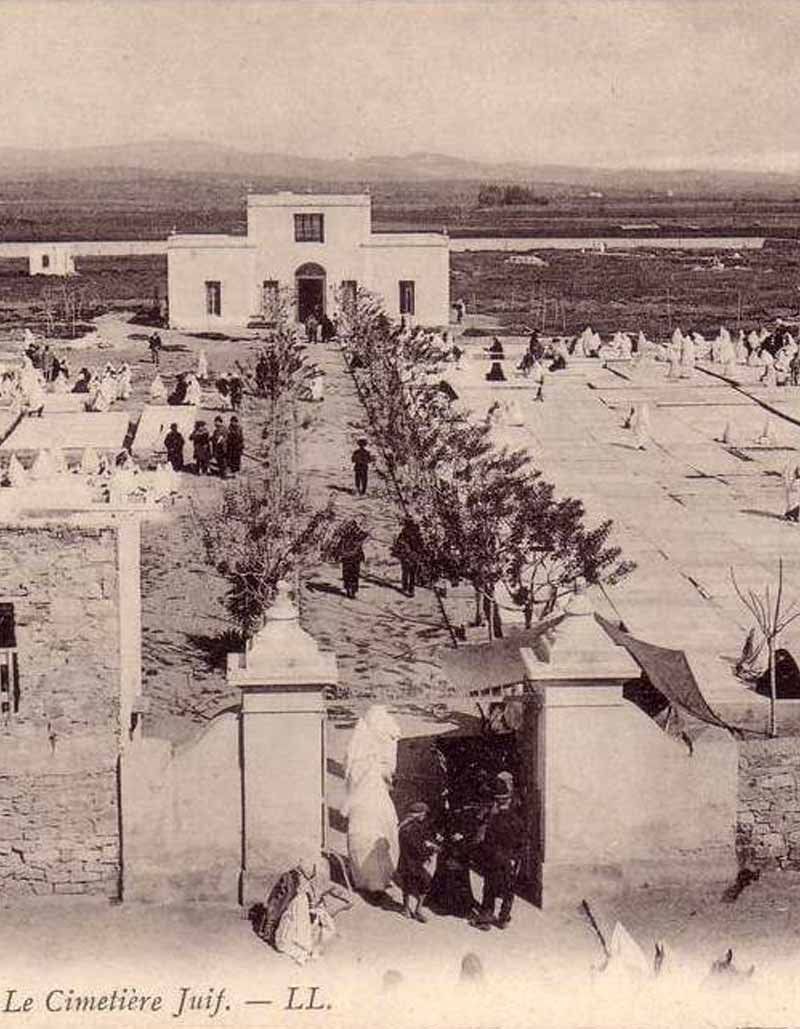
The Borgel Cemetery is the main Jewish cemetery of Tunis and, next to it, the city's main Christian cemetery. The two lie side by side on Avenue Kheireddine Pacha, north of the centre, separated by a wall. Both take their name from Élie Borgel, chief rabbi of Tunisia, who inaugurated the Jewish cemetery in 1894.
The Jewish cemetery replaced the old burial ground close to the Medina of Tunis and was laid out in two parts. One served the Twansa, the Jews of long Tunisian descent. The other served the Granas, the families of Italian and European origin who had settled in Tunis from the seventeenth century onwards. The two communities kept separate institutions for generations. Their division followed them into the cemetery. Thousands of tombs fill the site, from low whitewashed graves to marble monuments carved with Hebrew and French inscriptions.
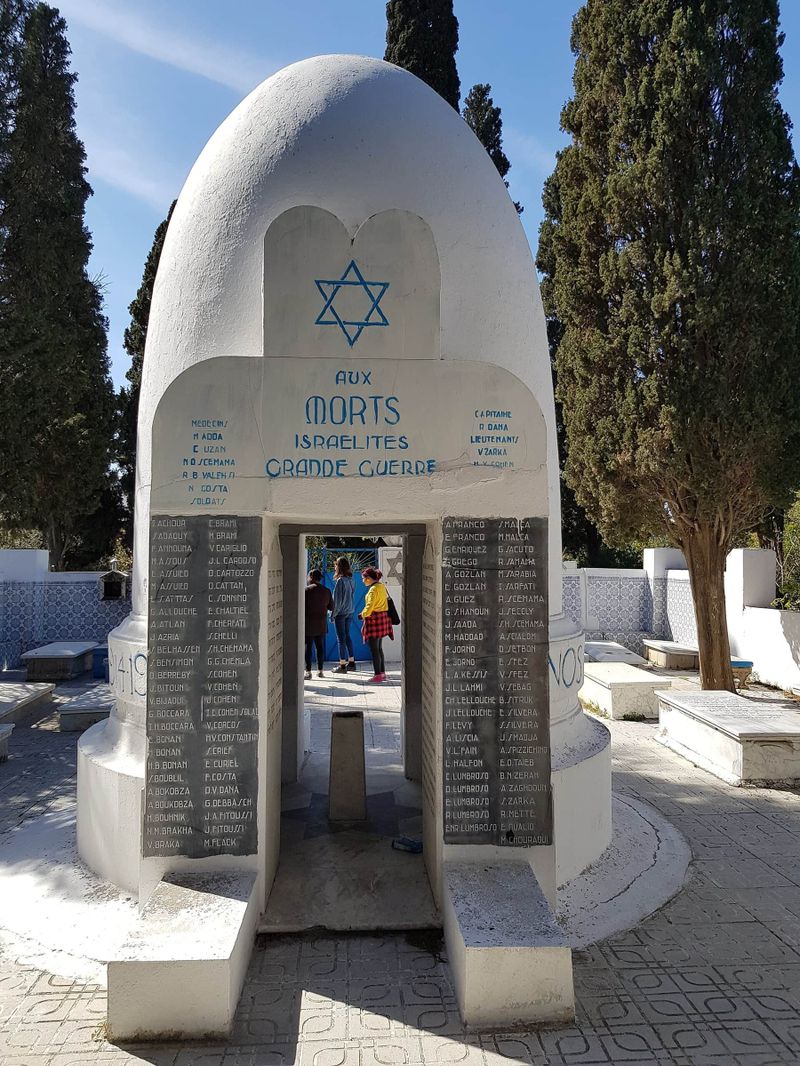
Among the best known graves is that of Habiba Msika, the singer and actress who was the great star of Tunisian music in the 1920s. She was murdered in February 1930. Her funeral procession through the city drew one of the largest crowds Tunis had seen. The cemetery also holds a white domed memorial to the Jewish soldiers of Tunisia who died in the First World War, with their names listed inside.
The Christian cemetery next door has received burials since 1927. It holds Catholic and Orthodox graves, including a Russian section linked to the community of the Russian Orthodox Church of the Resurrection. Graves moved from closed Christian cemeteries elsewhere in Tunisia have also been brought here. A service for the dead is held each year on 1 November, presided over by the Archbishop of Tunis.
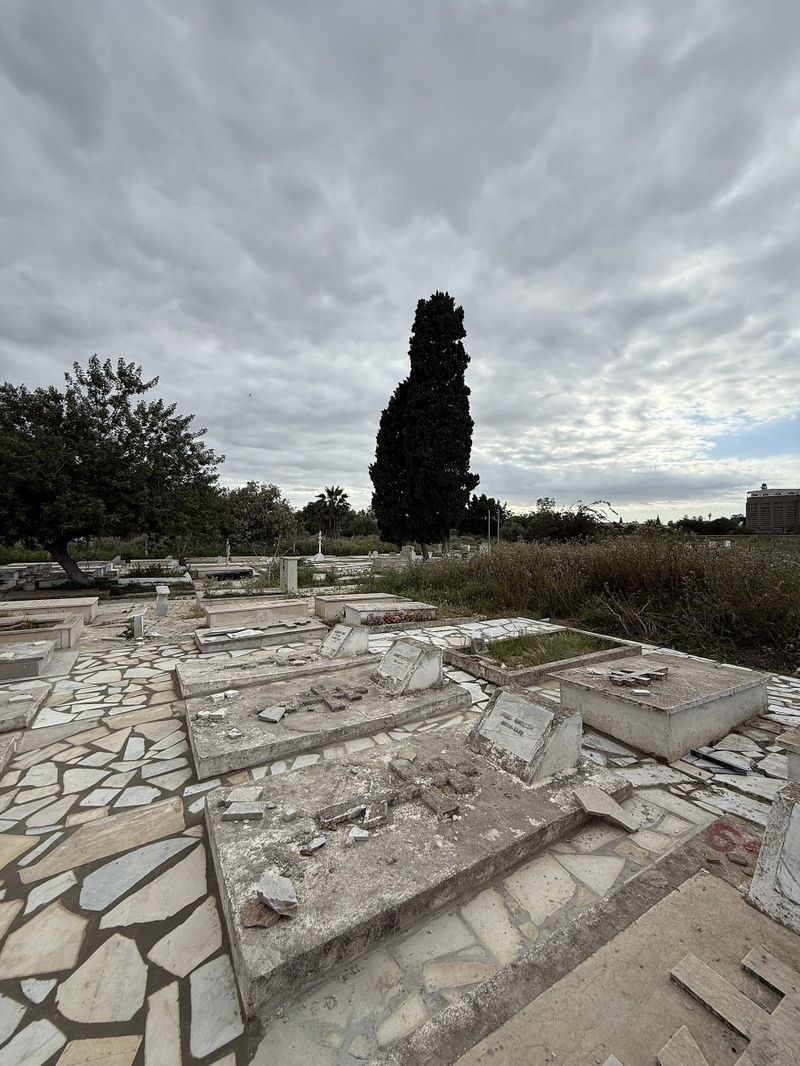
The ground has shifted over the decades. Many tombs are cracked or have sunk. Associations of descendants and the City of Tunis have worked to record the graves and restore the most damaged areas. Both cemeteries still receive burials today.
Exhibo editorial
A cemetery can be the most honest map of a city. Here the Tunis that the postcards forget is laid out row by row: rabbis and shopkeepers, Livornese merchants and Djerban families, a Russian émigré a few walls away, a famous singer whose funeral stopped the city.
What stays with you is the quiet. Avenue Kheireddine Pacha roars past outside. Inside there is only the sound of cypresses and the odd cat on a warm slab. Many of the families have long since left for Paris or Tel Aviv. The names remain, carved in two alphabets, waiting for someone to read them.
Gallery
How to find it
The entrance is on Avenue Kheireddine Pacha in the El Khadra area, north of the city centre and about ten minutes by taxi from Avenue Habib Bourguiba. The Jewish and Christian cemeteries lie side by side behind the same wall.
Similar places
All places
News by Exhibo
Editorial coverage on Exhibo
Why Every Sci-Fi Desert Looks Arab
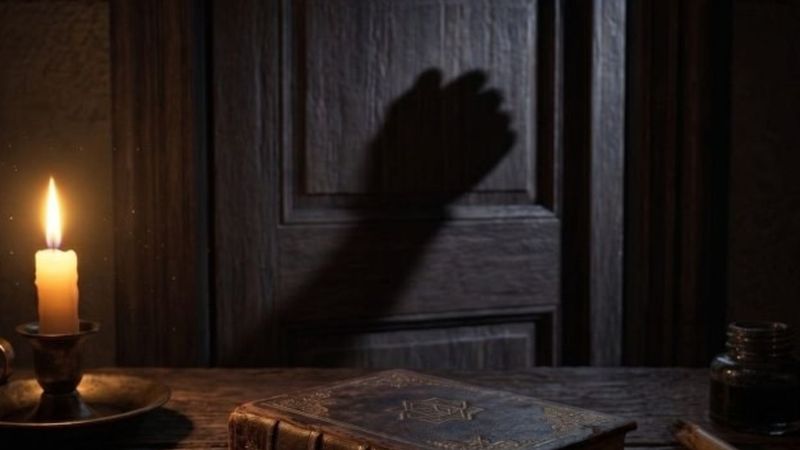
From Arrakis to Tatooine, when a film wants a desert to feel ancient, prophetic and alien, it reaches for an Arab and Berber vocabulary — and reveals more about the West that built it than the region it borrows from.
The wrapped faces, the trilling women, the barely-displaced Arabic: cinema's alien deserts keep sounding Arab. But the vocabulary was assembled in the West — from Orientalist painting to Lawrence to Dune — and it says more about who is looking than about anyone being looked at.
The Real Aladdin: The Story That Belonged to No Country
Aladdin has no Arabic manuscript older than its French translation. Behind the gap stands a young man from Aleppo, catalogued for a century as anonymous.
The most famous "Arabian" tale in the world is missing from the oldest Arabic manuscript of the Thousand and One Nights — because before a French translator wrote it down in Paris, there was no manuscript of it to be missing from.
The Fruit We Are Sure We Recognize
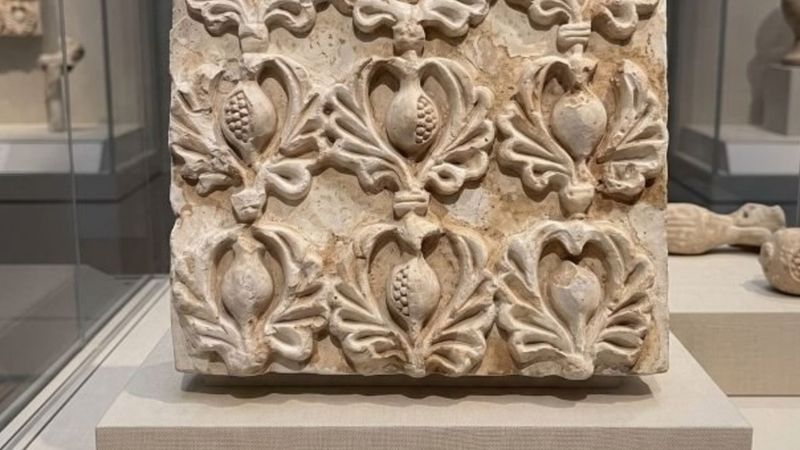
How the pomegranate became one of the most confidently named motifs in Islamic ornament — and one of the least confidently identified — across a thousand years of tile, silk and stucco, with meanings we mostly attached later.
A slab of sixth-century plaster in the Met shows a fruit you recognise at a glance: a pomegranate, and surely it means paradise. Hold that certainty up to the light and it dissolves. Across a thousand years of tile, silk and stucco, the pomegranate is the shape we name most confidently and identify least — blurring into the artichoke and the palmette, its meanings attached by later viewers, its very name partly a nineteenth-century invention