
Tombs of the Asasif
Late Period and New Kingdom tombs in the valley before Deir el-Bahari — vast chambers and reliefs that look back to Egypt's golden ages.
A valley of officials
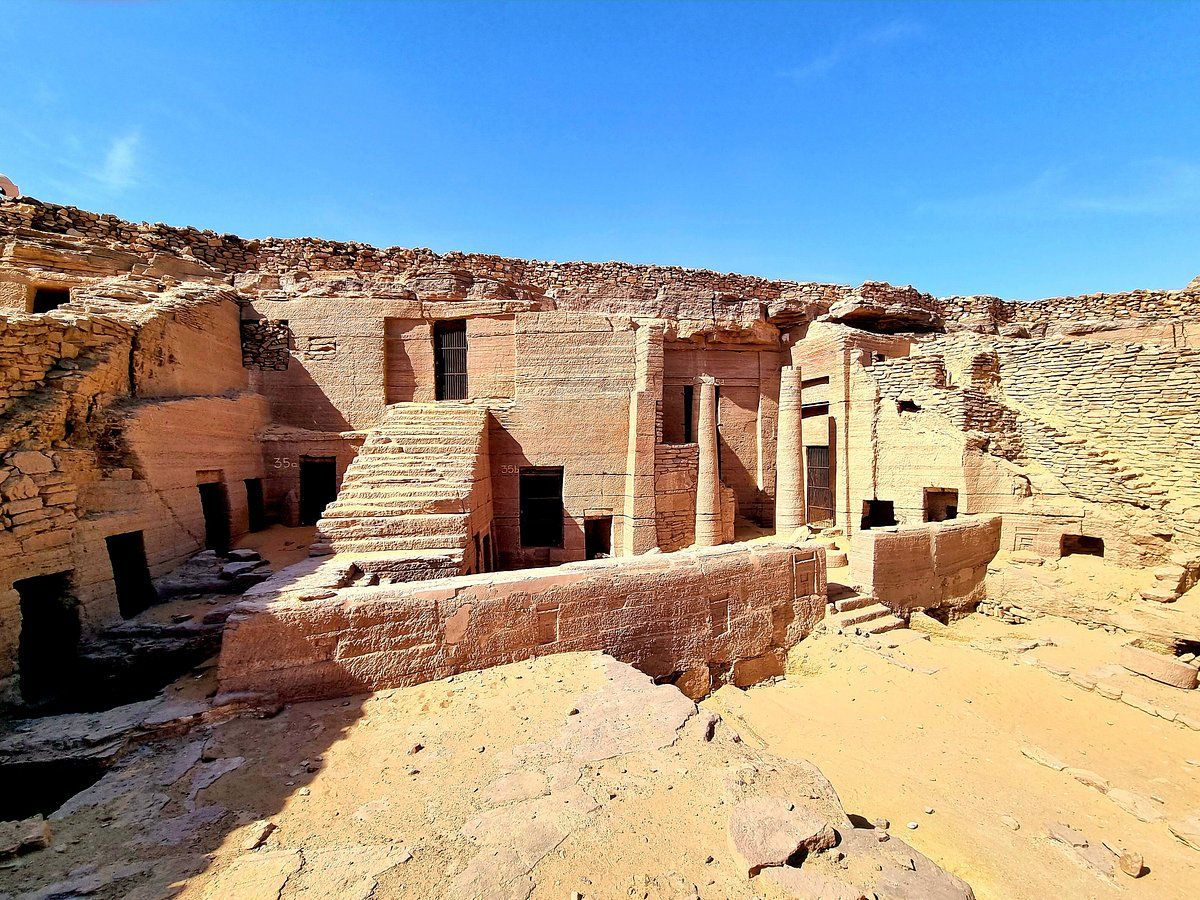
The Asasif is the broad valley that leads up to the temples of Deir el-Bahari on Luxor's west bank. Besides tombs of the New Kingdom, it holds an exceptional group of monumental tombs of the Late Period, built in the eighth to sixth centuries BC by the high officials of the Kushite (Twenty-fifth) and Saite (Twenty-sixth) dynasties, when Thebes was governed by powerful priests and the God's Wives of Amun. Their tombs are among the largest private tombs ever built in Egypt, with sunken open courts, pylon-like entrances in mud brick and extensive underground halls.
Archaism and refinement
Late Period artists deliberately imitated the styles of earlier golden ages, copying scenes from Old Kingdom and New Kingdom monuments with great skill, and the Asasif tombs preserve some of the finest relief carving of this period. The tomb of Pabasa (TT279), steward of the God's Wife of Amun, has a sunken court with pillars carved with scenes of daily life and beekeeping. Other major tombs in the valley include those of Montuemhat (TT34), the "Prince of Thebes" in the seventh century BC, and of Ankh-Hor (TT414). From the New Kingdom, the tomb of Kheruef (TT192), steward of Queen Tiye, contains exquisite reliefs of the jubilee festivals of Amenhotep III.
Visiting
Which tombs are open varies; the Asasif tombs are visited on their own ticket and receive few visitors, offering a quiet counterpoint to the crowds at Deir el-Bahari above. Excavation and restoration by Egyptian and international missions continue in the valley. The Asasif is part of the UNESCO World Heritage Site of Ancient Thebes with its Necropolis.
Exhibo editorial
Thousands of people a day walk up the Asasif to Hatshepsut's temple and never look down. Beneath their feet, behind mud-brick gateways sunk into the valley floor, lie some of the largest private tombs ever cut in Egypt — built by the governors and stewards of a later age who wanted to rival the glory of the past.
Go into whichever tombs are open and look at the carving: it is deliberately old-fashioned, copying scenes made a thousand years earlier, and yet supremely skilful. It's a little-known chapter of Egyptian art, in a valley you'll often have almost to yourself.
How to find it
The Asasif lies in the valley floor in front of Deir el-Bahari, on the approach road to Hatshepsut's temple. Buy the Asasif ticket at the West Bank ticket office or on site, then follow the signs from the Deir el-Bahari road to the open tombs, whose sunken courts open off the valley.
Similar places
All places
News by Exhibo
Editorial coverage on Exhibo
Unearthing the Golden City: Daily Life in Ancient Egypt
How a newly excavated workers' quarter reframes pharaonic history
A major survey travels to the West Coast, bringing ancient artefacts that shift focus from royal opulence to the daily lives of those who built the empire.
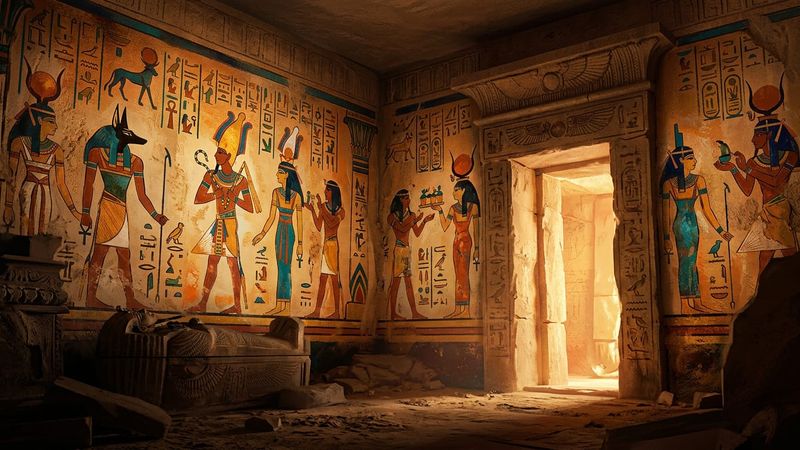
Ancient Egyptian Tomb with Vibrant Murals Unearthed in Luxor
Dutch excavation reveals well-preserved Ramesside period burial with rare coloured wall paintings
Archaeologists have uncovered a 3,000-year-old tomb on Luxor's west bank featuring brightly painted murals that provide valuable insights into elite burial practices during Egypt's New Kingdom period.