
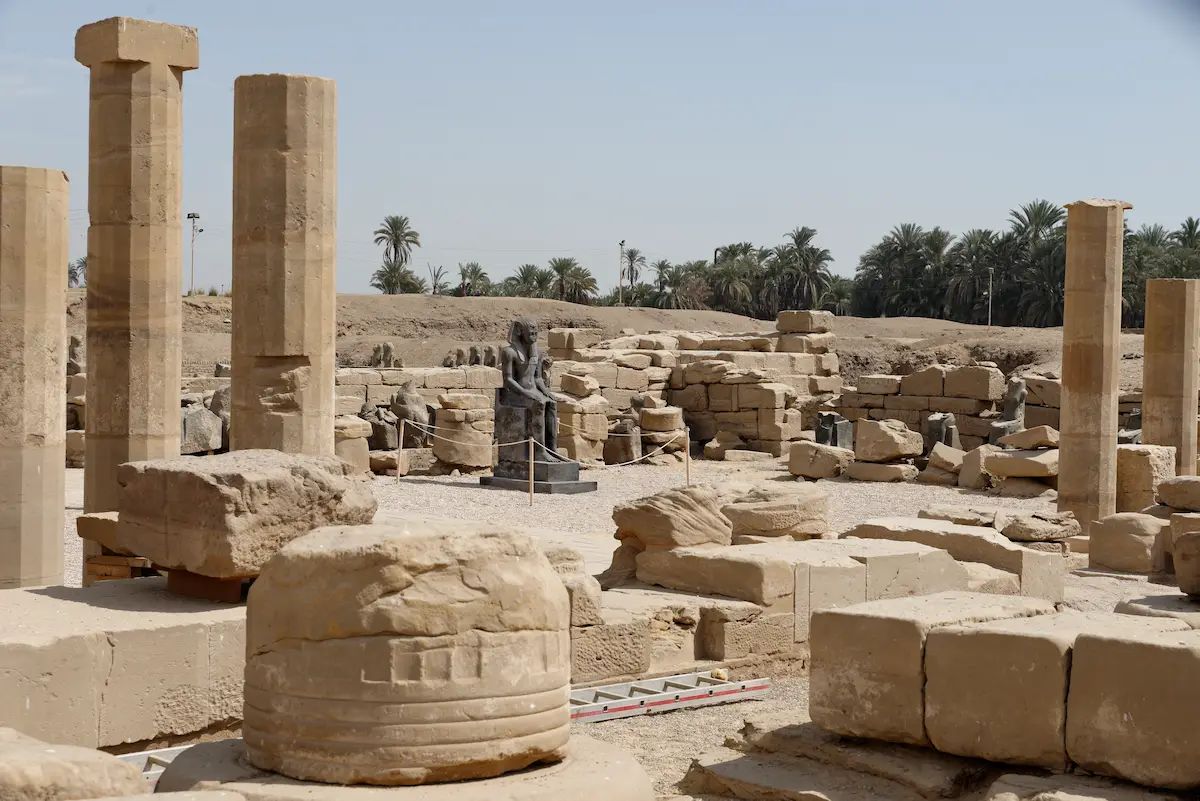
Temple of Mut (Precinct of Mut, Karnak)
The quiet southern precinct of Karnak — a crescent sacred lake and rows of lion-headed Sekhmet statues.
The goddess Mut
The Precinct of Mut lies a few hundred metres south of the main temple of Amun at Karnak, connected to it by an avenue of ram-headed sphinxes. It was dedicated to Mut, the consort of Amun and mother of Khonsu, a powerful goddess of motherhood and kingship, often identified with the fierce lion-headed goddess Sekhmet. The precinct contains at least six temples — the main Temple of Mut, the Contra Temple and Temples A to D — including a small temple of Ramesses III with military scenes and two headless colossi of the king.
The sacred lake and the Sekhmets
Three sides of the Temple of Mut are surrounded by a crescent-shaped sacred lake called the Isheru, a feature particular to temples of lioness goddesses. Around the temple stand dozens of black granite statues of Sekhmet; hundreds of these statues — commissioned under Amenhotep III and later gathered here — have been found in the precinct, many now in museums across the world, making it the greatest concentration of Sekhmet statues anywhere. The Taharqa gateway, built by the Kushite king in the seventh century BC, enlarged the precinct.
Excavation and opening
The precinct has been excavated since the 1970s by an expedition of the Brooklyn Museum and, since 2001, by Johns Hopkins University, with the support of the American Research Center in Egypt. After decades of work, it was opened to visitors in January 2014, with paths and information panels around the lake and the temples. It is visited on a separate ticket bought at the Karnak ticket office and is part of the UNESCO World Heritage Site of Ancient Thebes with its Necropolis.
Exhibo editorial
Karnak is the most crowded temple in Egypt; Mut, a ten-minute walk away, is one of the emptiest. Follow the path to the crescent lake, and there they are: lion-headed goddesses in black granite, seated in rows among the reeds and fallen blocks, staring calmly across the water.
It's a wonderfully peaceful place, shaded by trees, with stone benches by the lake and birds everywhere. Add it to your Karnak visit in the afternoon, when the light is soft and the Sekhmets glow — it's the best antidote to the crowds in the hypostyle hall.
How to find it
Buy the Temple of Mut ticket at the Karnak ticket booth, then go to the precinct south of the main Karnak temple, reached by car or on foot along the road from Karnak; the final 150 metres or so are on foot. Follow the path to the crescent-shaped sacred lake, where the Sekhmet statues stand around the Temple of Mut.
Similar places
All places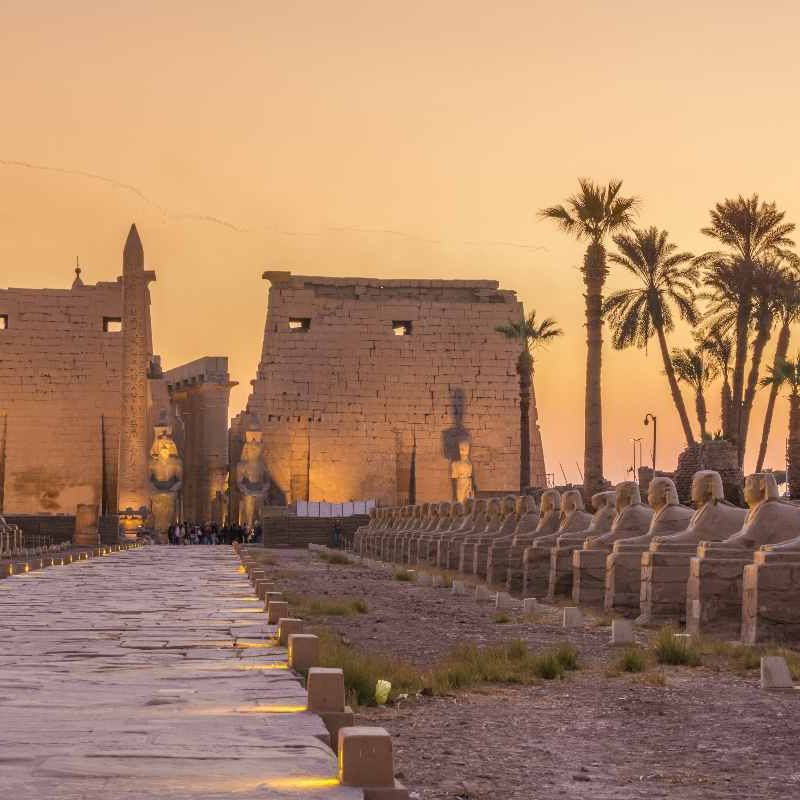
News by Exhibo
Editorial coverage on Exhibo
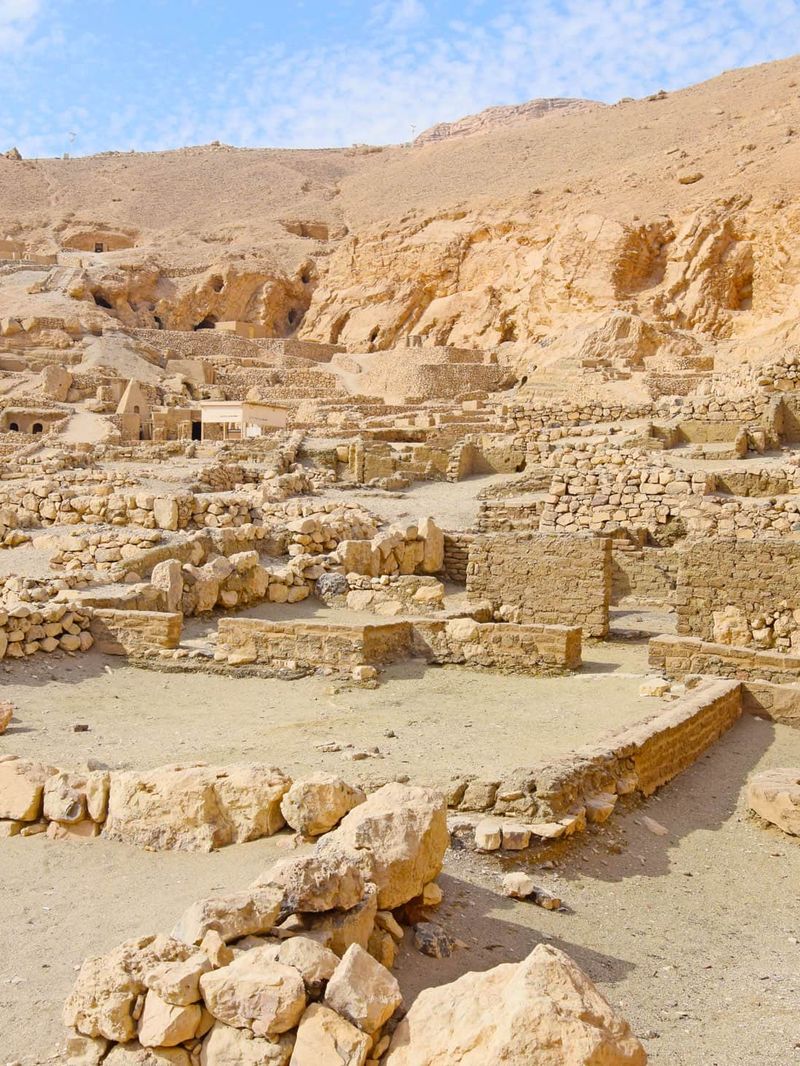
Unearthing the Golden City: Daily Life in Ancient Egypt
How a newly excavated workers' quarter reframes pharaonic history
A major survey travels to the West Coast, bringing ancient artefacts that shift focus from royal opulence to the daily lives of those who built the empire.
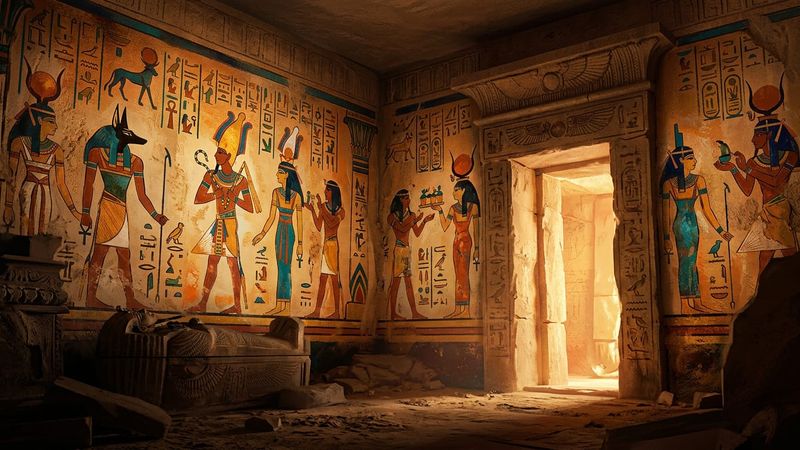
Ancient Egyptian Tomb with Vibrant Murals Unearthed in Luxor
Dutch excavation reveals well-preserved Ramesside period burial with rare coloured wall paintings
Archaeologists have uncovered a 3,000-year-old tomb on Luxor's west bank featuring brightly painted murals that provide valuable insights into elite burial practices during Egypt's New Kingdom period.