
Ramesseum
The mortuary temple of Ramesses II — the fallen colossus that inspired Shelley's 'Ozymandias'.
The temple of millions of years
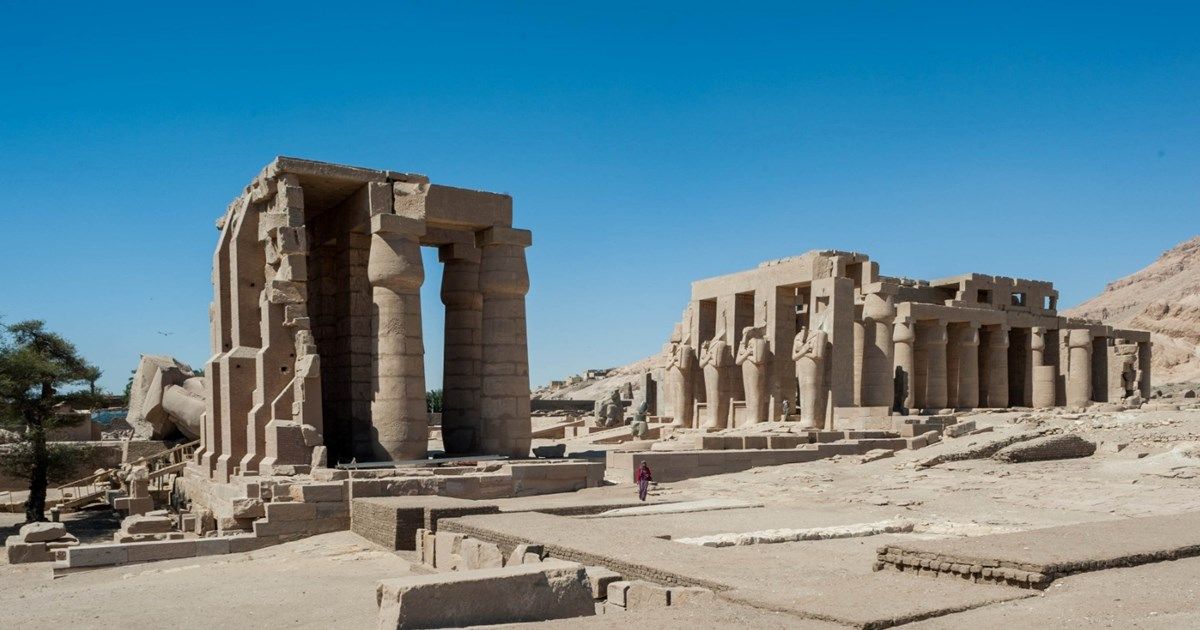
The Ramesseum, on Luxor's west bank, is the mortuary temple of Ramesses II, the most celebrated pharaoh of the New Kingdom, who reigned for sixty-six years in the thirteenth century BC. Known in antiquity as the "Temple of Usermaatra-Setepenra that unites with Thebes", it was built to sustain the king's cult for eternity. Although much of it has collapsed, it remains one of the most evocative ruins in Egypt, and its plan served as a model for the later temple of Ramesses III at Medinet Habu.
Ozymandias
In the temple's second court lie the fragments of a colossal seated statue of Ramesses II carved from a single block of granite, which originally stood some 18 metres high and weighed around 1,000 tonnes — one of the largest statues ever made in ancient Egypt. The Greek historian Diodorus Siculus, describing the temple as the "tomb of Ozymandias" (a Greek rendering of Ramesses' throne name, Usermaatra), quoted an inscription challenging anyone to surpass the king's works. The ruined colossus inspired Percy Bysshe Shelley's sonnet "Ozymandias", published in 1818, with its famous lines on the vanity of power.
Reliefs and ruins
The pylons and walls are carved with scenes of the Battle of Kadesh against the Hittites, Ramesses II's most famous campaign, and of other wars and religious festivals. A row of Osiride pillars — statues of the king as Osiris — still stands in the second court, and the hypostyle hall preserves part of its columns and an astronomical ceiling. Around the temple are the remains of extensive mud-brick storerooms, workshops and a palace, which give a sense of the economic life of a royal temple. A French–Egyptian mission has worked on the site for decades. The Ramesseum is part of the UNESCO World Heritage Site of Ancient Thebes with its Necropolis.
Exhibo editorial
"Look on my works, ye Mighty, and despair!" — the lines come to mind unbidden as you stand by the broken giant. The colossus lies in pieces in the court, a shoulder here, a fist there, the face long gone, and you can walk around it and measure yourself against a single finger.
The Ramesseum is quieter than most west bank temples, and its ruinous state is part of its beauty: the Osiride statues stand in a row, faces battered, against the sky; swallows nest in the mud-brick storerooms. Come in the late afternoon, when the light softens the stone, and let it do what it has done for poets for two centuries.
How to find it
The Ramesseum lies on the edge of the cultivation on the West Bank, between the Colossi of Memnon and Deir el-Bahari, about 4 km from the Nile crossing. Enter from the north-east side; the fallen colossus lies in the second court, beyond the first pylon, with the Osiride pillars just behind it.
Similar places
All places
News by Exhibo
Editorial coverage on Exhibo
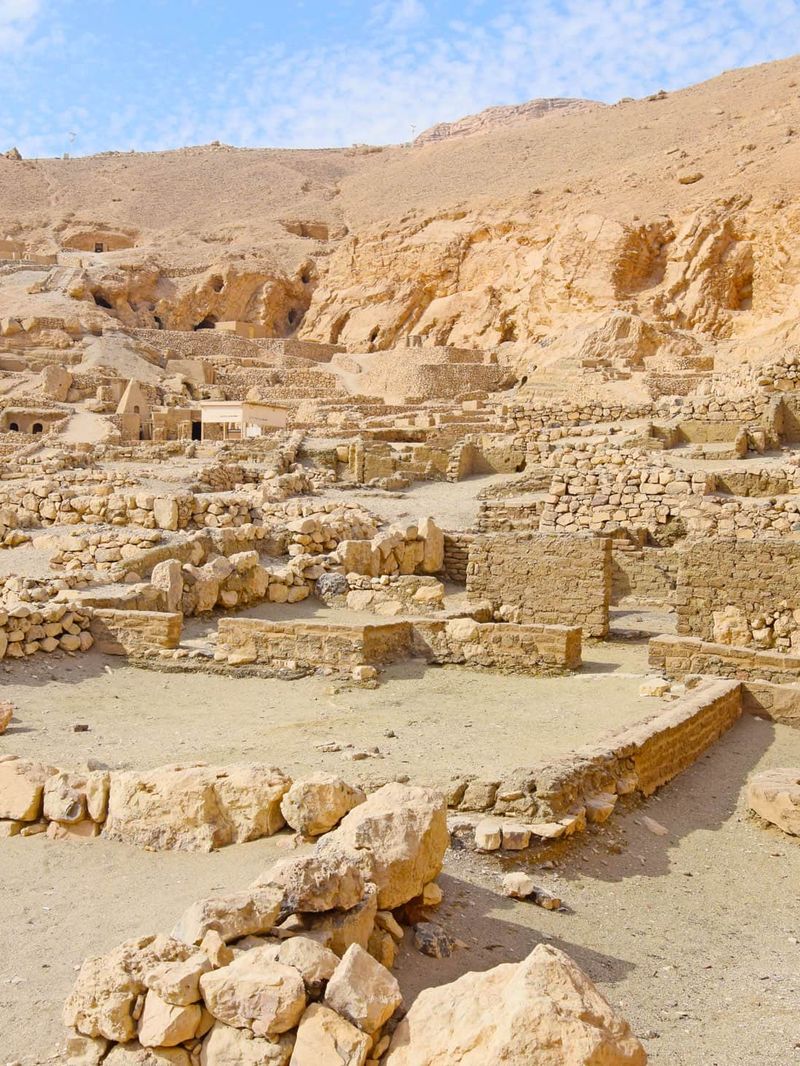
Unearthing the Golden City: Daily Life in Ancient Egypt
How a newly excavated workers' quarter reframes pharaonic history
A major survey travels to the West Coast, bringing ancient artefacts that shift focus from royal opulence to the daily lives of those who built the empire.
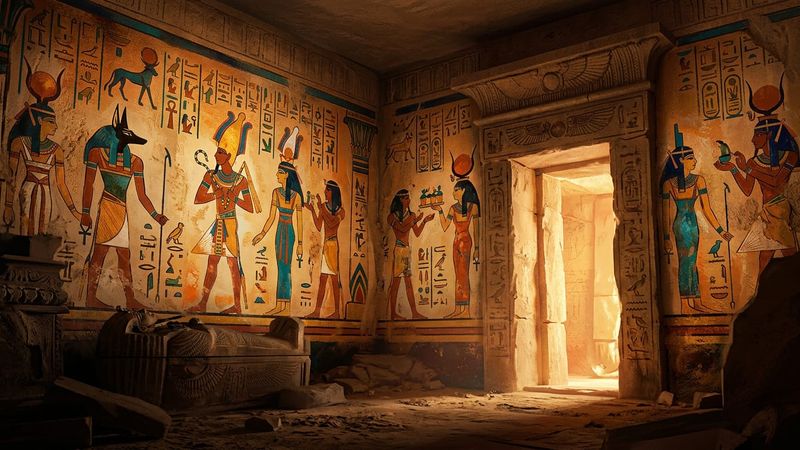
Ancient Egyptian Tomb with Vibrant Murals Unearthed in Luxor
Dutch excavation reveals well-preserved Ramesside period burial with rare coloured wall paintings
Archaeologists have uncovered a 3,000-year-old tomb on Luxor's west bank featuring brightly painted murals that provide valuable insights into elite burial practices during Egypt's New Kingdom period.