The tombs of the Apis bulls
The Serapeum of Saqqara is a vast underground burial place for the Apis bulls, sacred animals worshipped at Memphis as living manifestations of the god Ptah. Each Apis was chosen for distinctive markings, lived in luxury in a temple enclosure and on its death was mummified and buried with great ceremony; its successor was then sought across the country. In death the bull was identified with Osiris as Osiris-Apis, from which the Greek name of the god Serapis and of the Serapeum, derives.
The galleries
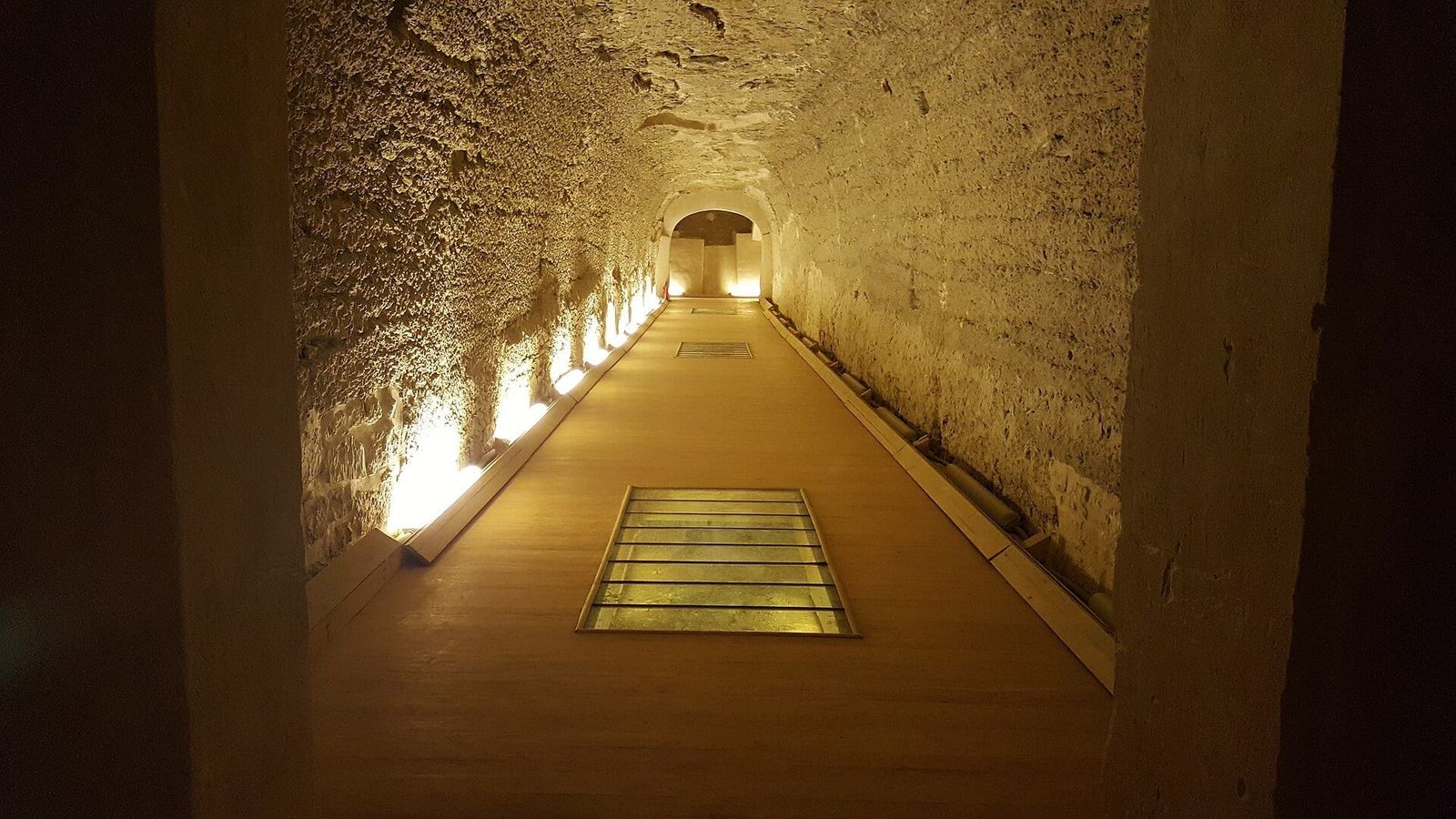
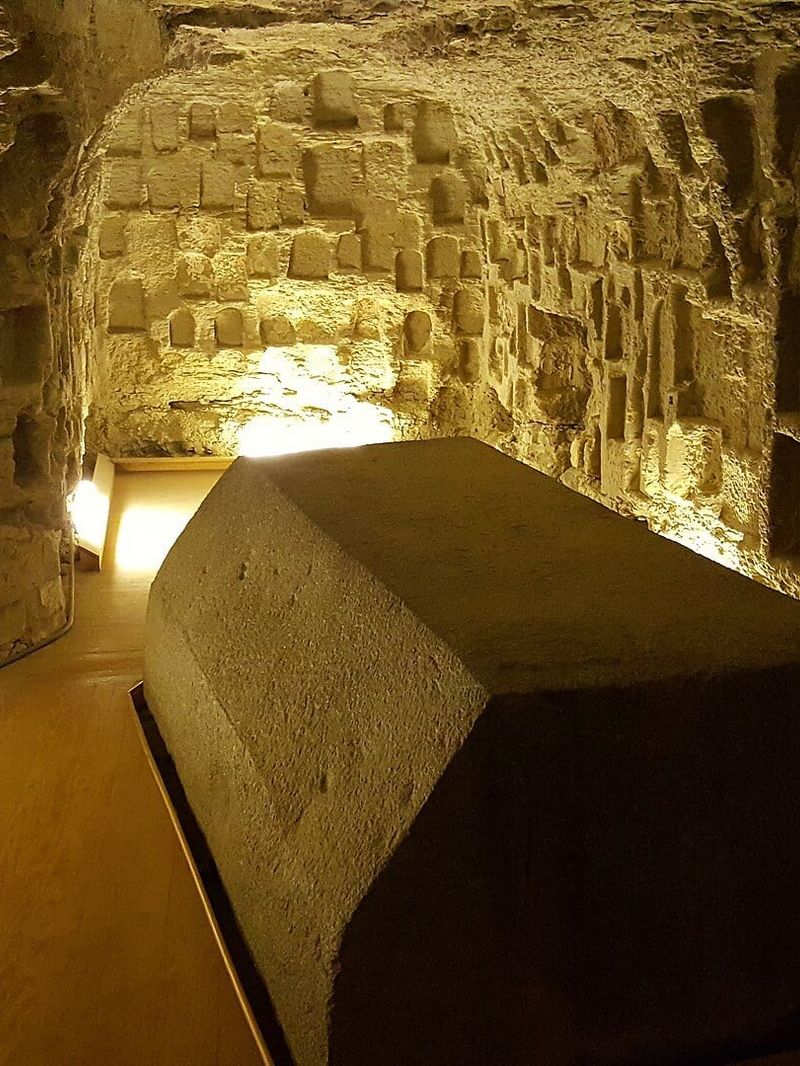
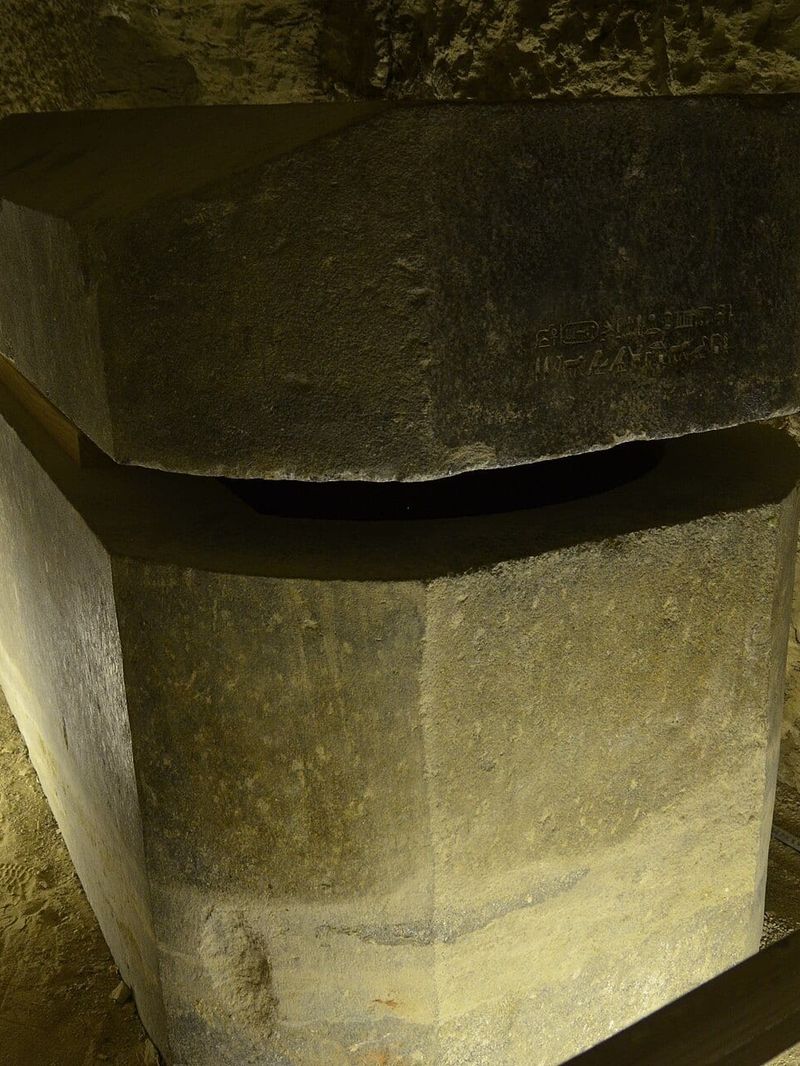
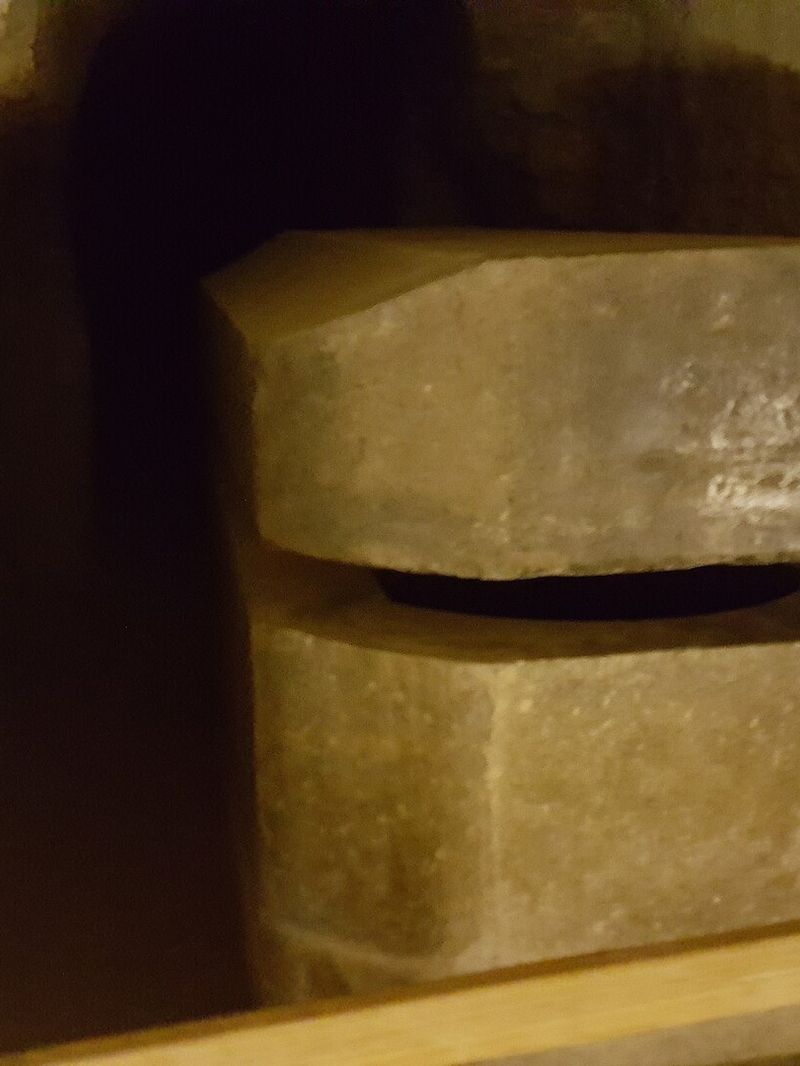
Apis burials took place at Saqqara from at least the New Kingdom; the largest complex, the so-called Greater Vaults, was begun in the Late Period, in the seventh century BC and used into the Ptolemaic era. It consists of long corridors cut into the rock, with side chambers on either side, many of which hold enormous sarcophagi of granite and basalt, carved from single blocks and each weighing many tens of tonnes, with heavy lids. Their polished surfaces and the precision of their cutting still impress engineers and visitors. Most were found already plundered in antiquity.
Discovery
The Serapeum was discovered in 1850–1851 by the young French archaeologist Auguste Mariette, who, having noticed a sphinx protruding from the sand, followed the buried avenue of sphinxes described by the Greek geographer Strabo until he reached the entrance to the galleries. The discovery launched Mariette's career; he went on to found the Egyptian Antiquities Service and the first Egyptian Museum. One intact burial found during his excavations, with its offerings, helped to explain the rituals of the cult. The galleries, lit for visitors, are part of the Saqqara necropolis and are visited on a separate ticket.
Exhibo editorial
You walk down from the desert glare into a long tunnel cut through the rock. The temperature drops and the corridor goes on and on into the dimness. Then the side chambers begin. In each one, sunk into the floor, lies a black or red granite box the size of a small room, polished like glass, the lid pushed slightly askew.
They were coffins for bulls. That fact never quite settles in the mind as you walk past them one after another: the devotion, the labour, the sheer weight of stone moved for an animal believed to be a god. It is one of the eeriest places in Egypt and one of the most unforgettable.
Gallery
How to find it
In the Saqqara necropolis, north-west of the Step Pyramid. Drive or walk from the Step Pyramid car park towards the Mastaba of Ti. The entrance to the Serapeum is a ramp leading down into the rock.
Similar places
All places
News by Exhibo
Editorial coverage on Exhibo
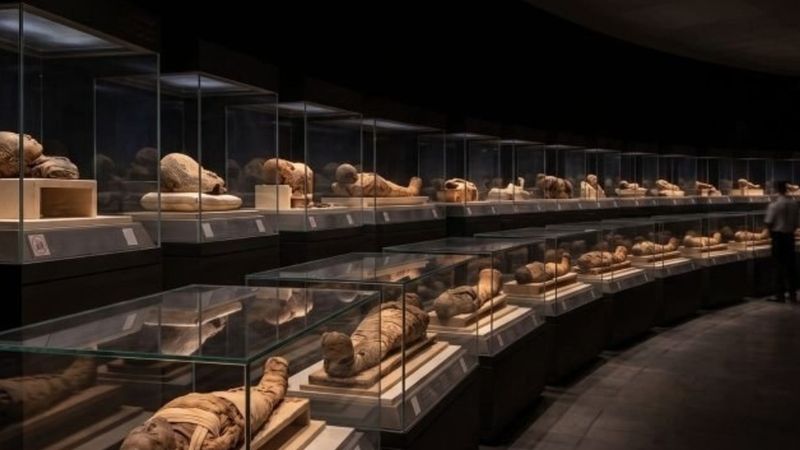
The Museum of Everything That Became a Tomb
Egypt built a museum to tell the story of an entire civilisation — seven thousand years of it, from flint tools to the present. The public knows it for one thing: the room where twenty dead kings lie in the dark.
In a black, hushed hall beneath the National Museum of Egyptian Civilization in Old Cairo lie the mummified bodies of Ramesses II, Hatshepsut, and eighteen other rulers of the New Kingdom — carried here in 2021 in a televised parade watched around the world.
Ancient Egyptian Art
Images built to work for gods, kings and the dead: canon, craft and change along the Nile across nearly three millennia.
Ancient Egyptian art was rarely made for the museum wall alone. This period survey explains why statues and reliefs functioned as cult tools, how a stable visual canon held for centuries, where Old, Middle and New Kingdom styles diverge, and which collections still make those differences visible today.
Agatha Christie's Egypt: Three Abu Simbels, a Pharaoh and a Murder on the Nile
Christie set one famous murder on the Nile and two lesser-known stories in ancient Egypt. The temples, letters and film sets behind all three.
The Abu Simbel of Death on the Nile has since moved up a hill. Christie's two other Egyptian stories lead to a pharaoh's dismantled temples at Karnak and a farmer's 4,000-year-old letters now in New York.