Sneferu's pyramids
The royal necropolis of Dahshur, about 40 kilometres south of Cairo and just south of Saqqara, holds two of the most important monuments in the history of architecture, both built for Sneferu, first king of the Fourth Dynasty and father of Khufu, in the 26th century BC. Sneferu was the greatest pyramid builder of all: with his earlier pyramid at Meidum, he is credited with moving more stone than any other pharaoh and his builders at Dahshur took the decisive step from the stepped pyramid to the true, smooth-sided pyramid perfected at Giza.
The Bent Pyramid
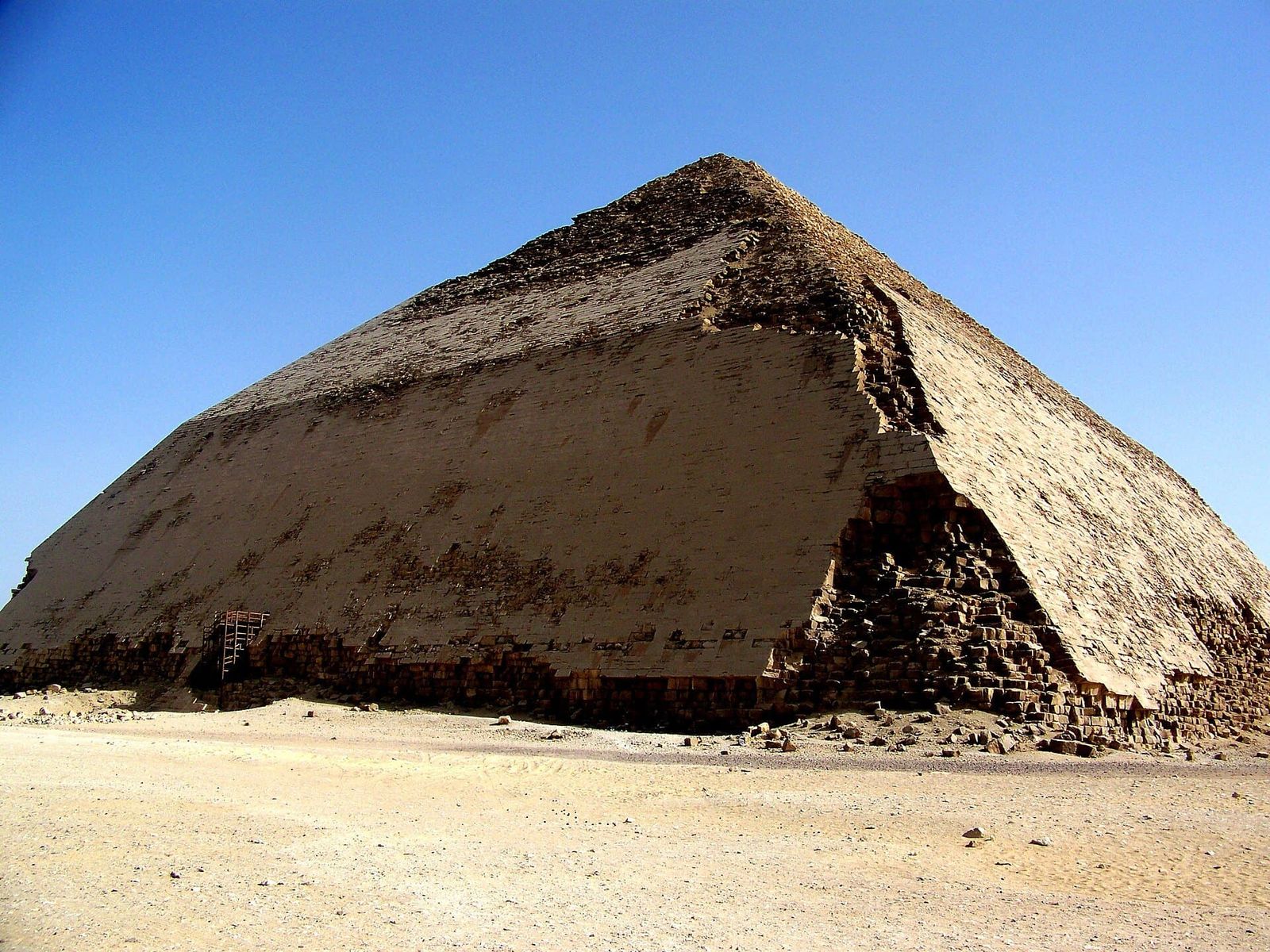
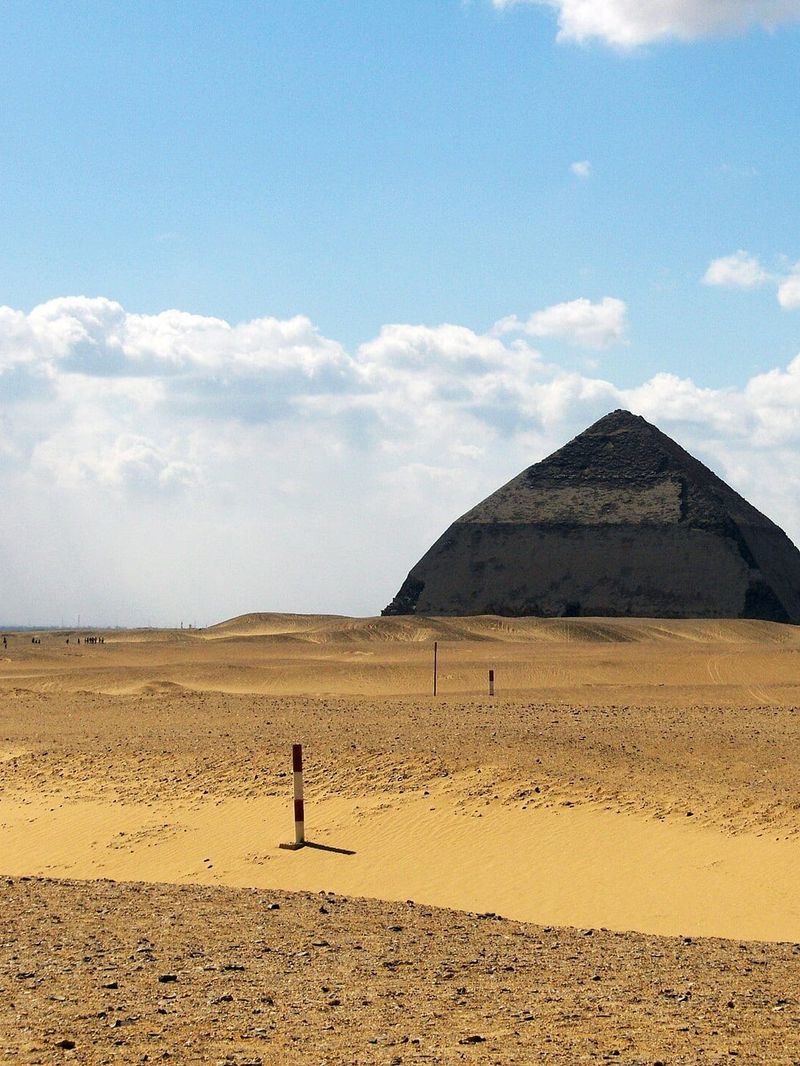
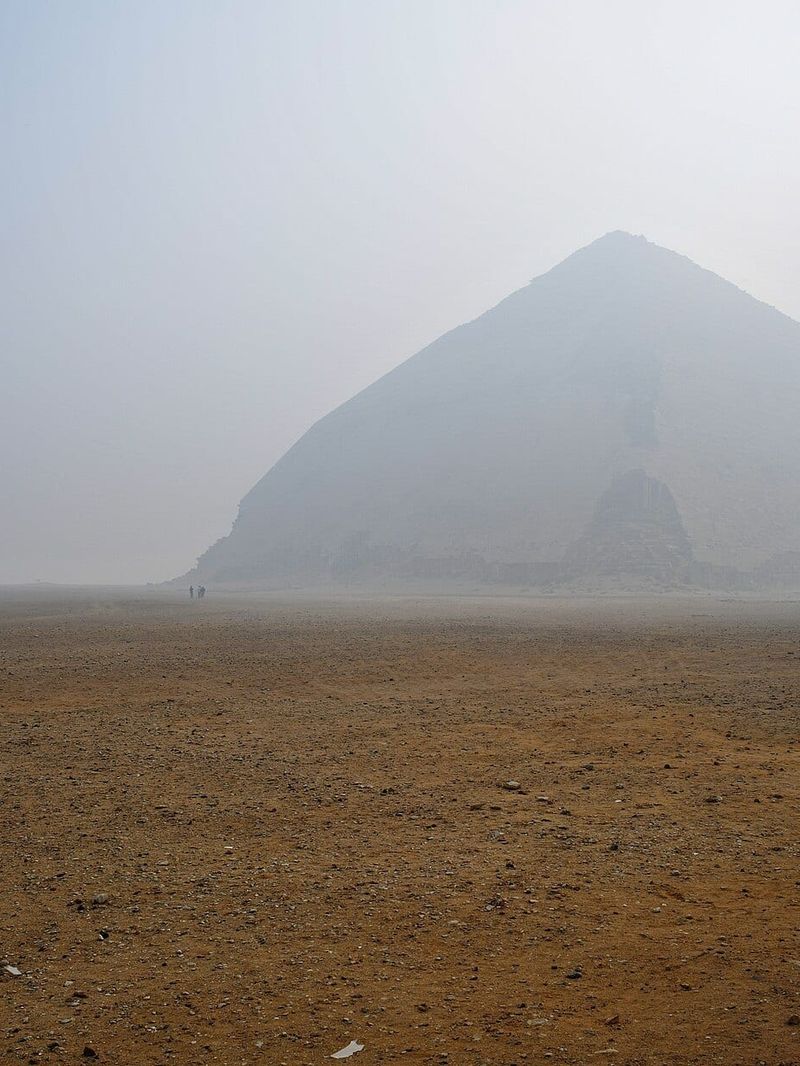
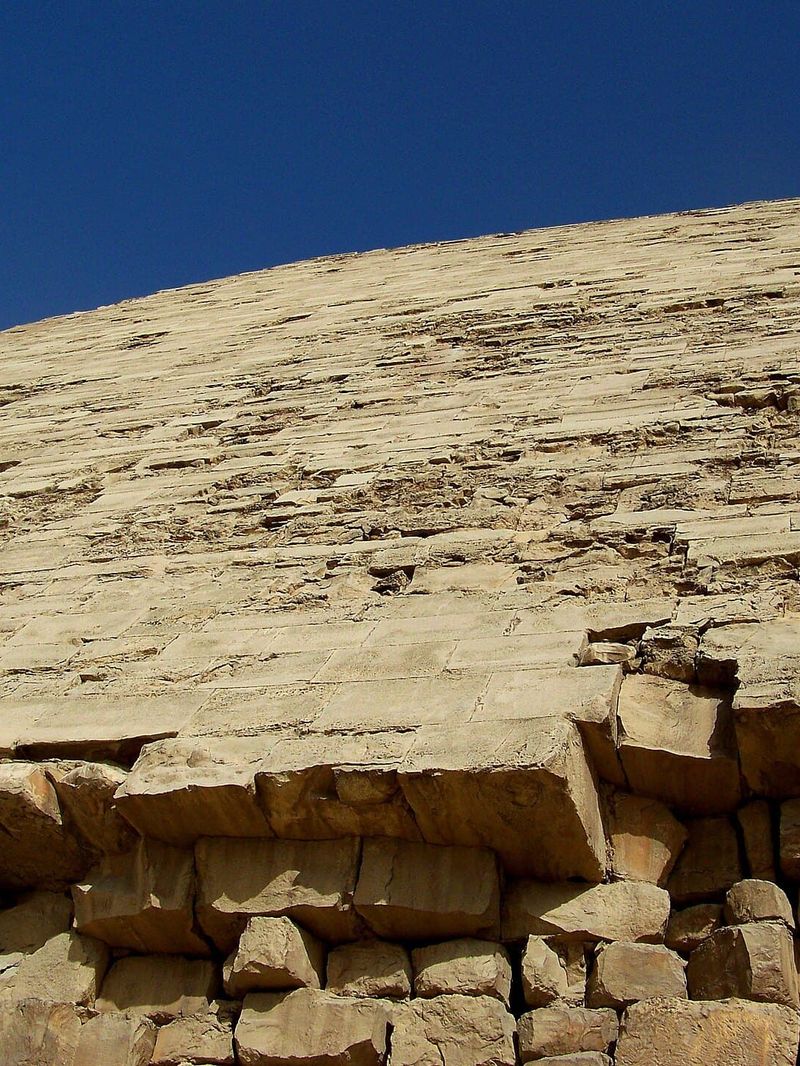
The Bent Pyramid, about 101 metres high, owes its name to the change in the angle of its sides: the lower part rises at about 54 degrees, the upper part at a much gentler angle of about 43 degrees. The change appears to have been made during construction, probably because of structural problems as the pyramid rose. It is the pyramid that best preserves its original polished limestone casing, which gives a vivid idea of how all the pyramids once looked. Uniquely, it has two entrances, on the north and west sides. In July 2019 its interior passages and chambers and its satellite pyramid were opened to visitors for the first time in decades.
The Red Pyramid
A short drive north, the Red Pyramid, named after the reddish tint of its limestone, rises about 105 metres at a constant gentle slope and is considered the first successful true pyramid ever built and the third largest in Egypt after the two great pyramids of Giza. Visitors can climb up to the entrance on its north face and descend a long passage into a series of high corbel-vaulted chambers.
The site
Dahshur lies in a desert landscape far quieter than Giza, part of the UNESCO World Heritage Site of Memphis and its Necropolis. From the site the Black Pyramid of Amenemhat III, a Middle Kingdom pyramid of mud brick, can be seen in the distance.
Exhibo editorial
Dahshur is what Giza was before the crowds: two giant pyramids in an open desert, a few cars, a guard, the wind. The Bent Pyramid is the more beautiful of the two. Its casing is still mostly intact and its sides break halfway up into a gentler slope, like a sentence the architects decided mid-way to rephrase.
Then go into the Red Pyramid. The climb up the outside and the long, low passage down are hard work, but the chambers at the bottom, tall and steeply corbelled, are one of the great interior experiences in Egypt. You may well have them entirely to yourself. Bring water and a torch for the corners. Combine it with Saqqara on the same day.
Gallery
How to find it
Dahshur lies about 10 km south of Saqqara. From the entrance the road runs to the Red Pyramid first, then west across the desert to the Bent Pyramid. A car or taxi is essential between the two.
Similar places
All places
News by Exhibo
Editorial coverage on Exhibo
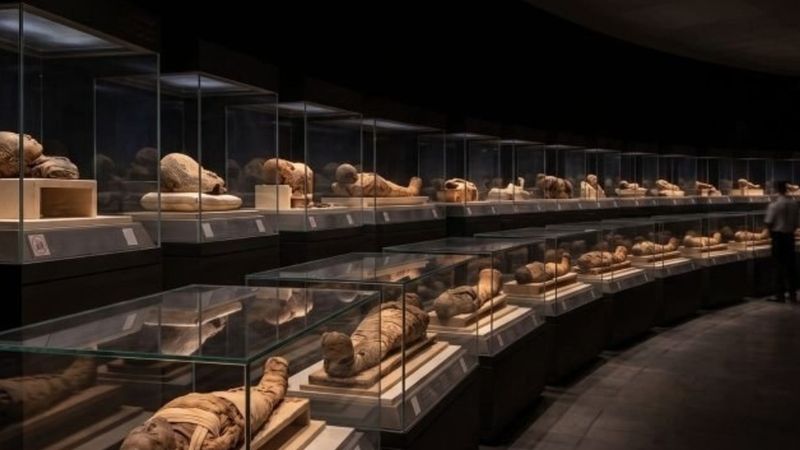
The Museum of Everything That Became a Tomb
Egypt built a museum to tell the story of an entire civilisation — seven thousand years of it, from flint tools to the present. The public knows it for one thing: the room where twenty dead kings lie in the dark.
In a black, hushed hall beneath the National Museum of Egyptian Civilization in Old Cairo lie the mummified bodies of Ramesses II, Hatshepsut, and eighteen other rulers of the New Kingdom — carried here in 2021 in a televised parade watched around the world.
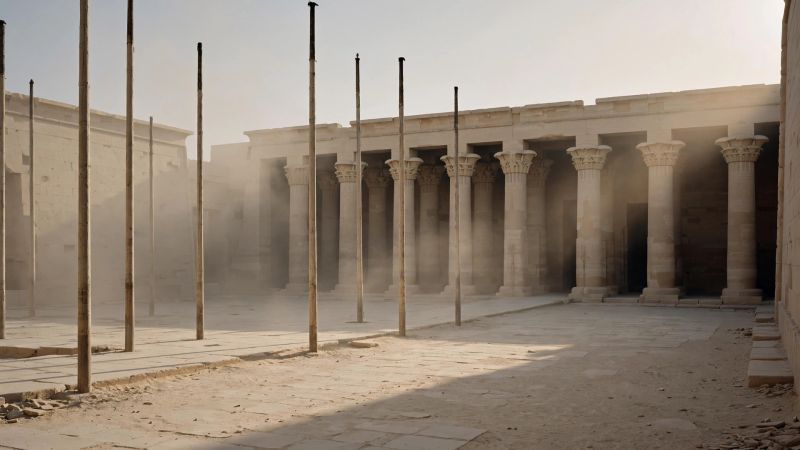
Ancient Egyptian Art
Images built to work for gods, kings and the dead: canon, craft and change along the Nile across nearly three millennia.
Ancient Egyptian art was rarely made for the museum wall alone. This period survey explains why statues and reliefs functioned as cult tools, how a stable visual canon held for centuries, where Old, Middle and New Kingdom styles diverge, and which collections still make those differences visible today.
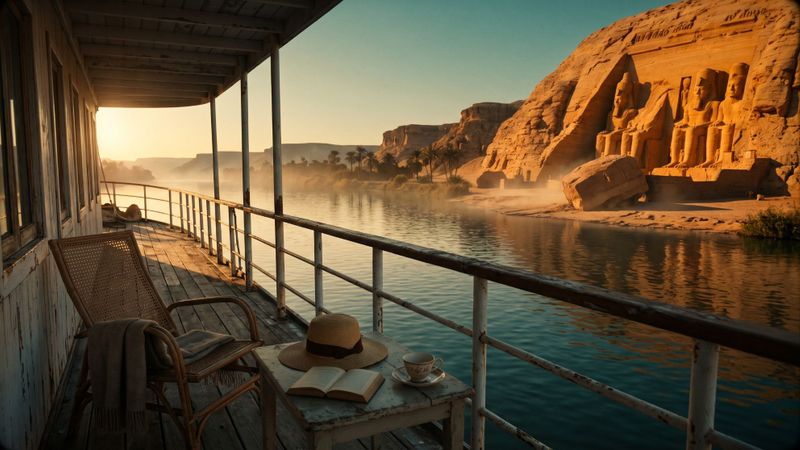
Agatha Christie's Egypt: Three Abu Simbels, a Pharaoh and a Murder on the Nile
Christie set one famous murder on the Nile and two lesser-known stories in ancient Egypt. The temples, letters and film sets behind all three.
The Abu Simbel of Death on the Nile has since moved up a hill. Christie's two other Egyptian stories lead to a pharaoh's dismantled temples at Karnak and a farmer's 4,000-year-old letters now in New York.