The pyramids of the sun kings
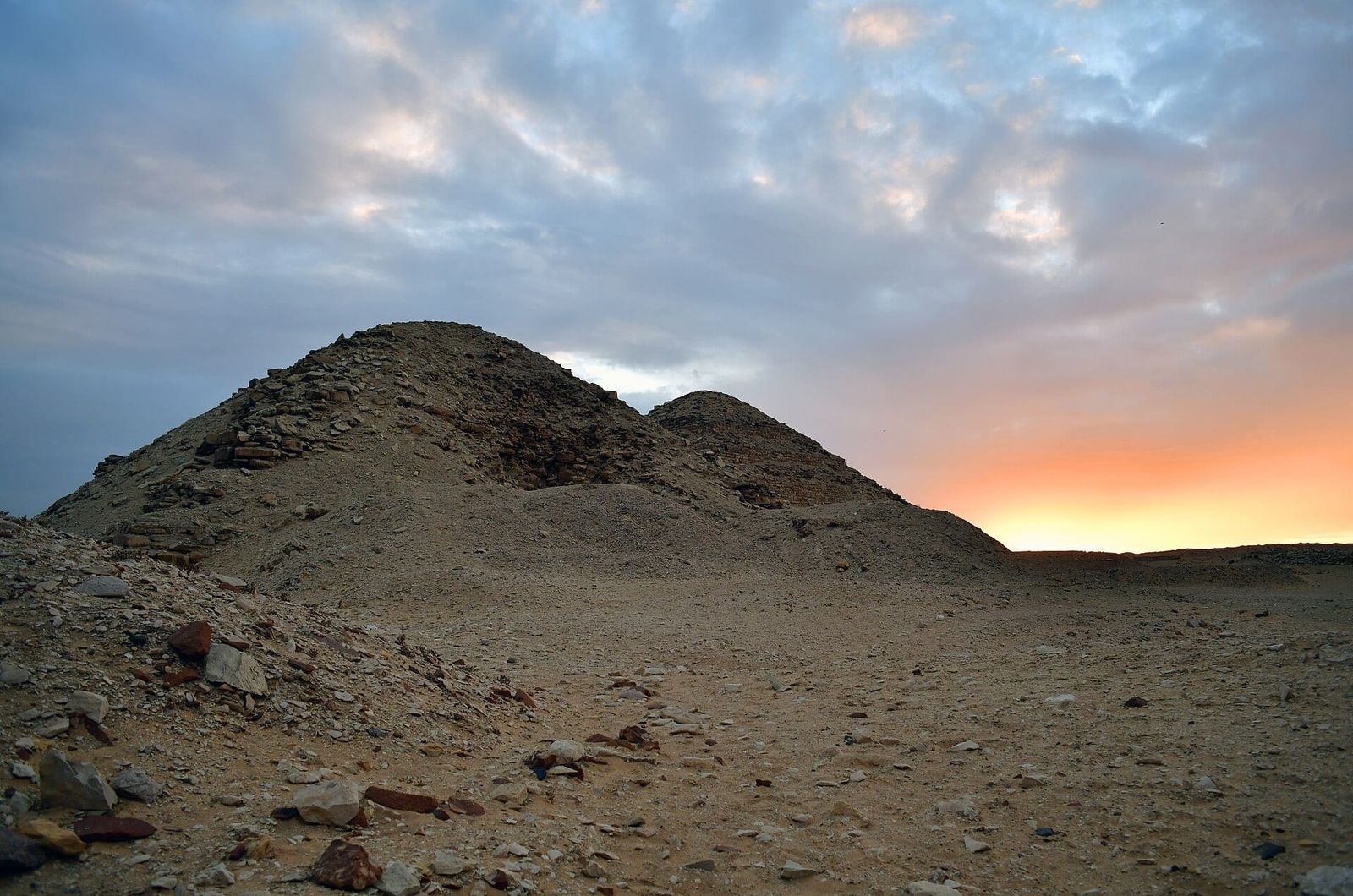
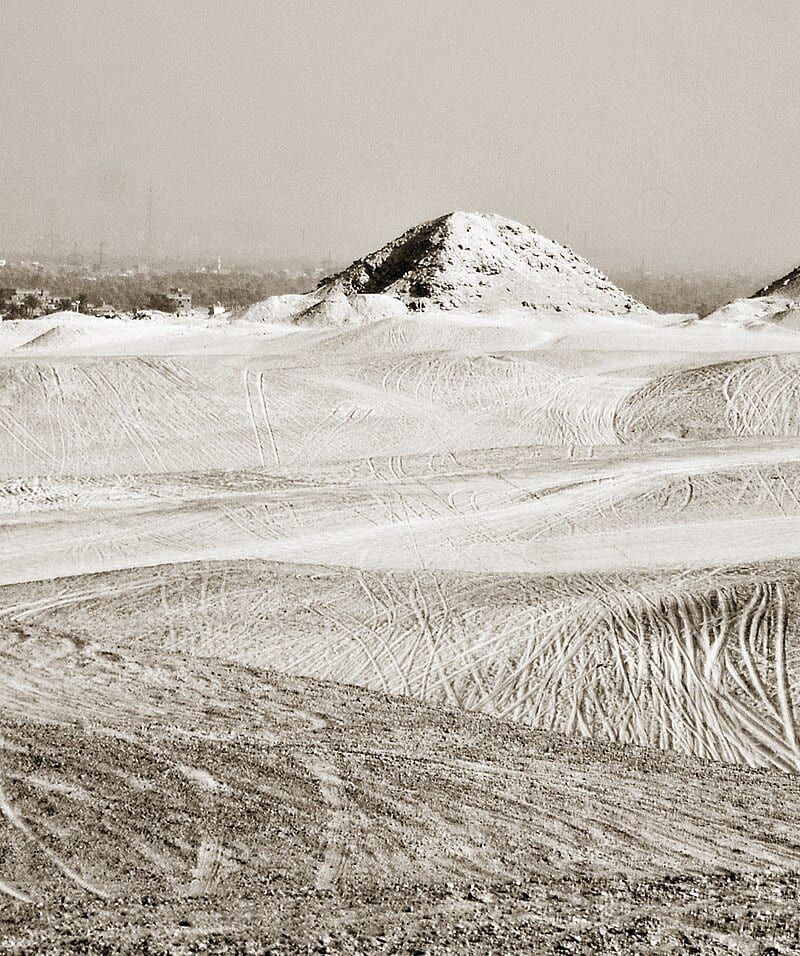
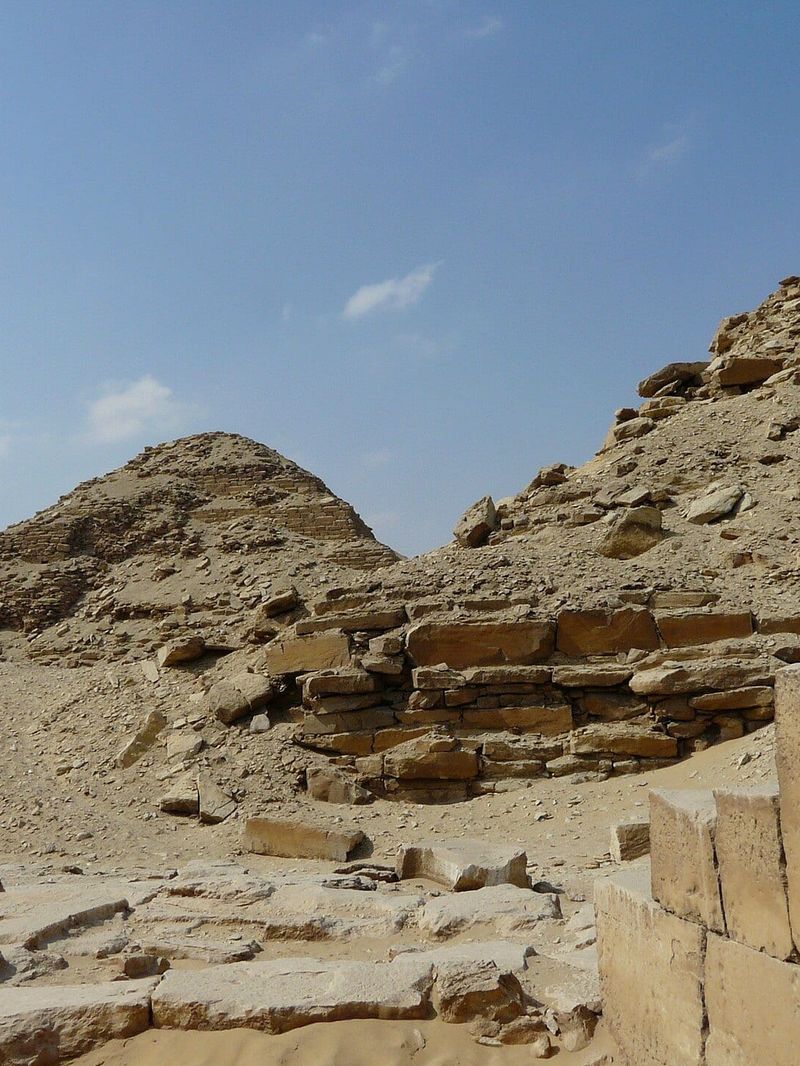
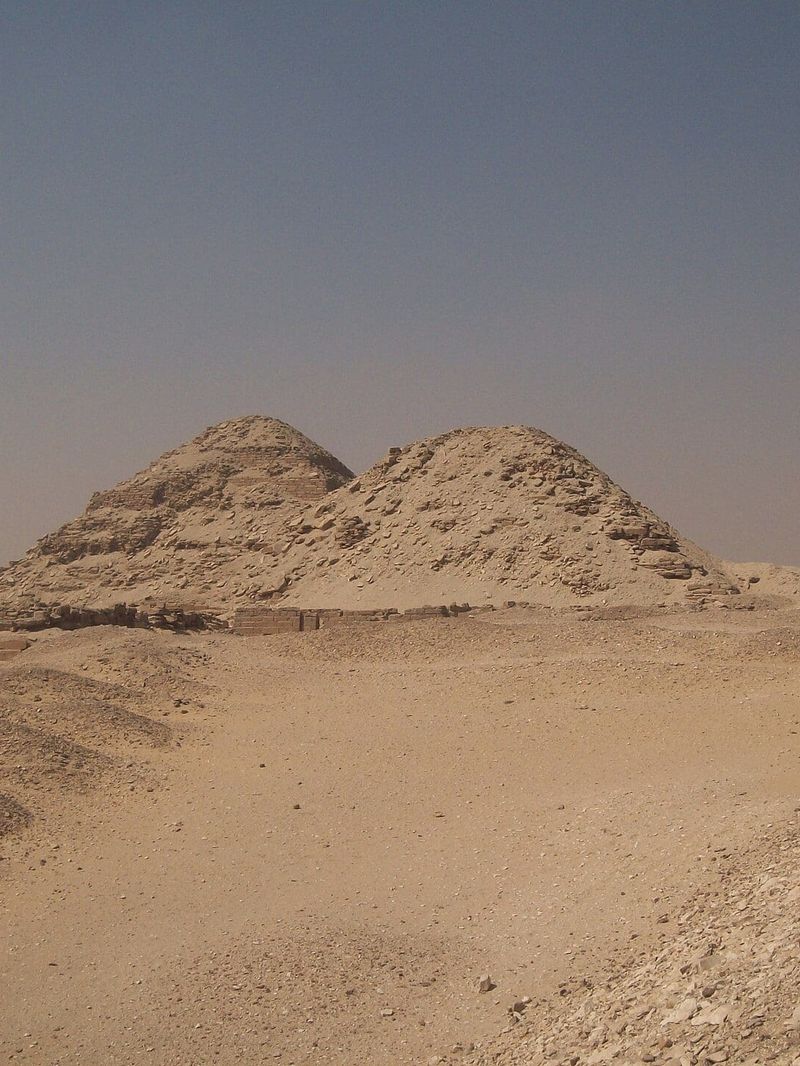
Abusir lies on the desert edge between Giza and Saqqara, about 25 kilometres south-west of central Cairo. In the middle of the third millennium BC, several kings of the Fifth Dynasty, whose names honour the sun god Ra, chose to be buried here rather than at Giza or Saqqara, building a group of pyramids that includes those of Sahure, Neferirkare, Nyuserre and Neferefre. Smaller and less solidly built than the great pyramids of the Fourth Dynasty, they are now heavily ruined, but their temples and causeways preserve important evidence of royal religion and architecture in the age of the sun cult.
Temples, papyri and reliefs
The pyramid complex of Sahure, the first king to build here, introduced a layout that later pyramids followed, with a valley temple, a covered causeway and a mortuary temple decorated with fine reliefs and granite palm columns. At the mortuary temple of Neferirkare, papyri discovered in the 1890s, the Abusir papyri, turned out to be part of the temple's administrative archive, one of the oldest surviving bodies of papyrus documents in the world, recording offerings, staff rotas and inventories. Around the pyramids lie the mastabas of officials, among them the great mastaba of the vizier Ptahshepses, one of the largest private tombs of the Old Kingdom.
The sun temples
Kings of the Fifth Dynasty also built sun temples near their pyramids. The best preserved, that of Nyuserre at Abu Ghurab just north of Abusir, centred on a huge squat obelisk on a platform, with a great alabaster altar that still survives. Abusir has been excavated since the 1960s by the Czech Institute of Egyptology and it is part of the UNESCO World Heritage Site of Memphis and its Necropolis.
Exhibo editorial
Abusir is the pyramid field most visitors drive past without noticing on the way to Saqqara. The pyramids here are slumped and eroded, more mountains of rubble than geometric marvels. That is part of the appeal: this is the Old Kingdom without the crowds, the camels or the souvenir sellers, just desert, wind and the outline of Saqqara to the south.
If you can get in, walk up the causeway of Sahure and stand among the granite columns of his temple, carved like bundles of palm fronds. A papyrus archive from this site is one of the oldest bureaucracies on paper in the world. Ask locally or through a specialist guide whether the site is open before you go.
Gallery
How to find it
Abusir lies between Giza and Saqqara, reached by a desert road north from the Saqqara area. Arrange the visit and transport in advance through a guide.
Similar places
All places
News by Exhibo
Editorial coverage on Exhibo
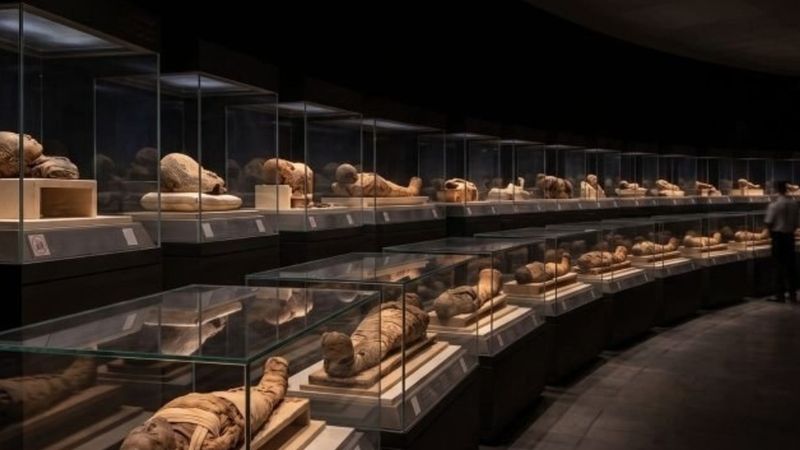
The Museum of Everything That Became a Tomb
Egypt built a museum to tell the story of an entire civilisation — seven thousand years of it, from flint tools to the present. The public knows it for one thing: the room where twenty dead kings lie in the dark.
In a black, hushed hall beneath the National Museum of Egyptian Civilization in Old Cairo lie the mummified bodies of Ramesses II, Hatshepsut, and eighteen other rulers of the New Kingdom — carried here in 2021 in a televised parade watched around the world.
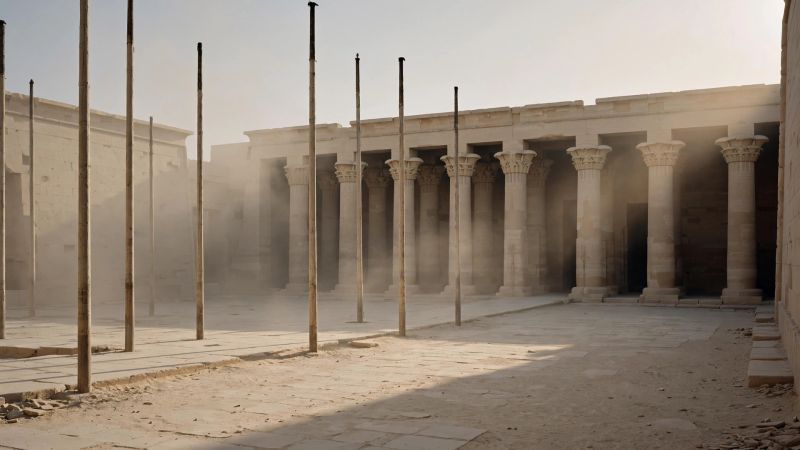
Ancient Egyptian Art
Images built to work for gods, kings and the dead: canon, craft and change along the Nile across nearly three millennia.
Ancient Egyptian art was rarely made for the museum wall alone. This period survey explains why statues and reliefs functioned as cult tools, how a stable visual canon held for centuries, where Old, Middle and New Kingdom styles diverge, and which collections still make those differences visible today.
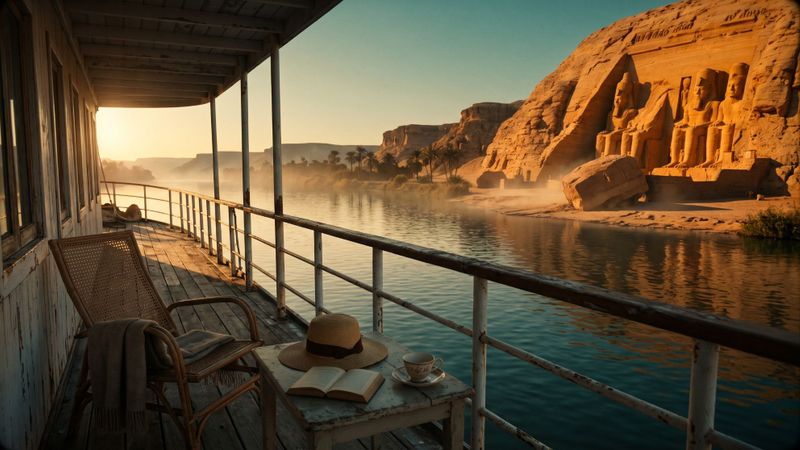
Agatha Christie's Egypt: Three Abu Simbels, a Pharaoh and a Murder on the Nile
Christie set one famous murder on the Nile and two lesser-known stories in ancient Egypt. The temples, letters and film sets behind all three.
The Abu Simbel of Death on the Nile has since moved up a hill. Christie's two other Egyptian stories lead to a pharaoh's dismantled temples at Karnak and a farmer's 4,000-year-old letters now in New York.