
Measuring the river
For thousands of years, the prosperity of Egypt depended on the annual flood of the Nile and the height of the water each summer determined the size of the harvest and the level of taxes. Nilometers, structures for measuring the river's level, existed from pharaonic times; the one at the southern tip of Roda Island in Cairo is the most famous surviving example from the Islamic period. It was built in 861 on the orders of the Abbasid caliph al-Mutawakkil, replacing earlier measuring devices on the site and is attributed to the astronomer Ahmad ibn Muhammad al-Farghani.
How it works
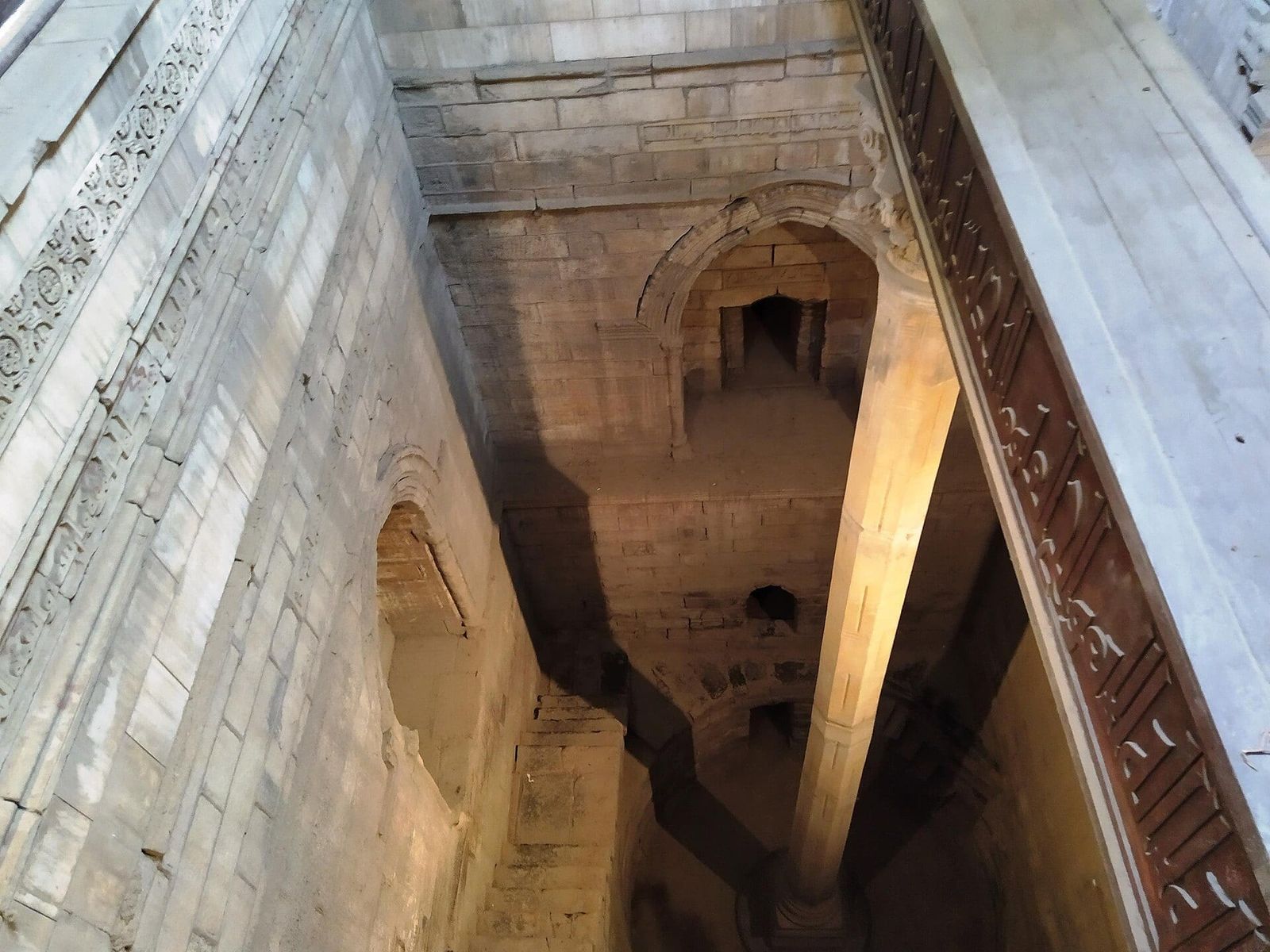
The Nilometer consists of a deep square well lined with stone, connected to the Nile by three tunnels at different levels through which the water entered. At its centre stands a tall octagonal marble column graduated in cubits, on which officials read the height of the flood. A stairway winds down the inside of the well to the bottom and the walls of the shaft are decorated with pointed arches and with Kufic inscriptions of Qur'anic verses about water, rain and fertility, among the earliest dated architectural inscriptions of their kind in Egypt. When the water reached the level judged sufficient for a good harvest, the flood was celebrated with public festivities and the tax assessment for the year was fixed accordingly.
A monument without a river to measure
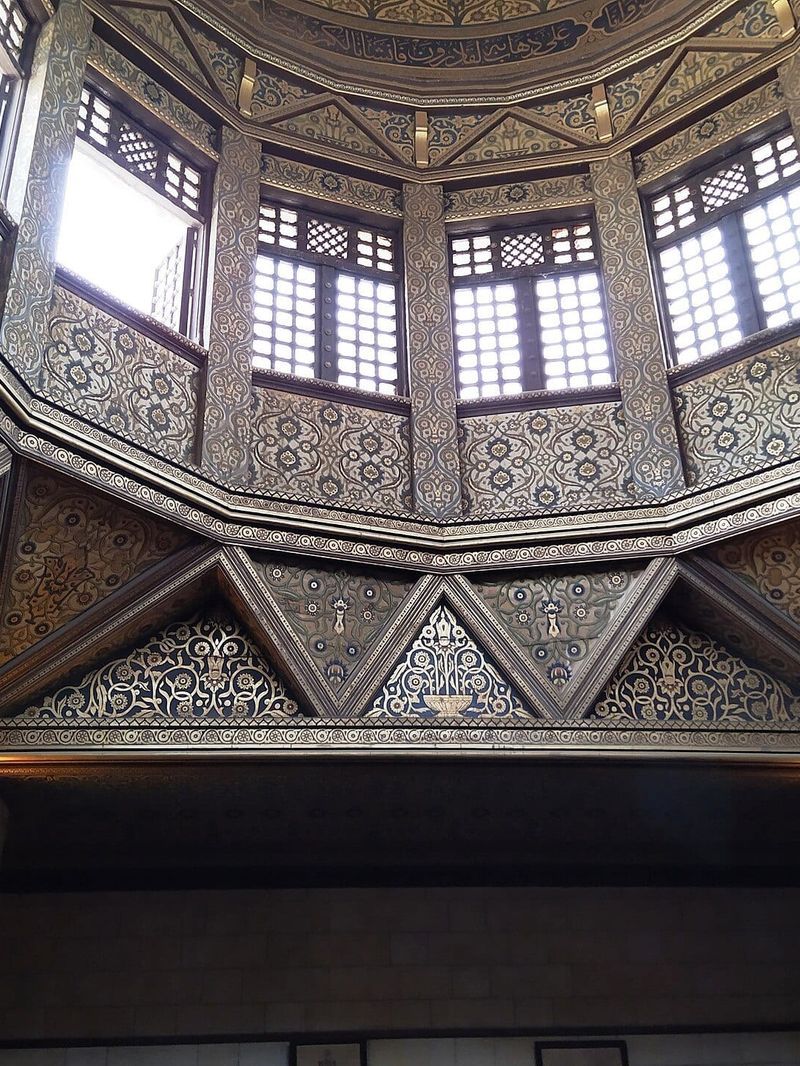
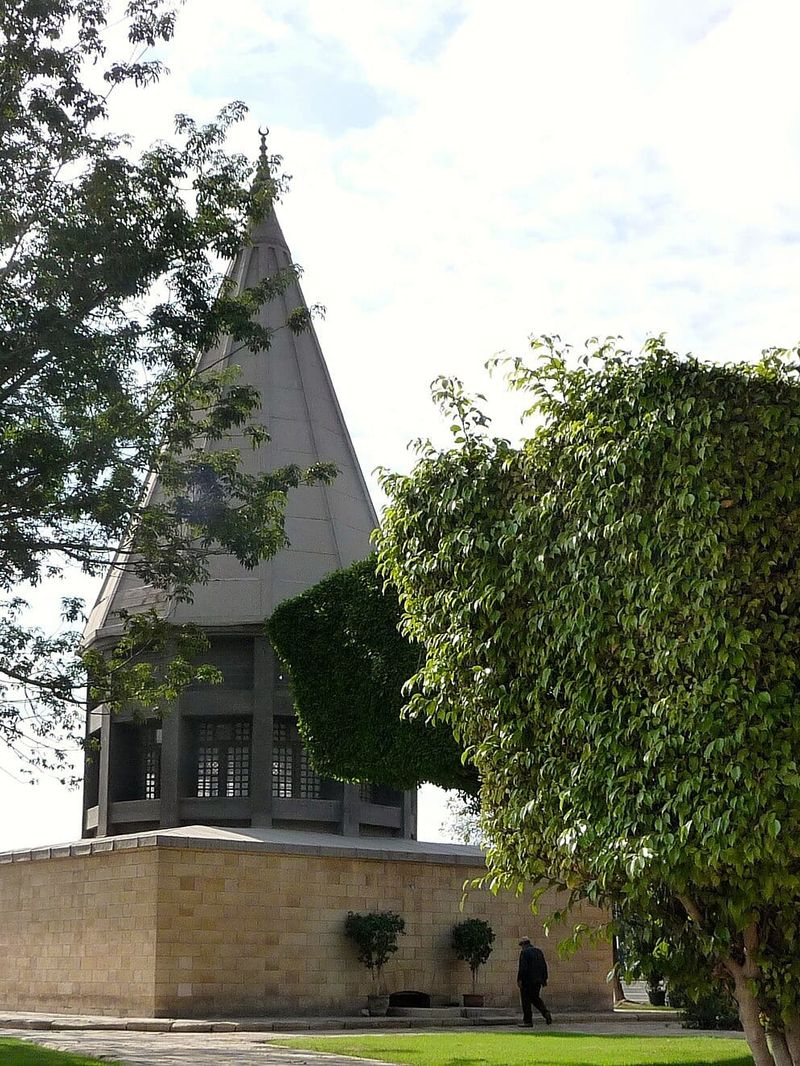
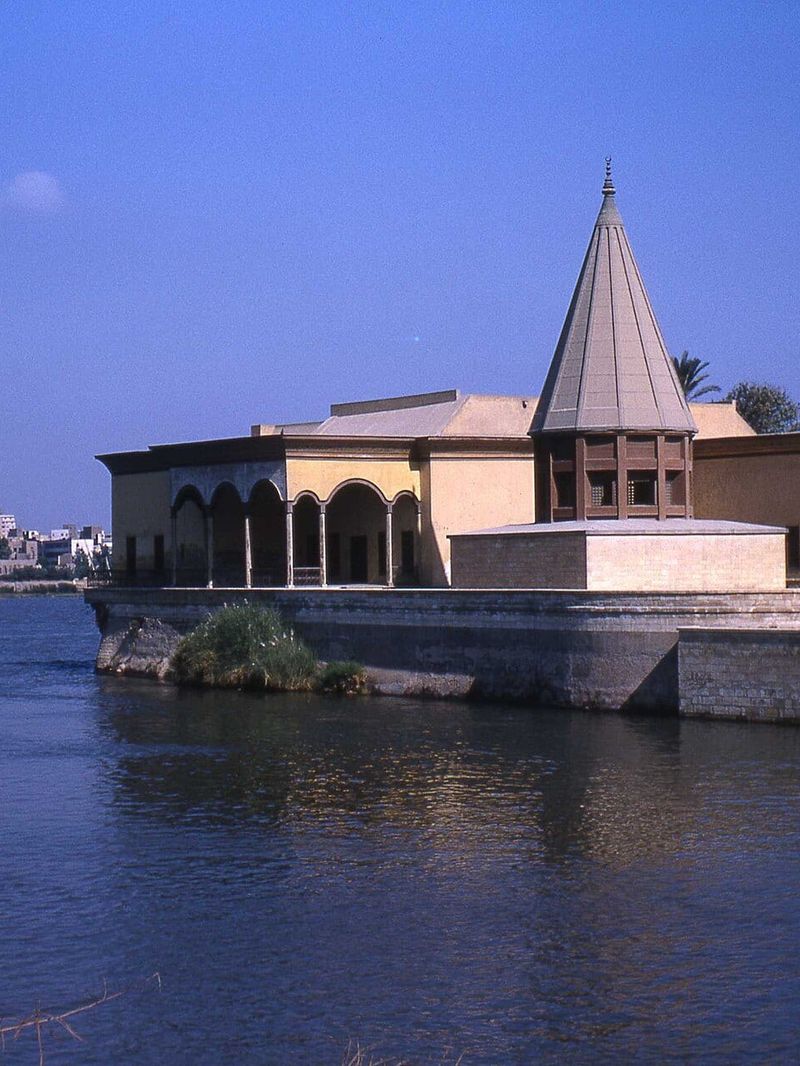
The Nilometer was restored several times in the medieval and Ottoman periods. Since the completion of the Aswan High Dam in 1970, the Nile no longer floods and the measuring well is dry. The conical wooden roof that covers it today is a modern reconstruction. The Nilometer stands next to the nineteenth-century Manasterly Palace, which hosts concerts and the Umm Kulthum Museum and is visited on the same ticket as the palace grounds.
Exhibo editorial
It is one of the most elegant buildings in Cairo and one of the least visited: a square stone well at the tip of an island, a marble column standing in the middle like a ruler, stairs spiralling down past arches and inscriptions to the bottom, where the river used to rise. For centuries the fate of every farmer in Egypt was read off that column.
Go down the stairs if they're open, look up at the patch of sky through the roof and then walk out to the promenade at the tip of Roda, where the Nile divides around the island. It's a beautiful, peaceful corner of the city and a good place to watch the river at sunset.
Gallery
How to find it
At the southern tip of Roda Island. From Al-Malek Al-Saleh metro station cross the bridge to Roda and walk south along the island, or take a taxi to the Manasterly Palace. The Nilometer stands in the palace grounds.
Similar places
All places
News by Exhibo
Editorial coverage on Exhibo
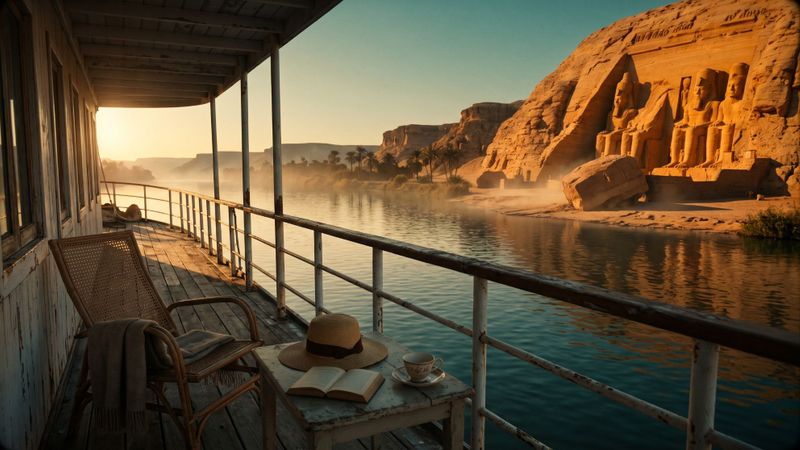
Agatha Christie's Egypt: Three Abu Simbels, a Pharaoh and a Murder on the Nile
Christie set one famous murder on the Nile and two lesser-known stories in ancient Egypt. The temples, letters and film sets behind all three.
The Abu Simbel of Death on the Nile has since moved up a hill. Christie's two other Egyptian stories lead to a pharaoh's dismantled temples at Karnak and a farmer's 4,000-year-old letters now in New York.
The Real Oasis of The Alchemist: Al-Fayoum and the Dream Coelho Borrowed
Paulo Coelho sent his shepherd to a real place in Egypt. What Santiago would have found there and where the story of the treasure at home came from.
Santiago's oasis is real. Al-Fayoum lies 100 km from Cairo, with Roman-era painted portraits, a temple on the caravan road and a dream story centuries older than Coelho.
Filmed, but Not Recorded: The Arab World’s Missing Film Locations
Wikidata knows Gladiator was filmed in Morocco. It doesn’t know where.
Ouarzazate is the second most filmed place in the Middle East and North Africa, yet 25 of its 27 productions are recorded only in Wikipedia prose. We compared filming records worldwide and found that in the Arab world, Wikidata usually knows the country but not the place.