Egypt's first capital
Memphis was the capital of ancient Egypt for much of its early history. According to tradition it was founded around 3100 BC by Menes, the king who united Upper and Lower Egypt, at the point where the Nile valley meets the delta and it remained one of the greatest cities of the ancient world for some three thousand years, home to the great temple of the creator god Ptah and the court of the Old Kingdom pharaohs who built their pyramids on the desert edge nearby, at Giza, Saqqara and Dahshur. Its name in Egyptian, Men-nefer, "enduring and beautiful", passed through Greek as Memphis. The city lies today largely beneath the fields and villages of Mit Rahina and its remains and necropolises form the UNESCO World Heritage Site of Memphis and its Necropolis.
The open-air museum
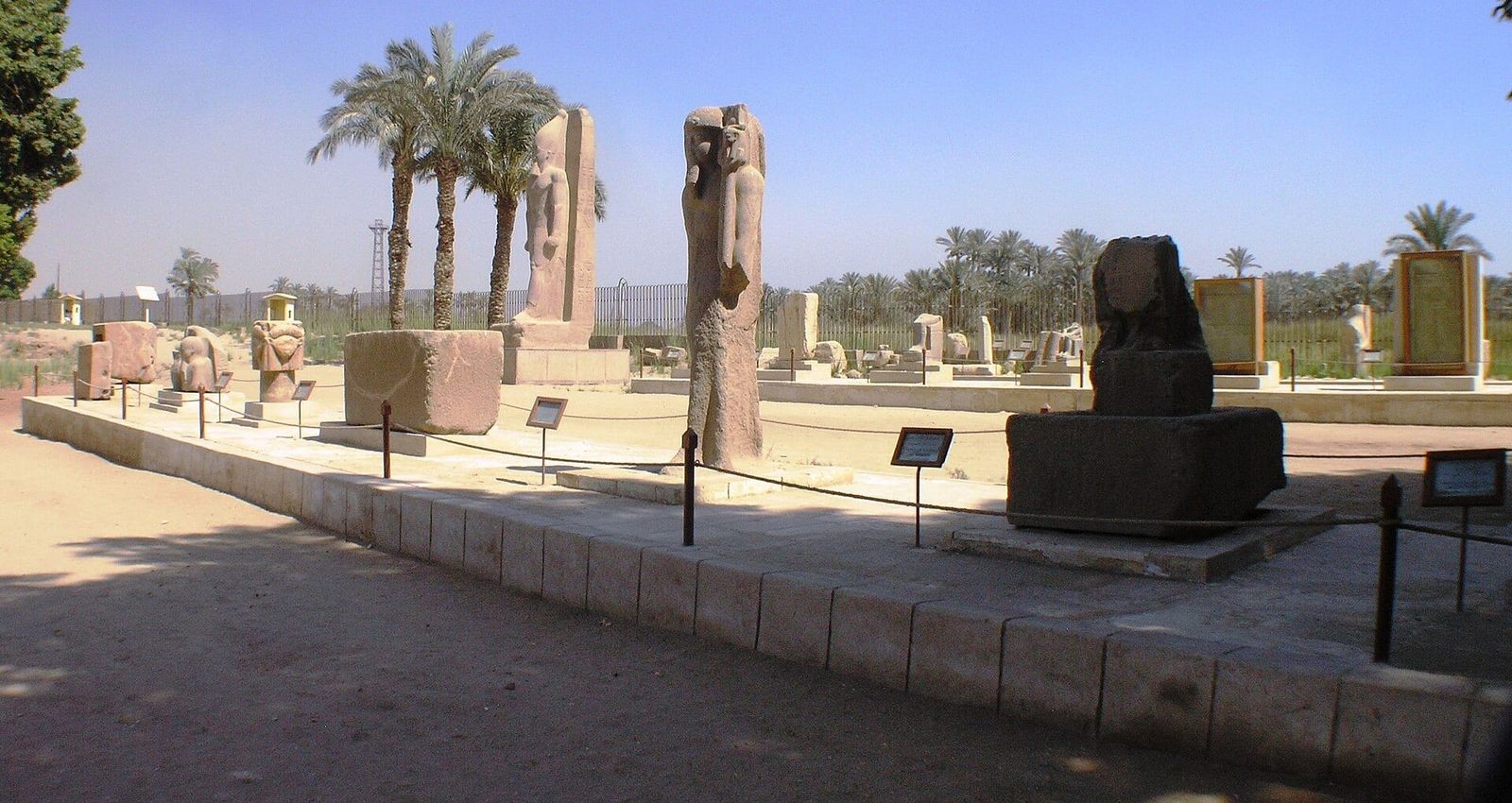
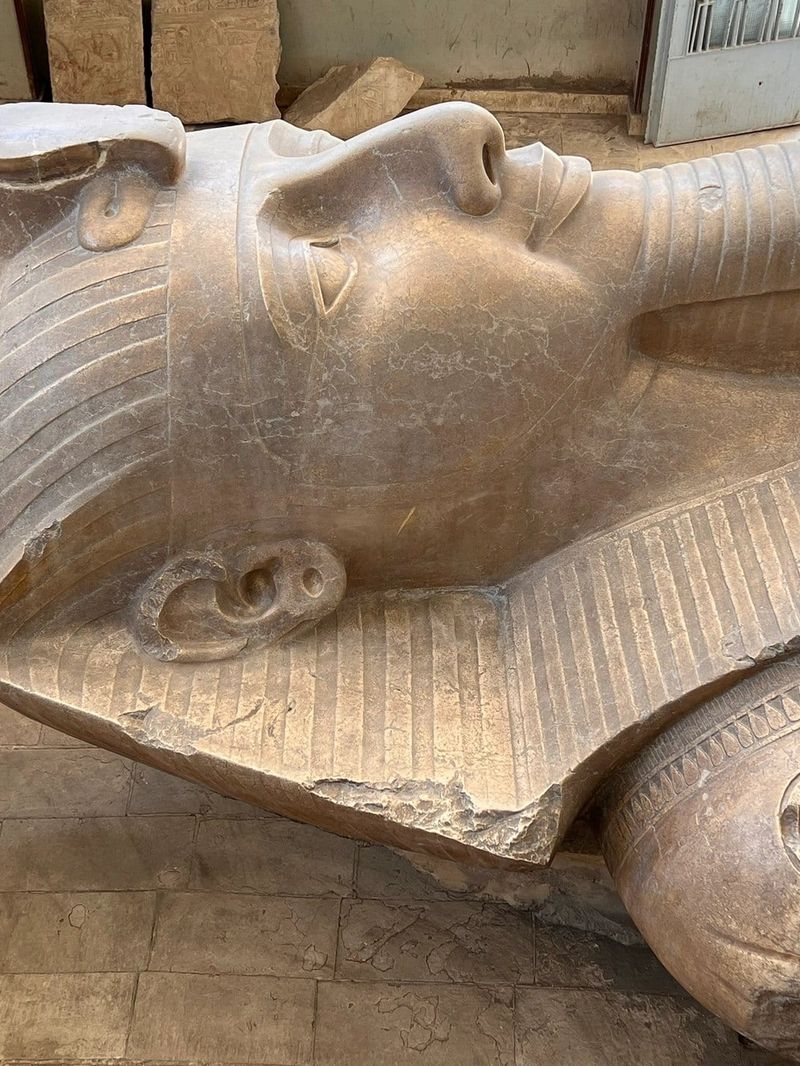
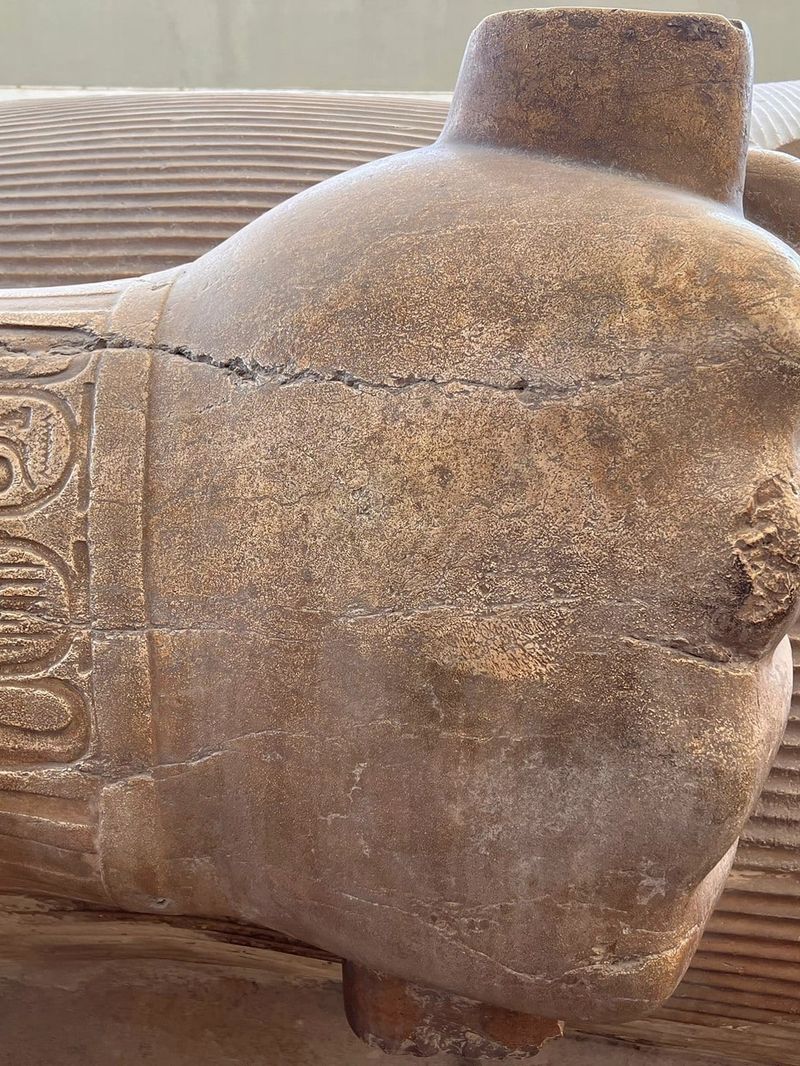
The heart of the visit is a small open-air museum set in a garden of palm trees in Mit Rahina. Its most famous exhibit is a colossal limestone statue of Ramesses II, around ten metres long, which lies on its back in a covered hall so that visitors can view it from a gallery above; its fine carving, including the royal cartouches on the shoulder and belt, is remarkably well preserved. Another colossus of Ramesses from Memphis, in granite, long stood in a Cairo square before being moved to the Grand Egyptian Museum.
The alabaster sphinx and more
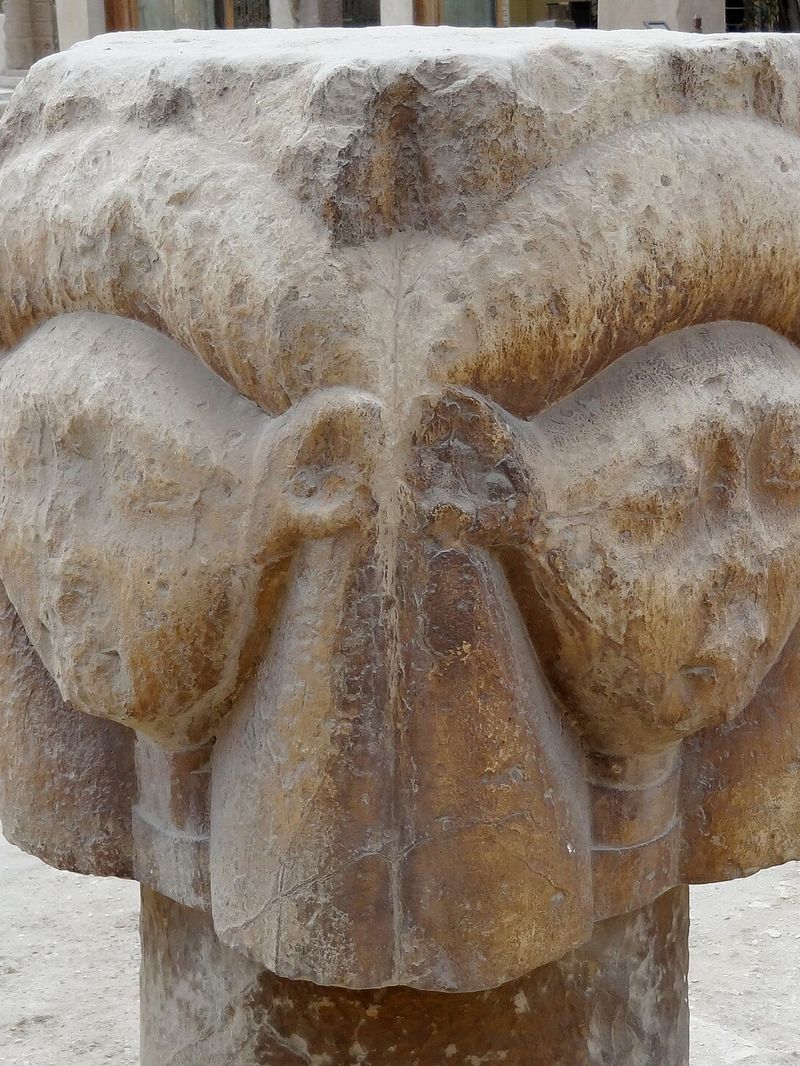
In the garden stands a large sphinx carved from calcite (Egyptian alabaster), some eight metres long, generally dated to the New Kingdom; it is one of the largest sphinxes in Egypt carved from a single block. Around it are statues, stelae, column fragments and other sculpture from the temples of Memphis, as well as the great alabaster embalming beds on which the sacred Apis bulls were prepared for burial before being taken to the Serapeum at Saqqara.
Exhibo editorial
It takes imagination at Memphis. That is part of its power. The greatest city of the pyramid age is now palm groves, canals and a village. What remains fits into a garden. But then you climb the gallery in the hall and look down at Ramesses II lying on his back, ten metres of perfectly carved limestone, the cartouche crisp on his shoulder. The vanished city suddenly has a face.
Memphis is a short stop of about an hour and it fits naturally between Saqqara and Dahshur. Stand by the alabaster sphinx for a moment and think of the temples, palaces and harbours that once stretched beneath your feet.
Gallery
How to find it
In the village of Mit Rahina, about 20 km south of Cairo and a short drive east of Saqqara. The open-air museum is on the main village road, with the colossus of Ramesses II in a covered hall inside the garden.
Similar places
All places
News by Exhibo
Editorial coverage on Exhibo
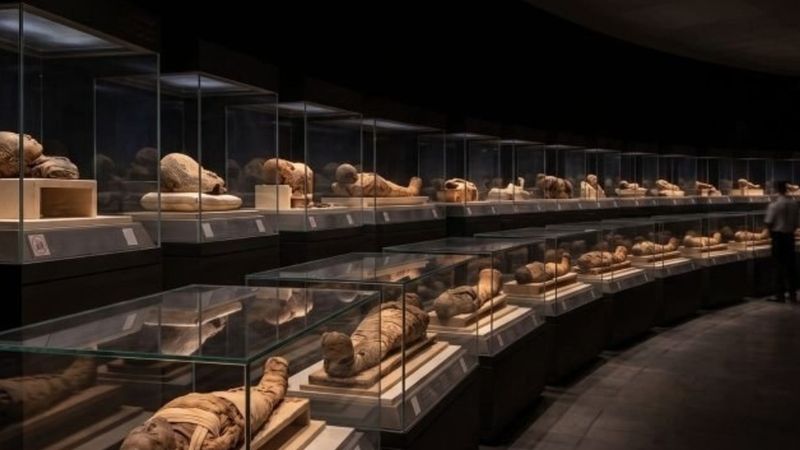
The Museum of Everything That Became a Tomb
Egypt built a museum to tell the story of an entire civilisation — seven thousand years of it, from flint tools to the present. The public knows it for one thing: the room where twenty dead kings lie in the dark.
In a black, hushed hall beneath the National Museum of Egyptian Civilization in Old Cairo lie the mummified bodies of Ramesses II, Hatshepsut, and eighteen other rulers of the New Kingdom — carried here in 2021 in a televised parade watched around the world.
Ancient Egyptian Art
Images built to work for gods, kings and the dead: canon, craft and change along the Nile across nearly three millennia.
Ancient Egyptian art was rarely made for the museum wall alone. This period survey explains why statues and reliefs functioned as cult tools, how a stable visual canon held for centuries, where Old, Middle and New Kingdom styles diverge, and which collections still make those differences visible today.
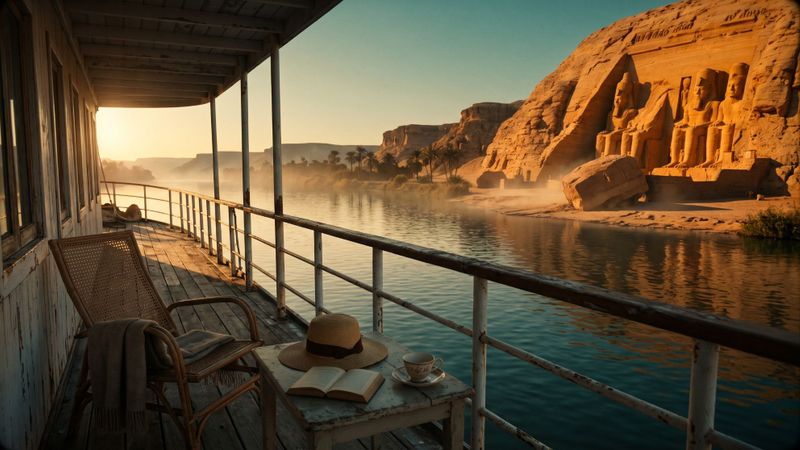
Agatha Christie's Egypt: Three Abu Simbels, a Pharaoh and a Murder on the Nile
Christie set one famous murder on the Nile and two lesser-known stories in ancient Egypt. The temples, letters and film sets behind all three.
The Abu Simbel of Death on the Nile has since moved up a hill. Christie's two other Egyptian stories lead to a pharaoh's dismantled temples at Karnak and a farmer's 4,000-year-old letters now in New York.