Carved from the bedrock
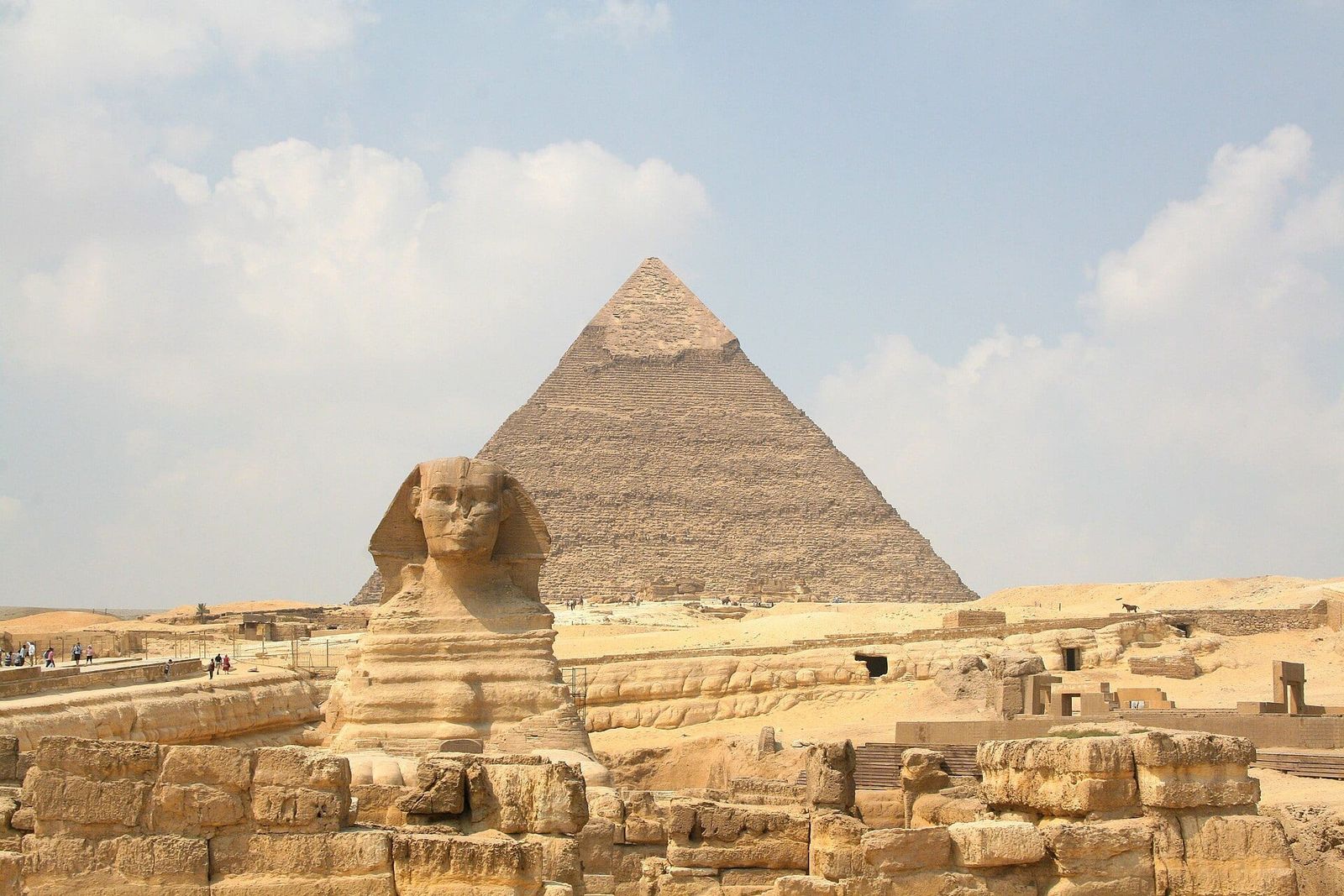
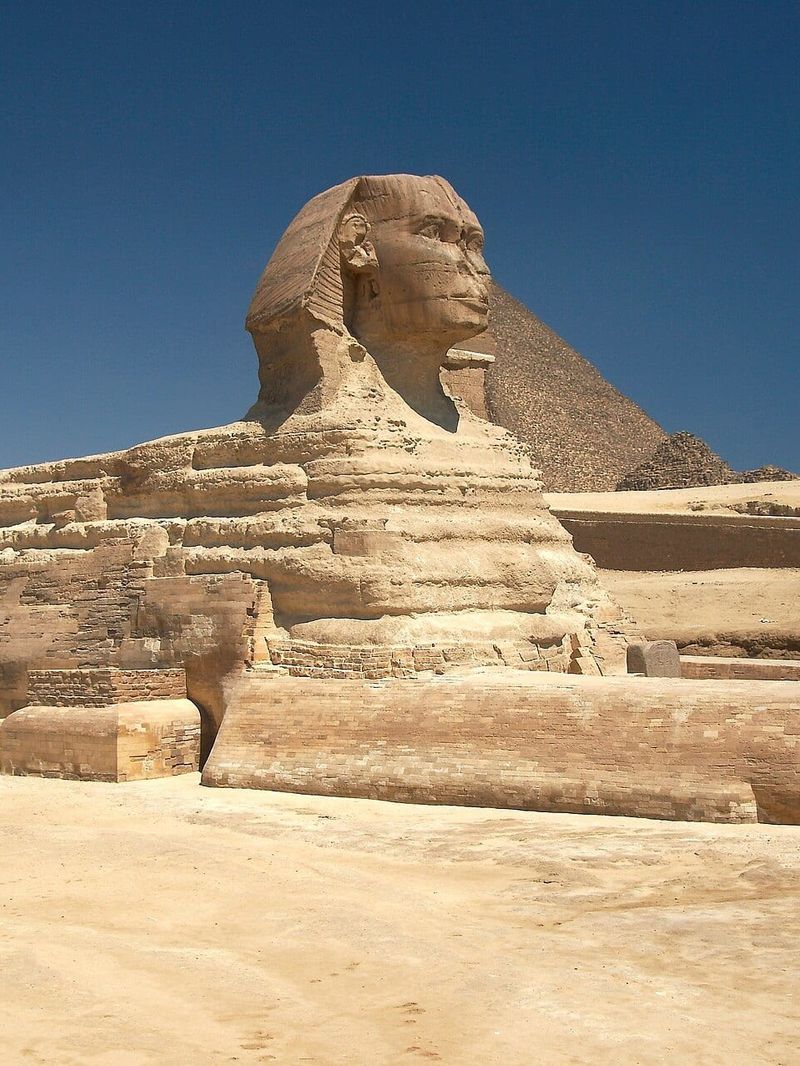
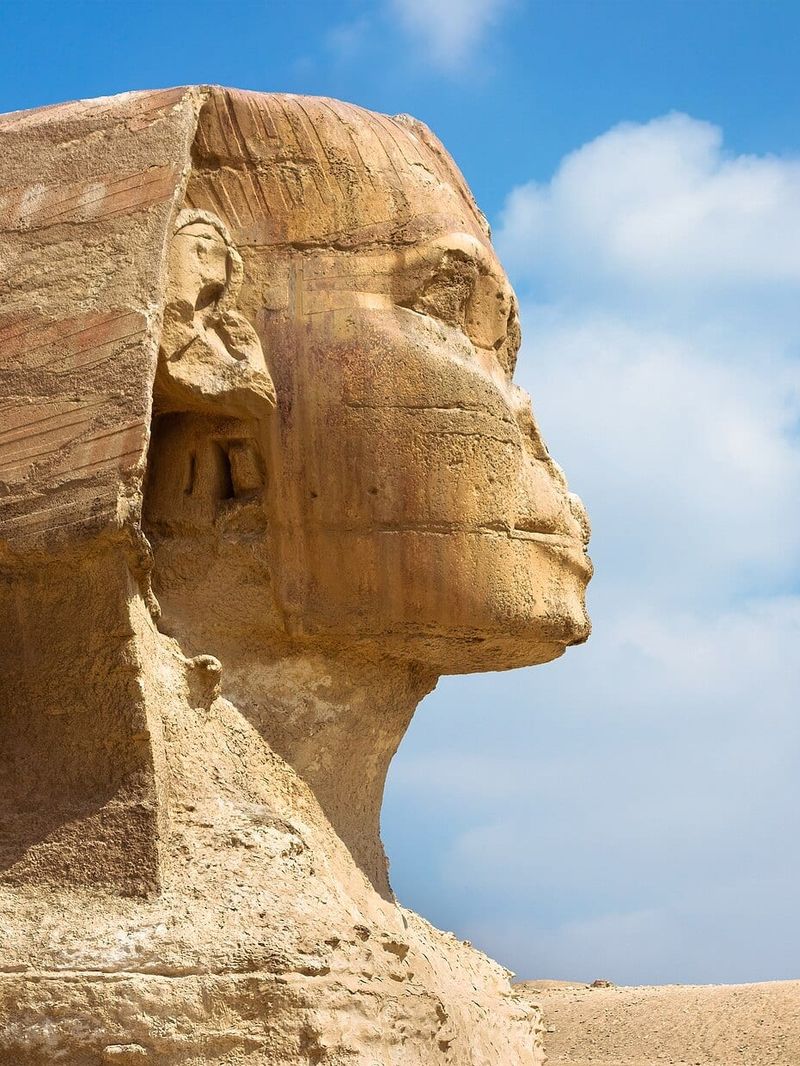
The Great Sphinx of Giza is one of the largest and oldest monumental sculptures in the world: a recumbent lion with a human head, about 73 metres long and some 20 metres high, carved directly from the limestone bedrock of the Giza plateau. It is generally attributed to the Fourth Dynasty king Khafre, around the middle of the third millennium BC and its face is thought to represent him, wearing the royal nemes headcloth. The Sphinx lies beside the causeway that led from Khafre's Valley Temple up to his pyramid and mortuary temple, as part of the same funerary complex.
Stories in the stone
The Sphinx has been buried by sand and dug out many times. Between its paws stands the Dream Stele of Thutmose IV, a granite slab erected around 1400 BC, which tells how the young prince fell asleep in the Sphinx's shadow and was promised the throne if he cleared away the sand that covered it. The figure's nose was already missing by the late Middle Ages: the historian al-Maqrizi reported that it had been deliberately damaged in the fourteenth century and the story that Napoleon's soldiers shot it off is a myth. Over the centuries the Sphinx was variously worshipped as a form of the sun god and admired by travellers from the Greeks onwards.
The Valley Temple
Immediately south of the Sphinx stands the Valley Temple of Khafre, one of the best-preserved buildings of the Old Kingdom. It was built of colossal blocks of limestone faced with polished red granite from Aswan, with a T-shaped hall of monolithic granite pillars and a floor of white alabaster. Here the king's body may have been received before being carried up the causeway to the pyramid; a famous diorite statue of Khafre protected by the falcon god Horus was discovered in a pit in the temple. A viewing terrace beside the temple offers the classic view of the Sphinx with the pyramids behind.
Exhibo editorial
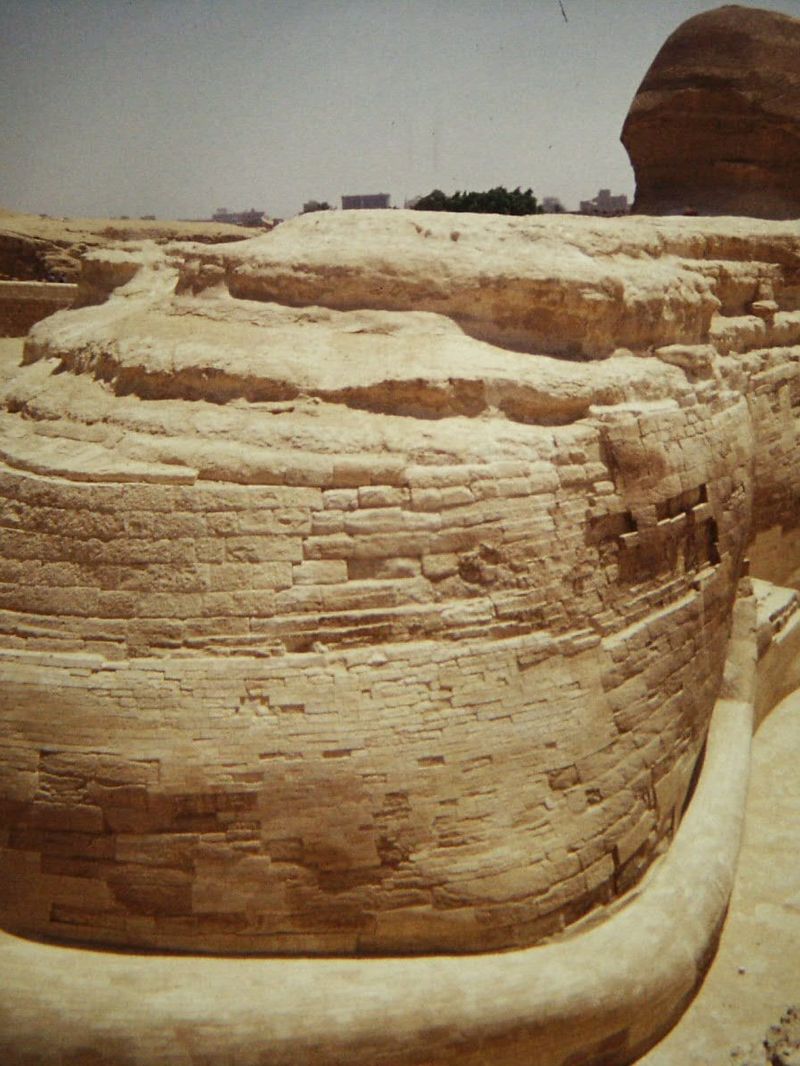
The Sphinx is smaller than you expect. And stranger. Seen from the terrace by the Valley Temple, it lies low in its hollow in the rock, weathered into soft layers like a sandstone cliff, the face eroded and noseless and somehow more human for it. Behind it the Pyramid of Khafre rises at exactly the right angle, as if the whole scene had been composed for the camera four and a half thousand years early.
Do not skip the temple you walk through to get there. The granite pillars of the Valley Temple, each a single block, polished and perfectly squared, are as impressive in their way as the pyramids. In the shade of that hall the Old Kingdom suddenly feels very close.
Gallery
How to find it
Enter the Giza plateau through the Sphinx Gate on the east side, near Nazlet el-Samman, or walk down from the pyramids along Khafre's causeway. The Valley Temple leads out onto a viewing terrace with the classic view of the Sphinx and the Pyramid of Khafre behind it.
Similar places
All places
News by Exhibo
Editorial coverage on Exhibo
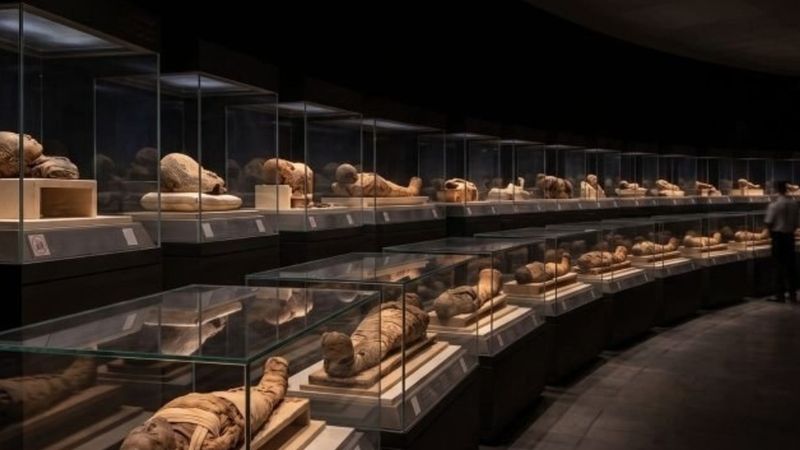
The Museum of Everything That Became a Tomb
Egypt built a museum to tell the story of an entire civilisation — seven thousand years of it, from flint tools to the present. The public knows it for one thing: the room where twenty dead kings lie in the dark.
In a black, hushed hall beneath the National Museum of Egyptian Civilization in Old Cairo lie the mummified bodies of Ramesses II, Hatshepsut, and eighteen other rulers of the New Kingdom — carried here in 2021 in a televised parade watched around the world.
Ancient Egyptian Art
Images built to work for gods, kings and the dead: canon, craft and change along the Nile across nearly three millennia.
Ancient Egyptian art was rarely made for the museum wall alone. This period survey explains why statues and reliefs functioned as cult tools, how a stable visual canon held for centuries, where Old, Middle and New Kingdom styles diverge, and which collections still make those differences visible today.
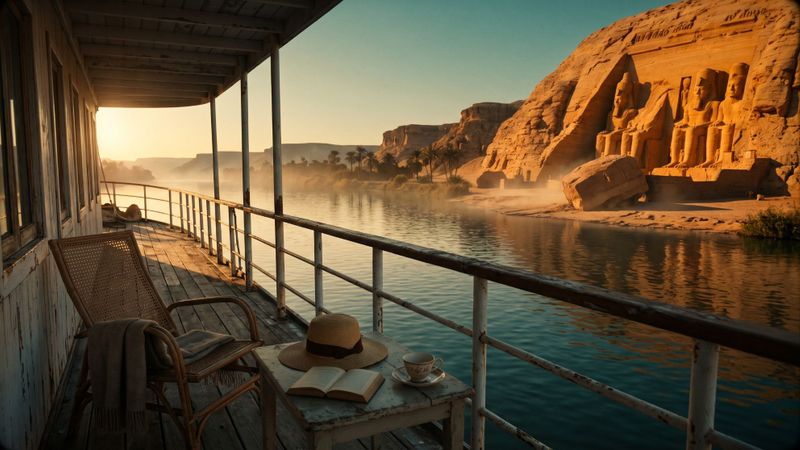
Agatha Christie's Egypt: Three Abu Simbels, a Pharaoh and a Murder on the Nile
Christie set one famous murder on the Nile and two lesser-known stories in ancient Egypt. The temples, letters and film sets behind all three.
The Abu Simbel of Death on the Nile has since moved up a hill. Christie's two other Egyptian stories lead to a pharaoh's dismantled temples at Karnak and a farmer's 4,000-year-old letters now in New York.