Shrine of Umar al-Suhrawardi
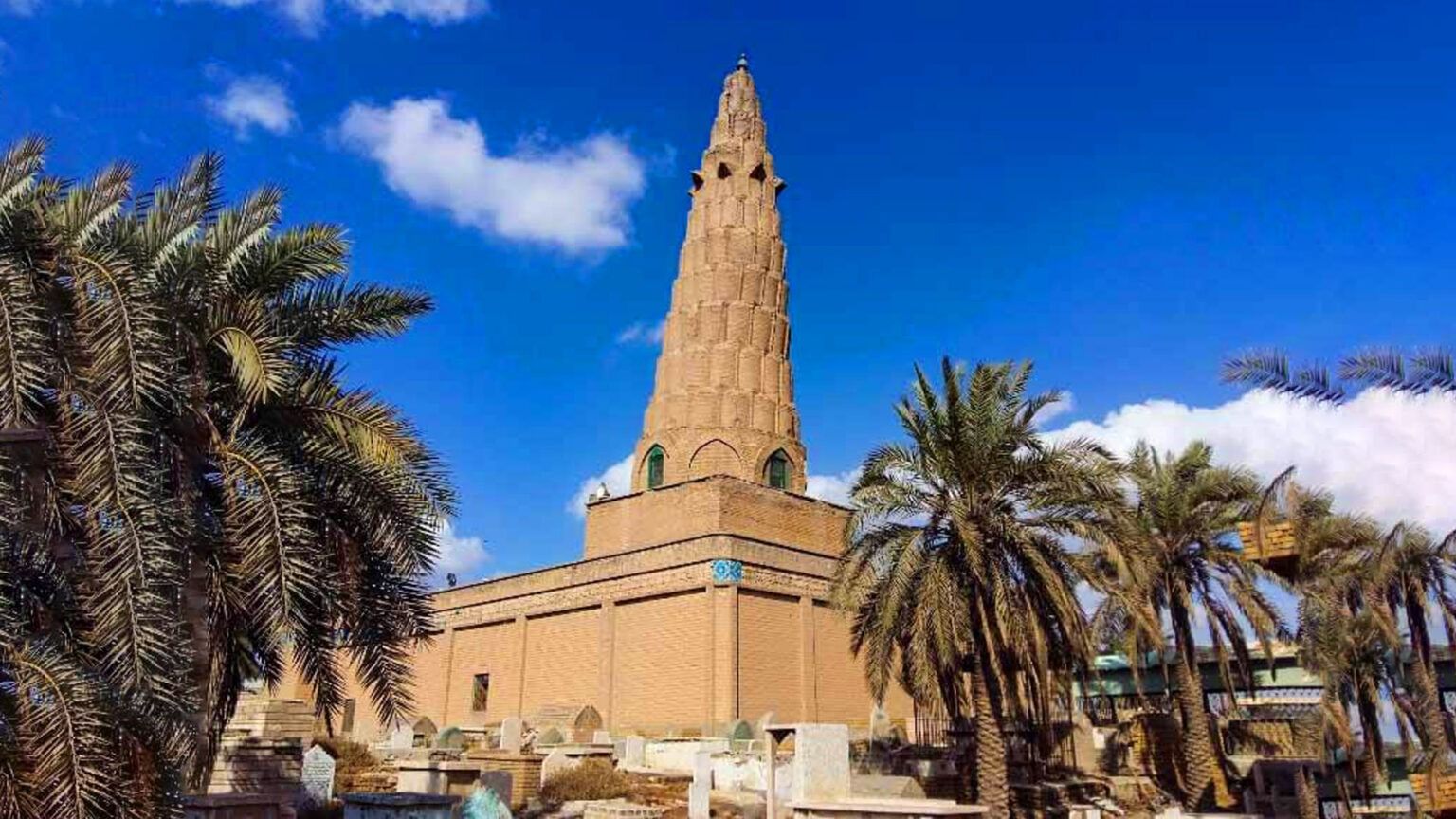
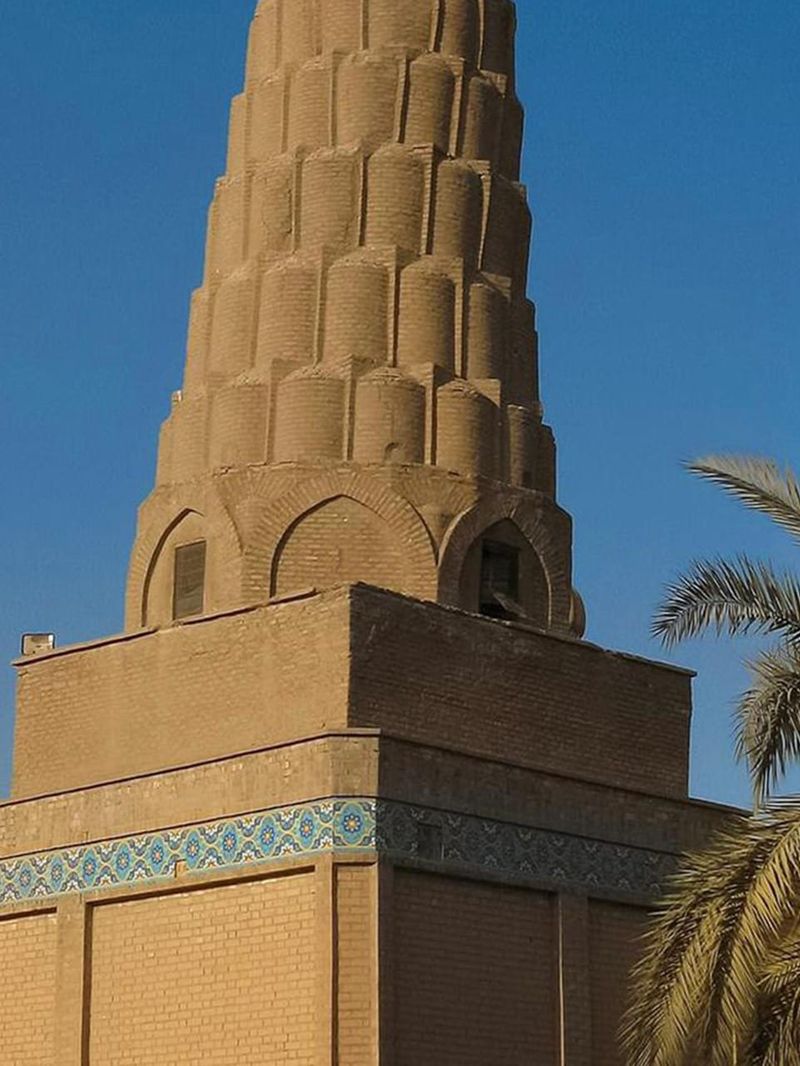
A tall cone of brick honeycomb over the grave of a great Sufi master, rising from an old Baghdad cemetery.
The sheikh of the Sufis
Shihab al-Din Abu Hafs Umar al-Suhrawardi was one of the most influential Sufi teachers of the medieval Islamic world. A Shafi'i scholar, he lived and taught in Baghdad under the Abbasid caliph al-Nasir li-Din Allah, who made him his envoy and gave him charge of the city's Sufi lodges. His book on the Sufi path, the Awarif al-Maarif, was read from Anatolia to India, where the Suhrawardi order he shaped spread widely. He died in Baghdad in 1234 and was buried in the great cemetery on the east bank of the Tigris, later known as the al-Wardiyya cemetery. The district around it still carries his name: Sheikh Omar.
The muqarnas cone
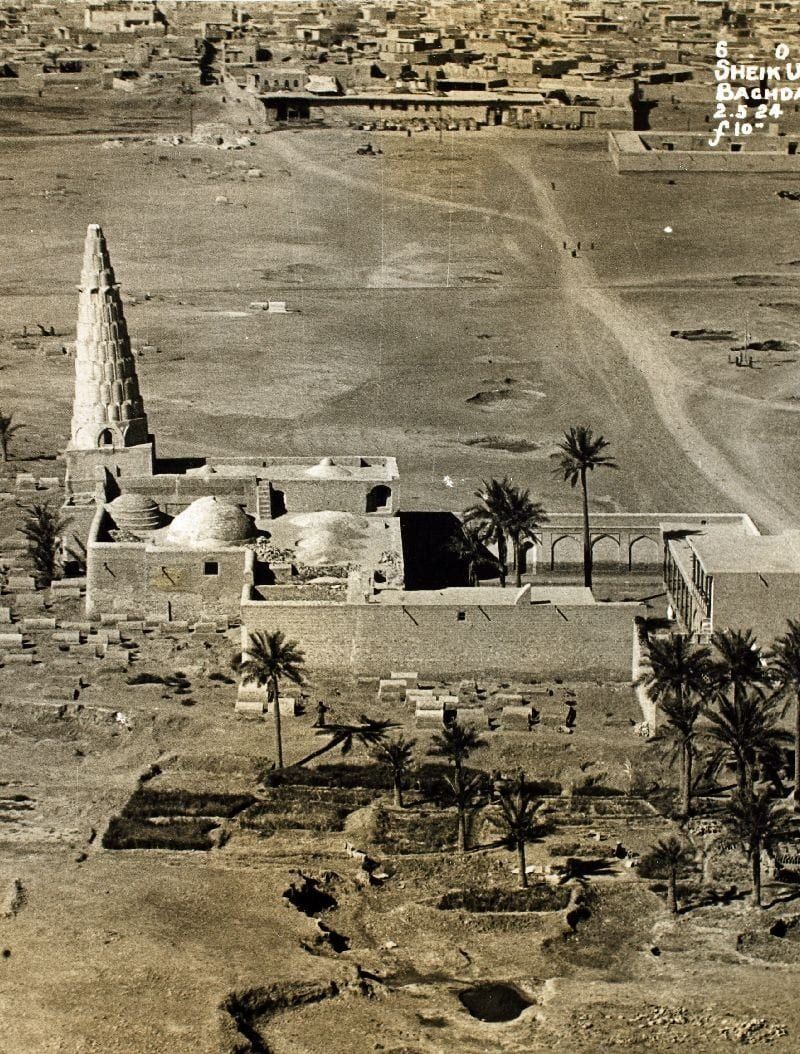
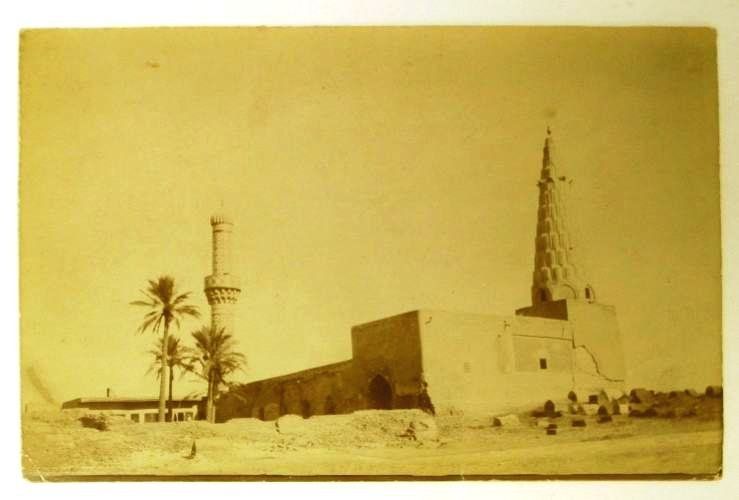
The tomb is probably the work of the caliph al-Nasir in the early 13th century, though the date is debated. Its square chamber, about 4 metres across, rises about 7 metres to an octagonal drum. Above it stands the shrine's famous dome: a slender cone about 11 metres tall, built of brick in tiers of muqarnas cells. Most domes hide their structure under a smooth shell. Here the stepped cells show on the outside too, so the whole cone looks like a pine cone or a honeycomb. This type of dome belongs to lower Iraq and Khuzistan. Its closest relative in Baghdad is the cone over the tomb of Zumurrud Khatun on the west bank of the river.
The earliest inscription on the tomb records a restoration in 735 AH, which is 1334 to 1335. During a restoration in the 1970s painted plant ornament was found inside the cells of the cone.
The mosque around the tomb
A mosque grew up beside the tomb. Most of what stands today is Ottoman and later. The courtyard measures about 33 by 21 metres, with a prayer hall of about 20 by 15 metres. An inscription records a renovation under the Ottoman sultan Abd al-Hamid II in 1903. The entrance portal carries a tiled inscription of 1934 naming King Ghazi of Iraq. The tall minaret beside the cone was added in 1948.
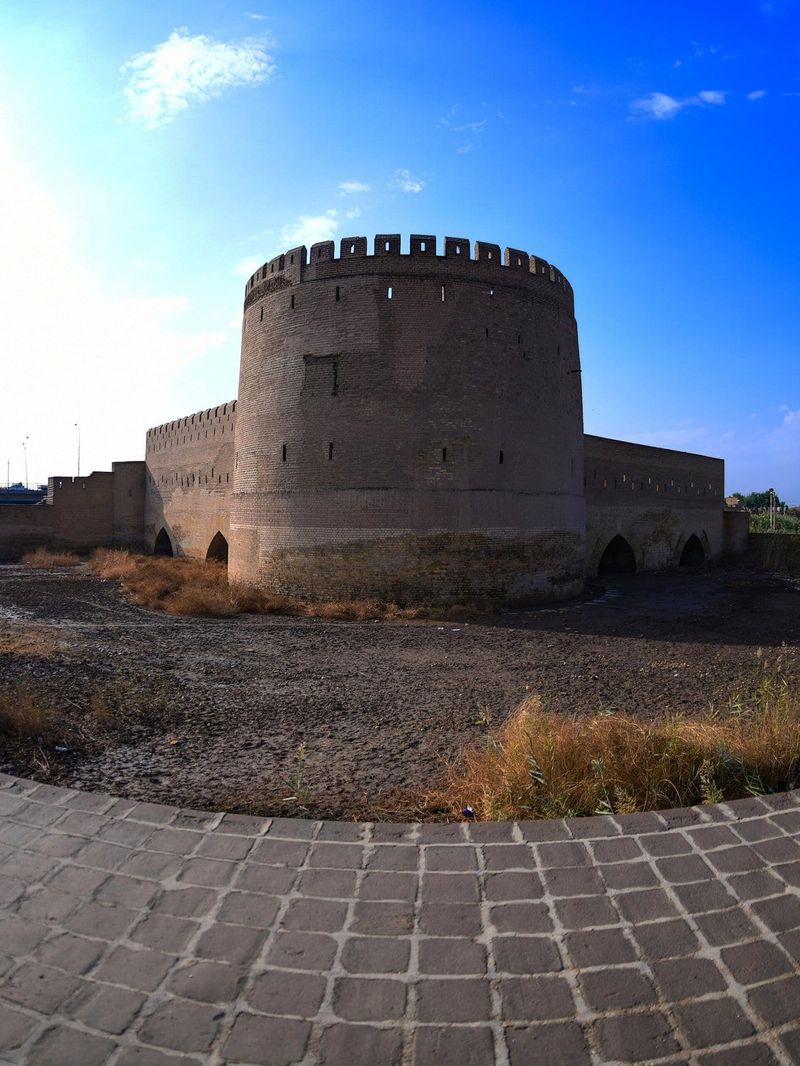
The shrine stands a few minutes' walk from Bab al-Wastani, the last surviving gate of the Abbasid walls. The old views of the site show the cone and the gate rising together out of an open plain of graves. For more of Abbasid Baghdad, see the Al-Mustansiriya Madrasa on the river.
Exhibo editorial
Baghdad lost most of its Abbasid buildings to floods, sieges and the Mongols. This cone survived. It looks like nothing else in the city. It is a dome that refuses to be smooth. You read its structure from the outside, tier by tier, the way you read a carved Quran page line by line.
Come for the cone. Then walk the few minutes to Bab al-Wastani and look back. The gate kept enemies out of Baghdad. The shrine held its scholars in. Between them, one short street holds eight hundred years of the city.
Gallery
How to find it
The shrine stands in the Sheikh Omar district of Rusafa, on the east bank of the Tigris, a few minutes' walk from Bab al-Wastani on Sheikh Omar Street. The mosque is a working place of worship. Visitors should dress modestly. Women should cover their hair. It is best to avoid prayer times.
Similar places
All places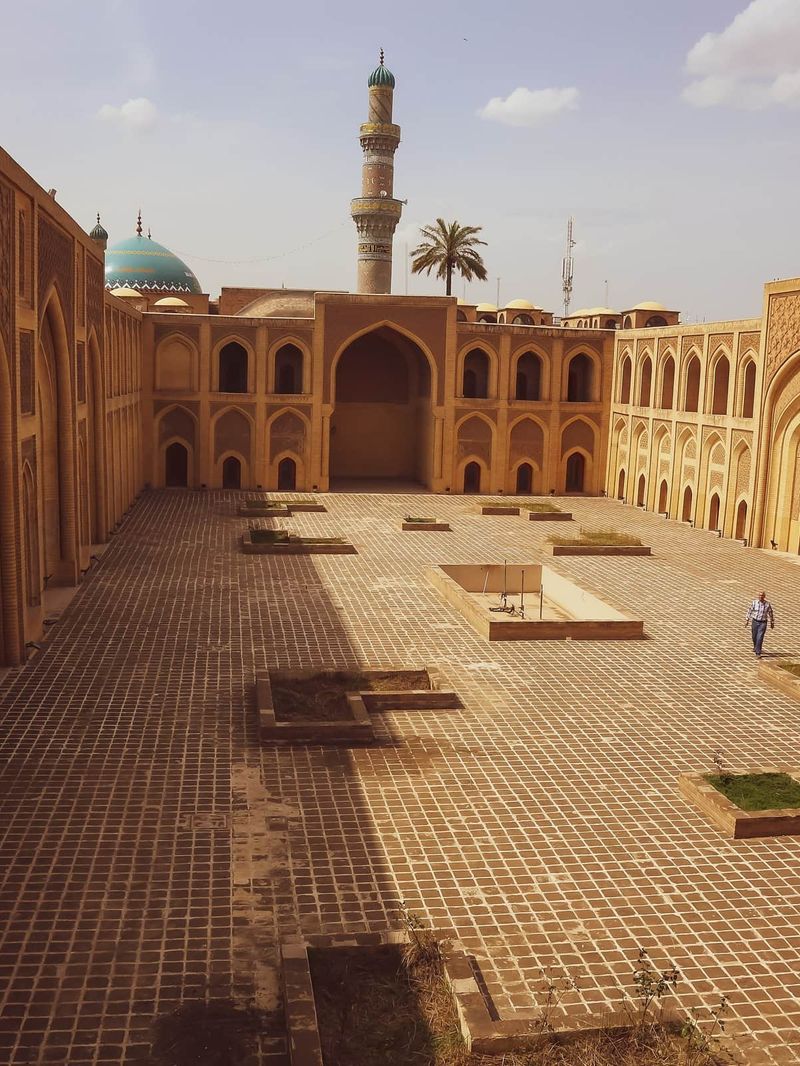
News by Exhibo
Editorial coverage on Exhibo
The City With No Ruins: What Is Left of Abbasid Baghdad
A caliph drew his capital in fire, the Mongols erased it, and a video game rebuilt it out of Isfahan and Samarkand. What actually survives of Abbasid Baghdad, where it is, and who else has tried to put it back.
Climb a viewpoint in Assassin's Creed Mirage and you see the Round City whole — double walls, four gates, the green dome at the centre. Nobody has ever seen that view. No excavated remains have been securely identified as any of it. This is what is actually left of ninth-century Baghdad, where you would have to go to stand in it, and why Ubisoft was the second team to rebuild a city that no longer exists.
The Civilisation That Bought Itself Back: A Field Guide to Collecting Arab Art
A field guide to collecting Arab and Middle Eastern art — who buys, what it costs, why prices lag cultural significance, and where collectors are looking now.
How the Arab world went from selling its art history to the West to building the fastest-growing market for Middle Eastern art on earth — who buys, why, what it costs, and where the smart money is looking now
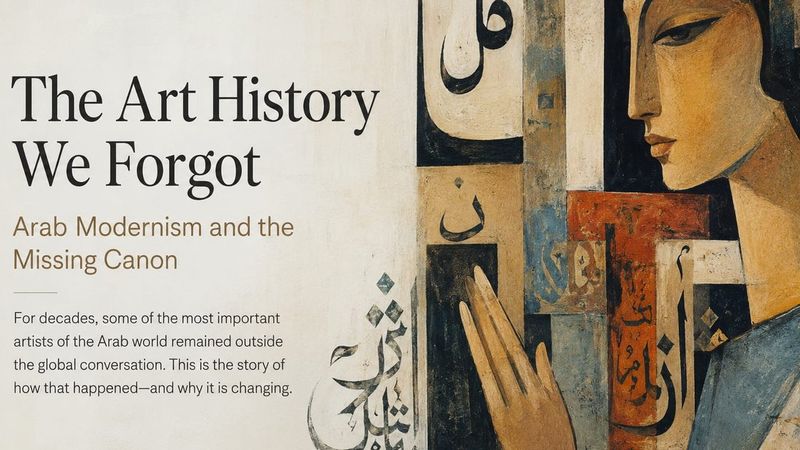
Arab Modernism 101: The Movement That Western Art History Forgot
An entire century of extraordinary painting, sculpture and radical thinking got written out of the global canon. Someone made that decision. And now the market — and the collectors who pay attention — are making a different one.
Great art does not become invisible by accident. Arab Modernism reveals how museums, markets and cultural institutions shape what the world sees — and what it overlooks. A story about artists, recognition and the blind spots that define art history.