
Qasr Tuba
The most remote Umayyad palace, a half-built brick complex in a desert valley reached only by 4x4.
At the end of the road
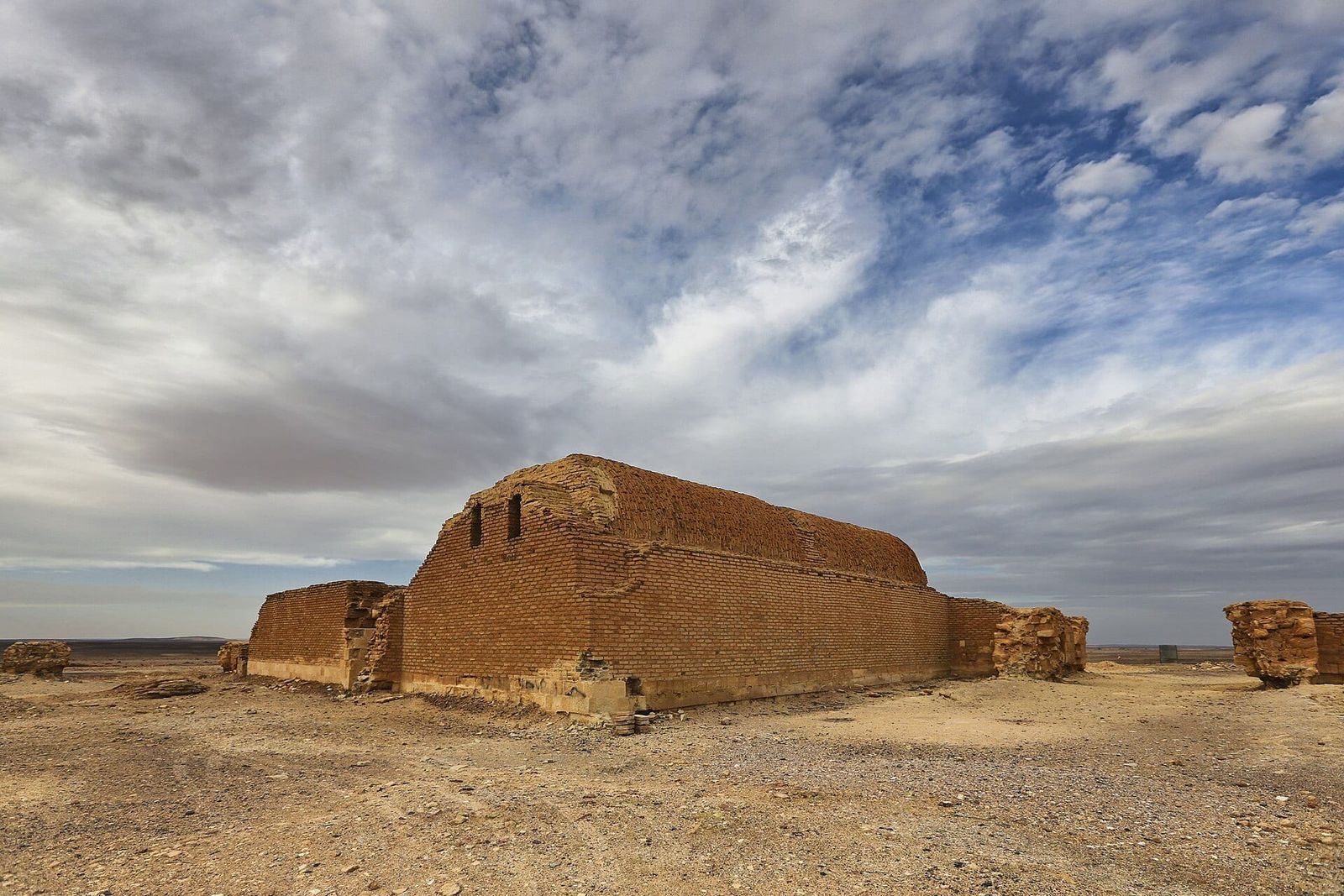
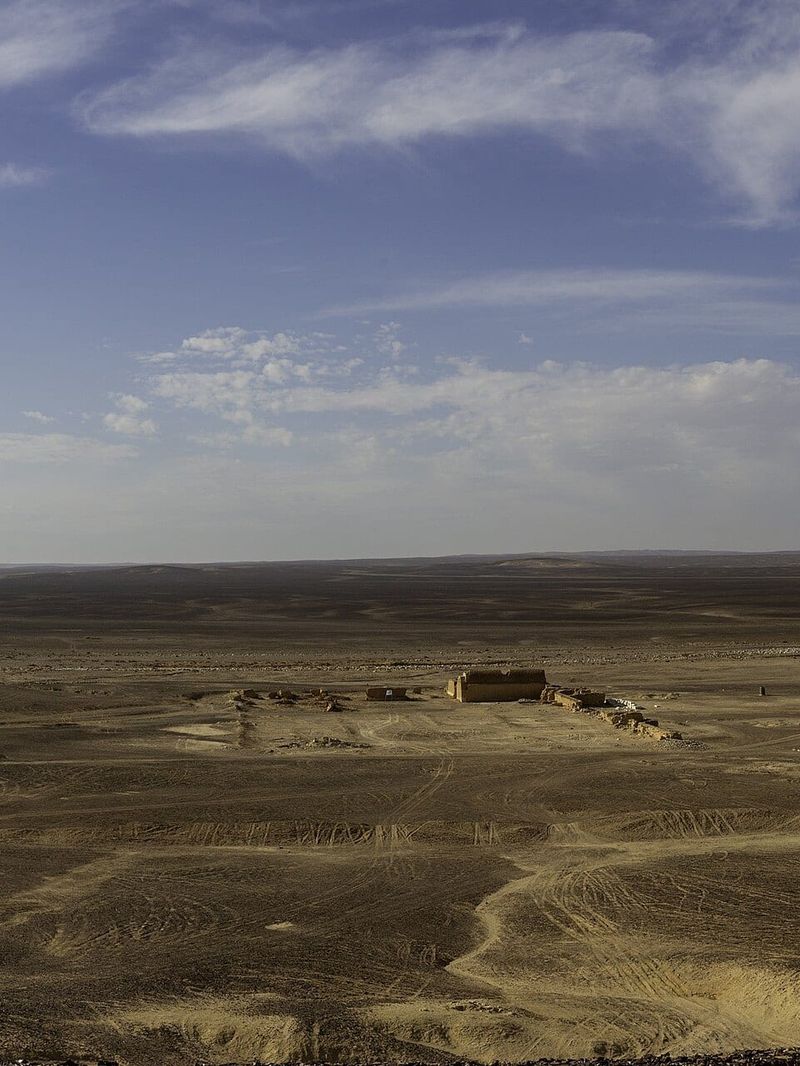
Qasr Tuba is the southernmost and most isolated of the Umayyad desert palaces of Jordan. It stands in Wadi al-Ghadaf, deep in the steppe east of the Desert Highway. Like Qasr Mushatta it is attributed to the caliph al-Walid II and dated to the 740s. Like Mushatta it was left unfinished.
The building
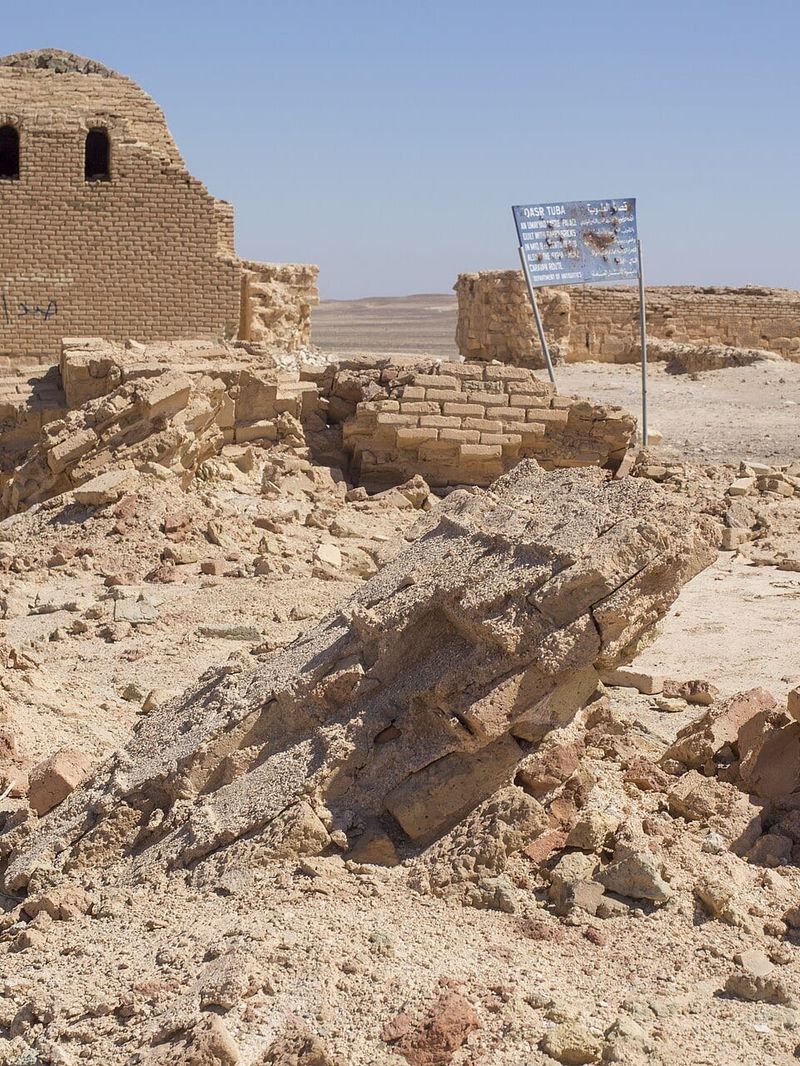
The plan was huge: two square enclosures side by side, each meant to have towers and courtyards. Only part of it was built. The walls are of fired brick on footings of cut stone, a technique from Mesopotamia that sets Tuba apart from the stone buildings of the region. Surviving vaults and arches give a sense of the intended scale.
Decoration
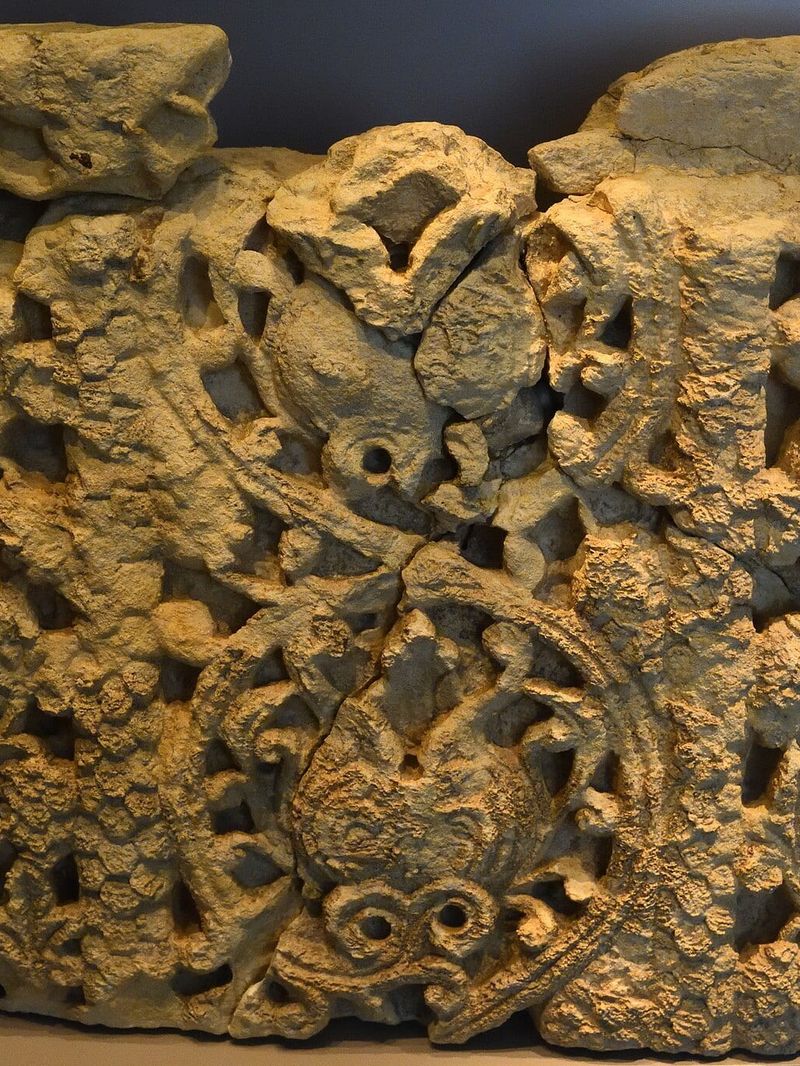
The doorways were framed with finely carved limestone jambs and lintels decorated with vine scrolls and geometric patterns. Carved lintels from Tuba are now kept in museums in Amman, far from the valley.
Visiting
The site has no staff and is reached only by rough desert tracks. A four-wheel-drive vehicle and a local driver or guide are needed.
Exhibo editorial
Tuba is for people who have seen the other desert castles and want to know how far the Umayyads were ready to go. No visitor centre, no ticket booth, usually nobody else. Brick arches in a dry valley, a long way from anywhere.
A caliph planned a double palace at the edge of the map. The bricklayers got partway through before the dynasty's own crisis stopped the work. What survives is half a sentence, all the more eloquent for it.
Gallery
How to find it
Reached from the Desert Highway south of Amman by roughly 60 km of desert tracks east into Wadi al-Ghadaf. Do not attempt it in a standard car or without a driver who knows the route. Arrange a 4x4 in Amman or Qatrana.
Similar places
All places
News by Exhibo
Editorial coverage on Exhibo
Filmed, but Not Recorded: The Arab World’s Missing Film Locations
Wikidata knows Gladiator was filmed in Morocco. It doesn’t know where.
Ouarzazate is the second most filmed place in the Middle East and North Africa, yet 25 of its 27 productions are recorded only in Wikipedia prose. We compared filming records worldwide and found that in the Arab world, Wikidata usually knows the country but not the place.
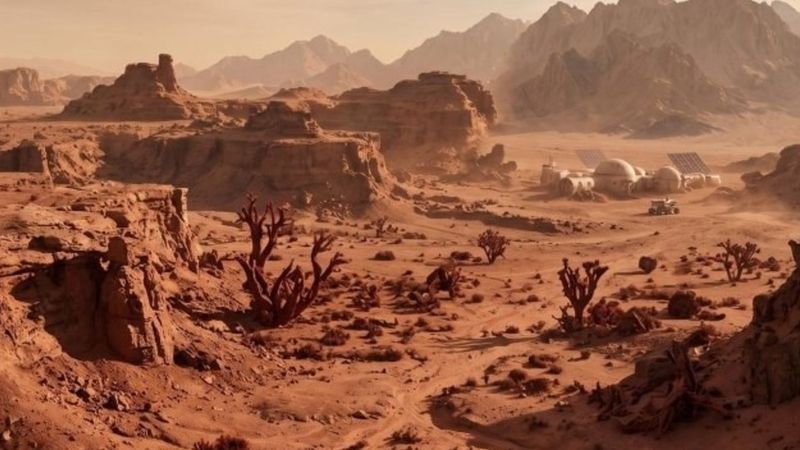
Why Every Sci-Fi Desert Looks Arab
From Arrakis to Tatooine, when a film wants a desert to feel ancient, prophetic and alien, it reaches for an Arab and Berber vocabulary — and reveals more about the West that built it than the region it borrows from.
The wrapped faces, the trilling women, the barely-displaced Arabic: cinema's alien deserts keep sounding Arab. But the vocabulary was assembled in the West — from Orientalist painting to Lawrence to Dune — and it says more about who is looking than about anyone being looked at.
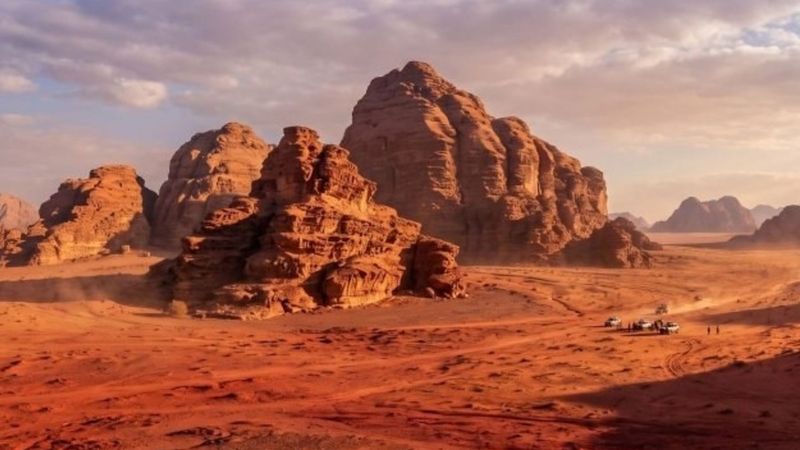
Why Wadi Rum Keeps Playing Mars: A Desert That Is Right About the Wrong Planet
A valley in southern Jordan has become cinema's favourite Mars — not because it is like the planet, but because it looks like the one we carry in our heads.
Put Wadi Rum beside a rover photograph and you can't tell which is Mars. But the desert shares almost nothing with the real planet except its colour — and lately, the illusion has grown powerful enough that real space missions have come to Jordan to rehearse.