King Hussein Bin Talal Mosque
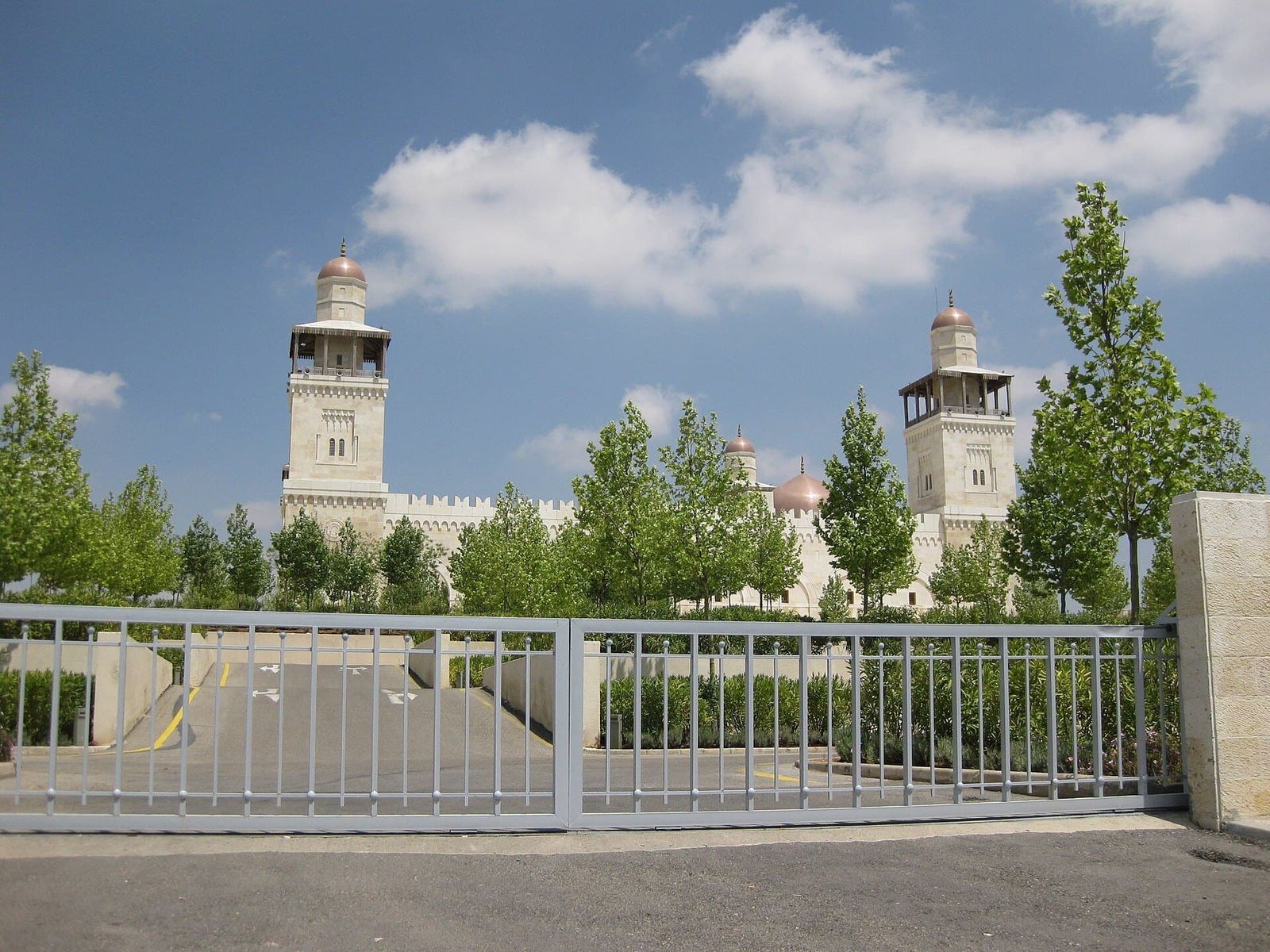
Jordan's largest mosque, in pale stone with four minarets above Al Hussein Public Parks.
The state mosque
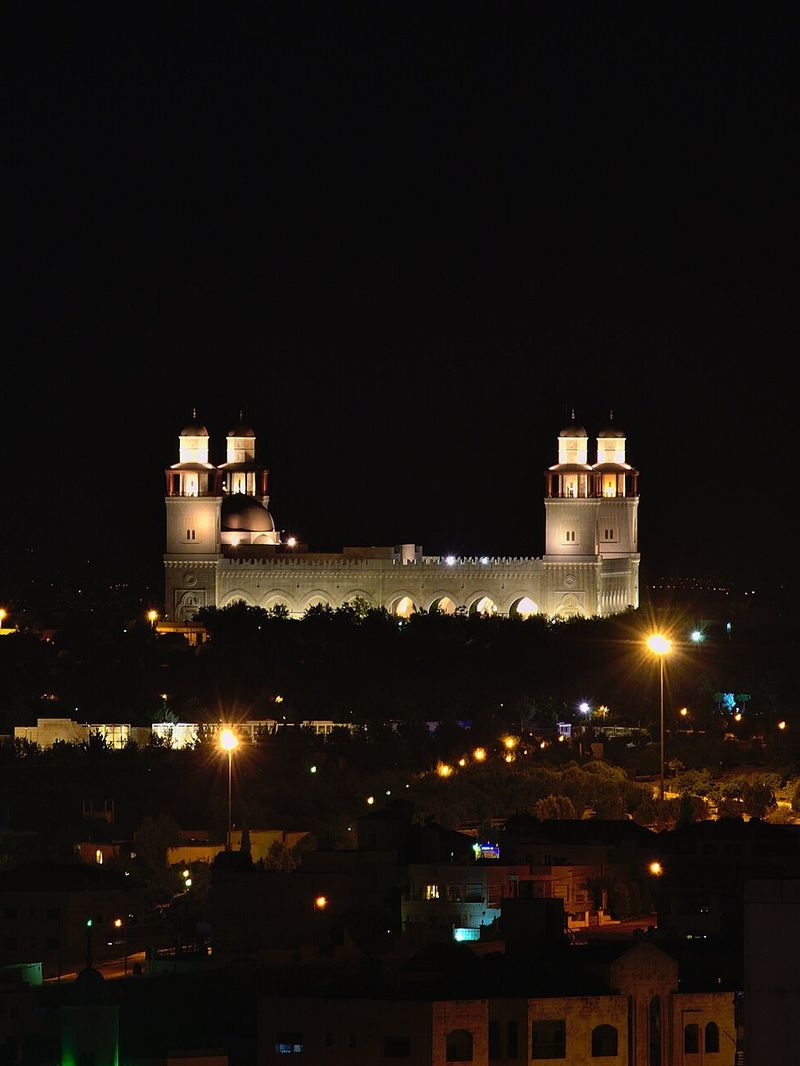
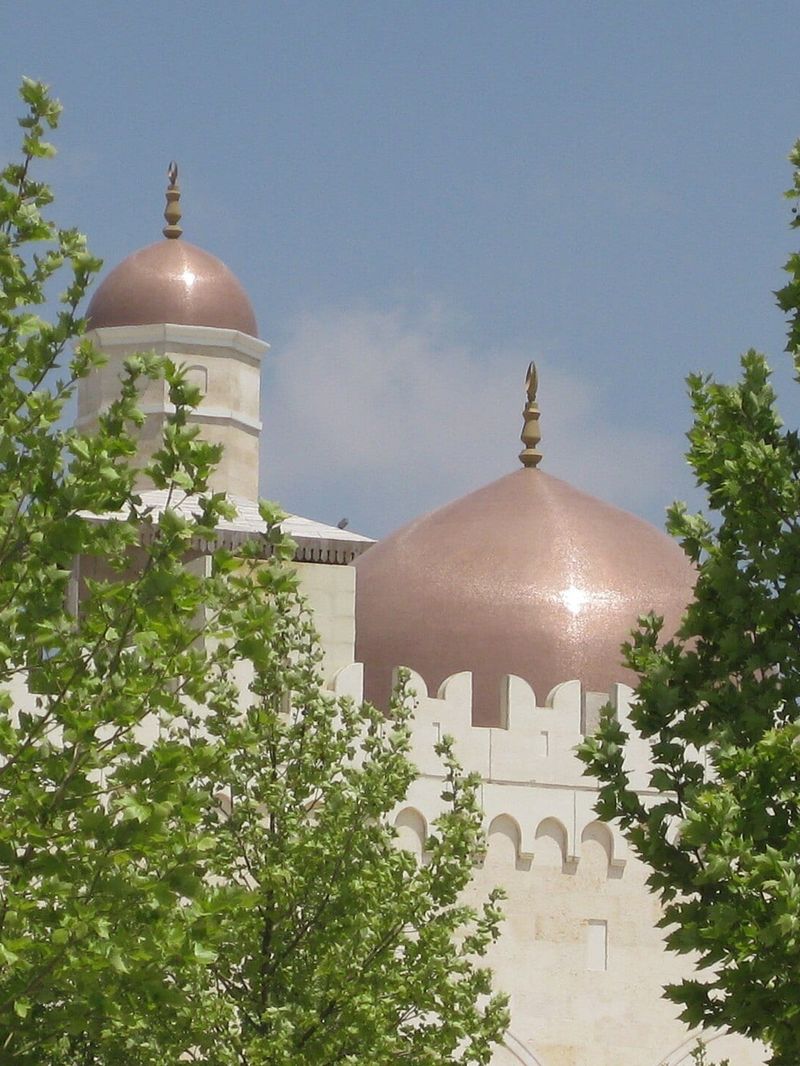
The King Hussein Bin Talal Mosque is the largest mosque in Jordan and serves as its state mosque. It stands on a rise in the Dabouq area of West Amman at the edge of Al Hussein Public Parks and can be seen from much of the western city.
History
King Abdullah II built it in memory of his father, King Hussein, who reigned from 1952 to 1999. It was completed in the mid-2000s. The complex also holds a museum of relics associated with the Prophet Muhammad.
Architecture
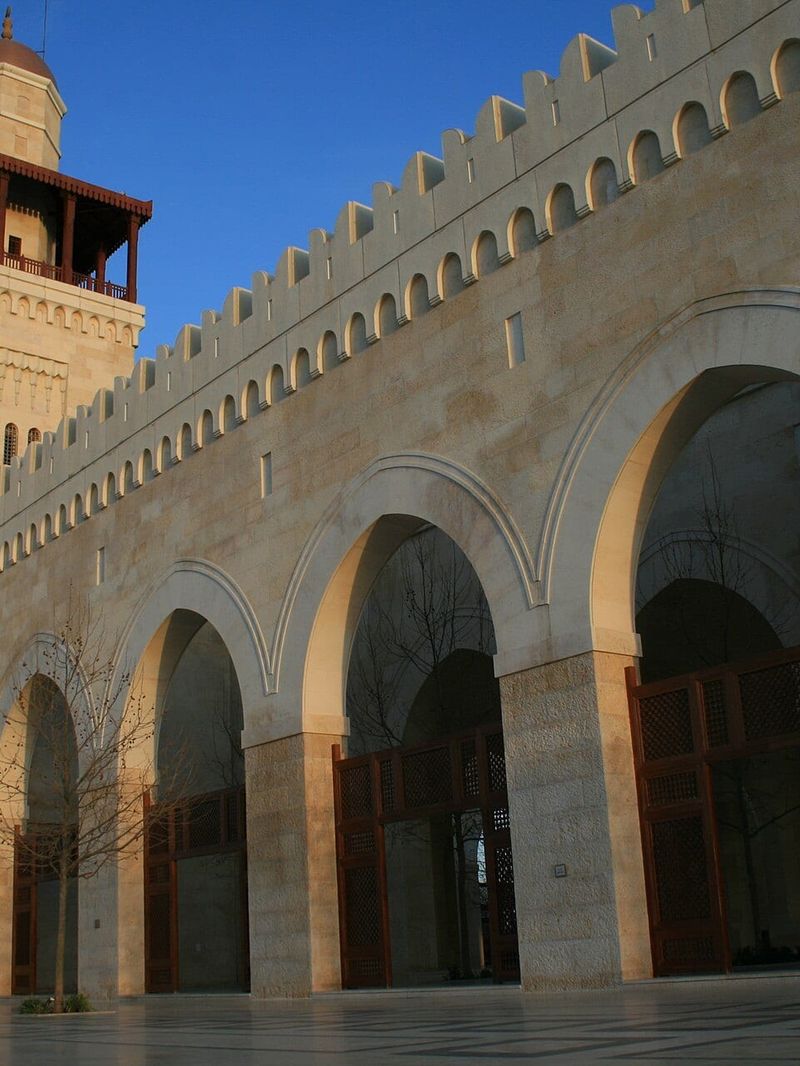
The mosque was designed by the British architect Khaled Azzam. It is square in plan, built of pale stone and marble with a central dome and four minarets. It holds about 5,500 worshippers inside and in its open prayer areas. Around it the complex includes offices, lecture halls and a library, with separate prayer and ablution areas for women.
Setting
Al Hussein Public Parks, below the mosque, are among the largest green spaces in Amman. They hold the Royal Automobile Museum, the Children's Museum Jordan and long lawns where families gather at weekends. For a very different mosque, see the Abu Darwish Mosque in East Amman.
Exhibo editorial
Most of the landmarks of Amman are squeezed into old valleys. This one was given a hill and room around it. The difference shows. White stone, four minarets and an open forecourt make one calm statement about what a modern Arab state wants its main mosque to look like.
Pair it with an evening in the park below, when families spread out on the grass with flasks of tea. The mosque lights up behind them. The most formal building in the city becomes the backdrop to one of its most relaxed habits.
Gallery
How to find it
In West Amman on King Abdullah II Street, at the top of Al Hussein Public Parks. Drive into the park area and follow the signs to the mosque car park. The four minarets are visible from the main road.
Similar places
All places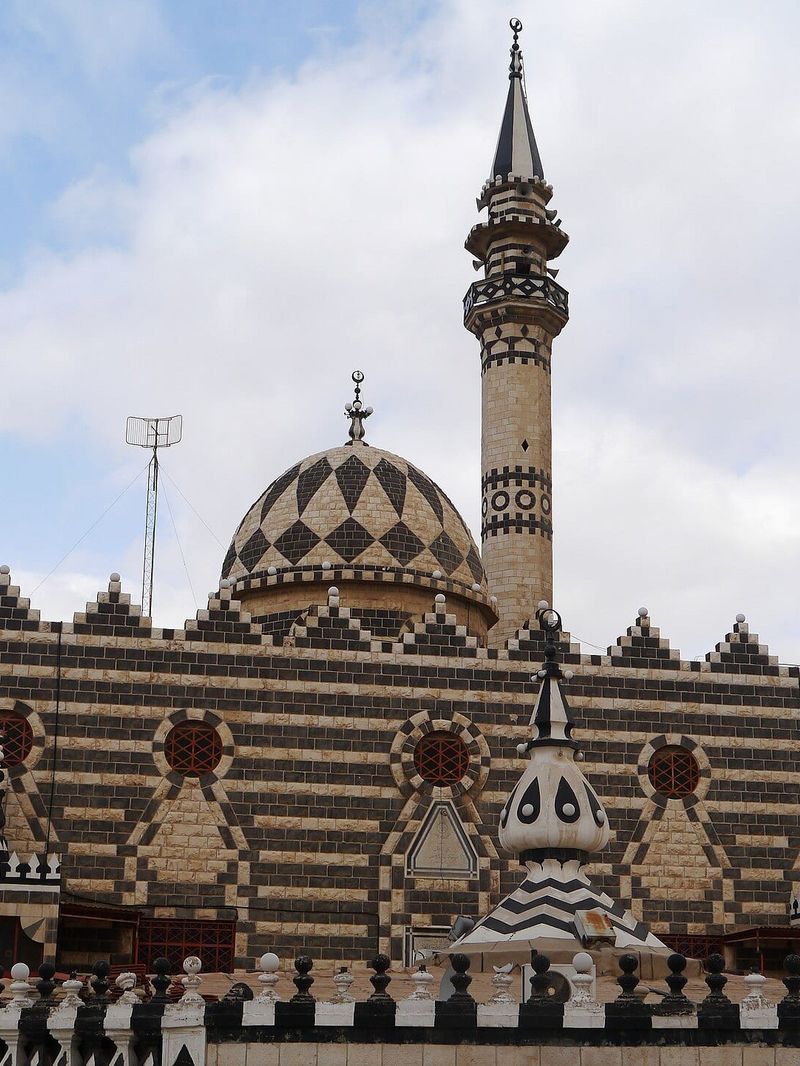
News by Exhibo
Editorial coverage on Exhibo
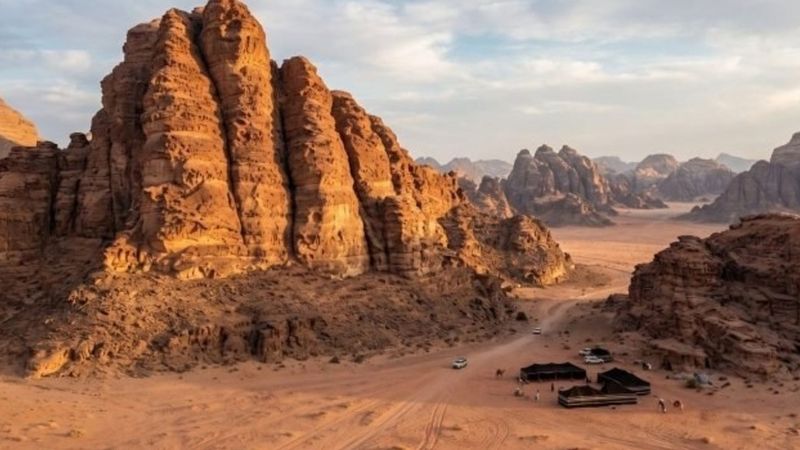
The Desert That Was Written Over
Twenty-five thousand ancient inscriptions, one British officer, and a Hollywood desert filmed largely in Spain — how Wadi Rum keeps being renamed by whoever holds the power to make it visible.
The rock at the entrance is called the Seven Pillars of Wisdom, after a book that never named it. Beneath the film legend lies a landscape covered in older writing almost nobody stops to read.
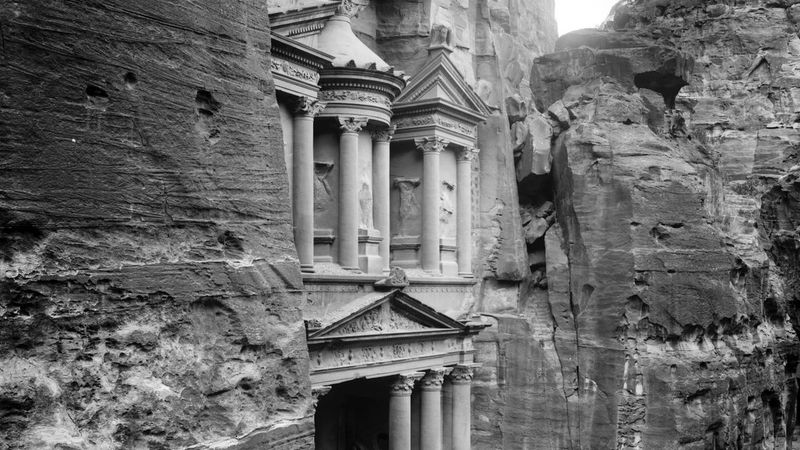
Filmed, but Not Recorded: The Arab World’s Missing Film Locations
Wikidata knows Gladiator was filmed in Morocco. It doesn’t know where.
Ouarzazate is the second most filmed place in the Middle East and North Africa, yet 25 of its 27 productions are recorded only in Wikipedia prose. We compared filming records worldwide and found that in the Arab world, Wikidata usually knows the country but not the place.
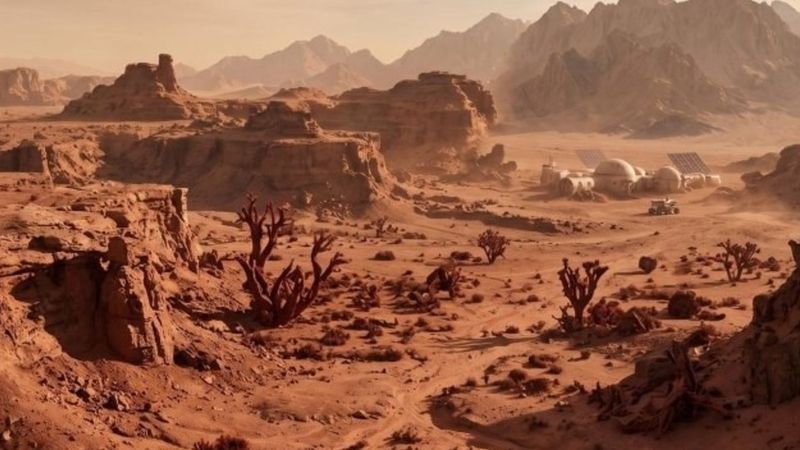
Why Every Sci-Fi Desert Looks Arab
From Arrakis to Tatooine, when a film wants a desert to feel ancient, prophetic and alien, it reaches for an Arab and Berber vocabulary — and reveals more about the West that built it than the region it borrows from.
The wrapped faces, the trilling women, the barely-displaced Arabic: cinema's alien deserts keep sounding Arab. But the vocabulary was assembled in the West — from Orientalist painting to Lawrence to Dune — and it says more about who is looking than about anyone being looked at.